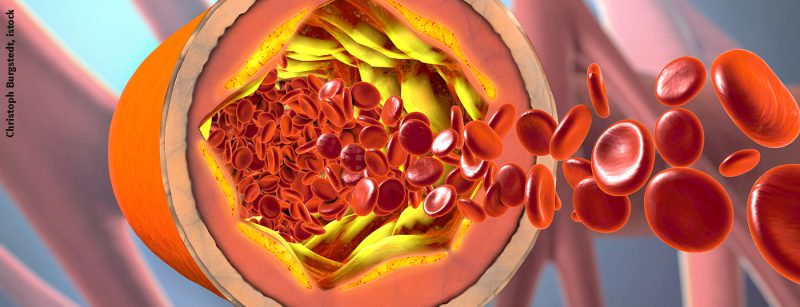
This content is machine translated Atherosclerosis Revolutionary therapeutic approach for cholesterol reduction in the starting blocks A new drug could revolutionize the management of cholesterol lowering. In Vienna, a new agent was used for the first time in the clinic, which is expected to reduce LDL…
View Post 1 min This content is machine translated PAVK Low-dose paclitaxel coating also effective in balloons Recent two-year results from the COMPARE trial – the world’s first prospective, randomized, controlled head-to-head study of two drug-coated balloons – showed that the one coated with a lower dose…
View Post 3 min This content is machine translated Blood pressure and lipid management Effects of effective therapy on cardiovascular health. A major factor in the development of atherosclerotic-related cardiovascular disease is the retention and accumulation of cholesterol-rich lipoproteins in the vessels. Therefore, in addition to adequate blood pressure control, the…
View Post 3 min This content is machine translated Coronary heart disease (CHD) Innovative method for non-invasive diagnostics in suspected CHD cases. When coronary heart disease (CHD) is suspected, the question arises as to how the family physician should best proceed diagnostically. There is a need for optimization of noninvasive CHD diagnostics…
View Post 4 min This content is machine translated Obesity Goodbye prosperity belly – welcome feel-good weight! The proportion of severely overweight or obese patients is steadily increasing. The common disease is seen more of a health disorder resulting from an unhealthy lifestyle. However, the consequences can…
View Post 2 min This content is machine translated Advanced training with case studies Type 2 diabetes and heart Type 2 diabetes mellitus and cardiovascular disease are closely linked. Thus, diabetes is not only one of the most important cardiovascular risk factors, but also increases the morbidity and mortality… CME-Test
View Post 6 min This content is machine translated Diabetes mellitus Biomarker-associated clustering for improved treatment management. Phenotyping and subclassification of diabetic patients is becoming increasingly important to provide patient-adapted treatment options. Meanwhile, there are several cluster analyses that could reveal certain specific patterns of patient characteristics.…
View Post 4 min This content is machine translated Pulmonary embolism Anticoagulate hemodynamically unstable patients even on suspicion Patients with pulmonary embolism require anticoagulation for a period of at least three months. Before starting therapy, several considerations must be addressed: Which anticoagulant is the most appropriate for this…
View Post 14 min This content is machine translated Focus on diabetes and heart New studies and new recommendations Study data in recent years have highlighted the enormous extent to which type 2 diabetes mellitus (T2D) promotes the development of cardiovascular disease. In addition, it became clear that certain…
View Post 3 min This content is machine translated Heart failure SGLT-2 inhibitors – great therapeutic potential in HFrEF patients. In addition to the SGLT-2 inhibitor dapagliflozin, which was also approved by Swissmedic last July for the treatment of heart failure (HFrEF) in non-diabetics, another member of this drug class,…
View Post 2 min This content is machine translated Heart failure Effectively reduce re-hospitalization in patients with iron deficiency Intravenous iron (III) carboxymaltose results in significantly fewer hospital readmissions in patients with heart failure and iron deficiency compared with placebo. This is the conclusion of a study published in…