This content is machine translated Nerve bottleneck syndrome Diagnostic value of nerve sonography in carpal tunnel syndrome Carpal tunnel syndrome is the most common nerve constriction syndrome. The diagnosis can often be made clinically with a focused history and neurologic examination. To assess nerve function as well…
View Post 5 min This content is machine translated Radiological imaging in dermatology The forgotten “stepchild” with great relevance also for dermatologists Radiological examinations are part of everyday life in dermatological practice. They are used for preliminary examination for system therapeutics, examination for system involvement, diagnosis of syndromes, investigation of causes and…
View Post 8 min This content is machine translated Whole brain irradiation or stereotaxy? Options for radiotherapy in brain metastases For 1-3 brain metastases, stereotactic radiotherapy is highly effective, either as a single time treatment for smaller lesions or as fractionated stereotactic radiotherapy. In single-treatment radiotherapy, the radiation dose must…
View Post 5 min This content is machine translated Radiooncology options Stereotactic radiotherapy, hyperthermia and intraoperative irradiation In a symposium at the 26th Physicians’ Continuing Education Course in Clinical Oncology in St. Gallen, various forms of radiotherapy were explained. In recent years, technological progress has led to…
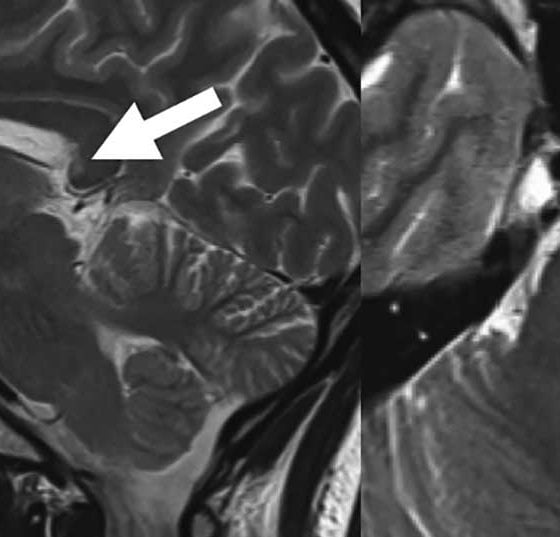
View Post 5 min This content is machine translated Cavernomas in the brain stem Perioperative imaging and microsurgical strategies. Case report: In 2011, a 50-year-old patient was diagnosed with a cavernoma of almost 2 cm in the area of the pons, after passive mild sensory disturbances of the right side…
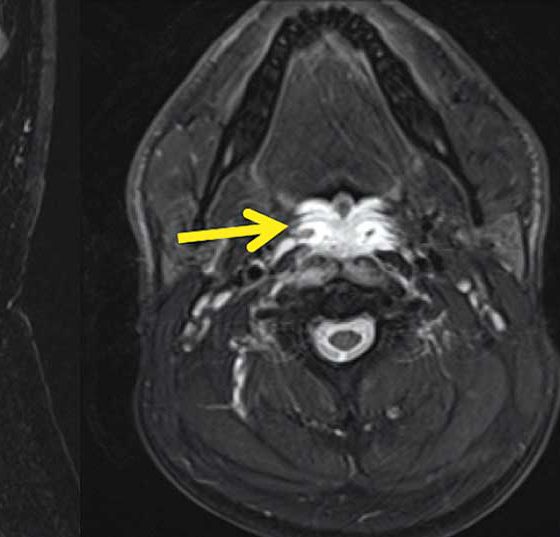
View Post 4 min This content is machine translated Acute calcifying tendinitis of the longus colli muscle A rare cause of headache and sore throat Case Report: A 44-year-old male patient presented with severe neck and occipital headache, increased in flexion/rotation, also progressive neck and swallowing pain. Laboratory findings included leukocytosis (13,000× 109/l) and CRP…
View Post 6 min This content is machine translated When is which imaging procedure appropriate? CT or MRI – decision-making aids for the practice Although there are clear guidelines on which investigational modality is used for which question, the decision is plurifactorial. If in doubt, you can ask the radiologist for advice. Medical history…
View Post 6 min This content is machine translated Basics of imaging in multiple sclerosis Classification systems enable precise classification Multiple sclerosis is a relatively common inflammatory disease of the brain and the entire central nervous system in which demyelination, the cause of which is still unclear, occurs [1]. Diagnosis…
View Post 6 min This content is machine translated Radiotherapy for prostate cancer Precision radiotherapy in primary treatment and oligometastasis. With rapid technological advances in radiation oncology, new treatment options are now available to patients with prostate cancer, both in the primary therapy and in the metastatic setting. In particular,…
View Post 3 min This content is machine translated Sports injuries The agony of choice in imaging It may sound a bit old-fashioned, but with any medical problem, the classic order applies: history, clinical examination, additional clarifications. Imaging therefore comes in third place if there is already…
View Post 8 min This content is machine translated Radiochemotherapy as therapy of choice Anal carcinoma: diagnostics and current treatment concepts Risk factors for anal carcinoma include female sex, human papillomavirus infections, promiscuity/anal intercourse, smoking, and immunosuppression (e.g., HIV infection). If there are abnormal findings on inspection, palpation, and/or anoscopy, the…