Medizinonline Medizinonline
  • News
    • News
    • Market & Medicine
  • Patients
    • Disease patterns
    • Diagnostics
    • Therapy
  • Partner Content
    • Dermatology
      • Atopic dermatitis and psoriasis news
    • Diabetes
      • Dia-Month Club – Type 2 Diabetes
      • Diabetes in Motion
      • Diabetes Podcasts
    • Gastroenterology
      • IBD matters
    • Oncology
      • Swiss Oncology in motion
    • Orthopedics
      • Osteoporosis in motion
  • Departments
    • Allergology and clinical immunology
    • General Internal Medicine
    • Anesthesiology
    • Angiology
    • Surgery
    • Dermatology and venereology
    • Endocrinology and Diabetology
    • Nutrition
    • Gastroenterology and Hepatology
    • Genetics
    • Geriatrics
    • Gynecology
    • Hematology
    • Infectiology
    • Cardiology
    • Nephrology
    • Neurology
    • Emergency and intensive care medicine
    • Nuclear Medicine
    • Oncology
    • Ophthalmology
    • ORL
    • Orthopedics
    • Pediatrics
    • Pharmacology and toxicology
    • Pharmaceutical medicine
    • Phlebology
    • Physical medicine and rehabilitation
    • Pneumology
    • Prevention and health care
    • Psychiatry and psychotherapy
    • Radiology
    • Forensic Medicine
    • Rheumatology
    • Sports Medicine
    • Traumatology and trauma surgery
    • Tropical and travel medicine
    • Urology
    • Dentistry
  • CME & Congresses
    • CME continuing education
    • Congress Reports
    • Congress calendar
  • Practice
    • Noctimed
    • Practice Management
    • Jobs
    • Interviews
  • Log In
  • Register
  • My account
  • Contact
  • Publications
  • Contact
  • Deutsch
  • English
  • Français
  • Italiano
  • Português
  • Español
Subscribe
Medizinonline Medizinonline
  • News
    • News
    • Market & Medicine
  • Patienten
    • Krankheitsbilder
    • Diagnostik
    • Therapie
  • Partner Content
    • Dermatology
      • Atopic dermatitis and psoriasis news
    • Diabetes
      • Dia-Month Club – Type 2 Diabetes
      • Diabetes in Motion
      • Diabetes Podcasts
    • Gastroenterology
      • IBD matters
    • Oncology
      • Swiss Oncology in motion
    • Orthopedics
      • Osteoporosis in motion
    • Phytotherapie
    • Rheumatology
  • Departments
    • Fachbereiche 1-13
      • Allergology and clinical immunology
      • General Internal Medicine
      • Anesthesiology
      • Angiology
      • Surgery
      • Dermatology and venereology
      • Endocrinology and Diabetology
      • Nutrition
      • Gastroenterology and Hepatology
      • Genetics
      • Geriatrics
      • Gynecology
      • Hematology
    • Fachbereiche 14-26
      • Infectiology
      • Cardiology
      • Nephrology
      • Neurology
      • Emergency and intensive care medicine
      • Nuclear Medicine
      • Oncology
      • Ophthalmology
      • ORL
      • Orthopedics
      • Pediatrics
      • Pharmacology and toxicology
      • Pharmaceutical medicine
    • Fachbereiche 26-38
      • Phlebology
      • Physical medicine and rehabilitation
      • Phytotherapy
      • Pneumology
      • Prevention and health care
      • Psychiatry and psychotherapy
      • Radiology
      • Forensic Medicine
      • Rheumatology
      • Sports Medicine
      • Traumatology and trauma surgery
      • Tropical and travel medicine
      • Urology
      • Dentistry
  • CME & Congresses
    • CME continuing education
    • Congress Reports
    • Congress calendar
  • Practice
    • Noctimed
    • Practice Management
    • Jobs
    • Interviews
Login

Sie haben noch keinen Account? Registrieren

  • Depression

Differentiated diagnosis and therapy of a common disease

    • Congress Reports
    • Psychiatry and psychotherapy
    • RX
  • 3 minute read

Depression wants to be accurately diagnosed and specifically treated. In Switzerland, up to 20% of the population is affected – in varying degrees. However, because depression is a clinical diagnosis, it is not always easy to know which path to take. But prolonged dithering is not advisable. It is preferable to treat according to guidelines and to select the drug on the basis of symptoms.

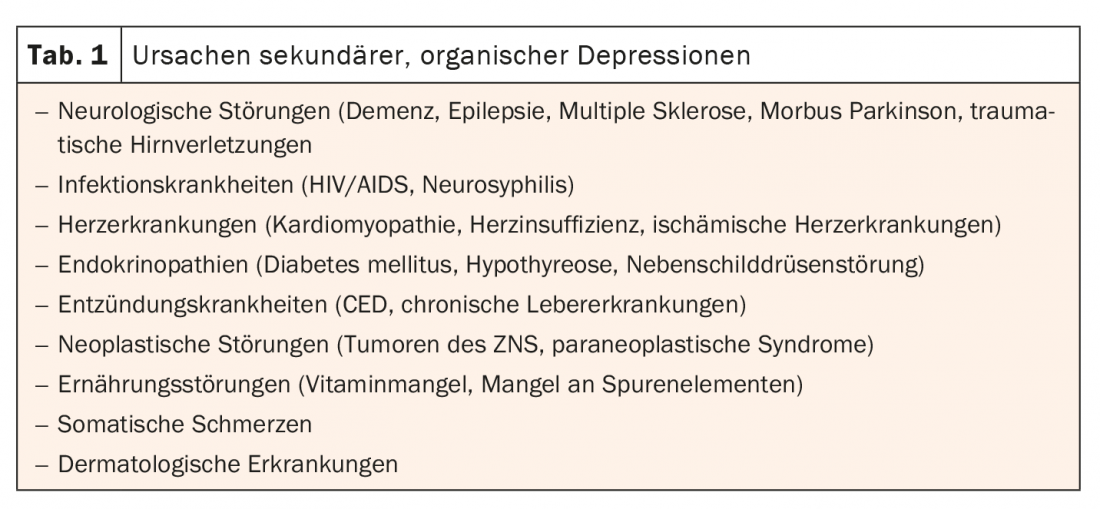
Not all depression is the same. In addition, the symptoms of depression can hide a variety of other diseases. In addition to the main symptoms of depressed mood, loss of interest, joylessness, lack of drive and increased fatigue, there may be other additional symptoms. These include decreased concentration and attention, decreased self-esteem and self-confidence, feelings of guilt and worthlessness, negative and pessimistic outlook on the future, sleep disturbances, decreased appetite, and/or suicidal ideation. Therefore, a comprehensive medical history, physical-neurological findings, and technical examinations including thyroid parameters, iron metabolism, EEG, and MRI are important for differentiated diagnosis. This approach serves to differentiate symptomatic depression from organic depression. Symptomatic depression usually occurs postoperatively, postinfectiously, endocrine, or pharmacogenically. In organic depression, the cause is more likely to be, for example, the presence of dementia or a brain tumor (Table 1) .


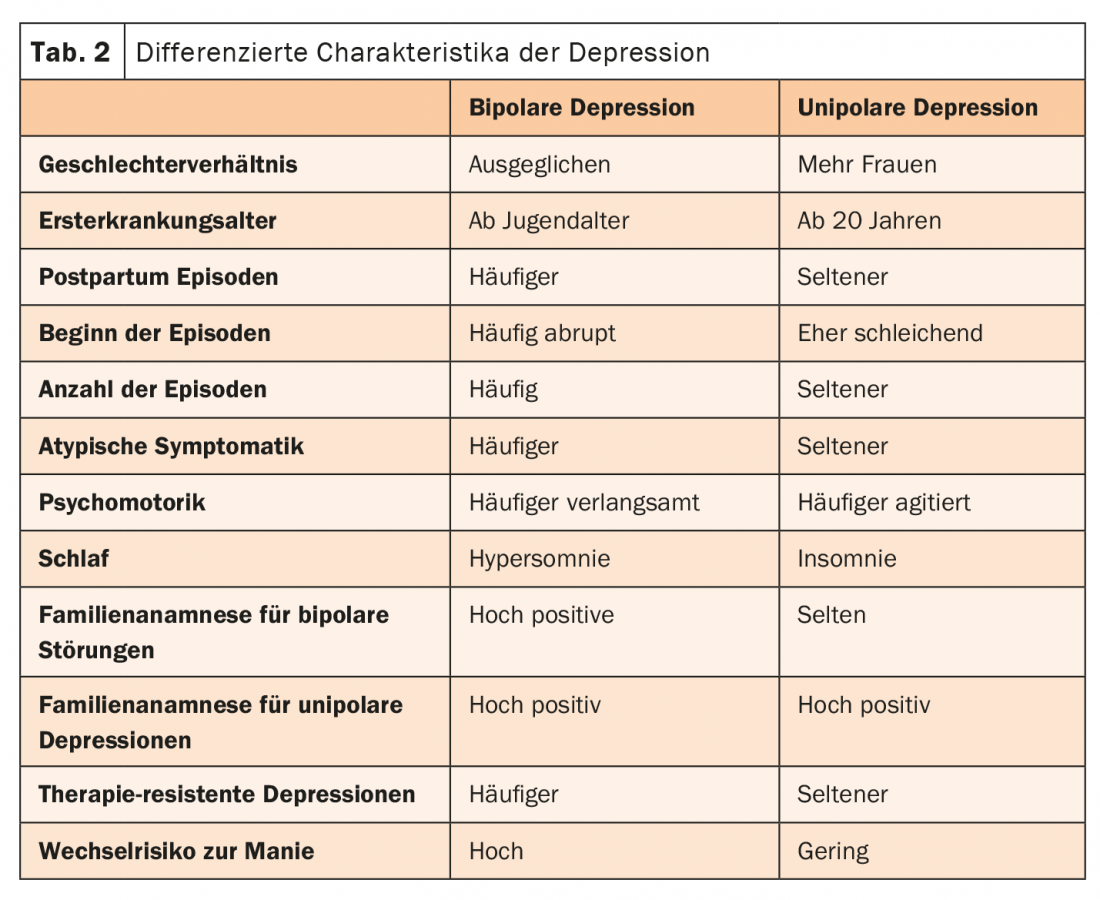
Screening forms can be used for further clarification. The Suicide status form, WHO-5 well-being questionnaire, or patient health questionnaire (PHQ-D) can provide further insight into patients’ mental lives. Third-party assessment questionnaires such as the HAM-D or the Montgomery-Åsberg Depression Rating Scale (MADRS) complete the picture. Neurobiological markers of depression include immune, electrophysiological, endocrine, as well as CNS-associated markers, in addition to genetic and environmental factors and the cognitive symptoms already described. For example, cortisol, IL-6, IFN-gamma and triglycerides are increased, cholesterol, iron, B12 or also BDNF are reduced, as Prof. Dr. med. Thomas J. Müller, Meiringen/Bern, pointed out. The question is whether there are predictors that can predict diagnosis or even response to a drug. In fact, there are certain characteristics that can be differentiated, at least in terms of bipolar or unipolar depression (Table 2) .


Individual approach relies on participatory decision making

After education and psychoeducation, the treatment algorithm relies on participatory decision making to elicit the individually appropriate course of action. While an active wait-and-see approach for 14 days may be considered for a mild form of depression, psychotherapy and/or pharmacotherapy should be started immediately for moderate or severe depression. With the help of close monitoring, therapy can be adjusted or supplemented as needed. For acute treatment of bipolar depression, the 2019 update recommends combination treatment of quetiapine/quetiapine XR or lithium in combination with an antidepressant. SSRIs (with the exception of paroxetine) and bupropion are most likely to be recommended for this purpose.
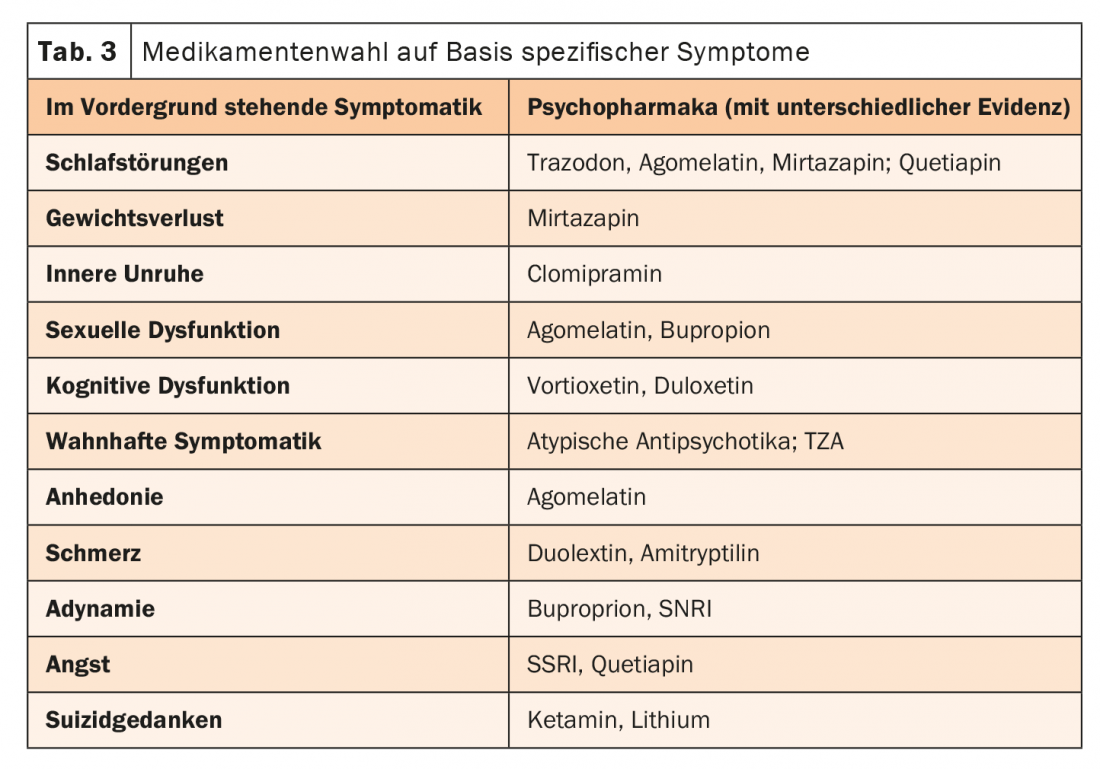


Which antidepressant is ultimately used can be decided, for example, on the basis of the psychomotor effect. Amitriptyline, doxepin, and trimipramine have more sedative-anxiolytic effects. SSRIs, MAO inhibitors, venlafaxine, desipramine, and nortriptyline, on the other hand, are less sedating. Imipramine and clomipramine are mildly sedating and activating, respectively, for this purpose, as the expert pointed out to the Kielholz scheme. Ultimately, selection should be based on the specific symptoms, with classification based on experience (tab. 3) . The study situation is not clear in this respect.

Congress: FomF Update Refresher


InFo NEUROLOGY & PSYCHIATRY 2021; 19(4): 26-27 (published 8/21, ahead of print).
Autoren
  • Leoni Burggraf
Publikation
  • InFo NEUROLOGIE & PSYCHIATRIE
Related Topics
  • Depression
  • participatory decision-making
  • Psychoeducation
Previous Article
  • Corona vaccination

Vaccination interval for convalescents

  • General Internal Medicine
  • Infectiology
  • News
  • Prevention and health care
  • RX
  • Studies
View Post
Next Article
  • SARS-CoV-2 infection

How long does the vaccination protection last?

  • General Internal Medicine
  • Infectiology
  • News
  • Prevention and health care
  • RX
  • Studies
View Post
You May Also Like
View Post
  • 3 min
  • Migraine

Fremanezumab for comorbid migraine and depression

    • Neurology
    • Pharmacology and toxicology
    • RX
    • Studies
View Post
  • 6 min
  • Case study

Moyamoya disease in a 23-year-old female patient

    • Angiology
    • Cases
    • Education
    • Neurology
    • Radiology
    • RX
View Post
  • 6 min
  • Dapagliflozin for T2D and heart failure

Epicardial fat reduced in patients with type 2 diabetes and HF

    • Cardiology
    • Education
    • Endocrinology and Diabetology
    • RX
View Post
  • 10 min
  • A hub of biological aging

Mitochondrial dysfunction and energy metabolism

    • Education
    • General Internal Medicine
    • Genetics
    • Prevention and health care
    • RX
    • Sports Medicine
    • Studies
View Post
  • 3 min
  • Health Literacy

Promoting health literacy: from the abstract to the concrete level

    • RX
    • General Internal Medicine
    • Practice Management
    • Prevention and health care
    • Studies
View Post
  • 8 min
  • Pharmacological therapy

Anxiety symptoms in eating disorders

    • Education
    • Nutrition
    • Pharmacology and toxicology
    • Psychiatry and psychotherapy
    • RX
    • Studies
View Post
  • 4 min
  • Case study

Wiedemann-Steiner syndrome in a 2-year-old girl

    • Cases
    • Education
    • General Internal Medicine
    • Genetics
    • Pediatrics
    • RX
View Post
  • 8 min
  • Evidence, limitations and practical implications

Phytotherapy for anxiety disorders

    • Education
    • General Internal Medicine
    • Pharmaceutical medicine
    • Phytotherapy
    • Psychiatry and psychotherapy
    • RX
    • Studies
  • IBD matters

    Zum Thema
Top CME content
  • 1
    Causes and prevention at work
  • 2
    Yellow nail and Swyer-James syndrome
  • 3
    Recommendations for action in practice
  • 4
    From the β-cell to the center: the versatile role of amylin
  • 5
    Communication as the key to therapy adherence

Newsletter

Sign up and stay up to date

Subscribe
Medizinonline Medizinonline
  • Contact
  • General terms and conditions
  • Imprint

Input your search keywords and press Enter.