Medizinonline Medizinonline
  • News
    • News
    • Market & Medicine
  • Patients
    • Disease patterns
    • Diagnostics
    • Therapy
  • Partner Content
    • Dermatology
      • Atopic dermatitis and psoriasis news
    • Diabetes
      • Dia-Month Club – Type 2 Diabetes
      • Diabetes in Motion
      • Diabetes Podcasts
    • Gastroenterology
      • IBD matters
    • Oncology
      • Swiss Oncology in motion
    • Orthopedics
      • Osteoporosis in motion
  • Departments
    • Allergology and clinical immunology
    • General Internal Medicine
    • Anesthesiology
    • Angiology
    • Surgery
    • Dermatology and venereology
    • Endocrinology and Diabetology
    • Nutrition
    • Gastroenterology and Hepatology
    • Genetics
    • Geriatrics
    • Gynecology
    • Hematology
    • Infectiology
    • Cardiology
    • Nephrology
    • Neurology
    • Emergency and intensive care medicine
    • Nuclear Medicine
    • Oncology
    • Ophthalmology
    • ORL
    • Orthopedics
    • Pediatrics
    • Pharmacology and toxicology
    • Pharmaceutical medicine
    • Phlebology
    • Physical medicine and rehabilitation
    • Pneumology
    • Prevention and health care
    • Psychiatry and psychotherapy
    • Radiology
    • Forensic Medicine
    • Rheumatology
    • Sports Medicine
    • Traumatology and trauma surgery
    • Tropical and travel medicine
    • Urology
    • Dentistry
  • CME & Congresses
    • CME continuing education
    • Congress Reports
    • Congress calendar
  • Practice
    • Noctimed
    • Practice Management
    • Jobs
    • Interviews
  • Log In
  • Register
  • My account
  • Contact
  • Publications
  • Contact
  • Deutsch
  • English
  • Français
  • Italiano
  • Português
  • Español
Subscribe
Medizinonline Medizinonline
  • News
    • News
    • Market & Medicine
  • Patienten
    • Krankheitsbilder
    • Diagnostik
    • Therapie
  • Partner Content
    • Dermatology
      • Atopic dermatitis and psoriasis news
    • Diabetes
      • Dia-Month Club – Type 2 Diabetes
      • Diabetes in Motion
      • Diabetes Podcasts
    • Gastroenterology
      • IBD matters
    • Oncology
      • Swiss Oncology in motion
    • Orthopedics
      • Osteoporosis in motion
    • Phytotherapie
    • Rheumatology
  • Departments
    • Fachbereiche 1-13
      • Allergology and clinical immunology
      • General Internal Medicine
      • Anesthesiology
      • Angiology
      • Surgery
      • Dermatology and venereology
      • Endocrinology and Diabetology
      • Nutrition
      • Gastroenterology and Hepatology
      • Genetics
      • Geriatrics
      • Gynecology
      • Hematology
    • Fachbereiche 14-26
      • Infectiology
      • Cardiology
      • Nephrology
      • Neurology
      • Emergency and intensive care medicine
      • Nuclear Medicine
      • Oncology
      • Ophthalmology
      • ORL
      • Orthopedics
      • Pediatrics
      • Pharmacology and toxicology
      • Pharmaceutical medicine
    • Fachbereiche 26-38
      • Phlebology
      • Physical medicine and rehabilitation
      • Phytotherapy
      • Pneumology
      • Prevention and health care
      • Psychiatry and psychotherapy
      • Radiology
      • Forensic Medicine
      • Rheumatology
      • Sports Medicine
      • Traumatology and trauma surgery
      • Tropical and travel medicine
      • Urology
      • Dentistry
  • CME & Congresses
    • CME continuing education
    • Congress Reports
    • Congress calendar
  • Practice
    • Noctimed
    • Practice Management
    • Jobs
    • Interviews
Login

Sie haben noch keinen Account? Registrieren

  • Anxiety disorders

From the fear of fear

    • Education
    • Psychiatry and psychotherapy
    • RX
  • 3 minute read

Anxiety disorders, along with depression, are among the most common disorders in the field of psychiatry. While fear is an emotional response to a specific threat, anxiety is an anticipation of future threats. A wide range of anxiety disorders are now distinguished – with implications for treatment regimens.

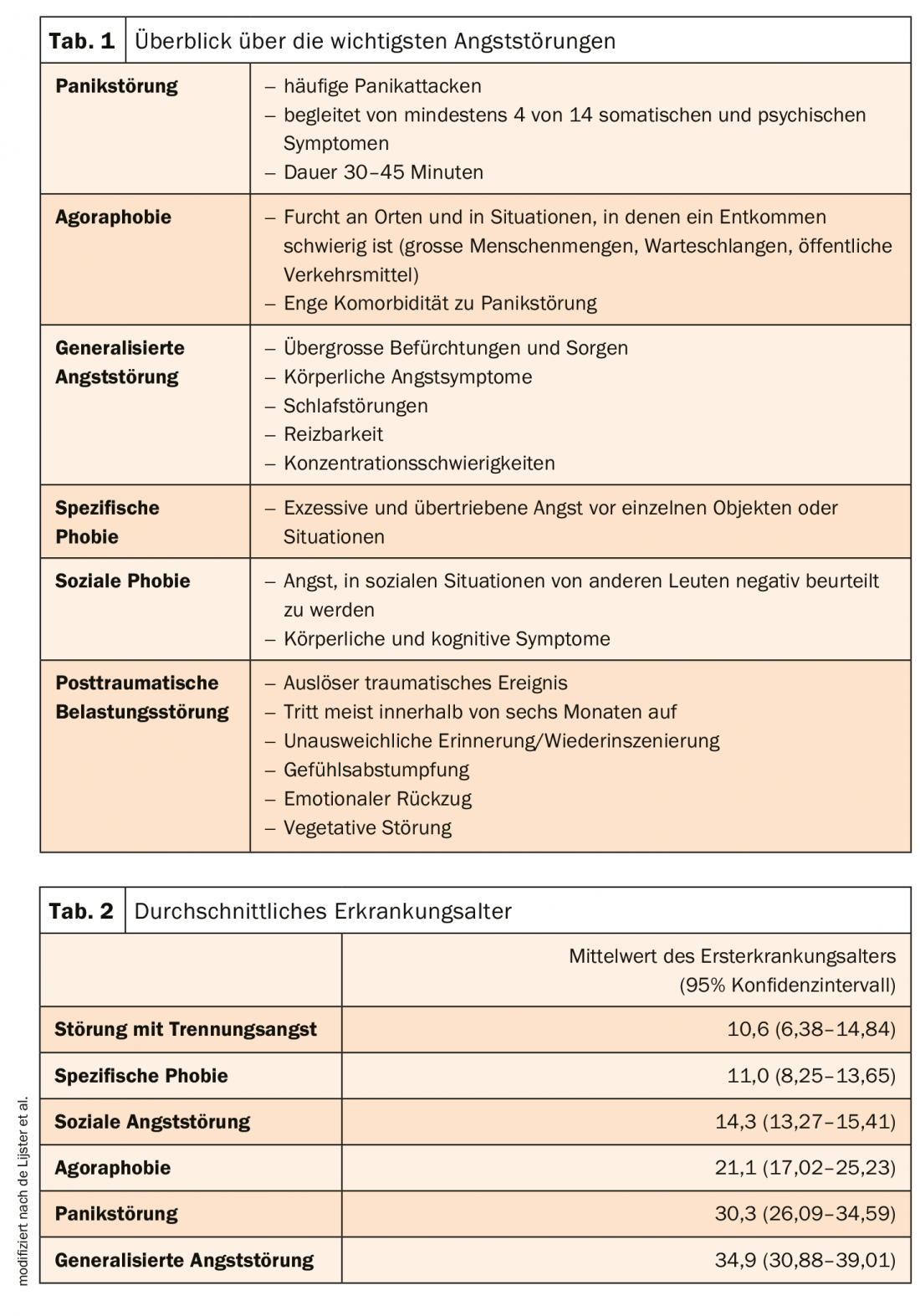
Actually, evolution meant well. Our “fight-or-flight” response allows us to adapt quickly to dangerous situations. However, if the concrete threat from external factors is missing and the anxiety occurs nevertheless, the picture of an anxiety disorder is given. Anxiety symptoms manifest themselves primarily in shortness of breath, palpitations, agitation, muscle tension, tremors, and a dry mouth. These physiological responses prepare the body for fight or flight. The clinical picture is differentiated into separation anxiety disorder, selective mutism, specific phobia, social anxiety disorder, panic disorder, agoraphobia, generalized anxiety disorder and post-traumatic stress disorder (Tab. 1) . They differ in both onset and course of illness (Tab. 2).


The diagnosis is based on the differentiation between symptom, syndrome and diagnosis level. At the symptom level, the focus is primarily on physical complaints. In addition, avoidance behavior and worry or social behavior strategies are recorded. At the syndrome level, it is mainly the severity that is assessed. Self-assessment and third-party assessment scales are used for this purpose. Initial indications of the diagnosis are usually already apparent in spontaneous descriptions of the complaints in the free clinical interview. However, since this is often not reliable enough, standardized interviews should be used in the further course. In addition, the possibility of comorbid conditions such as depression, psychotropic substance disorders, somatoform disorders, or other anxiety disorders should be closely examined.


Comprehensive help for self-help

The gold standard for the treatment of anxiety disorders is a combination of cognitive behavioral therapy (CBT) and pharmacologic interventions. However, psychotherapy is often not available in a timely manner. Suggestions for self-help should be given here to bridge the waiting time. Recently, the first steps have been taken in the direction of Internet therapy to help sufferers cope with their psychological problems. Meanwhile, offerings such as Internet-based cognitive-behavioral therapy or guided self-help approaches exist. However, studies have demonstrated that the combination of CT and drug therapy is often superior to the respective monotherapy. Therefore, a comprehensive treatment regimen tailored to the individual should be developed.

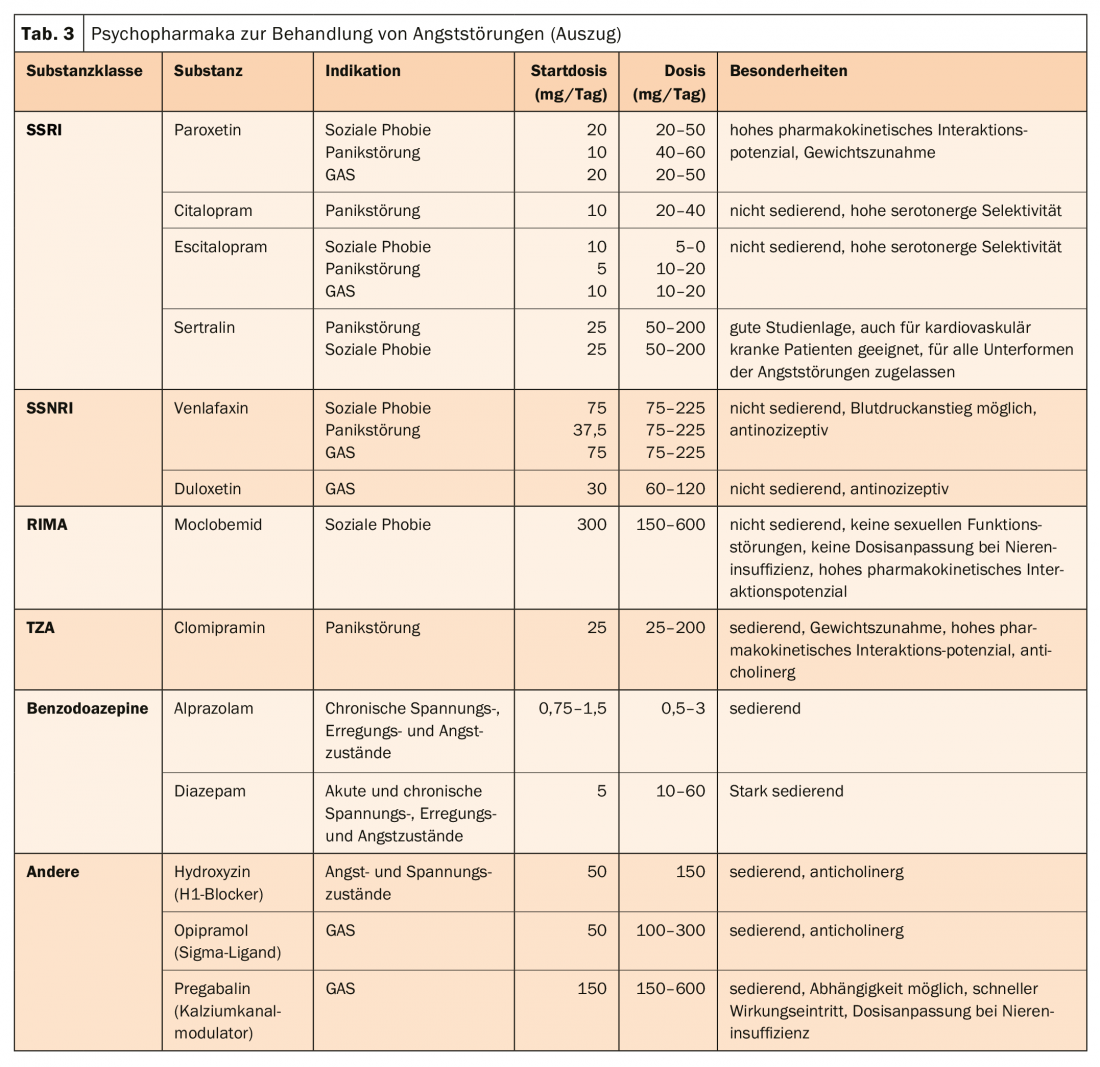
Basically, pharmacological therapy of anxiety disorders is divided into three phases: acute therapy, maintenance therapy, and prophylactic therapy. A number of substances from different substance classes are available for drug treatment (tab. 3) . The drugs of first choice are primarily selective serotonin reuptake inhibitors (SSRIs) and increasingly also selective serotonin-norepinephrine reuptake inhibitors (SSNRIs). However, their effect unfolds only after 2 to 6 weeks. Therefore, comedication with benzodiazepines may be useful at the beginning. In this way, the acute symptoms can be cupped and the effect latency can be bridged. However, they should not be given for more than one to two weeks.


Further reading:

  • Volz HP, Stieglitz RD: Anxiety disorders-diagnosis, psycho- and pharmacotherapy. DNP – The Neurologist & Psychiatrist 2019. 20(6): 90-99.
  • De Lijster JM, et al: The age of onset of anxiety disorders: a meta-analysis. Can J Psychiatry 2017; 62(4): 237-246.
  • %C3%(letzter Zugriff am 27.03.2020)
  • https://oegpb.at/wp-content/uploads/2018/12/Konsensus_Angststoerungen_29_10_2018.pdf (last accessed on 27.03.2020)
  • www.rosenfluh.ch/media/arsmedici/2014/14-15/Pharmakotherapie_bei_Angststorungen.pdf (last accessed on 27.03.2020)


InFo NEUROLOGY & PSYCHIATRY 2020; 18(3): 44-46.

Autoren
  • Leoni Burggraf
Publikation
  • InFo NEUROLOGIE & PSYCHIATRIE
Related Topics
  • Anxiety disorder
  • Fear
Previous Article
  • Psoriasis

Hepatitis screening before any system therapy

  • Dermatology and venereology
  • Education
  • Gastroenterology and Hepatology
  • General Internal Medicine
  • Infectiology
  • RX
View Post
Next Article
  • Acne vulgaris

Symptom-oriented treatment strategy

  • Dermatology and venereology
  • Education
  • RX
View Post
You May Also Like
View Post
  • 10 min
  • Contact eczema

Causes and prevention at work

    • Allergology and clinical immunology
    • CME continuing education
    • Dermatology and venereology
    • Prevention and health care
    • RX
View Post
  • 15 min
  • Pulmonary hypertension

PH and lung diseases

    • Cardiology
    • CME continuing education
    • Pneumology
    • RX
    • Studies
View Post
  • 6 min
  • Respiratory infections: viral bronchitis or bacterial pneumonia?

Old crucial question in the light of current findings

    • Congress Reports
    • General Internal Medicine
    • Infectiology
    • Pharmaceutical medicine
    • Pharmacology and toxicology
    • Phytotherapy
    • Pneumology
    • RX
View Post
  • 6 min
  • What biomarkers reveal about "biological youth" - and what not (yet)

Epigenetic ageing

    • Education
    • Genetics
    • Geriatrics
    • Prevention and health care
    • RX
    • Studies
View Post
  • 4 min
  • Amyotrophic lateral sclerosis and nutrition

Calorie optimization in ALS through digital intervention

    • Education
    • Neurology
    • Nutrition
    • RX
    • Studies
View Post
  • 14 min
  • "Forgotten axis" between plant substances, gut and systemic health

Microbiome and phytotherapy

    • Education
    • Endocrinology and Diabetology
    • Gastroenterology and Hepatology
    • General Internal Medicine
    • Infectiology
    • Neurology
    • Nutrition
    • Pharmaceutical medicine
    • Phytotherapy
    • RX
    • Studies
View Post
  • 4 min
  • HIV: updated EACS guideline

Individualized approach to sustainable prevention and care

    • Cardiology
    • Education
    • General Internal Medicine
    • Infectiology
    • Prevention and health care
    • RX
    • Studies
View Post
  • 5 min
  • Evidence-based diagnostics and treatment in the medical setting

Anxiety and depression disorders in adolescence

    • Education
    • Pediatrics
    • Pharmacology and toxicology
    • Psychiatry and psychotherapy
    • RX
    • Studies
  • IBD matters

    Zum Thema
Top CME content
  • 1
    Can you swallow intelligence? Relevant substance classes times for healthy people
  • 2
    PH and lung diseases
  • 3
    Causes and prevention at work
  • 4
    Clinical care from birth to adulthood
  • 5
    Aligning care with the patient

Newsletter

Sign up and stay up to date

Subscribe
Medizinonline Medizinonline
  • Contact
  • General terms and conditions
  • Imprint

Input your search keywords and press Enter.