Medizinonline Medizinonline
  • News
    • News
    • Market & Medicine
  • Patients
    • Disease patterns
    • Diagnostics
    • Therapy
  • Partner Content
    • Diabetes
      • Dia-Month Club – Type 2 Diabetes
      • Diabetes in Motion
      • Diabetes Podcasts
    • Gastroenterology
      • IBD matters
    • Oncology
      • Swiss Oncology in motion
    • Orthopedics
      • Osteoporosis in motion
  • Departments
    • Allergology and clinical immunology
    • General Internal Medicine
    • Anesthesiology
    • Angiology
    • Surgery
    • Dermatology and venereology
    • Endocrinology and Diabetology
    • Nutrition
    • Gastroenterology and Hepatology
    • Genetics
    • Geriatrics
    • Gynecology
    • Hematology
    • Infectiology
    • Cardiology
    • Nephrology
    • Neurology
    • Emergency and intensive care medicine
    • Nuclear Medicine
    • Oncology
    • Ophthalmology
    • ORL
    • Orthopedics
    • Pediatrics
    • Pharmacology and toxicology
    • Pharmaceutical medicine
    • Phlebology
    • Physical medicine and rehabilitation
    • Pneumology
    • Prevention and health care
    • Psychiatry and psychotherapy
    • Radiology
    • Forensic Medicine
    • Rheumatology
    • Sports Medicine
    • Traumatology and trauma surgery
    • Tropical and travel medicine
    • Urology
    • Dentistry
  • CME & Congresses
    • CME continuing education
    • Congress Reports
    • Congress calendar
  • Practice
    • Noctimed
    • Practice Management
    • Jobs
    • Interviews
  • Log In
  • Register
  • My account
  • Contact
  • Publications
  • Contact
  • Deutsch
  • English
  • Français
  • Italiano
  • Português
  • Español
Subscribe
Medizinonline Medizinonline
  • News
    • News
    • Market & Medicine
  • Patienten
    • Krankheitsbilder
    • Diagnostik
    • Therapie
  • Partner Content
    • Diabetes
      • Dia-Month Club – Type 2 Diabetes
      • Diabetes in Motion
      • Diabetes Podcasts
    • Gastroenterology
      • IBD matters
    • Oncology
      • Swiss Oncology in motion
    • Orthopedics
      • Osteoporosis in motion
    • Phytotherapie
    • Rheumatology
  • Departments
    • Fachbereiche 1-13
      • Allergology and clinical immunology
      • General Internal Medicine
      • Anesthesiology
      • Angiology
      • Surgery
      • Dermatology and venereology
      • Endocrinology and Diabetology
      • Nutrition
      • Gastroenterology and Hepatology
      • Genetics
      • Geriatrics
      • Gynecology
      • Hematology
    • Fachbereiche 14-26
      • Infectiology
      • Cardiology
      • Nephrology
      • Neurology
      • Emergency and intensive care medicine
      • Nuclear Medicine
      • Oncology
      • Ophthalmology
      • ORL
      • Orthopedics
      • Pediatrics
      • Pharmacology and toxicology
      • Pharmaceutical medicine
    • Fachbereiche 26-38
      • Phlebology
      • Physical medicine and rehabilitation
      • Phytotherapy
      • Pneumology
      • Prevention and health care
      • Psychiatry and psychotherapy
      • Radiology
      • Forensic Medicine
      • Rheumatology
      • Sports Medicine
      • Traumatology and trauma surgery
      • Tropical and travel medicine
      • Urology
      • Dentistry
  • CME & Congresses
    • CME continuing education
    • Congress Reports
    • Congress calendar
  • Practice
    • Noctimed
    • Practice Management
    • Jobs
    • Interviews
Login

Sie haben noch keinen Account? Registrieren

  • Coronary heart disease

Effective lipid lowering not only in patients with statin intolerance

    • Cardiology
    • Congress Reports
    • RX
    • Studies
  • 3 minute read

Patients with coronary artery disease benefit from well-controlled cholesterol levels. But with elevated levels, lifestyle modifications are not always sufficient to reach the target value. Statins are then usually resorted to for LDL lowering. But what if sufferers are statin intolerant? In them, effective results can be achieved with PCSK9 inhibitors – and not only in them…

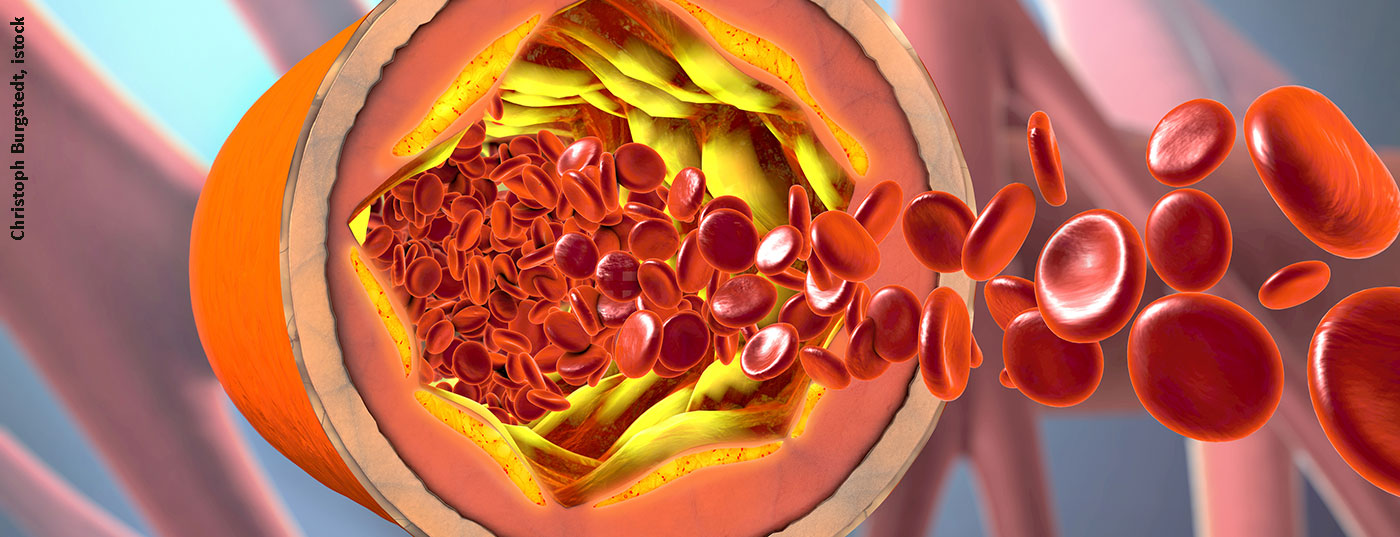
The causal role that LDL cholesterol plays in the development of atherosclerosis is now undisputed. It has been demonstrated that individuals with a mutation in one of the genes involved in cholesterol metabolism show significantly elevated LDL cholesterol levels. These are often associated with cardiovascular disease. In contrast, people who have loss-of-function mutations in the PCSK9 gene – which results in very low LDL-C concentrations – have a strikingly low cardiovascular risk. This is where the therapeutic measures came in. The LDL cholesterol reduction achieved by medication is proportional to the reduction in cardiovascular risk. Lifestyle modifications, such as a switch to a healthy diet and more active lifestyle, rarely lead to success on their own. Standard pharmacological therapy includes statins. However, optimal treatment of dyslipidemia is still far from being achieved. A recent study has now brought to light that no 16% of patients with CHD achieve the LDL cholesterol target of <1.4 mmol/l despite effective lipid-lowering therapy.

The background of the study was the question whether the standard therapy (statins ± ezetemib) can achieve the treatment goal of the current ESC guideline of <1.4 mmol/l and/or halving the baseline LDL cholesterol level in patients with very high cardiovascular risk. For this purpose, the guideline-based adjustment and adherence to lipid-lowering therapy during and after a cardiological rehabilitation measure was recorded in 1000 patients over a period of 12 months. The proportion of patients treated with statins was more than 94% at admission and at discharge from the rehabilitation clinic and at three- and 12-month follow-up. Approximately 9% of patients were treated with ezetemib on admission, and more than 23% of patients were treated with ezetemib on discharge from the rehabilitation clinic and during the further course of treatment.

It was found that the proportion of patients with LDL cholesterol in the target range was 9% at admission and 15.7% at discharge. The study investigators therefore raise the question of whether the specified treatment goals can be achieved at all in the majority of patients with CHD without the additional administration of PCSK9 inhibitors.

Significant reduction of more than 50% possible

Proven effective lipid lowering of up to 60% can be achieved with additional administration of a PCSK9 inhibitor. The monoclonal antibody binds to the protein PCSK9, preventing it from docking to the LDL receptors. This increases the uptake of LDL cholesterol from the blood into the liver. In addition to patients with a very high cardiovascular risk and heterozygous familial hypercholesterolemia, the new substance class can currently be used primarily in patients with statin intolerance. Intolerance to standard therapeutics is said to occur when two statins caused muscle pain that could not be explained in any other way and that resolved after statin therapy was discontinued. One of the statins used must have been administered at the lowest approved dose. In addition to the effective and long-lasting LDL cholesterol lowering, PCSK9 inhibitors also impress with their good safety profile. It remains exciting to see how they continue to hold their own in everyday clinical practice.

DGK JT 2020 virtual

Source: Guha M, Völler H, Eckrich K, et al: The current ESC LDL-C target <1.4mmol/l is achieved in less than 16% of patients with CHD despite effective lipid-lowering therapy: data from the LLT-R registry. Clin Res Cardiol 109, Suppl 1, April 2020 – Article V1796.


CARDIOVASC 2020; 19(2): 36 (published 8/7/20, ahead of print).

Autoren
  • Leoni Burggraf
Publikation
  • CARDIOVASC
Related Topics
  • coronary heart disease
  • Lipid lowering
  • PCSK9 inhibitors
Previous Article
  • Pain Medicine

Challenges and possibilities of therapy with cannabinoids

  • Education
  • General Internal Medicine
  • Neurology
  • Oncology
  • Pharmacology and toxicology
  • Prevention and health care
  • Rheumatology
  • RX
View Post
Next Article
  • Chronic wounds

Modern wound management is interdisciplinary and individualized

  • Congress Reports
  • Dermatology and venereology
  • Endocrinology and Diabetology
  • Geriatrics
  • RX
View Post
You May Also Like
View Post
  • 5 min
  • Ulcerative colitis: current evidence on anti-inflammatory therapies

Remission induction and maintenance with biologics and JAK-i

    • RX
    • Congress Reports
    • Gastroenterology and Hepatology
    • General Internal Medicine
    • Studies
View Post
  • 4 min
  • Bronchiectasis

New strategies against neutrophilic inflammation

    • RX
    • Congress Reports
    • General Internal Medicine
    • Infectiology
    • Pneumology
    • Studies
View Post
  • 3 min
  • IBD in childhood

Pneumococcal vaccination without negative consequences

    • RX
    • Education
    • Gastroenterology and Hepatology
    • General Internal Medicine
    • Infectiology
    • Pediatrics
    • Prevention and health care
View Post
  • 14 min
  • Seborrheic Dermatitis in Adults and Adolescents

Current State of Knowledge and New Therapeutic Approaches

    • RX
    • CME continuing education
    • Dermatology and venereology
    • Studies
View Post
  • 7 min
  • Plastic surgery and reconstructive microsurgery for DFS

Functional limb preservation between infection control, vascular medicine and resurfacing

    • RX
    • Angiology
    • CME continuing education
    • Dermatology and venereology
    • Endocrinology and Diabetology
    • General Internal Medicine
    • Geriatrics
    • Physical medicine and rehabilitation
    • Surgery
View Post
  • 7 min
  • Orthobiologics for knee osteoarthritis

PRP and hyaluronic acid injections as building blocks in a multimodal concept

    • RX
    • Congress Reports
    • General Internal Medicine
    • Orthopedics
    • Rheumatology
    • Sports Medicine
    • Studies
    • Surgery
View Post
  • 3 min
  • Soft tissue sarcomas of the lower extremity

Diagnostics, subtypes and treatment options

    • RX
    • Education
    • Oncology
View Post
  • 38 min
  • Psychological dependence on AI assistants, smartphones and short videos

Algorithms, avatars and the unburdened mind

    • RX
    • CME continuing education
    • Neurology
    • Pediatrics
    • Prevention and health care
    • Psychiatry and psychotherapy
    • Studies
  • IBD matters

    Zum Thema
Top CME content
  • 1
    Current State of Knowledge and New Therapeutic Approaches
  • 2
    Why is it so hard to lose weight?
  • 3
    Functional limb preservation between infection control, vascular medicine and resurfacing
  • 4
    Algorithms, avatars and the unburdened mind
  • 5
    Communication as the key to therapy adherence

Newsletter

Sign up and stay up to date

Subscribe
Medizinonline Medizinonline
  • Contact
  • General terms and conditions
  • Imprint

Input your search keywords and press Enter.