Medizinonline Medizinonline
  • News
    • News
    • Market & Medicine
  • Patients
    • Disease patterns
    • Diagnostics
    • Therapy
  • Partner Content
    • Diabetes
      • Dia-Month Club – Type 2 Diabetes
      • Diabetes in Motion
    • Gastroenterology
      • IBD matters
    • Oncology
      • Swiss Oncology in motion
    • Orthopedics
      • Osteoporosis in motion
  • Departments
    • Allergology and clinical immunology
    • General Internal Medicine
    • Anesthesiology
    • Angiology
    • Surgery
    • Dermatology and venereology
    • Endocrinology and Diabetology
    • Nutrition
    • Gastroenterology and Hepatology
    • Genetics
    • Geriatrics
    • Gynecology
    • Hematology
    • Infectiology
    • Cardiology
    • Nephrology
    • Neurology
    • Emergency and intensive care medicine
    • Nuclear Medicine
    • Oncology
    • Ophthalmology
    • ORL
    • Orthopedics
    • Pediatrics
    • Pharmacology and toxicology
    • Pharmaceutical medicine
    • Phlebology
    • Physical medicine and rehabilitation
    • Pneumology
    • Prevention and health care
    • Psychiatry and psychotherapy
    • Radiology
    • Forensic Medicine
    • Rheumatology
    • Sports Medicine
    • Traumatology and trauma surgery
    • Tropical and travel medicine
    • Urology
    • Dentistry
  • CME & Congresses
    • CME continuing education
    • Congress Reports
    • Congress calendar
  • Practice
    • Noctimed
    • Practice Management
    • Jobs
    • Interviews
  • Log In
  • Register
  • My account
  • Contact
  • Publications
  • Contact
  • Deutsch
  • English
  • Français
  • Italiano
  • Português
  • Español
Subscribe
Medizinonline Medizinonline
  • News
    • News
    • Market & Medicine
  • Patienten
    • Krankheitsbilder
    • Diagnostik
    • Therapie
  • Partner Content
    • Diabetes
      • Dia-Month Club – Type 2 Diabetes
      • Diabetes in Motion
    • Gastroenterology
      • IBD matters
    • Oncology
      • Swiss Oncology in motion
    • Orthopedics
      • Osteoporosis in motion
    • Phytotherapie
    • Rheumatology
  • Departments
    • Fachbereiche 1-13
      • Allergology and clinical immunology
      • General Internal Medicine
      • Anesthesiology
      • Angiology
      • Surgery
      • Dermatology and venereology
      • Endocrinology and Diabetology
      • Nutrition
      • Gastroenterology and Hepatology
      • Genetics
      • Geriatrics
      • Gynecology
      • Hematology
    • Fachbereiche 14-26
      • Infectiology
      • Cardiology
      • Nephrology
      • Neurology
      • Emergency and intensive care medicine
      • Nuclear Medicine
      • Oncology
      • Ophthalmology
      • ORL
      • Orthopedics
      • Pediatrics
      • Pharmacology and toxicology
      • Pharmaceutical medicine
    • Fachbereiche 26-38
      • Phlebology
      • Physical medicine and rehabilitation
      • Phytotherapy
      • Pneumology
      • Prevention and health care
      • Psychiatry and psychotherapy
      • Radiology
      • Forensic Medicine
      • Rheumatology
      • Sports Medicine
      • Traumatology and trauma surgery
      • Tropical and travel medicine
      • Urology
      • Dentistry
  • CME & Congresses
    • CME continuing education
    • Congress Reports
    • Congress calendar
  • Practice
    • Noctimed
    • Practice Management
    • Jobs
    • Interviews
Login

Sie haben noch keinen Account? Registrieren

  • Influence of diet on health

Nutrition and osteoporosis – the most important facts in brief

    • Endocrinology and Diabetology
    • Gynecology
    • News
    • Nutrition
    • Rheumatology
    • RX
  • 3 minute read

In addition to factors such as exercise and genetics, diet also plays an important role in the development and therapy of the disease. of osteoporosis. Vitamin D, calcium and protein intake are elementary.

The importance of protein intake as a component of the diet should not be underestimated in osteoporosis.

Protein intake

It has not infrequently been claimed that proteins, especially of animal origin, have a negative impact on bone health. This assumption was based, among other things, on the observation of increased renal calcium excretion after protein-rich meals. Proteins increase intestinal calcium absorption, which explains the associated calciuria. Calcium is therefore not dissolved from the bones by proteins, as was previously assumed.

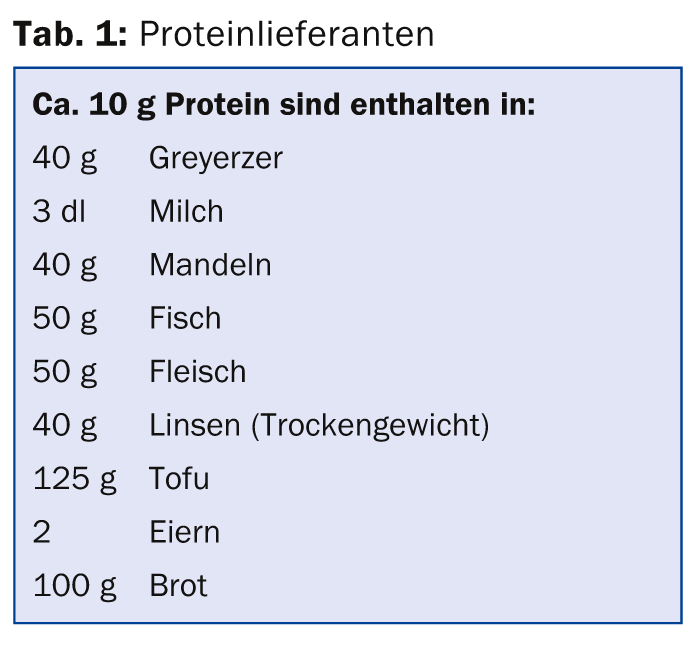
On the contrary, numerous studies now find a positive correlation between protein intake and bone density. The Swiss Federal Nutrition Commission EEK recommends a protein intake of at least 0.8 g/kgKG/d for older people (Tab. 1) . However, studies also show that a relatively high protein intake of up to 1.5 g/kgKG/d has a positive effect on bone density and on the risk of hip fractures.
 

Calcium

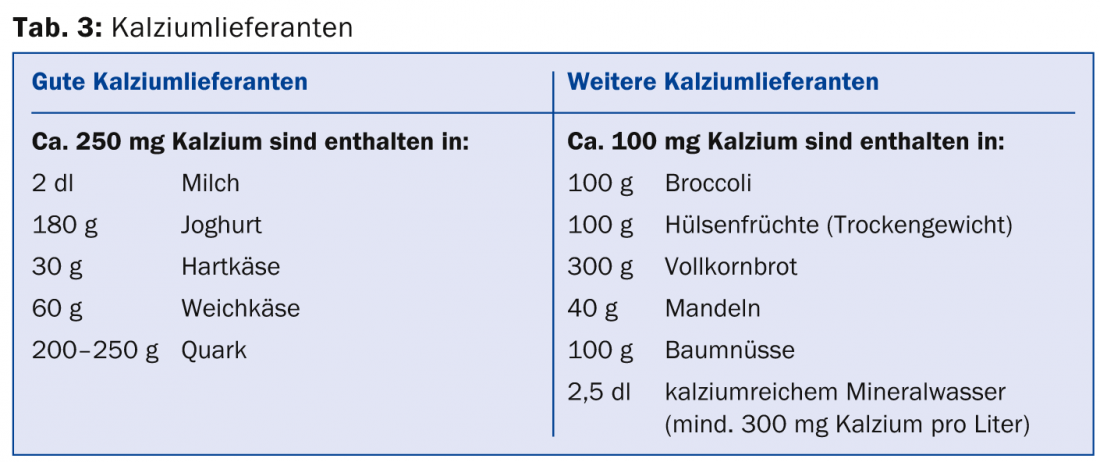
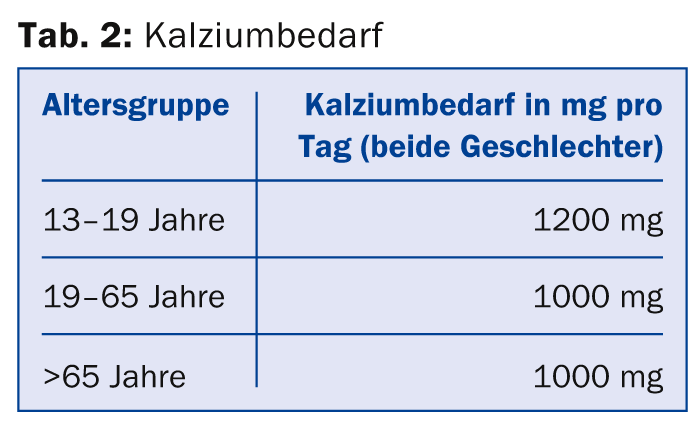
Calcium is the most important building block of bones. In order to reduce the risk of osteoporosis and also fractures resulting from it, both vitamin D and calcium must be supplied in sufficient quantities (Tab. 2 and 3).
 

General recommendations

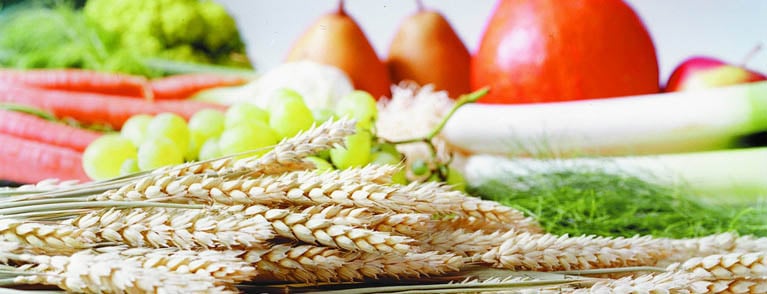
Drinks: 1-2 liters daily, preferably in the form of unsweetened beverages, e.g. drinking/mineral water or fruit/herbal tea. Prefer mineral water rich in calcium. Consume coffee, black tea/green tea and cola drinks with restraint.

Vegetables and fruits: daily five servings of different colors, including three servings of vegetables and two servings of fruits. One serving is equal to 120 g. One serving per day can be replaced by 2 dl of unsweetened fruit or vegetable juice. Green vegetables such as broccoli, chard, spinach, various types of cabbage and leafy greens are good sources of calcium.

Cereal products, potatoes and legumes: three servings daily. For cereal products, give preference to whole grains. One serving is equivalent to 75-125 g bread/dough or 60-100 g legumes (raw) or 180-300 g potatoes or 45-75 g crispbread/whole grain crackers/flakes/flour/pasta/rice/corn/other cereal grains (dry weight).

Dairy products, meat, fish, eggs and tofu: Three servings of milk or dairy products daily. One serving is equivalent to 2 dl of milk or 150-200 g of yogurt/quark/cottage cheese/other dairy products or 30 g of semi-hard/hard cheese or 60 g of soft cheese.

In addition, one serving daily of meat, poultry, fish, eggs, tofu, quorn, seitan, cheese or cottage cheese. Alternate between these protein sources. One serving is equivalent to 100-120 g of meat/poultry/fish/tofu/quorn/ seitan (fresh weight) or 2-3 eggs or 30 g of semi-hard/hard cheese or 60 g of soft cheese or 150-200 g of curd/cottage cheese.

Oils, fats and nuts: Daily 2-3 tablespoons (20-30 g) of vegetable oil, at least half of which should be in the form of canola oil. Daily one serving (20-30 g) of unsalted nuts, seeds or kernels (such as hazelnuts, almonds, tree nuts, sesame seeds, sunflower seeds, etc.). In addition, butter, margarine, cream, etc. can be used sparingly (about 1 tbsp = 10 g/d).

Sweets, salty snacks and alcoholic beverages: Enjoy sweets, sweetened beverages, salty snacks and alcoholic beverages with moderation. Good sources of calcium are milk, yogurt or cottage cheese desserts.

HAUSARZT PRAXIS 2015; 10(2): 7

Autoren
  • Steffi Schlüchter
Publikation
  • HAUSARZT PRAXIS
Related Topics
  • Calcium
  • Osteoporosis
  • Protein
  • Vitamin D
Previous Article
  • Rare Disease Day

Step by Step

  • General Internal Medicine
  • Hematology
  • Infectiology
  • News
  • Oncology
  • Pediatrics
  • Prevention and health care
  • RX
View Post
Next Article
  • Small papillary thyroid carcinomas

Is active monitoring enough?

  • News
  • Oncology
  • RX
  • Studies
View Post
You May Also Like
View Post
  • 10 min
  • Neuropathic Pain

Evidence-Based Neuromodulation Based on Clinical Trials and Real-World Data

    • RX
    • CME continuing education
    • Neurology
    • Physical medicine and rehabilitation
    • Studies
    • Surgery
View Post
  • 14 min
  • Fibromyalgia Syndrome

Development, Diagnosis, Epidemiology, and Treatment of a Disease Entity

    • General Internal Medicine
    • CME continuing education
    • Geriatrics
    • Neurology
    • Orthopedics
    • Rheumatology
    • RX
View Post
  • 7 min
  • Juvenile Idiopathic Arthritis

Early Detection and Targeted Treatment in an Interdisciplinary Setting

    • RX
    • Education
    • General Internal Medicine
    • Pediatrics
    • Rheumatology
View Post
  • 6 min
  • Disorders of the Gut-Brain Interaction

Rome V Criteria: What Has Changed, and What Has Remained the Same?

    • RX
    • Education
    • Gastroenterology and Hepatology
    • General Internal Medicine
View Post
  • 5 min
  • Tourette Syndrome

What can be done to treat this tic disorder?

    • RX
    • Education
    • General Internal Medicine
    • Neurology
    • Pharmacology and toxicology
    • Studies
View Post
  • 4 min
  • Chronic Hepatitis B: Is a Cure in Sight?

Phase III Trial of Temporary Treatment with Bepirovirsen Was Successful

    • RX
    • Congress Reports
    • General Internal Medicine
    • Infectiology
    • Studies
View Post
  • 14 min
  • Fibromyalgia Syndrome

Development, Diagnosis, Epidemiology, and Treatment of a Disease Entity

    • General Internal Medicine
    • CME continuing education
    • Geriatrics
    • Neurology
    • Orthopedics
    • Rheumatology
    • RX
View Post
  • 9 min
  • Congenital Vascular Malformations

Personalized Treatment Before a Planned Pregnancy

    • Cardiology
    • Angiology
    • CME continuing education
    • General Internal Medicine
    • Genetics
    • Gynecology
    • Radiology
    • Surgery
  • IBD matters

    Zum Thema
Top CME content
  • 1
    Evidence-Based Neuromodulation Based on Clinical Trials and Real-World Data
  • 2
    Development, Diagnosis, Epidemiology, and Treatment of a Disease Entity
  • 3
    Development, Diagnosis, Epidemiology, and Treatment of a Disease Entity
  • 4
    Personalized Treatment Before a Planned Pregnancy
  • 5
    Update on Anti-Rheumatic Medications

Newsletter

Sign up and stay up to date

Subscribe
Medizinonline Medizinonline
  • Contact
  • General terms and conditions
  • Imprint

Input your search keywords and press Enter.