Medizinonline Medizinonline
  • News
    • News
    • Market & Medicine
  • Patients
    • Disease patterns
    • Diagnostics
    • Therapy
  • Partner Content
    • Diabetes
      • Dia-Month Club – Type 2 Diabetes
      • Diabetes in Motion
      • Diabetes Podcasts
    • Gastroenterology
      • IBD matters
    • Oncology
      • Swiss Oncology in motion
    • Orthopedics
      • Osteoporosis in motion
  • Departments
    • Allergology and clinical immunology
    • General Internal Medicine
    • Anesthesiology
    • Angiology
    • Surgery
    • Dermatology and venereology
    • Endocrinology and Diabetology
    • Nutrition
    • Gastroenterology and Hepatology
    • Genetics
    • Geriatrics
    • Gynecology
    • Hematology
    • Infectiology
    • Cardiology
    • Nephrology
    • Neurology
    • Emergency and intensive care medicine
    • Nuclear Medicine
    • Oncology
    • Ophthalmology
    • ORL
    • Orthopedics
    • Pediatrics
    • Pharmacology and toxicology
    • Pharmaceutical medicine
    • Phlebology
    • Physical medicine and rehabilitation
    • Pneumology
    • Prevention and health care
    • Psychiatry and psychotherapy
    • Radiology
    • Forensic Medicine
    • Rheumatology
    • Sports Medicine
    • Traumatology and trauma surgery
    • Tropical and travel medicine
    • Urology
    • Dentistry
  • CME & Congresses
    • CME continuing education
    • Congress Reports
    • Congress calendar
  • Practice
    • Noctimed
    • Practice Management
    • Jobs
    • Interviews
  • Log In
  • Register
  • My account
  • Contact
  • Publications
  • Contact
  • Deutsch
  • English
  • Français
  • Italiano
  • Português
  • Español
Subscribe
Medizinonline Medizinonline
  • News
    • News
    • Market & Medicine
  • Patienten
    • Krankheitsbilder
    • Diagnostik
    • Therapie
  • Partner Content
    • Diabetes
      • Dia-Month Club – Type 2 Diabetes
      • Diabetes in Motion
      • Diabetes Podcasts
    • Gastroenterology
      • IBD matters
    • Oncology
      • Swiss Oncology in motion
    • Orthopedics
      • Osteoporosis in motion
    • Phytotherapie
    • Rheumatology
  • Departments
    • Fachbereiche 1-13
      • Allergology and clinical immunology
      • General Internal Medicine
      • Anesthesiology
      • Angiology
      • Surgery
      • Dermatology and venereology
      • Endocrinology and Diabetology
      • Nutrition
      • Gastroenterology and Hepatology
      • Genetics
      • Geriatrics
      • Gynecology
      • Hematology
    • Fachbereiche 14-26
      • Infectiology
      • Cardiology
      • Nephrology
      • Neurology
      • Emergency and intensive care medicine
      • Nuclear Medicine
      • Oncology
      • Ophthalmology
      • ORL
      • Orthopedics
      • Pediatrics
      • Pharmacology and toxicology
      • Pharmaceutical medicine
    • Fachbereiche 26-38
      • Phlebology
      • Physical medicine and rehabilitation
      • Phytotherapy
      • Pneumology
      • Prevention and health care
      • Psychiatry and psychotherapy
      • Radiology
      • Forensic Medicine
      • Rheumatology
      • Sports Medicine
      • Traumatology and trauma surgery
      • Tropical and travel medicine
      • Urology
      • Dentistry
  • CME & Congresses
    • CME continuing education
    • Congress Reports
    • Congress calendar
  • Practice
    • Noctimed
    • Practice Management
    • Jobs
    • Interviews
Login

Sie haben noch keinen Account? Registrieren

  • Chronic nodular prurigo

Pruriginous lesional skin exhibits specific DNA methylation signature

    • Allergology and clinical immunology
    • Congress Reports
    • Dermatology and venereology
    • Genetics
    • RX
    • Studies
  • 2 minute read

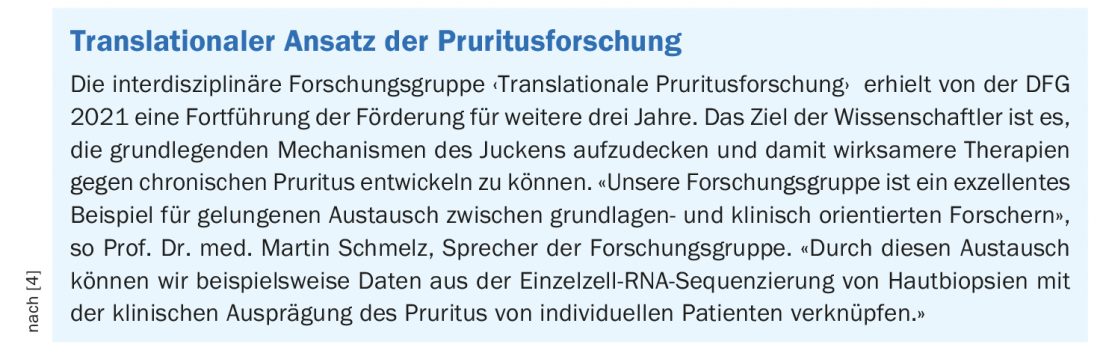
The question of which mechanisms contribute to the chronification of pruritus in chronic nodular prurigo is the subject of current research. It is hoped that new insights will be gained from the investigation of molecular processes. In a project presented at this year’s ADF meeting, DNA methylation patterns of pruriginous-lesional and non-lesional skin of prurigo patients were analyzed and compared to a skin-healthy control group.

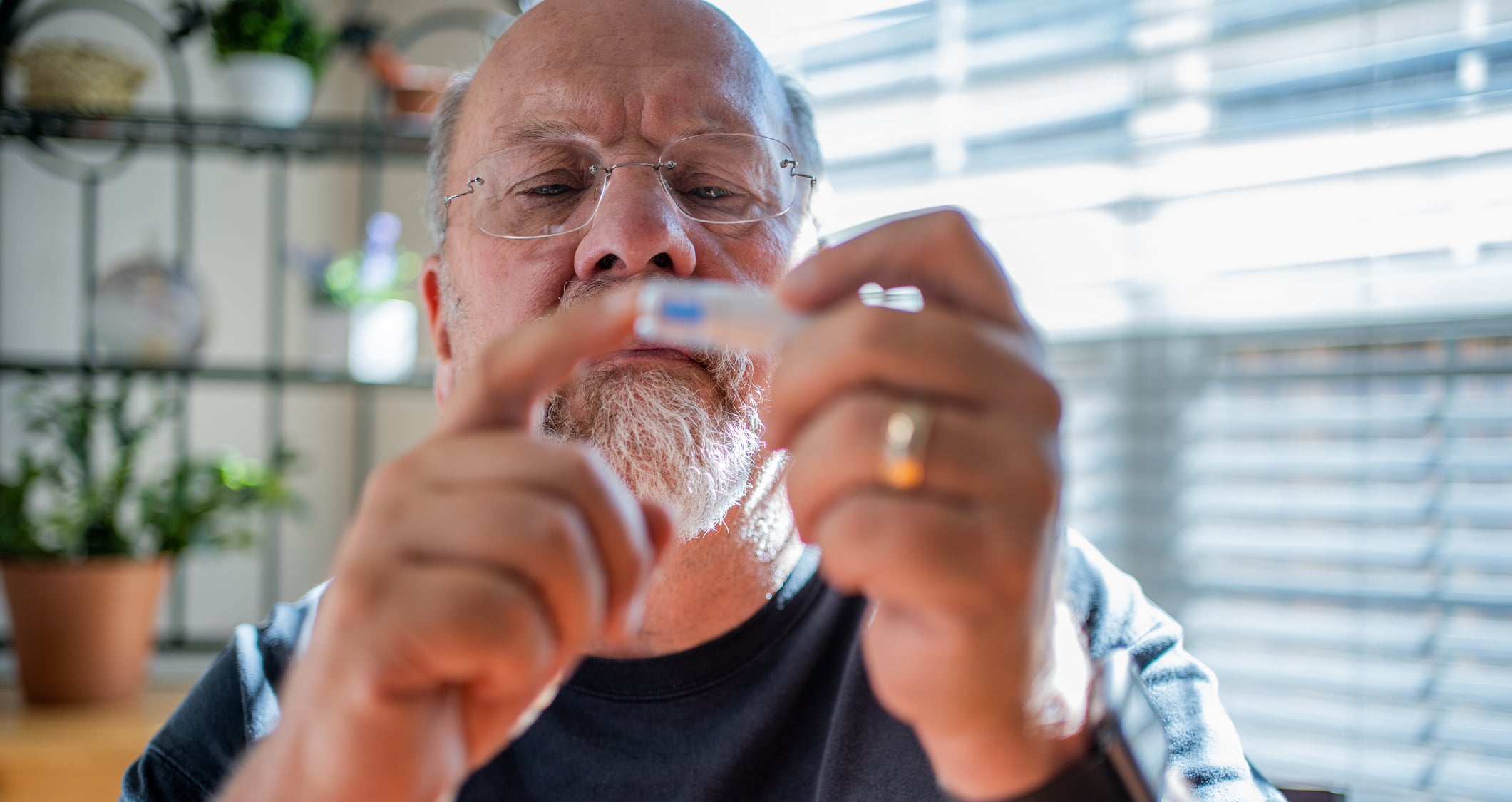
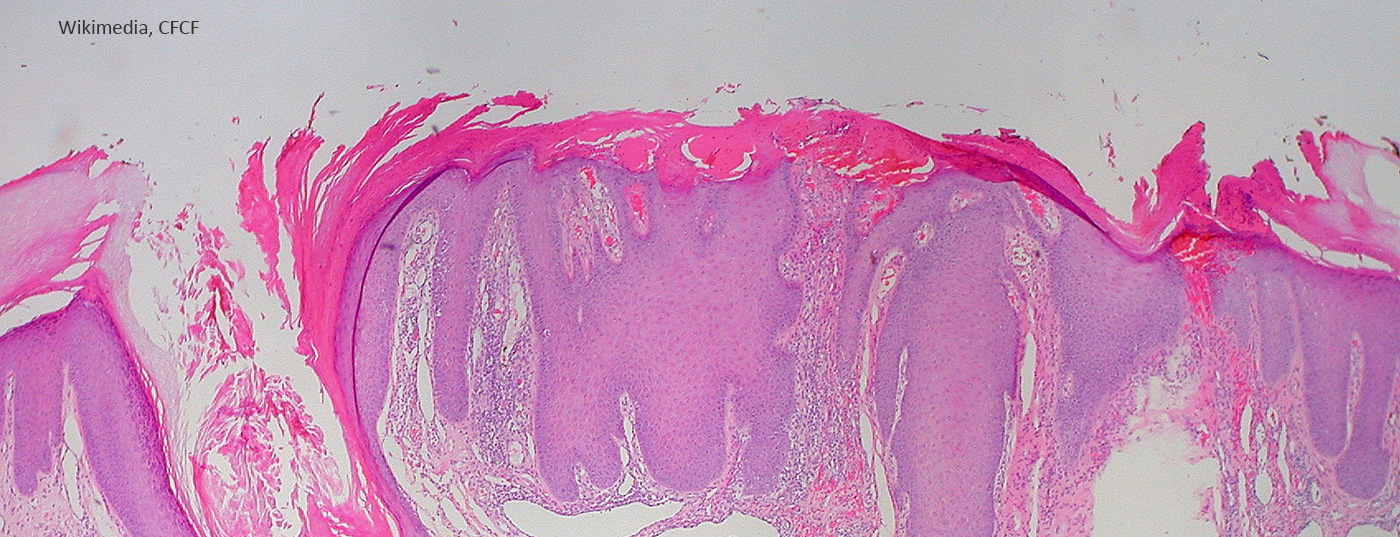
Prurigo nodularis is defined as the presence of numerous, symmetrically distributed, hyperkeratotic or erosive nodules, especially in regions readily accessible for scratching. The predominant symptom is severe itching [1]. Persistent pruritus, sometimes accompanied by secondary scratch lesions, is referred to as chronic nodular prurigo. It is still unclear whether scratching per se is responsible for the development and maintenance of chronicity by inducing the itch-scratch cycle, or whether other mechanisms are also involved [2].


Analysis of epigenetic mechanisms

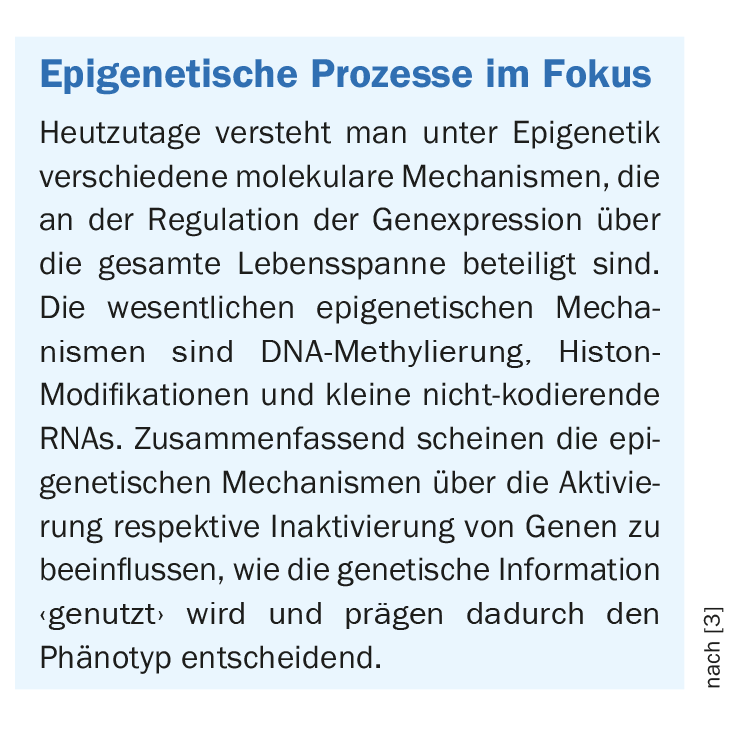
To find out more, a research team from Münster University Hospital analyzed the DNA methylation patterns of five patients with chronic nodular prurigo (CNPG) and compared them with a skin-healthy control group [2]. DNA methylation profiles can be used to identify differences between the DNA of diseased and healthy tissue. DNA methylation is a relatively stable modification of the epigenome.

One aim of the present study was to find biomarkers based on DNA methylation that would allow conclusions to be drawn about the mechanisms underlying the chronicity of pruritus. For this purpose, biopsies of pruriginous lesional (PL) and non-pruriginous non-lesional (NPNL) skin from patients and healthy controls were analyzed using Illumina Infinium Methylation EPIC arrays (Diagonede, Belgium). To identify similar subgroups in the dataset based on differential DNA methylation, distance clustering analysis was then performed, followed by principal component analysis (PCA).


Differences in DNA methylation could be detected

The results show that both distance clustering and PCA were able to differentiate pruriginous-lesional (PL) from non-pruriginous-non-lesional (NPNL) biopsies and from skin-healthy controls (HC) [2]. The researchers found a significant number of differentially methylated positions (DMPs) between PL and NPNL (n=28879) and between PL and HC (n=24994). This highlights the DNA methylation differences that the researchers suspect. In contrast, no differentially methylated positions (DMPs) or regions (DMRs) could be detected when comparing NPNL and HC ( Table 1) .
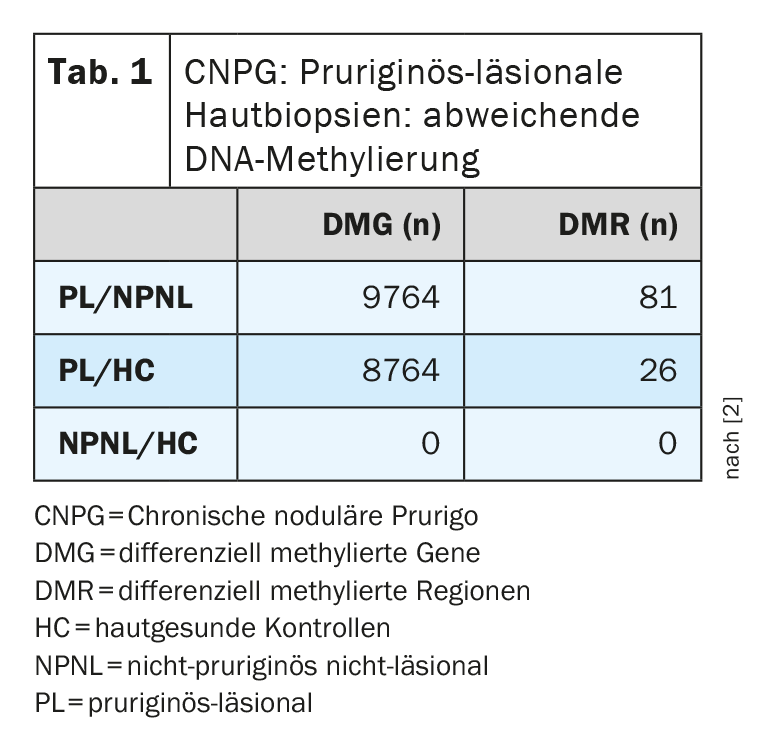


In summary, the present study identified characteristic clusters of DNA methylation depending on lesion status in CNPG. Further analyses regarding correlations with gene expression profiles are currently underway and may contribute to a deeper understanding of the mechanisms leading to chronicity of pruritus.

Congress: Working Group of Dermatological Research


Literature:

  1. Mettang T, Vonend A, Raap U: Prurigo nodularis in dermatoses and systemic diseases. Dermatologist 2014; 65(8): 697-703.
  2. Agelopoulos K, et al: Pruritic lesional skin in chronic nodular prurigo exhibits specific DNA methylation signatures, P188, ADF Annual Meeting, 23-26 Feb 2022.
  3. Manjrekar J. Epigenetic inheritance, prions and evolution. J Genet 2017; 96(3): 445-456.
  4. “Successful research on chronic pruritus continues: DFG research group enters second funding phase”, Münster University Hospital, 30.09.2021
  5. Wieser JK, Mercurio MG, Somers K: Resolution of Treatment-Refractory Prurigo Nodularis With Dupilumab: A Case Series Cureus 2020; 12(6): e8737.


DERMATOLOGIE PRAXIS 2022; 32(2): 24 (published 4/20/22, ahead of print).
Autoren
  • Mirjam Peter, M.Sc.
Publikation
  • DERMATOLOGIE PRAXIS
Related Topics
  • prurigo
Previous Article
  • Blood-based analytics: clinical application

“Liquid biopsy” in malignant melanoma

  • Dermatology and venereology
  • Education
  • Genetics
  • Hematology
  • Oncology
  • RX
  • Studies
View Post
Next Article
  • Modern lipid management

Treating dyslipidemia in diabetes in a target-oriented manner

  • Congress Reports
  • Endocrinology and Diabetology
  • General Internal Medicine
  • Hematology
  • Partner Content
  • RX
  • Studies
View Post
You May Also Like
View Post
  • 6 min
  • Prurigo nodularis: evidence-based treatment

Targeted therapy options on the rise

    • Allergology and clinical immunology
    • Dermatology and venereology
    • Education
    • Pharmacology and toxicology
    • RX
    • Studies
View Post
  • 13 min
  • MACE risk, heart failure incidence and all-cause mortality

Metabolic syndrome as a cardiovascular risk factor

    • Cardiology
    • Education
    • Endocrinology and Diabetology
    • General Internal Medicine
    • RX
    • Studies
View Post
  • 9 min
  • Glaucoma in old age: slowing down progression

IOP lowering is currently the only evidence-based treatment

    • Education
    • General Internal Medicine
    • Ophthalmology
    • Prevention and health care
    • RX
    • Studies
View Post
  • 7 min
  • Vector-borne infections with skin manifestations

Arboviruses and leishmaniasis in Europe

    • Congress Reports
    • Infectiology
    • Prevention and health care
    • RX
    • Studies
    • Tropical and travel medicine
View Post
  • 6 min
  • Multimorbidity and functional capacity in old age

Clarify individual health status and reduce risks

    • Congress Reports
    • General Internal Medicine
    • Geriatrics
    • Neurology
    • Orthopedics
    • Physical medicine and rehabilitation
    • Prevention and health care
    • Rheumatology
    • RX
View Post
  • 6 min
  • Tick season: danger from early summer meningoencephalitis

TBE vaccination recommended for adults and children aged 3 and over

    • Education
    • Infectiology
    • Neurology
    • Prevention and health care
    • RX
    • Studies
View Post
  • 13 min
  • New WHO guideline, updated stimulation protocols, focus on PGT-A

Fertility and reproductive medicine 2026

    • Education
    • Gynecology
    • RX
    • Studies
View Post
  • 12 min
  • Wound treatment

Surgical wound complications

    • CME continuing education
    • Dermatology and venereology
    • Endocrinology and Diabetology
    • Geriatrics
    • Physical medicine and rehabilitation
    • RX
    • Surgery
  • IBD matters

    Zum Thema
Top CME content
  • 1
    Do special amino acids lead to success?
  • 2
    Current status of PAT
  • 3
    Surgical wound complications
  • 4
    Do special amino acids lead to success?
  • 5
    Functional limb preservation between infection control, vascular medicine and resurfacing

Newsletter

Sign up and stay up to date

Subscribe
Medizinonline Medizinonline
  • Contact
  • General terms and conditions
  • Imprint

Input your search keywords and press Enter.