Medizinonline Medizinonline
  • News
    • News
    • Market & Medicine
  • Patients
    • Disease patterns
    • Diagnostics
    • Therapy
  • Partner Content
    • Diabetes
      • Dia-Month Club – Type 2 Diabetes
      • Diabetes in Motion
      • Diabetes Podcasts
    • Gastroenterology
      • IBD matters
    • Oncology
      • Swiss Oncology in motion
    • Orthopedics
      • Osteoporosis in motion
  • Departments
    • Allergology and clinical immunology
    • General Internal Medicine
    • Anesthesiology
    • Angiology
    • Surgery
    • Dermatology and venereology
    • Endocrinology and Diabetology
    • Nutrition
    • Gastroenterology and Hepatology
    • Genetics
    • Geriatrics
    • Gynecology
    • Hematology
    • Infectiology
    • Cardiology
    • Nephrology
    • Neurology
    • Emergency and intensive care medicine
    • Nuclear Medicine
    • Oncology
    • Ophthalmology
    • ORL
    • Orthopedics
    • Pediatrics
    • Pharmacology and toxicology
    • Pharmaceutical medicine
    • Phlebology
    • Physical medicine and rehabilitation
    • Pneumology
    • Prevention and health care
    • Psychiatry and psychotherapy
    • Radiology
    • Forensic Medicine
    • Rheumatology
    • Sports Medicine
    • Traumatology and trauma surgery
    • Tropical and travel medicine
    • Urology
    • Dentistry
  • CME & Congresses
    • CME continuing education
    • Congress Reports
    • Congress calendar
  • Practice
    • Noctimed
    • Practice Management
    • Jobs
    • Interviews
  • Log In
  • Register
  • My account
  • Contact
  • Publications
  • Contact
  • Deutsch
  • English
  • Français
  • Italiano
  • Português
  • Español
Subscribe
Medizinonline Medizinonline
  • News
    • News
    • Market & Medicine
  • Patienten
    • Krankheitsbilder
    • Diagnostik
    • Therapie
  • Partner Content
    • Diabetes
      • Dia-Month Club – Type 2 Diabetes
      • Diabetes in Motion
      • Diabetes Podcasts
    • Gastroenterology
      • IBD matters
    • Oncology
      • Swiss Oncology in motion
    • Orthopedics
      • Osteoporosis in motion
    • Phytotherapie
    • Rheumatology
  • Departments
    • Fachbereiche 1-13
      • Allergology and clinical immunology
      • General Internal Medicine
      • Anesthesiology
      • Angiology
      • Surgery
      • Dermatology and venereology
      • Endocrinology and Diabetology
      • Nutrition
      • Gastroenterology and Hepatology
      • Genetics
      • Geriatrics
      • Gynecology
      • Hematology
    • Fachbereiche 14-26
      • Infectiology
      • Cardiology
      • Nephrology
      • Neurology
      • Emergency and intensive care medicine
      • Nuclear Medicine
      • Oncology
      • Ophthalmology
      • ORL
      • Orthopedics
      • Pediatrics
      • Pharmacology and toxicology
      • Pharmaceutical medicine
    • Fachbereiche 26-38
      • Phlebology
      • Physical medicine and rehabilitation
      • Phytotherapy
      • Pneumology
      • Prevention and health care
      • Psychiatry and psychotherapy
      • Radiology
      • Forensic Medicine
      • Rheumatology
      • Sports Medicine
      • Traumatology and trauma surgery
      • Tropical and travel medicine
      • Urology
      • Dentistry
  • CME & Congresses
    • CME continuing education
    • Congress Reports
    • Congress calendar
  • Practice
    • Noctimed
    • Practice Management
    • Jobs
    • Interviews
Login

Sie haben noch keinen Account? Registrieren

  • Telemedicine for SLIT

Useful addition – but not a replacement

    • Allergology and clinical immunology
    • Education
    • General Internal Medicine
    • News
    • Practice Management
    • Prevention and health care
    • RX
  • 2 minute read

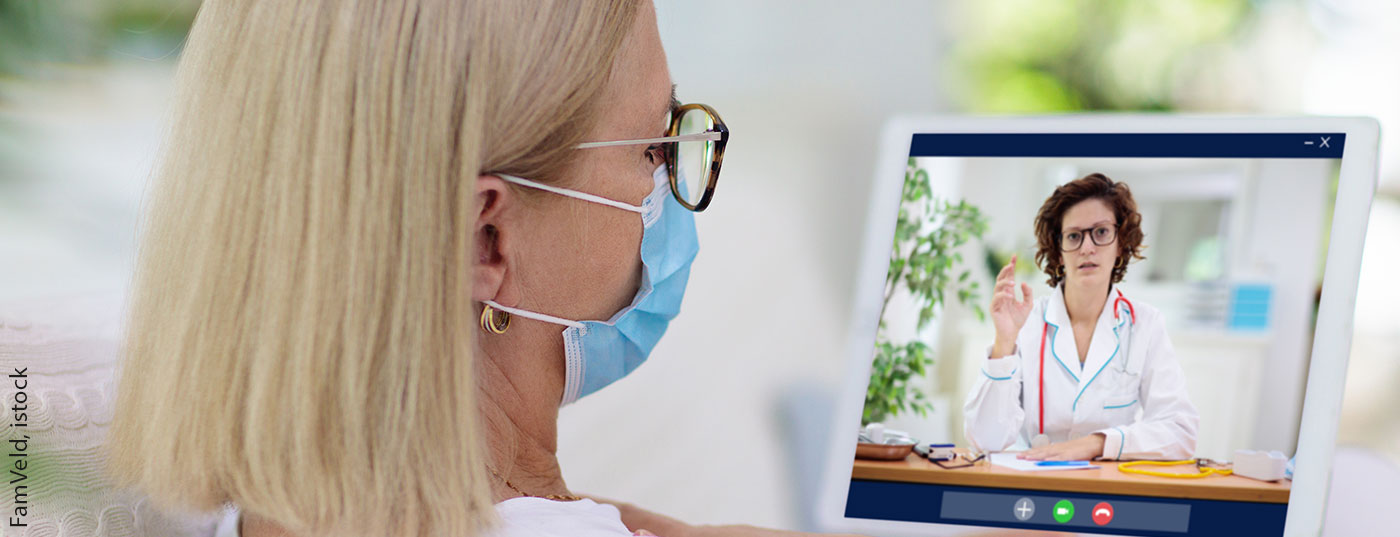
In the current COVID-19 pandemic, a variety of measures have been taken to minimize the number of direct physician-patient contacts. However, this becomes difficult when using allergen immunotherapy (AIT), the regularity of which leads to many outpatient visits. The highest level of protection for both patients and healthcare workers is required here.

One approach here is offered by digital health solutions, in particular the use of telemedicine (TM), which has been proposed in the past as a useful tool to provide medical services at a distance when physical presence is not possible. However, there has often been a lack of acceptance, including on the part of physicians. Originally developed with the goal of expanding access to health services, particularly in rural areas, these technologies have now gained significant momentum in Corona times.

Many positive aspects

In a real-life study, patients with grass pollen-induced allergic rhinitis were offered telemedicine for the up-dosing phase [1]. Adults with grass pollen-induced allergic rhinitis (n=73) were administered an investigational drug in 6 allergology practices in the Rhine-Main area and the Allergy Center Wiesbaden. The study duration was approximately 8 weeks per patient, and there was a daily offer of telemedicine consultation by appointment. This involved recording patient assessment for both telemedicine aspects and aspects of SLIT treatment and providing an overall assessment.

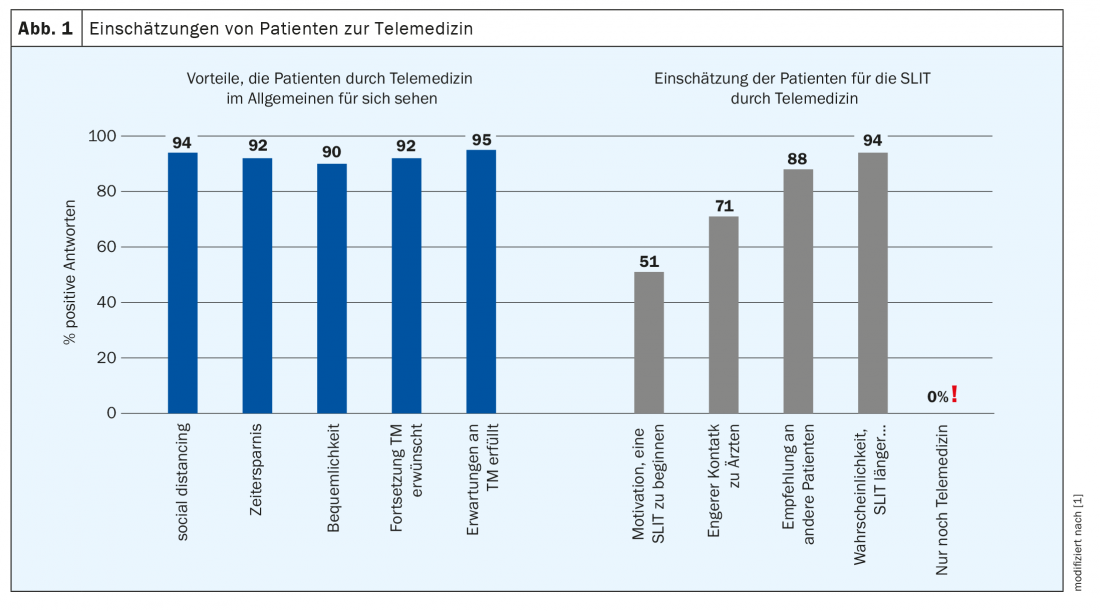
The telemedicine offer was perceived as very positive by the patients, state the authors from the Center for Rhinology and Allergology in Wiesbaden, the ENT University Hospital in Mainz, and two ENT group practices in Taunusstein and Mainz-Kastel. The most frequently mentioned positive aspects included the advantage of social distancing, i.e. avoiding direct contact, the time saved due to eliminated travel and waiting times, and the convenience (Fig. 1). Patients’ expectations of TM were mostly met and most were interested in continuing the service.


Closer contact than in face-to-face consultations

Motivation to start SLIT at all was considered higher with TM offered by half of the patients. Interestingly, the authors noted, nearly 75% reported “closer contact with attending physicians” than in the face-to-face consultation. For the most part, subjects would make a positive recommendation for other patients. The probability of continuing SLIT with TM longer was positively quantified by 94%. However, not a single patient wished for the elimination of the allergology office hours and only telemedicine.


  • German Allergy Congress 2020, Wiesbaden (D)


Source:

  1. Alali A, Kondic V, Thieme C, et al: Telemedicine is useful for up-dosing SLIT with a 5-grass tablet under COVID-19 pandemic conditions. German Allergy Congress 2020, P7.12


InFo PNEUMOLOGY & ALLERGOLOGY 2020; 2(4): 36.
Publikation
  • InFo PNEUMOLOGIE & ALLERGOLOGIE
Related Topics
  • Allergen immunotherapy
  • covid-19
  • Doctor-patient contact
  • practice management
  • SLIT
  • Telemedicine
Previous Article
  • From symptom to diagnosis

Vertebral changes: Forestier’s disease

  • Cases
  • Education
  • General Internal Medicine
  • Orthopedics
  • Radiology
  • RX
View Post
Next Article
  • Researchers discover new connection

How a signaling molecule influences the clinical course of ovarian cancer

  • Gynecology
  • RX
View Post
You May Also Like
View Post
  • 8 min
  • Psychooncology

Communication as the key to therapy adherence

    • CME continuing education
    • Practice Management
    • RX
View Post
  • 12 min
  • The Brain and the Motivation to Eat

Why is it so hard to lose weight?

    • RX
    • CME continuing education
    • Endocrinology and Diabetology
    • General Internal Medicine
    • Nutrition
    • Pharmacology and toxicology
    • Prevention and health care
    • Psychiatry and psychotherapy
    • Studies
View Post
  • 5 min
  • Omaveloxolone for Friedreich's Ataxia

Efficacy and Safety Studied Over 6 Years

    • Neurology
    • Congress Reports
    • Endocrinology and Diabetology
    • RX
    • Studies
View Post
  • 6 min
  • Psoriasis: therapy with biologics and TYK-2-i

Progress assessments based on current long-term and real-world data

    • RX
    • Congress Reports
    • Dermatology and venereology
    • Pharmacology and toxicology
    • Rheumatology
    • Studies
View Post
  • 4 min
  • Hypertension: the most important facts for daily practice

Early dual antihypertensive therapy is usually indicated

    • RX
    • Cardiology
    • Congress Reports
    • General Internal Medicine
View Post
  • 4 min
  • Escitalopram for anxiety disorders

Positive effect, but no immediate improvement in symptoms

    • RX
    • Education
    • Neurology
    • Pharmacology and toxicology
    • Psychiatry and psychotherapy
    • Studies
View Post
  • 4 min
  • Helicobacter pylori infection

Simplified dual therapy beats quadruple regimen

    • RX
    • Education
    • Gastroenterology and Hepatology
    • General Internal Medicine
    • Infectiology
    • Studies
View Post
  • 3 min
  • Gastric carcinoma

Ways of precision oncology

    • RX
    • Congress Reports
    • Gastroenterology and Hepatology
    • Oncology
    • Studies
  • IBD matters

    Zum Thema
Top CME content
  • 1
    Why is it so hard to lose weight?
  • 2
    Communication as the key to therapy adherence
  • 3
    Communication as the key to therapy adherence
  • 4
    Solutions to the malnutrition dilemma
  • 5
    Solutions to the malnutrition dilemma

Newsletter

Sign up and stay up to date

Subscribe
Medizinonline Medizinonline
  • Contact
  • General terms and conditions
  • Imprint

Input your search keywords and press Enter.