Medizinonline Medizinonline
  • News
    • News
    • Market & Medicine
  • Patients
    • Disease patterns
    • Diagnostics
    • Therapy
  • Partner Content
    • Dermatology
      • Atopic dermatitis and psoriasis news
    • Diabetes
      • Dia-Month Club – Type 2 Diabetes
      • Diabetes in Motion
      • Diabetes Podcasts
    • Gastroenterology
      • IBD matters
    • Oncology
      • Swiss Oncology in motion
    • Orthopedics
      • Osteoporosis in motion
  • Departments
    • Allergology and clinical immunology
    • General Internal Medicine
    • Anesthesiology
    • Angiology
    • Surgery
    • Dermatology and venereology
    • Endocrinology and Diabetology
    • Nutrition
    • Gastroenterology and Hepatology
    • Genetics
    • Geriatrics
    • Gynecology
    • Hematology
    • Infectiology
    • Cardiology
    • Nephrology
    • Neurology
    • Emergency and intensive care medicine
    • Nuclear Medicine
    • Oncology
    • Ophthalmology
    • ORL
    • Orthopedics
    • Pediatrics
    • Pharmacology and toxicology
    • Pharmaceutical medicine
    • Phlebology
    • Physical medicine and rehabilitation
    • Pneumology
    • Prevention and health care
    • Psychiatry and psychotherapy
    • Radiology
    • Forensic Medicine
    • Rheumatology
    • Sports Medicine
    • Traumatology and trauma surgery
    • Tropical and travel medicine
    • Urology
    • Dentistry
  • CME & Congresses
    • CME continuing education
    • Congress Reports
    • Congress calendar
  • Practice
    • Noctimed
    • Practice Management
    • Jobs
    • Interviews
  • Log In
  • Register
  • My account
  • Contact
  • Publications
  • Contact
  • Deutsch
  • English
  • Français
  • Italiano
  • Português
  • Español
Subscribe
Medizinonline Medizinonline
  • News
    • News
    • Market & Medicine
  • Patienten
    • Krankheitsbilder
    • Diagnostik
    • Therapie
  • Partner Content
    • Dermatology
      • Atopic dermatitis and psoriasis news
    • Diabetes
      • Dia-Month Club – Type 2 Diabetes
      • Diabetes in Motion
      • Diabetes Podcasts
    • Gastroenterology
      • IBD matters
    • Oncology
      • Swiss Oncology in motion
    • Orthopedics
      • Osteoporosis in motion
    • Phytotherapie
    • Rheumatology
  • Departments
    • Fachbereiche 1-13
      • Allergology and clinical immunology
      • General Internal Medicine
      • Anesthesiology
      • Angiology
      • Surgery
      • Dermatology and venereology
      • Endocrinology and Diabetology
      • Nutrition
      • Gastroenterology and Hepatology
      • Genetics
      • Geriatrics
      • Gynecology
      • Hematology
    • Fachbereiche 14-26
      • Infectiology
      • Cardiology
      • Nephrology
      • Neurology
      • Emergency and intensive care medicine
      • Nuclear Medicine
      • Oncology
      • Ophthalmology
      • ORL
      • Orthopedics
      • Pediatrics
      • Pharmacology and toxicology
      • Pharmaceutical medicine
    • Fachbereiche 26-38
      • Phlebology
      • Physical medicine and rehabilitation
      • Phytotherapy
      • Pneumology
      • Prevention and health care
      • Psychiatry and psychotherapy
      • Radiology
      • Forensic Medicine
      • Rheumatology
      • Sports Medicine
      • Traumatology and trauma surgery
      • Tropical and travel medicine
      • Urology
      • Dentistry
  • CME & Congresses
    • CME continuing education
    • Congress Reports
    • Congress calendar
  • Practice
    • Noctimed
    • Practice Management
    • Jobs
    • Interviews
Login

Sie haben noch keinen Account? Registrieren

  • The somewhat different knowledge

Who was actually… Moriz Kaposi?

    • Dermatology and venereology
    • Education
    • Infectiology
    • Oncology
    • RX
  • 4 minute read

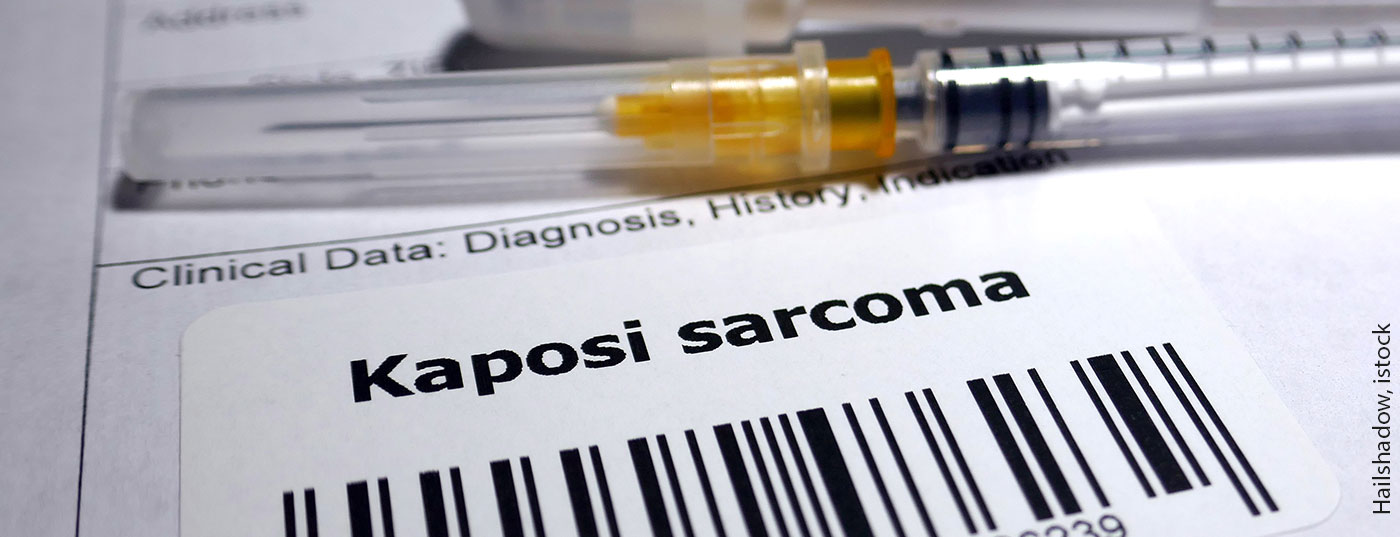
When Moriz Kaposi first described Kaposi’s sarcoma in 1872, he probably had no idea that this entity would become much more famous in the context of HIV/AIDS. He was much more concerned with another venereal disease: syphilis. However, it was not only his work on syphilis that had a lasting impact on medical history, but also many other works. Who was this man who changed his name and married his mentor’s daughter?

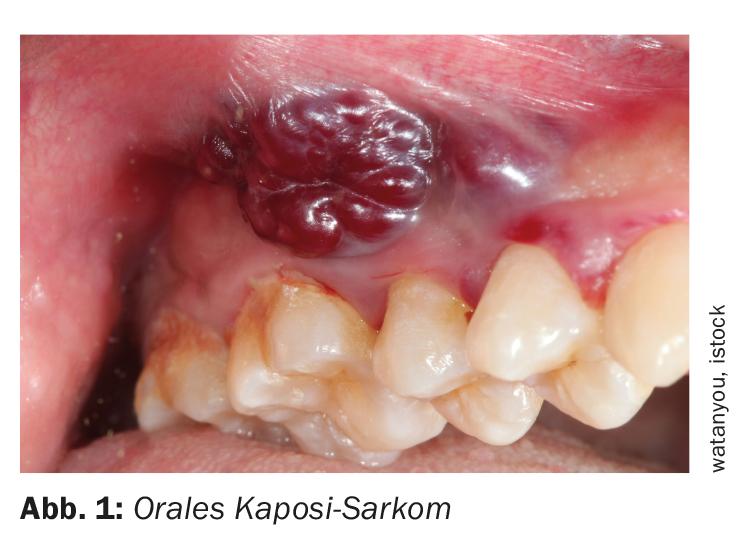
Today, the name of a vascular neoplasm, Kaposi’s sarcoma, in particular, still recalls Moriz Kaposi. Also known as sarcoma idiopathicum multiplex haemorrhagicum, the condition is caused by infection with human herpes virus type 8 and manifests as numerous flat patchy or nodular skin lesions. In addition to the classic Kaposi’s sarcoma  (Fig. 1) – to which the first description published in 1872 probably referred – endemic and immunodeficiency-related forms also exist. Among other things, HIV/AIDS is often the triggering factor these days. However, Moriz Kaposi, who was born in Hungary in 1837 into a poor Jewish family, did not observe the disease in Africa, nor in AIDS patients, but mainly in older men of Italian, Eastern European or Jewish descent [1]. And in addition to the vascular neoplasia that bears his name, he made many other discoveries that have contributed significantly to the advancement of medicine.


American Dream (in Vienna)

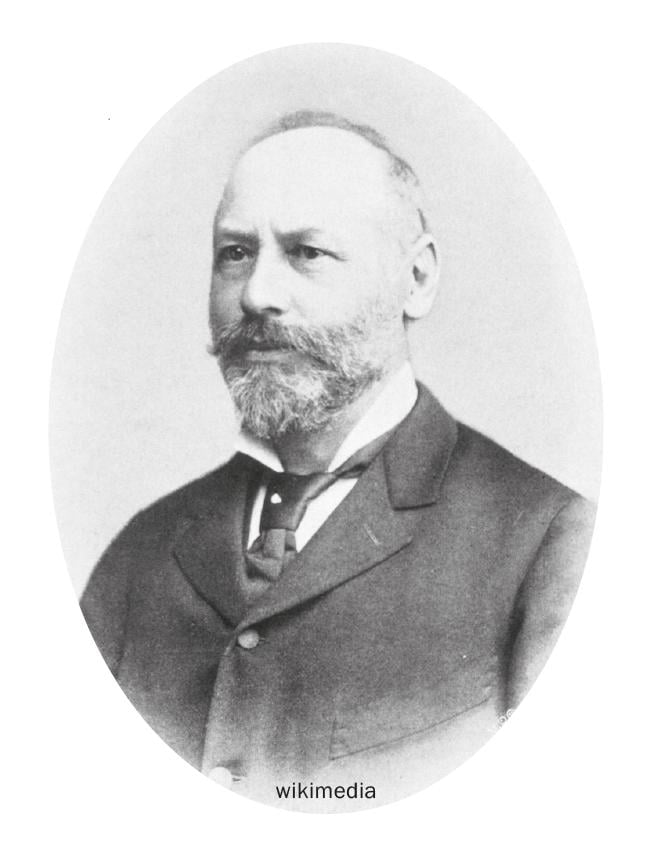
Kaposi, who grew up in poor circumstances in Hungary, studied at the Medical University of Vienna – at that time still under the name Kohn. After successfully completing his studies in 1861, at the age of 24 he became an assistant to Professor Hebra, a dermatologist who was already celebrated during his lifetime. This step was to set the course for his later life. Thus, Kaposi not only replaced his mentor as head and professor of dermatology at the University Hospital of Vienna, but also married his daughter Martha [2]. Kaposi had five children with her.

Throughout his career, Kaposi devoted himself to various skin diseases and authored over 150 writings, including numerous textbooks. The beginning was made by his habilitation “Die Syphilis der Schleimhaut der Mund-, Rachen-, Nasal- und Kehlkopfhöhle” ( Syphilis of the mucous membrane of the oral, pharyngeal, nasal and laryngeal cavity ) and the “Lehrbuch der Hautkrankheiten” (Textbook of skin diseases ), which he compiled together with his father-in-law. This was followed in 1880 by his most famous work, comprising 810 pages: The “Pathology and Therapy of Skin Diseases in Lectures for Practical Physicians and Students” . This work became one of the seminal books in dermatology. Over the years it has been translated into several languages, including Russian. Clinical assessment, accurate description and systematic classification of diseases were always at the center of Kaposi’s activities. Or, as he called it, “The mastery of clinical material.” In addition to Kaposi’s sarcoma, his initial descriptions include xeroderma pigmentosum, syringoma, and eczema herpeticatum. Butterfly erythema in lupus erythemotodes also owes its name to Moriz Kaposi [3].

Even if Kaposi was progressive in many respects, he was conservative in etiologic viewpoints. For a long time, for example, he did not attach any importance to bacteriology and was not convinced of the tuberculous cause of lupus vulgaris until late in his career. He adhered to the unity doctrine of syphilis – i.e., the perception of ulcus molle and syphilis as one and the same disease – even after the discovery of the bacterium Haemophilus ducreyi, the trigger of soft chancre. The identification of human herpesvirus 8 as the causative agent of Kaposi’s sarcoma would probably have surprised him greatly.


From Kohn to Kaposi

Before his marriage to Hebra’s daughter Martha, Kaposi converted to the Catholic faith and changed his name – but not to “Hebra”. In reference to his birthplace, the Hungarian town of Kaposvár, he decided on the new surname “Kaposi”. The real reason for this name change will probably remain a mystery forever. Theories include anti-Semitic thought during his lifetime. Considering his already established career at the time, however, this reason is rather unlikely. According to his own statements, the dermatologist changed his last name to avoid confusion with other doctors at the Medical University of Vienna, where there were five other “Kohns” at the same time as Kaposi. Or maybe his future wife just didn’t like the name. In any case, “Kohn sarcoma” would be a somewhat less attractive name for our Kaposi’s sarcoma because of the impure rhyme.

Born Kohn, the physician died in 1902 after a stellar career at the age of 65 in Vienna, where he is still buried today. In addition to the family grave, the Kaposigasse in Vienna also commemorates the co-founder of the German Dermatological Society. A fact that – according to contemporary witnesses – would probably have pleased him [4].

Source: Pesapane F, et al: Mór Cohen, better known as Moriz Kaposi. JAMA Dermatol. 2014; 150(3): 265.


Literature:

  1. Wells GL: Kaposi’s sarcoma. MSD Manual Issue for Patients; May 2019. www.msdmanuals.com/de/heim/hauterkrankungen/hautkrebs/kaposi-sarkom (last accessed 03.03.2021)
  2. Sailer KL: Kaposi, Moriz – German Biography. Bavarian State Library; 1977. www.deutsche-biographie.de/sfz39784.html (last accessed 03.03.2021)
  3. Moriz Kaposi (1837-1902). Nature. 1937; 140(3547): 717-718.
  4. Holubar K, Fatovic-Ferencic S: Moriz Kaposi 1837-1902: a historical reappraisal. www.oegdv.at/web2/images/pdfs/histkaposi.pdf.


InFo ONCOLOGY & HEMATOLOGY 2021; (9): 40.
Autoren
  • Med. pract. Amelie Stüger
Publikation
  • InFo ONKOLOGIE & HÄMATOLOGIE
Related Topics
  • AIDS
  • History of Medicine
  • Kaposi
  • kaposi sarcoma
  • Moriz Kaposi
  • Syphillis
Previous Article
  • Psoriatic Arthritis

New long-term data on guselkumab published

  • Dermatology and venereology
  • Education
  • Rheumatology
  • RX
  • Studies
View Post
Next Article
  • Cough

Common reason for a visit to the doctor

  • Congress Reports
  • General Internal Medicine
  • Infectiology
  • RX
View Post
You May Also Like
View Post
  • 5 min
  • Evidence-based diagnostics and treatment in the medical setting

Anxiety and depression disorders in adolescence

    • Education
    • Pediatrics
    • Pharmacology and toxicology
    • Psychiatry and psychotherapy
    • RX
    • Studies
View Post
  • 25 min
  • Neuroenhancement

Can you swallow intelligence? Relevant substance classes times for healthy people

    • CME continuing education
    • Neurology
    • Pharmacology and toxicology
    • Psychiatry and psychotherapy
    • RX
    • Studies
View Post
  • 9 min
  • Microbiome, inflammaging and affective/cognitive health

Gut-brain axis in old age

    • Education
    • Gastroenterology and Hepatology
    • General Internal Medicine
    • Geriatrics
    • Neurology
    • Nutrition
    • Prevention and health care
    • RX
    • Studies
View Post
  • 6 min
  • Vitiligo - the level of suffering should not be underestimated

A lot can be achieved therapeutically nowadays

    • Congress Reports
    • Dermatology and venereology
    • RX
    • Studies
View Post
  • 14 min
  • Adrenogenital syndrome

Clinical care from birth to adulthood

    • CME continuing education
    • Endocrinology and Diabetology
    • Nephrology
    • Pediatrics
    • RX
    • Studies
View Post
  • 12 min
  • Patient-centered rounds in medicine

Aligning care with the patient

    • CME continuing education
    • Education
    • General Internal Medicine
    • Prevention and health care
    • RX
    • Studies
View Post
  • 4 min
  • Communication between hospitals and outpatient care

How does a digital clinical information system prove itself in everyday practice?

    • Education
    • General Internal Medicine
    • Practice Management
    • Prevention and health care
    • RX
View Post
  • 5 min
  • Chronic and hard-to-heal wounds

Benefit from the advantages of outpatient negative pressure wound therapy

    • Congress Reports
    • Dermatology and venereology
    • Endocrinology and Diabetology
    • General Internal Medicine
    • Geriatrics
    • Physical medicine and rehabilitation
    • RX
    • Studies
  • IBD matters

    Zum Thema
Top CME content
  • 1
    Can you swallow intelligence? Relevant substance classes times for healthy people
  • 2
    Clinical care from birth to adulthood
  • 3
    Aligning care with the patient
  • 4
    Control instead of a flood of data: AI makes big data and wearables usable
  • 5
    Causes and prevention at work

Newsletter

Sign up and stay up to date

Subscribe
Medizinonline Medizinonline
  • Contact
  • General terms and conditions
  • Imprint

Input your search keywords and press Enter.