Medizinonline Medizinonline
  • News
    • News
    • Market & Medicine
  • Patients
    • Disease patterns
    • Diagnostics
    • Therapy
  • Partner Content
    • Dermatology
      • Atopic dermatitis and psoriasis news
    • Diabetes
      • Dia-Month Club – Type 2 Diabetes
      • Diabetes in Motion
      • Diabetes Podcasts
    • Gastroenterology
      • IBD matters
    • Oncology
      • Swiss Oncology in motion
    • Orthopedics
      • Osteoporosis in motion
  • Departments
    • Allergology and clinical immunology
    • General Internal Medicine
    • Anesthesiology
    • Angiology
    • Surgery
    • Dermatology and venereology
    • Endocrinology and Diabetology
    • Nutrition
    • Gastroenterology and Hepatology
    • Genetics
    • Geriatrics
    • Gynecology
    • Hematology
    • Infectiology
    • Cardiology
    • Nephrology
    • Neurology
    • Emergency and intensive care medicine
    • Nuclear Medicine
    • Oncology
    • Ophthalmology
    • ORL
    • Orthopedics
    • Pediatrics
    • Pharmacology and toxicology
    • Pharmaceutical medicine
    • Phlebology
    • Physical medicine and rehabilitation
    • Pneumology
    • Prevention and health care
    • Psychiatry and psychotherapy
    • Radiology
    • Forensic Medicine
    • Rheumatology
    • Sports Medicine
    • Traumatology and trauma surgery
    • Tropical and travel medicine
    • Urology
    • Dentistry
  • CME & Congresses
    • CME continuing education
    • Congress Reports
    • Congress calendar
  • Practice
    • Noctimed
    • Practice Management
    • Jobs
    • Interviews
  • Log In
  • Register
  • My account
  • Contact
  • Publications
  • Contact
  • Deutsch
  • English
  • Français
  • Italiano
  • Português
  • Español
Subscribe
Medizinonline Medizinonline
  • News
    • News
    • Market & Medicine
  • Patienten
    • Krankheitsbilder
    • Diagnostik
    • Therapie
  • Partner Content
    • Dermatology
      • Atopic dermatitis and psoriasis news
    • Diabetes
      • Dia-Month Club – Type 2 Diabetes
      • Diabetes in Motion
      • Diabetes Podcasts
    • Gastroenterology
      • IBD matters
    • Oncology
      • Swiss Oncology in motion
    • Orthopedics
      • Osteoporosis in motion
    • Phytotherapie
    • Rheumatology
  • Departments
    • Fachbereiche 1-13
      • Allergology and clinical immunology
      • General Internal Medicine
      • Anesthesiology
      • Angiology
      • Surgery
      • Dermatology and venereology
      • Endocrinology and Diabetology
      • Nutrition
      • Gastroenterology and Hepatology
      • Genetics
      • Geriatrics
      • Gynecology
      • Hematology
    • Fachbereiche 14-26
      • Infectiology
      • Cardiology
      • Nephrology
      • Neurology
      • Emergency and intensive care medicine
      • Nuclear Medicine
      • Oncology
      • Ophthalmology
      • ORL
      • Orthopedics
      • Pediatrics
      • Pharmacology and toxicology
      • Pharmaceutical medicine
    • Fachbereiche 26-38
      • Phlebology
      • Physical medicine and rehabilitation
      • Phytotherapy
      • Pneumology
      • Prevention and health care
      • Psychiatry and psychotherapy
      • Radiology
      • Forensic Medicine
      • Rheumatology
      • Sports Medicine
      • Traumatology and trauma surgery
      • Tropical and travel medicine
      • Urology
      • Dentistry
  • CME & Congresses
    • CME continuing education
    • Congress Reports
    • Congress calendar
  • Practice
    • Noctimed
    • Practice Management
    • Jobs
    • Interviews
Login

Sie haben noch keinen Account? Registrieren

  • Glucagon-like peptide 1 (GLP1) analogues

The future of diabetes management has begun

    • Cardiology
    • Education
    • Endocrinology and Diabetology
    • General Internal Medicine
    • Partner Content
    • RX
  • 2 minute read

Diabetes does not hurt – one would almost like to add “unfortunately”. This is because the number of unreported cases of affected patients is still high. Possible late effects of the disease, especially if it is not treated or treated late, can be serious. In the process, the therapy has been steadily improved in recent years. Glucagon-like peptide 1 (GLP1) analogs have also provided a new treatment option that works quickly and effectively.

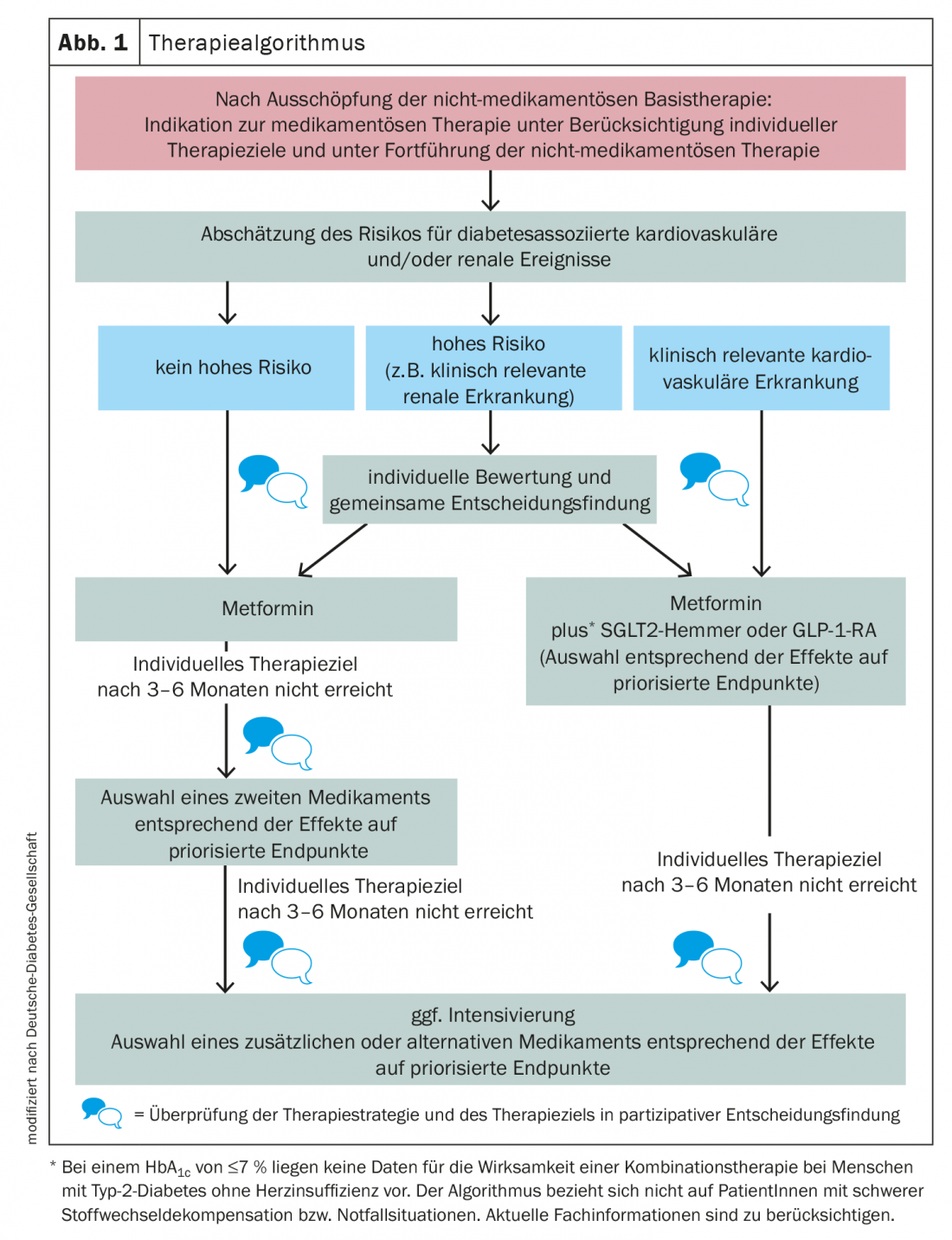
Diabetes mellitus is a serious disease that is a high risk factor for comorbid diseases, especially cardiovascular disease. It is estimated that around 500,000 people in Switzerland are affected. However, about half of those affected are still unaware of their disease. On average, it takes seven years for the diagnosis to be made. Valuable time that could already be used effectively for treatment. The sooner blood glucose levels can be adjusted through sufficient exercise, a balanced diet and adequate drug therapy, the sooner acute symptoms and late effects can be avoided. Current guidelines recommend lifestyle modification and the use of metformin as first-line treatment for type 2 diabetes mellitus (Fig. 1) . The HbA1c value is still considered the glycemic standard for long-term therapy management. However, there has now been a shift from a rigid target value to a target corridor. This is between 6.5 and 7.5% (48-58 mmol/mol Hb), but should be determined on an individual basis. Therapy goals depend on patient preference, comorbidity, age and life expectancy, quality of life, cultural conditions, psychosocial circumstances and opportunities, and abilities of the affected person.


Supplementary GLP1 administration

Already in addition to first-line therapy, a GLP1 analogue can be added if the risk of a diabetes-related cardiovascular and/or renal event is high or if clinically relevant cardiovascular disease is already present. GLP1 analogues are preparations that mimic the action of the natural incretin hormone. Incretins are formed in the intestine and regulate blood glucose by stimulating insulin secretion in the pancreas. GLP1 receptor agonists promote insulin secretion from pancreatic beta cells in a glucose-dependent manner, decrease glucagon secretion from alpha cells resulting in decreased glucose release by the liver, increase insulin sensitivity, and slow gastric emptying, thereby reducing the rate at which glucose enters the bloodstream. Another advantage: there is no risk of hypoglycemia.

In addition, GLP1 administration has been shown to lead to weight reduction and, with regard to cardiovascular events, a reduction in morbidity and mortality rates has been observed.

Usually, GLP1 analogues are administered subcutaneously – often once a week is sufficient. In Switzerland, for example, exenatide, liraglutide, lixisenatide and dulaglutide are currently approved. Semaglutide is the first GLP1 analog to be newly available as a tablet for oral administration in addition to subcutaneous administration.


Further reading:

  • www.diabetesschweiz.ch/ueber-diabetes.html (last accessed 17.01.2021)
  • www.bfs.admin.ch/bfs/de/home/statistiken/gesundheit/gesundheitszustand/krankheiten/diabetes.html (last accessed on 17.01.2021)
  • www.deutsche-diabetes-gesellschaft.de/behandlung/leitlinien (last accessed on 17.01.2021)


CARDIOVASC 2021; 20(1): 30

Autoren
  • Leoni Burggraf
Publikation
  • CARDIOVASC
Related Topics
  • Diabetes
  • GLP-1
Previous Article
  • News from the lung cancer pipeline

First targeted substance in KRAS mutation and bispecific immunotherapy

  • Genetics
  • Market & Medicine
  • Oncology
  • Pneumology
  • RX
  • Studies
View Post
Next Article
  • Benign tumors in childhood

Validated tool for triage in infantile hemangiomas.

  • Congress Reports
  • Dermatology and venereology
  • Pediatrics
  • RX
View Post
You May Also Like
View Post
  • 4 min
  • Case study

Wiedemann-Steiner syndrome in a 2-year-old girl

    • Cases
    • Education
    • General Internal Medicine
    • Genetics
    • Pediatrics
    • RX
View Post
  • 4 min
  • Chronic back pain

Care in the virtual hospital – the Back@home project

    • Congress Reports
    • General Internal Medicine
    • Physical medicine and rehabilitation
    • Prevention and health care
    • RX
    • Studies
View Post
  • 4 min
  • Psoriatic arthritis

Long-term remission also possible without DMARDs

    • Dermatology and venereology
    • Education
    • Rheumatology
    • RX
View Post
  • 5 min
  • Clinical relevance, benefits and limitations

Atrial Fibrillation Screening

    • Cardiology
    • Education
    • RX
    • Studies
View Post
  • 9 min
  • Parkinson's disease: progressive and clinically heterogeneous

Individualized management of motor and non-motor symptoms

    • Congress Reports
    • Geriatrics
    • Neurology
    • Pharmacology and toxicology
    • RX
    • Studies
View Post
  • 9 min
  • Type 2 diabetes and heart failure: a bidirectional relationship

Proactive preventive measures can reduce the burden of disease

    • Cardiology
    • Education
    • Endocrinology and Diabetology
    • Prevention and health care
    • RX
    • Studies
View Post
  • 4 min
  • Dementia

Delirium risks and treatment strategies

    • Education
    • Geriatrics
    • Neurology
    • Pharmacology and toxicology
    • Psychiatry and psychotherapy
    • RX
    • Studies
View Post
  • 9 min
  • Colorectal cancer screening

Results of the population-based PREEMPT-CRC study

    • Education
    • Gastroenterology and Hepatology
    • Oncology
    • Prevention and health care
    • RX
    • Studies
  • IBD matters

    Zum Thema
Top CME content
  • 1
    Causes and prevention at work
  • 2
    Yellow nail and Swyer-James syndrome
  • 3
    Recommendations for action in practice
  • 4
    From the β-cell to the center: the versatile role of amylin
  • 5
    Communication as the key to therapy adherence

Newsletter

Sign up and stay up to date

Subscribe
Medizinonline Medizinonline
  • Contact
  • General terms and conditions
  • Imprint

Input your search keywords and press Enter.