Medizinonline Medizinonline
  • News
    • News
    • Market & Medicine
  • Patients
    • Disease patterns
    • Diagnostics
    • Therapy
  • Partner Content
    • Dermatology
      • Atopic dermatitis and psoriasis news
    • Diabetes
      • Dia-Month Club – Type 2 Diabetes
      • Diabetes in Motion
      • Diabetes Podcasts
    • Gastroenterology
      • IBD matters
    • Oncology
      • Swiss Oncology in motion
    • Orthopedics
      • Osteoporosis in motion
  • Departments
    • Allergology and clinical immunology
    • General Internal Medicine
    • Anesthesiology
    • Angiology
    • Surgery
    • Dermatology and venereology
    • Endocrinology and Diabetology
    • Nutrition
    • Gastroenterology and Hepatology
    • Genetics
    • Geriatrics
    • Gynecology
    • Hematology
    • Infectiology
    • Cardiology
    • Nephrology
    • Neurology
    • Emergency and intensive care medicine
    • Nuclear Medicine
    • Oncology
    • Ophthalmology
    • ORL
    • Orthopedics
    • Pediatrics
    • Pharmacology and toxicology
    • Pharmaceutical medicine
    • Phlebology
    • Physical medicine and rehabilitation
    • Pneumology
    • Prevention and health care
    • Psychiatry and psychotherapy
    • Radiology
    • Forensic Medicine
    • Rheumatology
    • Sports Medicine
    • Traumatology and trauma surgery
    • Tropical and travel medicine
    • Urology
    • Dentistry
  • CME & Congresses
    • CME continuing education
    • Congress Reports
    • Congress calendar
  • Practice
    • Noctimed
    • Practice Management
    • Jobs
    • Interviews
  • Log In
  • Register
  • My account
  • Contact
  • Publications
  • Contact
  • Deutsch
  • English
  • Français
  • Italiano
  • Português
  • Español
Subscribe
Medizinonline Medizinonline
  • News
    • News
    • Market & Medicine
  • Patienten
    • Krankheitsbilder
    • Diagnostik
    • Therapie
  • Partner Content
    • Dermatology
      • Atopic dermatitis and psoriasis news
    • Diabetes
      • Dia-Month Club – Type 2 Diabetes
      • Diabetes in Motion
      • Diabetes Podcasts
    • Gastroenterology
      • IBD matters
    • Oncology
      • Swiss Oncology in motion
    • Orthopedics
      • Osteoporosis in motion
    • Phytotherapie
    • Rheumatology
  • Departments
    • Fachbereiche 1-13
      • Allergology and clinical immunology
      • General Internal Medicine
      • Anesthesiology
      • Angiology
      • Surgery
      • Dermatology and venereology
      • Endocrinology and Diabetology
      • Nutrition
      • Gastroenterology and Hepatology
      • Genetics
      • Geriatrics
      • Gynecology
      • Hematology
    • Fachbereiche 14-26
      • Infectiology
      • Cardiology
      • Nephrology
      • Neurology
      • Emergency and intensive care medicine
      • Nuclear Medicine
      • Oncology
      • Ophthalmology
      • ORL
      • Orthopedics
      • Pediatrics
      • Pharmacology and toxicology
      • Pharmaceutical medicine
    • Fachbereiche 26-38
      • Phlebology
      • Physical medicine and rehabilitation
      • Phytotherapy
      • Pneumology
      • Prevention and health care
      • Psychiatry and psychotherapy
      • Radiology
      • Forensic Medicine
      • Rheumatology
      • Sports Medicine
      • Traumatology and trauma surgery
      • Tropical and travel medicine
      • Urology
      • Dentistry
  • CME & Congresses
    • CME continuing education
    • Congress Reports
    • Congress calendar
  • Practice
    • Noctimed
    • Practice Management
    • Jobs
    • Interviews
Login

Sie haben noch keinen Account? Registrieren

  • Psychooncology

Strengthen doctor-patient relationship

    • News
    • Oncology
    • Prevention and health care
    • Psychiatry and psychotherapy
    • RX
  • 2 minute read

The diagnosis of “cancer” catches most people unprepared and leaves behind uncertainties and fears. A gentle conversation adapted to the person affected can strengthen the doctor-patient relationship in the long term. This also has implications for treatment response.

Despite all modern apparatus-based diagnostics and evidence-based therapies, the doctor-patient conversation plays a central role in salutogenesis. Studies show that patient satisfaction and also the success of a therapy depend on the way the physician conducts the conversation. A key concept relevant in this regard is that of adherence – which is also directly influenced by the physician’s ability to communicate. Often, communication skills are even more important than the physician’s clinical experience. Appreciation for the patient plays a central role. This is because this appreciation of the physician leads directly to an increase in the patient’s self-esteem. And that is already attacked per se in this vulnerable phase.

In addition, the absorption capacity is reduced to a minimum in an emotionally stressful situation. Therefore, one should always ask what is remembered from this conversation and whether possibly a professional colleague has already had a similar conversation. What follows is an almost immediate onset of dependence on medical providers, often coupled with frenzied actionism. Now it is important to also pay attention to the quiet tones and to read between the lines. Because the patient wants someone who really understands him and his situation. In particular, topics such as fear of pain, the family situation and the burden on relatives, previous experiences with the disease or later fear of recurrence are frequently addressed in psycho-oncological discussions.
 

Avoid silent mail

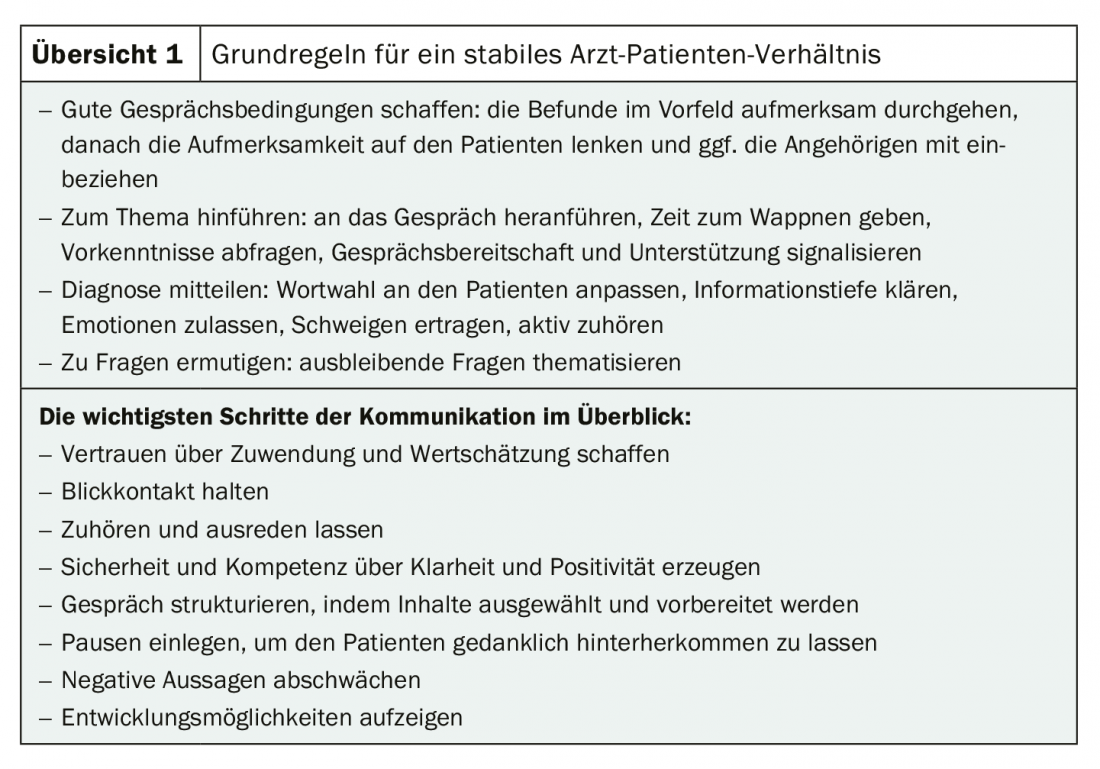
It has proven successful to follow a clear structure with the description of the situation, the setting of priorities, the processing of the illness, the view of the resources up to the clarification of the treatment order in order to support the patient in the best possible way. In any doctor-patient communication, the problem of “silence post loss” can occur: There can be a big difference between what the doctor means and what he says, and one should be aware of this. What the patient hears and what he actually understands may be quite different from the initial message. Therefore, it is not only sensible but imperative to limit oneself to a few relevant pieces of information and to be as clear as possible when conveying the message.


InFo ONCOLOGY & HEMATOLOGY 2019; 7(5): 26.
 

Autoren
  • Leoni Burggraf
Publikation
  • InFo ONKOLOGIE & HÄMATOLOGIE
Related Topics
  • Psychooncology
Previous Article
  • Cardiovascular complications

Late effects of oncological diseases

  • Cardiology
  • Education
  • Oncology
  • Pediatrics
  • RX
View Post
Next Article
  • Modern wound management

Silicone-containing wound dressing as an add-on measure reduces pressure ulcer risk

  • Dermatology and venereology
  • Education
  • RX
  • Studies
View Post
You May Also Like
View Post
  • 6 min
  • What biomarkers reveal about "biological youth" - and what not (yet)

Epigenetic ageing

    • Education
    • Genetics
    • Geriatrics
    • Prevention and health care
    • RX
    • Studies
View Post
  • 4 min
  • Amyotrophic lateral sclerosis and nutrition

Calorie optimization in ALS through digital intervention

    • Education
    • Neurology
    • Nutrition
    • RX
    • Studies
View Post
  • 14 min
  • "Forgotten axis" between plant substances, gut and systemic health

Microbiome and phytotherapy

    • Education
    • Endocrinology and Diabetology
    • Gastroenterology and Hepatology
    • General Internal Medicine
    • Infectiology
    • Neurology
    • Nutrition
    • Pharmaceutical medicine
    • Phytotherapy
    • RX
    • Studies
View Post
  • 4 min
  • HIV: updated EACS guideline

Individualized approach to sustainable prevention and care

    • Cardiology
    • Education
    • General Internal Medicine
    • Infectiology
    • Prevention and health care
    • RX
    • Studies
View Post
  • 5 min
  • Evidence-based diagnostics and treatment in the medical setting

Anxiety and depression disorders in adolescence

    • Education
    • Pediatrics
    • Pharmacology and toxicology
    • Psychiatry and psychotherapy
    • RX
    • Studies
View Post
  • 25 min
  • Neuroenhancement

Can you swallow intelligence? Relevant substance classes times for healthy people

    • CME continuing education
    • Neurology
    • Pharmacology and toxicology
    • Psychiatry and psychotherapy
    • RX
    • Studies
View Post
  • 9 min
  • Microbiome, inflammaging and affective/cognitive health

Gut-brain axis in old age

    • Education
    • Gastroenterology and Hepatology
    • General Internal Medicine
    • Geriatrics
    • Neurology
    • Nutrition
    • Prevention and health care
    • RX
    • Studies
View Post
  • 6 min
  • Vitiligo - the level of suffering should not be underestimated

A lot can be achieved therapeutically nowadays

    • Congress Reports
    • Dermatology and venereology
    • RX
    • Studies
  • IBD matters

    Zum Thema
Top CME content
  • 1
    Can you swallow intelligence? Relevant substance classes times for healthy people
  • 2
    Clinical care from birth to adulthood
  • 3
    Aligning care with the patient
  • 4
    Control instead of a flood of data: AI makes big data and wearables usable
  • 5
    Causes and prevention at work

Newsletter

Sign up and stay up to date

Subscribe
Medizinonline Medizinonline
  • Contact
  • General terms and conditions
  • Imprint

Input your search keywords and press Enter.