Medizinonline Medizinonline
  • News
    • News
    • Market & Medicine
  • Patients
    • Disease patterns
    • Diagnostics
    • Therapy
  • Partner Content
    • Dermatology
      • Atopic dermatitis and psoriasis news
    • Diabetes
      • Dia-Month Club – Type 2 Diabetes
      • Diabetes in Motion
      • Diabetes Podcasts
    • Gastroenterology
      • IBD matters
    • Oncology
      • Swiss Oncology in motion
    • Orthopedics
      • Osteoporosis in motion
  • Departments
    • Allergology and clinical immunology
    • General Internal Medicine
    • Anesthesiology
    • Angiology
    • Surgery
    • Dermatology and venereology
    • Endocrinology and Diabetology
    • Nutrition
    • Gastroenterology and Hepatology
    • Genetics
    • Geriatrics
    • Gynecology
    • Hematology
    • Infectiology
    • Cardiology
    • Nephrology
    • Neurology
    • Emergency and intensive care medicine
    • Nuclear Medicine
    • Oncology
    • Ophthalmology
    • ORL
    • Orthopedics
    • Pediatrics
    • Pharmacology and toxicology
    • Pharmaceutical medicine
    • Phlebology
    • Physical medicine and rehabilitation
    • Pneumology
    • Prevention and health care
    • Psychiatry and psychotherapy
    • Radiology
    • Forensic Medicine
    • Rheumatology
    • Sports Medicine
    • Traumatology and trauma surgery
    • Tropical and travel medicine
    • Urology
    • Dentistry
  • CME & Congresses
    • CME continuing education
    • Congress Reports
    • Congress calendar
  • Practice
    • Noctimed
    • Practice Management
    • Jobs
    • Interviews
  • Log In
  • Register
  • My account
  • Contact
  • Publications
  • Contact
  • Deutsch
  • English
  • Français
  • Italiano
  • Português
  • Español
Subscribe
Medizinonline Medizinonline
  • News
    • News
    • Market & Medicine
  • Patienten
    • Krankheitsbilder
    • Diagnostik
    • Therapie
  • Partner Content
    • Dermatology
      • Atopic dermatitis and psoriasis news
    • Diabetes
      • Dia-Month Club – Type 2 Diabetes
      • Diabetes in Motion
      • Diabetes Podcasts
    • Gastroenterology
      • IBD matters
    • Oncology
      • Swiss Oncology in motion
    • Orthopedics
      • Osteoporosis in motion
    • Phytotherapie
    • Rheumatology
  • Departments
    • Fachbereiche 1-13
      • Allergology and clinical immunology
      • General Internal Medicine
      • Anesthesiology
      • Angiology
      • Surgery
      • Dermatology and venereology
      • Endocrinology and Diabetology
      • Nutrition
      • Gastroenterology and Hepatology
      • Genetics
      • Geriatrics
      • Gynecology
      • Hematology
    • Fachbereiche 14-26
      • Infectiology
      • Cardiology
      • Nephrology
      • Neurology
      • Emergency and intensive care medicine
      • Nuclear Medicine
      • Oncology
      • Ophthalmology
      • ORL
      • Orthopedics
      • Pediatrics
      • Pharmacology and toxicology
      • Pharmaceutical medicine
    • Fachbereiche 26-38
      • Phlebology
      • Physical medicine and rehabilitation
      • Phytotherapy
      • Pneumology
      • Prevention and health care
      • Psychiatry and psychotherapy
      • Radiology
      • Forensic Medicine
      • Rheumatology
      • Sports Medicine
      • Traumatology and trauma surgery
      • Tropical and travel medicine
      • Urology
      • Dentistry
  • CME & Congresses
    • CME continuing education
    • Congress Reports
    • Congress calendar
  • Practice
    • Noctimed
    • Practice Management
    • Jobs
    • Interviews
Login

Sie haben noch keinen Account? Registrieren

  • National Skin Cancer Day May 13, 2013

Counteracting the formation of melanomas through early diagnosis

    • Dermatology and venereology
    • News
    • Oncology
    • RX
  • 3 minute read

The statistics for new cases of skin cancer in Switzerland are disturbing: 2000 melanoma diagnoses annually, about 300 of which are fatal; and 13,000 patients affected by actinic keratosis. Despite these alarming numbers, there are still unenlightened segments of the population. To ensure early detection and indication of appropriate treatment, the 8th National Skin Cancer Day will be held on May 13, 2013.

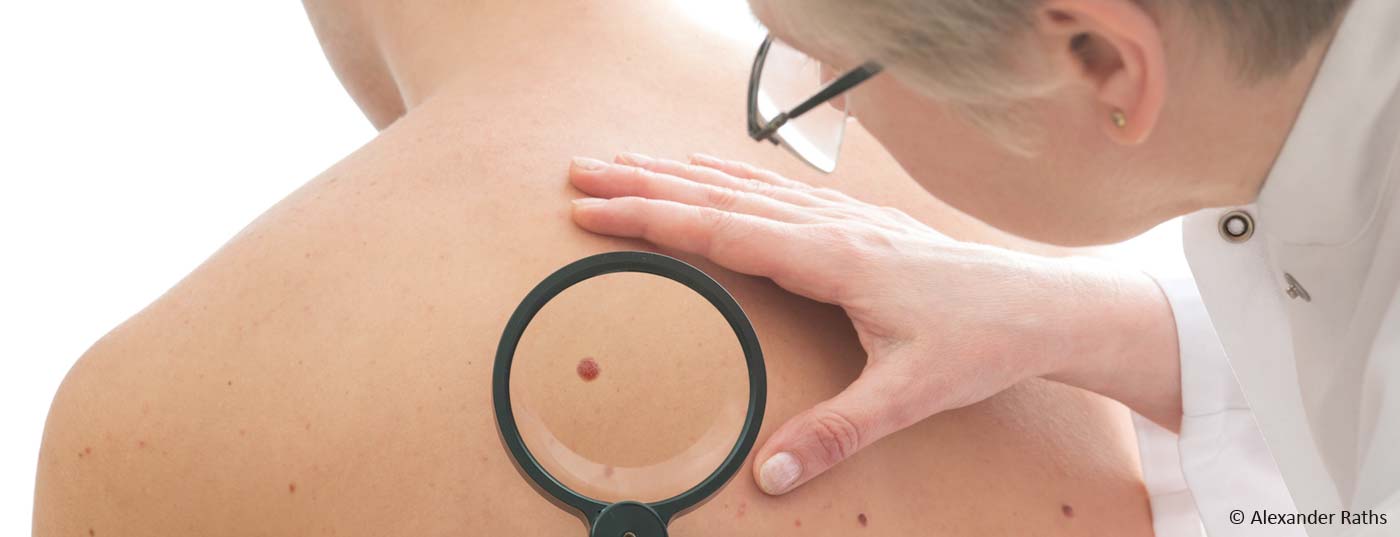
The national skin cancer day – a joint initiative of the Swiss Society of Dermatology and Venereology (SGDV) and Pharmasuisse – is of particular importance in the prevention of skin cancer. This year’s event will again ensure that the general public is made aware of and sensitized to the important topic of “skin cancer”. The population is encouraged to perform regular self-examinations and to seek dermatological consultation at an early stage. In addition to general educational work, the offer of free initial examinations and skin checks by dermatologists from all over Switzerland is primarily aimed at the early diagnosis of warning signs. The annual national skin cancer day thus counteracts not only the ignorance and/or the blunting against the topic, but also the unnoticed formation of melanomas. The longer-term goal is to achieve a significant decline in the

Figures of new cases of skin cancer

The precarious situation of the annual new cases of skin cancer in Switzerland is on the one hand due to the predominantly light skin type of the Swiss, which is associated with an increased risk of melanoma. On the other hand, the leisure time behavior of the Swiss also has an impact on the high skin cancer rate. Many Swiss work indoors and then prefer to spend their free time outdoors. Although the activities undertaken are not necessarily deliberate sunbathing, but rather everyday sporting activities, direct UV exposure still takes place. In addition, Switzerland is a comparably wealthy country and relatively more people can afford vacations in regions with high sun exposure.

Determination of the individual skin cancer risk

Particularly in view of this wide demographic distribution, the question of when a dermatological examination is necessary with regard to skin cancer is becoming increasingly relevant. Should I only have a dermatological examination if I observe suspicious changes in the skin and moles? Based on the current state of knowledge, it is believed that screening of patients with increased risk factor is very useful. People who have the following factors are particularly at risk:

  • Skin cancer case in the family
  • Disease of skin cancer in the past
  • Already suffered several severe (blistering) sunburns
  • Showing more than 50 moles
  • Removal of atypical birthmarks in the past
  • Very fair skin type (often characterized by red/blond hair, very fair skin that never tans, freckles, blue eyes, etc.).

These people should have their moles at least. once be examined by a dermatologist, so that one can determine the individual skin cancer risk. All others should also definitely take a perceptible change in the shape, color and/or size of a birthmark as a reason for a dermatological examination.

Measures for skin cancer prevention 

The prevention measures of skin cancer can be divided into two approaches. The primary prevention is aimed at the medium and long-term restriction of the development of skin cancer. Knowledge of one’s own skin type and accordingly efficient sun protection measures fall into this category. Secondary prevention, in turn, revolves around the detection, diagnosis and treatment of skin cancer at the earliest and most treatable stages. This strategy includes all educational campaigns dedicated to the early diagnosis of skin cancer diseases, including the National Skin Cancer Day.

Demet Bicer

Publikation
  • DERMATOLOGIE PRAXIS
Related Topics
  • actic keratosis
  • Consultation
  • Diagnosis
  • Early diagnosis
  • Melanoma
  • National Skin Cancer Day
  • Prevention
  • Risk
  • Self-examination
  • SGDV
  • Skin type
Previous Article
  • Geneva introduces itself

Geneva dermatology in the changing times

  • Dermatology and venereology
  • News
  • RX
View Post
Next Article
  • The history of the discovery of botulinum

A toxin that is not one

  • Dermatology and venereology
  • News
  • RX
View Post
You May Also Like
View Post
  • 14 min
  • "Forgotten axis" between plant substances, gut and systemic health

Microbiome and phytotherapy

    • Education
    • Endocrinology and Diabetology
    • Gastroenterology and Hepatology
    • General Internal Medicine
    • Infectiology
    • Neurology
    • Nutrition
    • Pharmaceutical medicine
    • Phytotherapy
    • RX
    • Studies
View Post
  • 4 min
  • HIV: updated EACS guideline

Individualized approach to sustainable prevention and care

    • Cardiology
    • Education
    • General Internal Medicine
    • Infectiology
    • Prevention and health care
    • RX
    • Studies
View Post
  • 5 min
  • Evidence-based diagnostics and treatment in the medical setting

Anxiety and depression disorders in adolescence

    • Education
    • Pediatrics
    • Pharmacology and toxicology
    • Psychiatry and psychotherapy
    • RX
    • Studies
View Post
  • 25 min
  • Neuroenhancement

Can you swallow intelligence? Relevant substance classes times for healthy people

    • CME continuing education
    • Neurology
    • Pharmacology and toxicology
    • Psychiatry and psychotherapy
    • RX
    • Studies
View Post
  • 9 min
  • Microbiome, inflammaging and affective/cognitive health

Gut-brain axis in old age

    • Education
    • Gastroenterology and Hepatology
    • General Internal Medicine
    • Geriatrics
    • Neurology
    • Nutrition
    • Prevention and health care
    • RX
    • Studies
View Post
  • 6 min
  • Vitiligo - the level of suffering should not be underestimated

A lot can be achieved therapeutically nowadays

    • Congress Reports
    • Dermatology and venereology
    • RX
    • Studies
View Post
  • 7 min
  • Vector-borne infections with skin manifestations

Arboviruses and leishmaniasis in Europe

    • Congress Reports
    • Infectiology
    • Prevention and health care
    • RX
    • Studies
    • Tropical and travel medicine
View Post
  • 12 min
  • Patient-centered rounds in medicine

Aligning care with the patient

    • CME continuing education
    • Education
    • General Internal Medicine
    • Prevention and health care
    • RX
    • Studies
  • IBD matters

    Zum Thema
Top CME content
  • 1
    Can you swallow intelligence? Relevant substance classes times for healthy people
  • 2
    Clinical care from birth to adulthood
  • 3
    Aligning care with the patient
  • 4
    Control instead of a flood of data: AI makes big data and wearables usable
  • 5
    Causes and prevention at work

Newsletter

Sign up and stay up to date

Subscribe
Medizinonline Medizinonline
  • Contact
  • General terms and conditions
  • Imprint

Input your search keywords and press Enter.