Medizinonline Medizinonline
  • News
    • News
    • Market & Medicine
  • Patients
    • Disease patterns
    • Diagnostics
    • Therapy
  • Partner Content
    • Diabetes
      • Dia-Month Club – Type 2 Diabetes
      • Diabetes in Motion
    • Gastroenterology
      • IBD matters
    • Oncology
      • Swiss Oncology in motion
    • Orthopedics
      • Osteoporosis in motion
  • Departments
    • Allergology and clinical immunology
    • General Internal Medicine
    • Anesthesiology
    • Angiology
    • Surgery
    • Dermatology and venereology
    • Endocrinology and Diabetology
    • Nutrition
    • Gastroenterology and Hepatology
    • Genetics
    • Geriatrics
    • Gynecology
    • Hematology
    • Infectiology
    • Cardiology
    • Nephrology
    • Neurology
    • Emergency and intensive care medicine
    • Nuclear Medicine
    • Oncology
    • Ophthalmology
    • ORL
    • Orthopedics
    • Pediatrics
    • Pharmacology and toxicology
    • Pharmaceutical medicine
    • Phlebology
    • Physical medicine and rehabilitation
    • Pneumology
    • Prevention and health care
    • Psychiatry and psychotherapy
    • Radiology
    • Forensic Medicine
    • Rheumatology
    • Sports Medicine
    • Traumatology and trauma surgery
    • Tropical and travel medicine
    • Urology
    • Dentistry
  • CME & Congresses
    • CME continuing education
    • Congress Reports
    • Congress calendar
  • Practice
    • Noctimed
    • Practice Management
    • Jobs
    • Interviews
  • Log In
  • Register
  • My account
  • Contact
  • Publications
  • Contact
  • Deutsch
  • English
  • Français
  • Italiano
  • Português
  • Español
Subscribe
Medizinonline Medizinonline
  • News
    • News
    • Market & Medicine
  • Patienten
    • Krankheitsbilder
    • Diagnostik
    • Therapie
  • Partner Content
    • Diabetes
      • Dia-Month Club – Type 2 Diabetes
      • Diabetes in Motion
    • Gastroenterology
      • IBD matters
    • Oncology
      • Swiss Oncology in motion
    • Orthopedics
      • Osteoporosis in motion
    • Phytotherapie
    • Rheumatology
  • Departments
    • Fachbereiche 1-13
      • Allergology and clinical immunology
      • General Internal Medicine
      • Anesthesiology
      • Angiology
      • Surgery
      • Dermatology and venereology
      • Endocrinology and Diabetology
      • Nutrition
      • Gastroenterology and Hepatology
      • Genetics
      • Geriatrics
      • Gynecology
      • Hematology
    • Fachbereiche 14-26
      • Infectiology
      • Cardiology
      • Nephrology
      • Neurology
      • Emergency and intensive care medicine
      • Nuclear Medicine
      • Oncology
      • Ophthalmology
      • ORL
      • Orthopedics
      • Pediatrics
      • Pharmacology and toxicology
      • Pharmaceutical medicine
    • Fachbereiche 26-38
      • Phlebology
      • Physical medicine and rehabilitation
      • Phytotherapy
      • Pneumology
      • Prevention and health care
      • Psychiatry and psychotherapy
      • Radiology
      • Forensic Medicine
      • Rheumatology
      • Sports Medicine
      • Traumatology and trauma surgery
      • Tropical and travel medicine
      • Urology
      • Dentistry
  • CME & Congresses
    • CME continuing education
    • Congress Reports
    • Congress calendar
  • Practice
    • Noctimed
    • Practice Management
    • Jobs
    • Interviews
Login

Sie haben noch keinen Account? Registrieren

  • Blisters and erosions in a newborn baby

Alarm symptoms that require rapid assignment

    • Cases
    • Dermatology and venereology
    • Education
    • Pediatrics
    • RX
  • 3 minute read

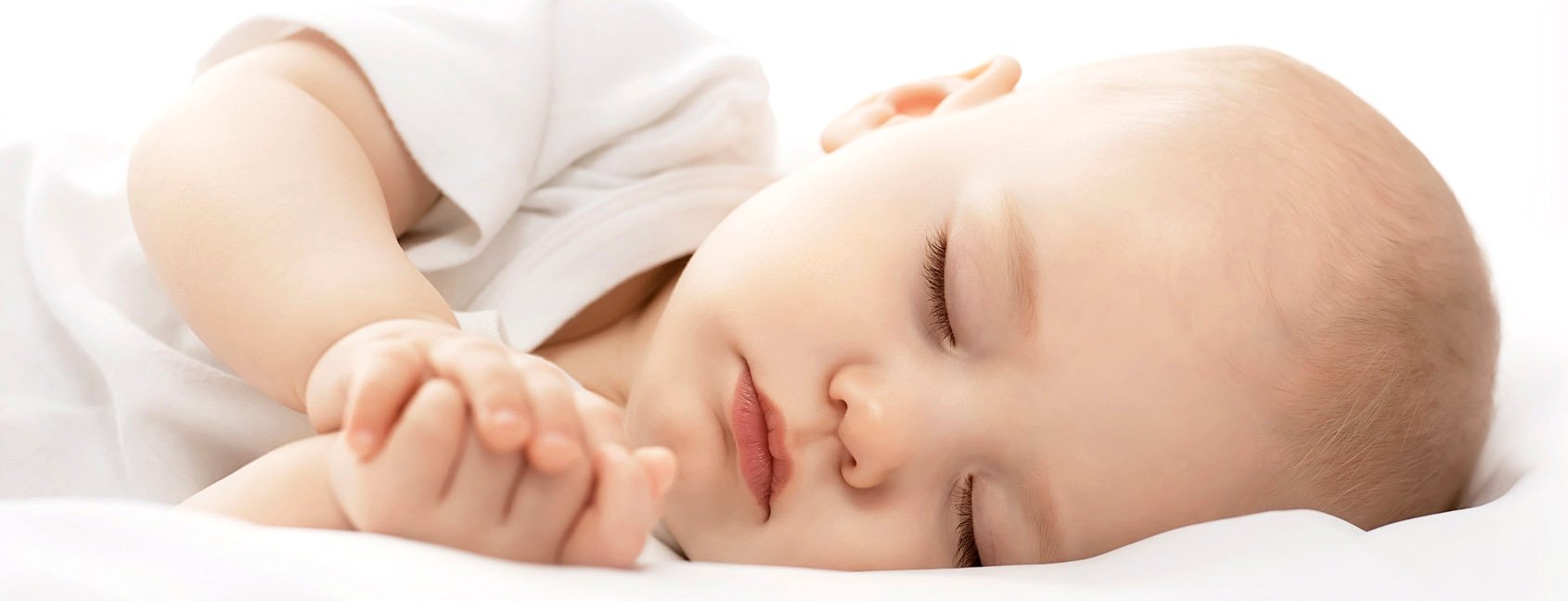
Case report: An eight-day-old boy presents with new onset of blisters since three days. The child is in good general condition and afebrile. There were no abnormal findings in the internal status at admission. There is no known family history of skin disease.

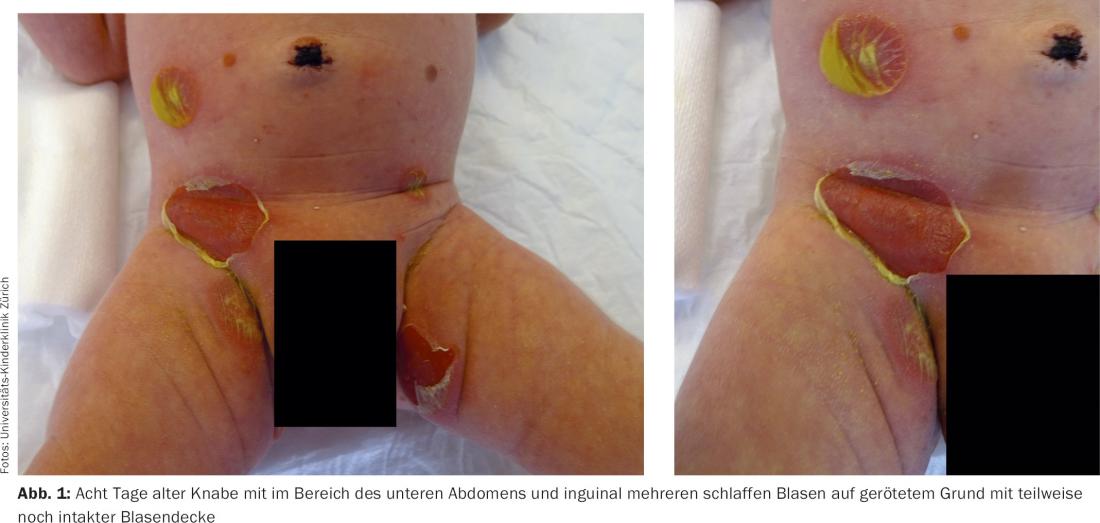
Clinical Presentation: Inguinal, gluteal, on the lower abdomen and on the right wrist, there are approximately 1-2 cm large, flaccid blisters as well as superficial erosions (Fig. 1) . The preserved blisters are serous filled, the mucous membranes are inconspicuous.
Quiz

Based on these findings, which is the most likely diagnosis?

A Bullous impetigo
B Staphylococcal Scalded Skin Syndrome
C Epidermolysis bullosa hereditaria
D Neonatal pemphigus vulgaris
E Epidermolytic ichthyosis

Diagnosis and Discussion: Based on the present findings, we made a diagnosis of bullous impetigo. Swabs were taken for microbiological diagnosis (nose, umbilicus, inguinal) and intravenous antibiotic therapy with clindamycin was initiated. Local treatment was with octenidine (Octenisept® Gel) alternating with mupirocin (Bactroban® Ointment). With the detection of Staphylococcus aureus in nasal, umbilical, and inguinal swabs, the diagnosis of bullous impetigo was confirmed.

Phage group II staphylococci (types 71 and 55) are causative agents of bullous impetigo and staphylococcal scalded skin syndrome (SSSS). The exfoliative toxins of S. aureus (ET-A and ET-B) play a central role in the development of blisters. They lead to a degradation of desmoglein 1 in the epidermis and thus to a gap formation at the level of the stratum granulosum. Due to the selectivity for desmoglein 1, analogous to pemphigus foliaceus, there is no involvement of the oral mucosa.

Usually, the diagnosis of bullous impetigo can be made clinically. Smear tests for microbiological pathogen diagnosis are useful. The clinical picture is characterized by fragile, yellow-serous to pus-filled blisters that rapidly rupture, leaving a rolled-up yellowish blister margin and superficial erosions that then crust over. Predilection sites for bullous impetigo in the newborn are the diaper region, axillae, and neck (Fig. 1). In disseminated forms, systemic antibiotic therapy is indicated; single foci can also be treated topically.

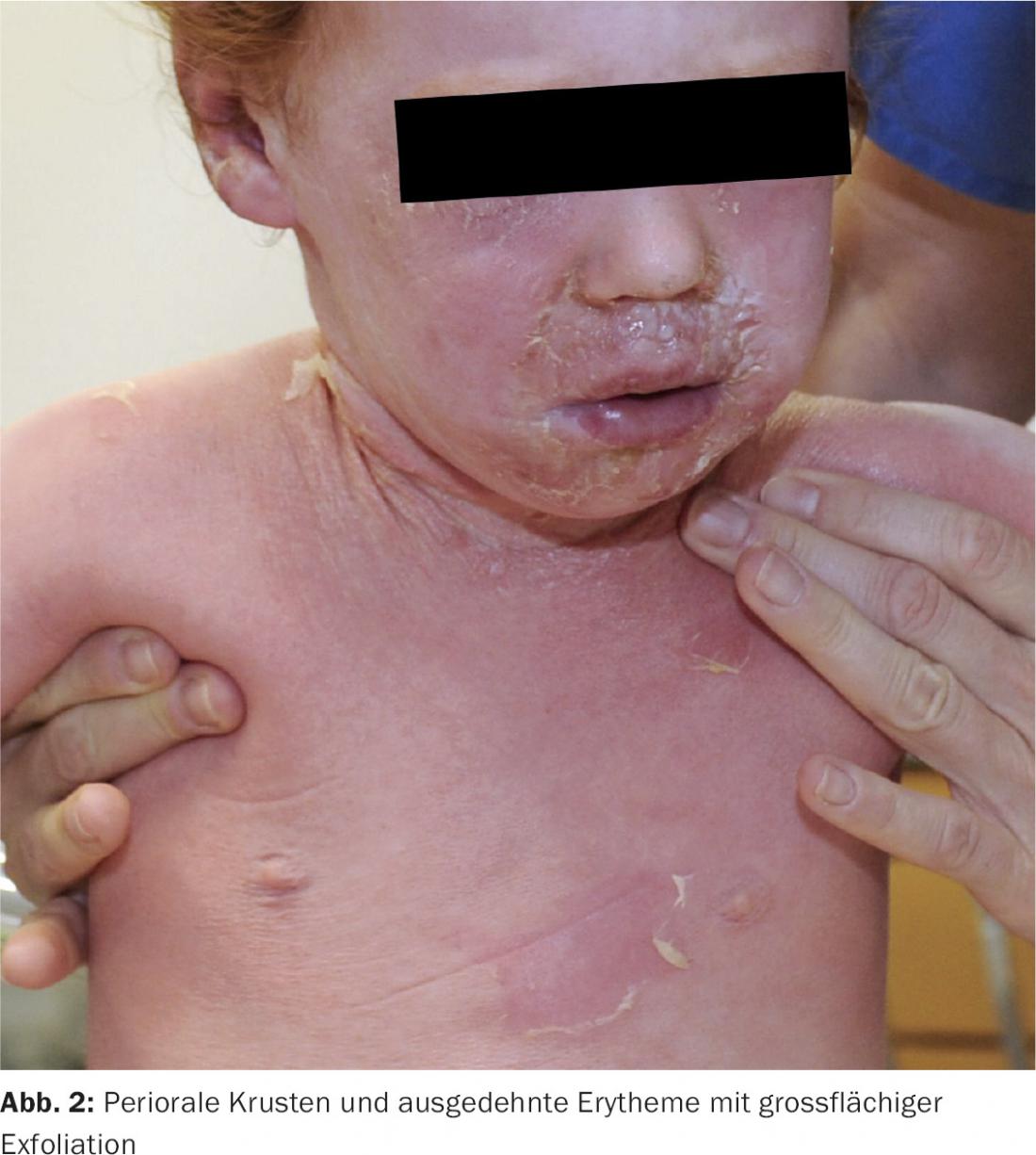
While bullous impetigo is a local skin infection without general clinical signs, SSSS involves hematogenous dissemination of exfoliative toxins from mostly extracutaneous foci of infection, often localized in the nasopharyngeal region or occult [1]. Typically, affected children have perioral, radially furrowed crusts and extensive, pouchy, painful erythema with secondary extensive exfoliation when severe ( Fig. 2).
 

Extensive blisters in the neonatal and infant period always represent an alarm symptom and require rapid referral to an institution experienced in the intensive care of young children. Besides bullous impetigo/SSSS, other infections (herpes simplex, varicella, etc.), autoimmune bullous dermatoses, genodermatoses (epidermolysis bullosa, epidermolytic ichthyosis), mastocytoses, severe drug reactions and others should be considered. In addition to microbiological examinations, laboratory tests (e.g., detection of autoantibodies) and a skin biopsy may be useful.

Literature:

  1. Handler MZ, Schwartz RA: Staphylococcal scalded skin syndrome: diagnosis and management in children and adults. J Eur Acad Dermatol Venereol 2014; 28(11): 1418-1423.

Further reading:

  • George A, et al: Extensive pustules in a neonate. Diagnosis: impetigo neonatorum. Pediatr Dermatol 2014; 31(5): 609-610.
  • Antaya RJ, Robinson DM: Blisters and pustules in the newborn. Pediatr Ann 2010; 39(10): 635-645.
  • Hussain S, Venepally M, Treat JR: Vesicles and pustules in the neonate. Semin Perinatol 2013; 37(1): 8-15.

DERMATOLOGIE PRAXIS 2015; 25(5): 25-26
Autoren
  • Dr. med. Aline Büchner
  • Alexandra Smith
  • Dr. med. Martin Theiler
  • PD Dr. med. Lisa Weibel
Publikation
  • DERMATOLOGIE PRAXIS
Related Topics
  • Impetigo
  • Skin infection
  • Staphylococcus
Previous Article
  • Venous leg ulcer (UCV)

How to treat the classic wound?

  • Angiology
  • Dermatology and venereology
  • Education
  • Phlebology
  • RX
View Post
Next Article
  • Endovascular therapy for stroke

Which patients benefit from stent retriever thrombectomy?

  • Cardiology
  • Education
  • General Internal Medicine
  • Neurology
  • RX
View Post
You May Also Like
View Post
  • 6 min
  • PMR and LVV: Current EULAR Recommendations

Polymyalgia rheumatica, giant cell arteritis, and Takayasu arteritis

    • RX
    • Angiology
    • Congress Reports
    • General Internal Medicine
    • Rheumatology
    • Studies
View Post
  • 9 min
  • Psychedelic-assisted therapy

Current status of PAT

    • RX
    • CME continuing education
    • General Internal Medicine
    • Pharmacology and toxicology
    • Psychiatry and psychotherapy
    • Studies
View Post
  • 3 min
  • First-line treatment for T2D

SGLT2i, metformin, or both?

    • RX
    • Education
    • Endocrinology and Diabetology
    • Studies
View Post
  • 4 min
  • Biophilic Design of Work Environments

Effects on Health, Well-Being, and Productivity

    • RX
    • General Internal Medicine
    • Practice Management
    • Prevention and health care
    • Studies
View Post
  • 4 min
  • From symptom to diagnosis

Intrapelvic mass with an ambiguous differential diagnosis

    • RX
    • Cases
    • Education
    • Gynecology
    • Oncology
    • Radiology
    • Surgery
View Post
  • 5 min
  • Endocrinology: APECED-Associated Hypoparathyroidism

A parathyroid hormone analog corrected serum calcium levels

    • RX
    • Cases
    • Education
    • Endocrinology and Diabetology
    • Genetics
    • Nephrology
    • Studies
View Post
  • 5 min
  • Transient ischemic attack

Comprehensive diagnostic testing can reduce the risk of stroke

    • RX
    • Cardiology
    • Education
    • Emergency and intensive care medicine
    • Neurology
    • Studies
View Post
  • 3 min
  • Malignant Tumors of the Clavicle

Surgical Challenges and Recurrence Patterns

    • RX
    • Education
    • Oncology
    • Radiology
    • Studies
    • Surgery
  • IBD matters

    Zum Thema
Top CME content
  • 1
    Endometrial carcinoma
  • 2
    Clinical Presentation, Diagnosis, and Treatment of DSPN
  • 3
    Why is it so hard to lose weight?
  • 4
    Four-Legged Medical Assistants – Therapy Dogs in Clinical Settings
  • 5
    Functional limb preservation between infection control, vascular medicine and resurfacing

Newsletter

Sign up and stay up to date

Subscribe
Medizinonline Medizinonline
  • Contact
  • General terms and conditions
  • Imprint

Input your search keywords and press Enter.