Medizinonline Medizinonline
  • News
    • News
    • Market & Medicine
  • Patients
    • Disease patterns
    • Diagnostics
    • Therapy
  • Partner Content
    • Diabetes
      • Dia-Month Club – Type 2 Diabetes
      • Diabetes in Motion
      • Diabetes Podcasts
    • Gastroenterology
      • IBD matters
    • Oncology
      • Swiss Oncology in motion
    • Orthopedics
      • Osteoporosis in motion
  • Departments
    • Allergology and clinical immunology
    • General Internal Medicine
    • Anesthesiology
    • Angiology
    • Surgery
    • Dermatology and venereology
    • Endocrinology and Diabetology
    • Nutrition
    • Gastroenterology and Hepatology
    • Genetics
    • Geriatrics
    • Gynecology
    • Hematology
    • Infectiology
    • Cardiology
    • Nephrology
    • Neurology
    • Emergency and intensive care medicine
    • Nuclear Medicine
    • Oncology
    • Ophthalmology
    • ORL
    • Orthopedics
    • Pediatrics
    • Pharmacology and toxicology
    • Pharmaceutical medicine
    • Phlebology
    • Physical medicine and rehabilitation
    • Pneumology
    • Prevention and health care
    • Psychiatry and psychotherapy
    • Radiology
    • Forensic Medicine
    • Rheumatology
    • Sports Medicine
    • Traumatology and trauma surgery
    • Tropical and travel medicine
    • Urology
    • Dentistry
  • CME & Congresses
    • CME continuing education
    • Congress Reports
    • Congress calendar
  • Practice
    • Noctimed
    • Practice Management
    • Jobs
    • Interviews
  • Log In
  • Register
  • My account
  • Contact
  • Publications
  • Contact
  • Deutsch
  • English
  • Français
  • Italiano
  • Português
  • Español
Subscribe
Medizinonline Medizinonline
  • News
    • News
    • Market & Medicine
  • Patienten
    • Krankheitsbilder
    • Diagnostik
    • Therapie
  • Partner Content
    • Diabetes
      • Dia-Month Club – Type 2 Diabetes
      • Diabetes in Motion
      • Diabetes Podcasts
    • Gastroenterology
      • IBD matters
    • Oncology
      • Swiss Oncology in motion
    • Orthopedics
      • Osteoporosis in motion
    • Phytotherapie
    • Rheumatology
  • Departments
    • Fachbereiche 1-13
      • Allergology and clinical immunology
      • General Internal Medicine
      • Anesthesiology
      • Angiology
      • Surgery
      • Dermatology and venereology
      • Endocrinology and Diabetology
      • Nutrition
      • Gastroenterology and Hepatology
      • Genetics
      • Geriatrics
      • Gynecology
      • Hematology
    • Fachbereiche 14-26
      • Infectiology
      • Cardiology
      • Nephrology
      • Neurology
      • Emergency and intensive care medicine
      • Nuclear Medicine
      • Oncology
      • Ophthalmology
      • ORL
      • Orthopedics
      • Pediatrics
      • Pharmacology and toxicology
      • Pharmaceutical medicine
    • Fachbereiche 26-38
      • Phlebology
      • Physical medicine and rehabilitation
      • Phytotherapy
      • Pneumology
      • Prevention and health care
      • Psychiatry and psychotherapy
      • Radiology
      • Forensic Medicine
      • Rheumatology
      • Sports Medicine
      • Traumatology and trauma surgery
      • Tropical and travel medicine
      • Urology
      • Dentistry
  • CME & Congresses
    • CME continuing education
    • Congress Reports
    • Congress calendar
  • Practice
    • Noctimed
    • Practice Management
    • Jobs
    • Interviews
Login

Sie haben noch keinen Account? Registrieren

  • Diabetes

“Better care for patients thanks to personalized therapy”

    • Hematology
    • Interviews
    • Prevention and health care
    • RX
  • 4 minute read

Prof. Oliver Schnell, MD, is concerned that more and more people are developing diabetes, which is associated with high morbidity and a reduced quality of life. The diabetologist from Munich is on the Executive Committee of the Diabetes and Cardiovascular Disease Study Group of EASD. In an interview with HAUSARZT PRAXIS, Prof. Schnell explains how to treat patients with the new, individualized therapy approach.

Prof. Schnell, for years we were told to get the HbA1c as low as possible. Now, suddenly, decisions have to be made on an individual basis. Why the rethink?

We have realized that we have to see the patient as an individual and not recommend the same thing to everyone. It plays a big role, for example, how old the patient is and how long his diabetes has already lasted, how motivated he is or what kind of profession he has.

What does that look like in practice?

The American Diabetes Association (ADA) and the European Association for the Study of Diabetes (EASD) recently issued new recommendations. Different criteria determine whether to adjust the HbA1c value more stringently or less stringently. Which factors are decisive in detail and how, must be decided individually and together with the patient.

For example?

In a young patient with a short duration of diabetes without concomitant diseases, I would try to set the HbA1c at 6%. If someone is not allowed to have hypoglycemia under any circumstances because of their job, for example, or if they are not very compliant, I would agree a less strict target value with them, around 7%. Similarly, for an elderly lady with osteoporosis, if she falls due to hypoglycemia, it can lead to fractures with months of hospitalization. However, a man of the same age without concomitant diseases, who is also very compliant, could be given a stricter HbA1c target value of approx. 6.5%.
The ADA and the International Diabetes Association (IDA) recommend a postprandial glucose of <180 mg/dl. To achieve this, patients should self-measure their blood glucose regularly (SMBG [Self Monitoring Blood Glucose]).

Are patients adhering to the agreement with their physician?

There you address a sore point. A survey of 1076 patients in Denmark and the United Kingdom [1] showed that one in four measured less frequently than once a week. In the USA it is even 60% and more [2–4]. Consequently, even in our so well-developed Western health care systems, agreed-upon goals are often not met. For example, 57% of patient diaries are not kept correctly, 60% of hypoglycemias are not documented [5], and 60% of patients on insulin treatment omit some glucose tests [6].
But we physicians also have to critically assess our actions: More than one in two do not read the patient diaries [7].

What long-term consequences this has for the patient is well known….

Yes, and also for the healthcare system. For the treatment of initial microvascular complications such as retinopathy, nephropathy, neuropathy or myocardial infarction alone, more than 80,000 euros are spent per year [8].

Why do patients take such poor care of their blood glucose?

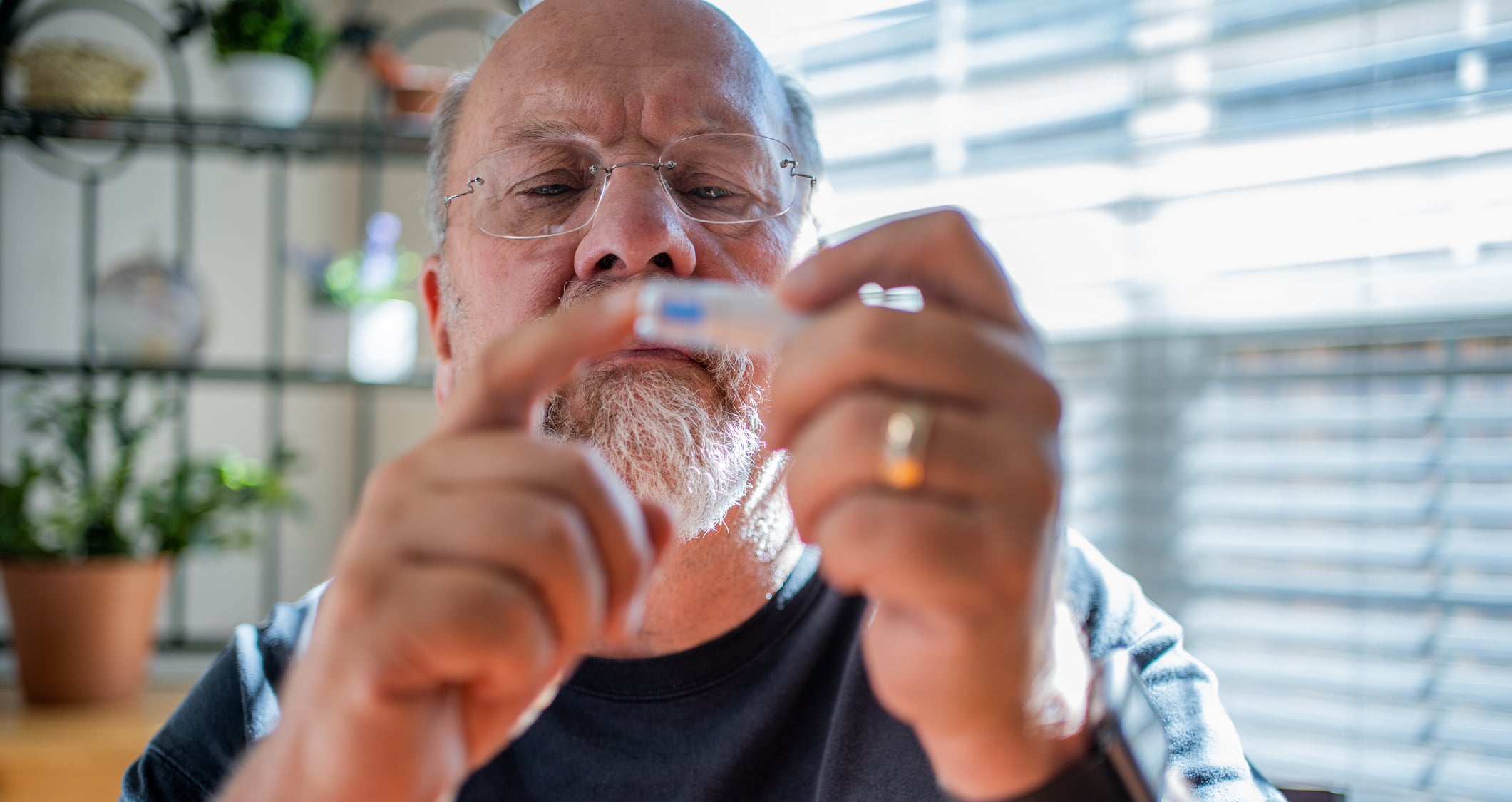
There are many reasons for this: Pricking is associated with pain, the test strips and devices are awkward to use, testing takes too long, and patients feel unable to make a decision. According to a survey from the United Kingdom, patients would measure more frequently if this were less painful, testing could be performed more inconspicuously, and the devices were easier to use [9]. In addition, many people have inadequate diabetes control: for example, one in five forgets to take their tablets regularly or to adjust the dosage to a changed blood glucose level [10]. Holistic, personalized diabetes management could help patients receive better care.

How should this be implemented in practice?

A “closed feedback system” is important here. The doctor first explains the patient’s diabetes in detail, agrees a therapy goal with him and how this can be achieved. The patient is told that and how to measure blood glucose regularly and enter the values in a diary – ideally this is done digitally. The blood glucose device automatically transfers the values to a computer to which the physician has access. This allows doctors to see at any time how well the patient has achieved his or her goal. Periodically, the patient should be called in to provide feedback and explain what went well and what did not. Studies show that regular blood glucose monitoring plays an important role in reducing hypoglycemia and improving HbA1c levels [11]. One of the key tasks, however, is for us doctors: we must not just look at results, but discuss them with the patient and respond to his or her questions. The new technologies with wireless transmission and all kinds of finesse are ideal for helping patients take charge of their diabetes. This saves them a lot of suffering and the state enormous costs.

Interview: Felicitas Witte, MD

Literature:

  1. Hansen MV, et al: Frequency and motives of blood glucose self-monitoring in type 1 diabetes. Diab Res and Clin Pract 2009; 85: 183-188.
  2. ADA, Standards of Medical Care in Diabetes. Diabetes Care 2013; 36(1): 11-66.
  3. ADA, Standards of Medical Care in Diabetes. Diabetes Care 2013; 36(1): 11-66.
  4. Karter AJ, et al: Self-monitoring of blood glucose: language and financial barriers in a managed care population with diabetes. Diab Care 2000; 23(4): 477-483.
  5. Franke D., et al.: Are self-documented diary blood glucose values (BZSK) of type 2 diabetic patients (T2DM) reliable? A comparison with drawn values in the blood glucose meter and their electronic evaluation. Poster presentation, DDG-2008, 43rd Annual Meeting of the German Diabetes Society (DDG), April 30-May 1, 2008, Munich, Germany.
  6. Karter AJ, et al: Self-monitoring of blood glucose: language and financial barriers in a managed care population with diabetes. Diab Care 2000; 23(4): 477-483.
  7. Koschinsky T.: Diabetes Management 2010, Elmau Talks, March 2010.
  8. Ray JA, et al: Review of the Cost of Diabetes Complications in Australia, Canada, France, Germany, Italy and Spain. Curr Opin Med Res 2005; 21(10): 1717 -1629.
  9. Batten L. Survey of blood glucose testing among Diabetes UK lay members. Crossbow Research, 2004.
  10. Browne DL, et al: Diabet Med 2000; 17: 528-531.
  11. Reichel A, et al: Improved A1c and Less Hypoglycemia by Self-Analysis of Graphically Depicted SMBG.  Presented at the 70th Scientific Session of the ADA (1049-P); 2010: Abstract Number: 1049-P.
Publikation
  • HAUSARZT PRAXIS
Related Topics
  • ADA
  • Diabetes
  • EASD
  • Glucose
  • HbA1c. Blood sugar
  • Hypoglycemia
  • Interview
Previous Article
  • Genomic tests

New options in breast cancer treatment

  • Congress Reports
  • Gynecology
  • Oncology
  • RX
View Post
Next Article
  • Targeting:

Focus on continuing education for family physicians

  • Congress Reports
  • Prevention and health care
  • RX
View Post
You May Also Like
View Post
  • 4 min
  • From symptom to diagnosis

Multilocular cystic renal cell carcinoma (MCRCC)

    • RX
    • Cases
    • Education
    • Nephrology
    • Oncology
    • Radiology
    • Studies
    • Surgery
View Post
  • 3 min
  • Shaping the Future with LLM & Co.

AI in Everyday Clinical Practice: Friend or Foe?

    • RX
    • General Internal Medicine
    • Practice Management
    • Prevention and health care
View Post
  • 5 min
  • Ulcerative colitis: current evidence on anti-inflammatory therapies

Remission induction and maintenance with biologics and JAK-i

    • RX
    • Congress Reports
    • Gastroenterology and Hepatology
    • General Internal Medicine
    • Studies
View Post
  • 4 min
  • Bronchiectasis

New strategies against neutrophilic inflammation

    • RX
    • Congress Reports
    • General Internal Medicine
    • Infectiology
    • Pneumology
    • Studies
View Post
  • 3 min
  • IBD in childhood

Pneumococcal vaccination without negative consequences

    • RX
    • Education
    • Gastroenterology and Hepatology
    • General Internal Medicine
    • Infectiology
    • Pediatrics
    • Prevention and health care
View Post
  • 7 min
  • Plastic surgery and reconstructive microsurgery for DFS

Functional limb preservation between infection control, vascular medicine and resurfacing

    • RX
    • Angiology
    • CME continuing education
    • Dermatology and venereology
    • Endocrinology and Diabetology
    • General Internal Medicine
    • Geriatrics
    • Physical medicine and rehabilitation
    • Surgery
View Post
  • 14 min
  • Seborrheic Dermatitis in Adults and Adolescents

Current State of Knowledge and New Therapeutic Approaches

    • RX
    • CME continuing education
    • Dermatology and venereology
    • Studies
View Post
  • 7 min
  • Orthobiologics for knee osteoarthritis

PRP and hyaluronic acid injections as building blocks in a multimodal concept

    • RX
    • Congress Reports
    • General Internal Medicine
    • Orthopedics
    • Rheumatology
    • Sports Medicine
    • Studies
    • Surgery
  • IBD matters

    Zum Thema
Top CME content
  • 1
    Current State of Knowledge and New Therapeutic Approaches
  • 2
    Why is it so hard to lose weight?
  • 3
    Functional limb preservation between infection control, vascular medicine and resurfacing
  • 4
    Algorithms, avatars and the unburdened mind
  • 5
    Communication as the key to therapy adherence

Newsletter

Sign up and stay up to date

Subscribe
Medizinonline Medizinonline
  • Contact
  • General terms and conditions
  • Imprint

Input your search keywords and press Enter.