Medizinonline Medizinonline
  • News
    • News
    • Market & Medicine
  • Patients
    • Disease patterns
    • Diagnostics
    • Therapy
  • Partner Content
    • Dermatology
      • Atopic dermatitis and psoriasis news
    • Diabetes
      • Dia-Month Club – Type 2 Diabetes
      • Diabetes in Motion
      • Diabetes Podcasts
    • Gastroenterology
      • IBD matters
    • Oncology
      • Swiss Oncology in motion
    • Orthopedics
      • Osteoporosis in motion
  • Departments
    • Allergology and clinical immunology
    • General Internal Medicine
    • Anesthesiology
    • Angiology
    • Surgery
    • Dermatology and venereology
    • Endocrinology and Diabetology
    • Nutrition
    • Gastroenterology and Hepatology
    • Genetics
    • Geriatrics
    • Gynecology
    • Hematology
    • Infectiology
    • Cardiology
    • Nephrology
    • Neurology
    • Emergency and intensive care medicine
    • Nuclear Medicine
    • Oncology
    • Ophthalmology
    • ORL
    • Orthopedics
    • Pediatrics
    • Pharmacology and toxicology
    • Pharmaceutical medicine
    • Phlebology
    • Physical medicine and rehabilitation
    • Pneumology
    • Prevention and health care
    • Psychiatry and psychotherapy
    • Radiology
    • Forensic Medicine
    • Rheumatology
    • Sports Medicine
    • Traumatology and trauma surgery
    • Tropical and travel medicine
    • Urology
    • Dentistry
  • CME & Congresses
    • CME continuing education
    • Congress Reports
    • Congress calendar
  • Practice
    • Noctimed
    • Practice Management
    • Jobs
    • Interviews
  • Log In
  • Register
  • My account
  • Contact
  • Publications
  • Contact
  • Deutsch
  • English
  • Français
  • Italiano
  • Português
  • Español
Subscribe
Medizinonline Medizinonline
  • News
    • News
    • Market & Medicine
  • Patienten
    • Krankheitsbilder
    • Diagnostik
    • Therapie
  • Partner Content
    • Dermatology
      • Atopic dermatitis and psoriasis news
    • Diabetes
      • Dia-Month Club – Type 2 Diabetes
      • Diabetes in Motion
      • Diabetes Podcasts
    • Gastroenterology
      • IBD matters
    • Oncology
      • Swiss Oncology in motion
    • Orthopedics
      • Osteoporosis in motion
    • Phytotherapie
    • Rheumatology
  • Departments
    • Fachbereiche 1-13
      • Allergology and clinical immunology
      • General Internal Medicine
      • Anesthesiology
      • Angiology
      • Surgery
      • Dermatology and venereology
      • Endocrinology and Diabetology
      • Nutrition
      • Gastroenterology and Hepatology
      • Genetics
      • Geriatrics
      • Gynecology
      • Hematology
    • Fachbereiche 14-26
      • Infectiology
      • Cardiology
      • Nephrology
      • Neurology
      • Emergency and intensive care medicine
      • Nuclear Medicine
      • Oncology
      • Ophthalmology
      • ORL
      • Orthopedics
      • Pediatrics
      • Pharmacology and toxicology
      • Pharmaceutical medicine
    • Fachbereiche 26-38
      • Phlebology
      • Physical medicine and rehabilitation
      • Phytotherapy
      • Pneumology
      • Prevention and health care
      • Psychiatry and psychotherapy
      • Radiology
      • Forensic Medicine
      • Rheumatology
      • Sports Medicine
      • Traumatology and trauma surgery
      • Tropical and travel medicine
      • Urology
      • Dentistry
  • CME & Congresses
    • CME continuing education
    • Congress Reports
    • Congress calendar
  • Practice
    • Noctimed
    • Practice Management
    • Jobs
    • Interviews
Login

Sie haben noch keinen Account? Registrieren

  • Pollen season

Birch pollen affects not only allergy sufferers!

    • Allergology and clinical immunology
    • Congress Reports
    • Pneumology
    • RX
    • Studies
  • 3 minute read

An environmental medicine study on the effects of birch pollen on allergic vs. non-allergic individuals reached interesting results. Among other findings, there is evidence that IgG1 and IgG4 levels are predictors of pollen-induced symptoms in both cohorts.


The sound function is limited to 200 characters
 
 
Options: History: Feedback: Donate Close

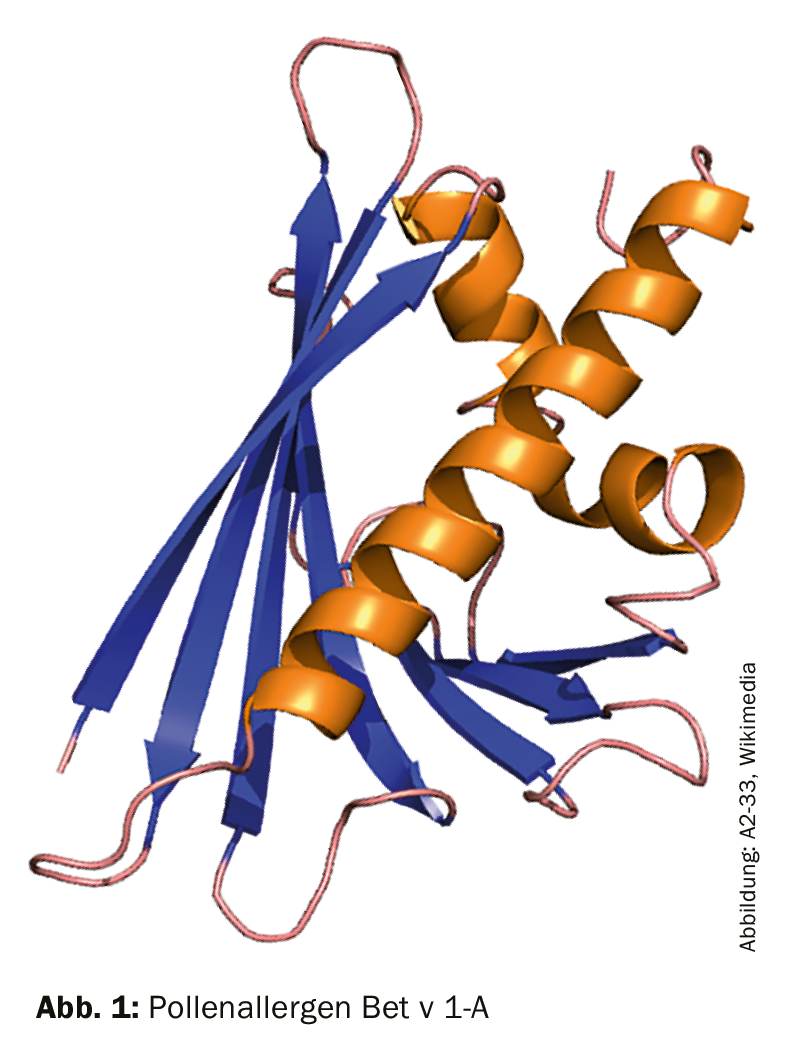
Allergens in pollen from birch trees often trigger allergic reactions in spring (e.g. hay fever, eye inflammation). The peak of birch pollen is in the months of April and May. One of the main allergens is the protein Bet-v-1 (Fig. 1), which is also a marker for sensitization to related tree species such as alder, beech, chestnut, hazel, hornbeam, and oak. Allergy to birch pollen is common in allergic individuals and up to 80% of those affected develop hypersensitivity reactions to Bet-v-1 like proteins in plant foods [1,2]. According to the results of this study, birch pollen can also cause symptoms in non-allergy sufferers. The data indicate that nasal IgG1 and IgG4 levels are predictors of pollen-induced symptoms.


A book with seven seals?

At the current time, not much is known about Bet-v-1-specific immunoglobulin responses to birch pollen, particularly with respect to nasal symptoms. Likewise, little is known about how exactly pollen exposure under natural conditions affects the health of non-allergic individuals. Therefore, the aim of the present study was to assess the effects of birch pollen exposure on respiratory symptoms and on the humoral immune response in allergic and non-allergic subjects: (a) Comparison of local humoral immune responses of patients with allergic rhinitis vs. healthy controls during and outside the pollen season, (b) Evaluation of the kinetic processes of the immune response under natural pollen exposure over the course of one year, (c) Association of immune response profiles with the occurrence of nasal symptoms.

Surprising results

Most surprisingly, not only the allergic but also the non-allergic subjects showed nasal symptoms during the birch pollen season, and these correlated with the pollen concentrations in the air.  Unlike hazel pollen and alder pollen exposures, which result in delayed effects, birch pollen has an immediate effect on symptoms in both allergic and non-allergic individuals.
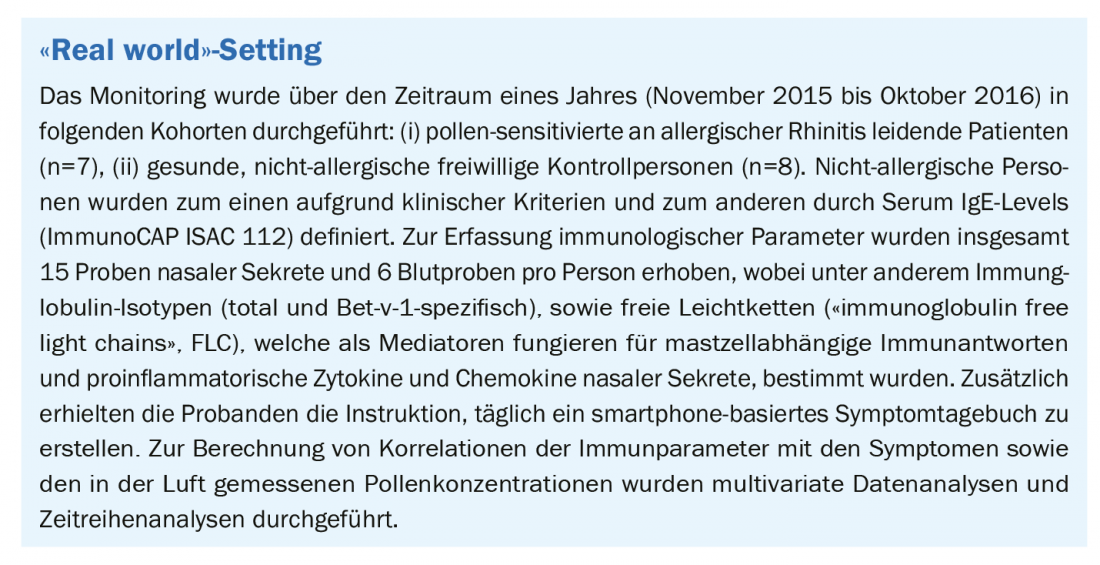


A comparison of values during vs. outside the pollen season shows that total IgA levels, as well as Bet-v-1-specific and FLC levels of nasal secretions are significantly higher during the pollen season only in the non-allergic subjects. A group comparison shows that non-allergy sufferers have significantly higher Bet-v-1 specific IgA, IgG1, and FLC (free light chain) levels during the season than the cohort of allergy sufferers (positively correlated with birch pollen concentration). With regard to IgG4 levels, it was found that after the end of the main pollen season, they were sigfnificantly higher in the allergic patients compared to the control group. The immune profiles of the nasal secretions of both cohorts differed with respect to the following cytokines: IL-33, eotaxin-2, IL-1β.

A principal component analysis based on a correlation matrix of normalized nasal immunomodulators also revealed that the loadings were highest for nasal IgG1 and IgG4.

Source: 46th ADF Annual Meeting, Munich (D), March 13-16, 2019.


Literature:

  1. ImmunoCAP Explorer: www.immunocapexplorer.com/de/molekulare-allergologie/birkenpollen-allergie, last accessed March 17, 2019.
  2. Groh N, et al: Immunoglobulin E and G4 epitopes of the major allergen of birch pollen Bet v 1 share residues critical for antibody binding. Clin Transl Allergy 2013; 3(Suppl3): O15. published online 2013 Jul 25. doi:10.1186/2045-7022-3-S3-O15.
  3. Gökkaya M, et al.: Changes in immunoglobulin levels under real-life pollen exposure: Role of nasal IgA and IgG antibodies. Poster presentation 46th ADF Annual Meeting, Munich, March 13-16, 2019. 


DERMATOLOGIE PRAXIS 2019; 29(2): 33
Autoren
  • Mirjam Peter, M.Sc.
Publikation
  • DERMATOLOGIE PRAXIS
Related Topics
  • Allergy
  • birch pollen
  • Pollen allergy
Previous Article
  • Removal of pathogenic substances

Lipoproteinapheresis – therapeutic option for familial hypercholesterolemia

  • Cardiology
  • Education
  • Hematology
  • RX
View Post
Next Article
  • Tilt training

Escape from powerlessness

  • Cardiology
  • Congress Reports
  • Neurology
  • RX
View Post
You May Also Like
View Post
  • 6 min
  • Pediatric epilepsy

Diazepam nasal spray for infants

    • Education
    • Neurology
    • Pediatrics
    • Pharmacology and toxicology
    • RX
    • Studies
View Post
  • 6 min
  • Findings from research on the generalization of exposure therapy

Treatment of comorbid anxiety

    • Education
    • Psychiatry and psychotherapy
    • RX
    • Studies
asthma_winter_istock-887318372
View Post
  • 4 min
  • Symptom-free despite asthma?

Asthma treatment requirements have increased

    • Congress Reports
    • General Internal Medicine
    • Pharmacology and toxicology
    • Pneumology
    • RX
View Post
  • 9 min
  • Phytotherapy for rhinosinusitis

Evidence, active substances and clinical classification for medical practice

    • Education
    • General Internal Medicine
    • Infectiology
    • ORL
    • Pharmaceutical medicine
    • Phytotherapy
    • RX
    • Studies
View Post
  • 15 min
  • Pulmonary hypertension

PH and lung diseases

    • Cardiology
    • CME continuing education
    • Pneumology
    • RX
    • Studies
View Post
  • 10 min
  • Contact eczema

Causes and prevention at work

    • Allergology and clinical immunology
    • CME continuing education
    • Dermatology and venereology
    • Prevention and health care
    • RX
View Post
  • 6 min
  • Respiratory infections: viral bronchitis or bacterial pneumonia?

Old crucial question in the light of current findings

    • Congress Reports
    • General Internal Medicine
    • Infectiology
    • Pharmaceutical medicine
    • Pharmacology and toxicology
    • Phytotherapy
    • Pneumology
    • RX
View Post
  • 6 min
  • What biomarkers reveal about "biological youth" - and what not (yet)

Epigenetic ageing

    • Education
    • Genetics
    • Geriatrics
    • Prevention and health care
    • RX
    • Studies
  • IBD matters

    Zum Thema
Top CME content
  • 1
    Can you swallow intelligence? Relevant substance classes times for healthy people
  • 2
    PH and lung diseases
  • 3
    Causes and prevention at work
  • 4
    Clinical care from birth to adulthood
  • 5
    Aligning care with the patient

Newsletter

Sign up and stay up to date

Subscribe
Medizinonline Medizinonline
  • Contact
  • General terms and conditions
  • Imprint

Input your search keywords and press Enter.