Medizinonline Medizinonline
  • News
    • News
    • Market & Medicine
  • Patients
    • Disease patterns
    • Diagnostics
    • Therapy
  • Partner Content
    • Diabetes
      • Dia-Month Club – Type 2 Diabetes
      • Diabetes in Motion
    • Gastroenterology
      • IBD matters
    • Oncology
      • Swiss Oncology in motion
    • Orthopedics
      • Osteoporosis in motion
  • Departments
    • Allergology and clinical immunology
    • General Internal Medicine
    • Anesthesiology
    • Angiology
    • Surgery
    • Dermatology and venereology
    • Endocrinology and Diabetology
    • Nutrition
    • Gastroenterology and Hepatology
    • Genetics
    • Geriatrics
    • Gynecology
    • Hematology
    • Infectiology
    • Cardiology
    • Nephrology
    • Neurology
    • Emergency and intensive care medicine
    • Nuclear Medicine
    • Oncology
    • Ophthalmology
    • ORL
    • Orthopedics
    • Pediatrics
    • Pharmacology and toxicology
    • Pharmaceutical medicine
    • Phlebology
    • Physical medicine and rehabilitation
    • Pneumology
    • Prevention and health care
    • Psychiatry and psychotherapy
    • Radiology
    • Forensic Medicine
    • Rheumatology
    • Sports Medicine
    • Traumatology and trauma surgery
    • Tropical and travel medicine
    • Urology
    • Dentistry
  • CME & Congresses
    • CME continuing education
    • Congress Reports
    • Congress calendar
  • Practice
    • Noctimed
    • Practice Management
    • Jobs
    • Interviews
  • Log In
  • Register
  • My account
  • Contact
  • Publications
  • Contact
  • Deutsch
  • English
  • Français
  • Italiano
  • Português
  • Español
Subscribe
Medizinonline Medizinonline
  • News
    • News
    • Market & Medicine
  • Patienten
    • Krankheitsbilder
    • Diagnostik
    • Therapie
  • Partner Content
    • Diabetes
      • Dia-Month Club – Type 2 Diabetes
      • Diabetes in Motion
    • Gastroenterology
      • IBD matters
    • Oncology
      • Swiss Oncology in motion
    • Orthopedics
      • Osteoporosis in motion
    • Phytotherapie
    • Rheumatology
  • Departments
    • Fachbereiche 1-13
      • Allergology and clinical immunology
      • General Internal Medicine
      • Anesthesiology
      • Angiology
      • Surgery
      • Dermatology and venereology
      • Endocrinology and Diabetology
      • Nutrition
      • Gastroenterology and Hepatology
      • Genetics
      • Geriatrics
      • Gynecology
      • Hematology
    • Fachbereiche 14-26
      • Infectiology
      • Cardiology
      • Nephrology
      • Neurology
      • Emergency and intensive care medicine
      • Nuclear Medicine
      • Oncology
      • Ophthalmology
      • ORL
      • Orthopedics
      • Pediatrics
      • Pharmacology and toxicology
      • Pharmaceutical medicine
    • Fachbereiche 26-38
      • Phlebology
      • Physical medicine and rehabilitation
      • Phytotherapy
      • Pneumology
      • Prevention and health care
      • Psychiatry and psychotherapy
      • Radiology
      • Forensic Medicine
      • Rheumatology
      • Sports Medicine
      • Traumatology and trauma surgery
      • Tropical and travel medicine
      • Urology
      • Dentistry
  • CME & Congresses
    • CME continuing education
    • Congress Reports
    • Congress calendar
  • Practice
    • Noctimed
    • Practice Management
    • Jobs
    • Interviews
Login

Sie haben noch keinen Account? Registrieren

  • Cystitis

Does it always have to be the “club” antibiotic?

    • Education
    • General Internal Medicine
    • Infectiology
    • RX
    • Urology
  • 3 minute read

Urinary tract infections are among the most common bacterial diseases, even in childhood. It is estimated that more than one in two women will suffer from cystitis at least once during their lifetime. For many sufferers, the bacteria are kept in check with the help of antibiotics. But is this procedure really always necessary?

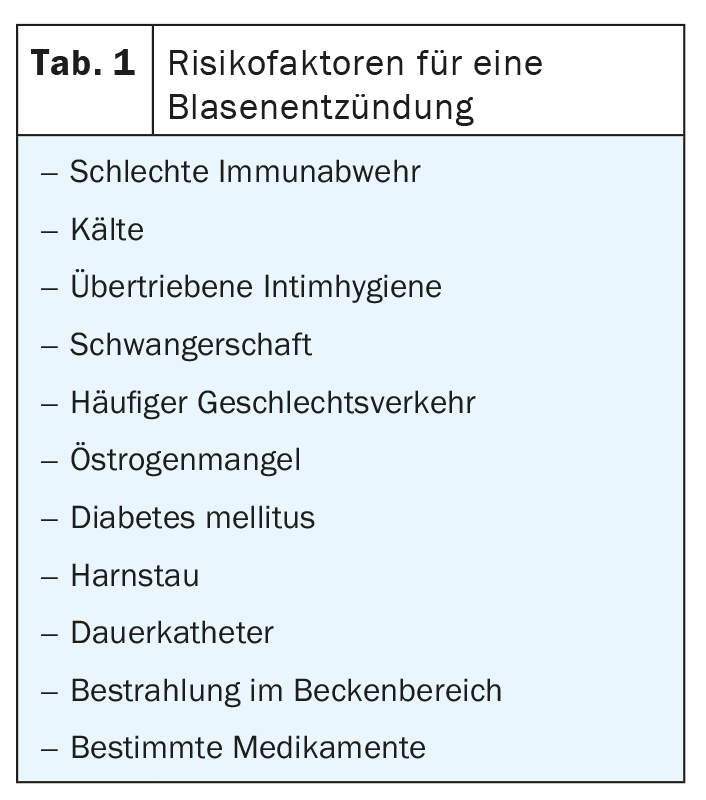
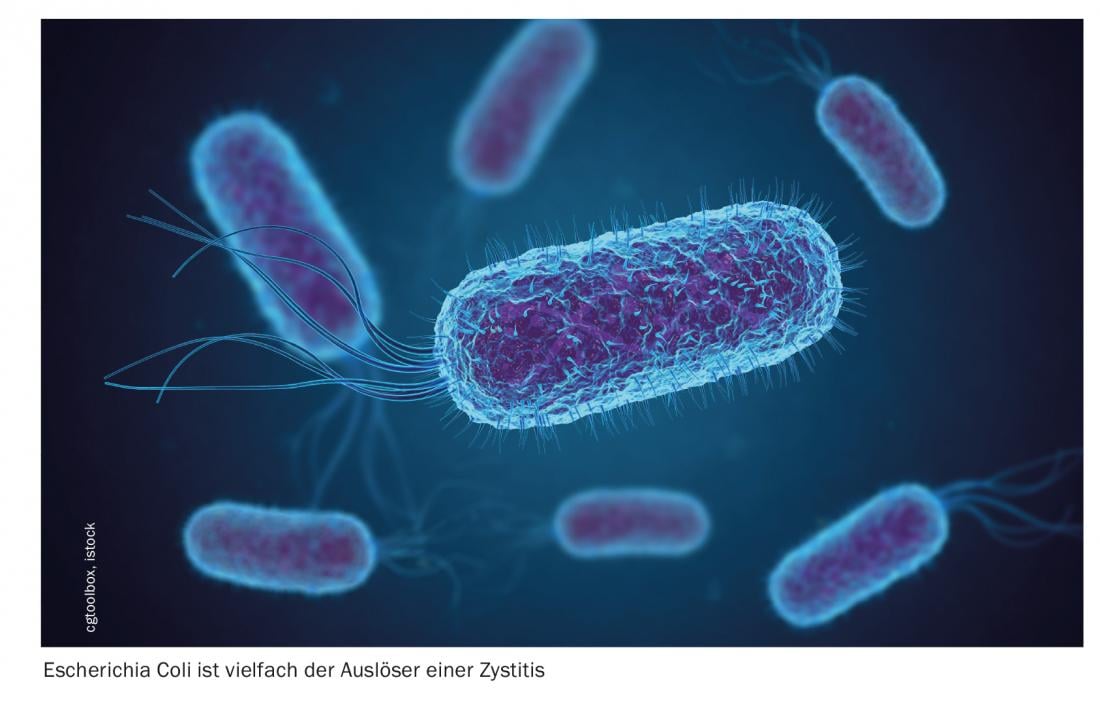
Urinary tract infections are common. Women in particular often suffer from inflammation of the urinary bladder – triggered by Escherichia coli in 80% of cases. In men, cystitis occurs much less frequently due to the much longer urethra. Pain, burning when urinating as well as a frequent urge to urinate considerably limit the quality of life of those affected. If the pathogens enter the urethra, they multiply strongly and rise to the top. This leads to inflammation of the tissue. Normally, this process is prevented by frequent urination and the acidic environment. However, a variety of risk factors can promote the occurrence of urinary tract infections (Table 1).


However, many women suffer from cystitis not only once, but recurrently. Especially at the beginning of the disease, many patients try to treat the symptoms themselves with heat, increased fluid intake, bladder tea or cranberries. In order to shorten the duration of the disease or in case of more severe symptoms, a number of other treatment options are available. Often, an antibiotic is then resorted to. In 2012, 61% of women who saw a doctor for cystitis were prescribed an antibiotic. In the following year, the share even increased by a further 3%. However, especially against the background of increased antibiotic resistance, one must ask whether this approach is always necessary.

Treat uncomplicated cystitis antibiotic-free

Uncomplicated urinary tract infections may be isolated or sporadic or recurrent. Complaints are classified as uncomplicated if there are no relevant functional or anatomic abnormalities in the urinary tract, no relevant renal dysfunction, and no relevant concomitant diseases/differential diagnoses that would suggest urinary tract infection or.  promote serious complications. According to guidelines, antibiotic therapy should be used especially in severe cases of acute uncomplicated cystitis. In contrast, in patients with mild or moderate symptoms, symptomatic therapy alone may be considered as an alternative. Primarily, these are patients with uncomplicated cystitis who are otherwise healthy, non-pregnant, and premenopausal.


Effectively block bacteria

Good antibiotic-free treatment includes taking it easy, drinking plenty of fluids, and effective symptom relief. Herbal, germicidal agents, immunostimulants, and antispasmodics can be soothing in this regard. The use of D-mannose has also proven successful. It is also suitable for prophylaxis of recurrent urinary tract infections. Furthermore, if antibiotic use is necessary, add-on administration shows synergistic effects.

D-mannose is a monosaccharide produced naturally in the body that binds to the hairs of bacteria, coating them and thus neutralizing them. The bacteria can then no longer adhere to the bladder mucosa and are flushed out with the urine. Since the natural sugar can be produced in small quantities by the body itself, D-mannose is not a foreign substance and is therefore well tolerated. Furthermore, it is not metabolized, thus does not participate in glucose metabolism, and does not interact with other substances. Due to its good efficacy and safety profile, the active ingredient can also be used during pregnancy or breastfeeding.


Further reading:

  • www.awmf.org/uploads/tx_szleitlinien/043-044l_S3_Harnwegsinfektionen_2017-05.pdf (last accessed 11/26/2020)
  • www.kbv.de/html/39049.php (last accessed 11/26/2020)
  • www.ksw.ch/app/uploads/2020/02/antibiotika-therapie-richtlinie-ksw.pdf (last accessed 11/26/2020)
  • https://primary-hospital-care.ch/article/doi/phc-d.2020.10179 (last accessed 11/26/2020)


HAUSARZT PRAXIS 2020; 15(12): 38
Autoren
  • Leoni Burggraf
Publikation
  • HAUSARZT PRAXIS
Related Topics
  • cystitis
  • Cystitis
  • Urinary tract infection
Previous Article
  • Head and Neck Tumors

Salivary gland carcinomas: basic principles and pharmacologic interventions.

  • Congress Reports
  • Gastroenterology and Hepatology
  • Oncology
  • RX
  • Studies
  • Surgery
View Post
Next Article
  • Chronic inflammatory bowel disease (CED)

Clinical nutrition therapy in Crohn’s disease and ulcerative colitis – an update.

  • Education
  • Gastroenterology and Hepatology
  • General Internal Medicine
  • RX
  • Studies
View Post
You May Also Like
View Post
  • 5 min
  • Hereditary Transthyretin Amyloidosis with Polyneuropathy

New Treatment Options for ATTRv-PN

    • RX
    • Cardiology
    • Education
    • Gastroenterology and Hepatology
    • General Internal Medicine
    • Neurology
    • Pharmacology and toxicology
    • Studies
View Post
  • 7 min
  • Type 1 Diabetes: A New Disease-Modifying Treatment Approach

Slowing the loss of β-cell function and delaying the progression of the disease

    • RX
    • Education
    • Endocrinology and Diabetology
    • General Internal Medicine
    • Pediatrics
    • Studies
View Post
  • 6 min
  • Liver Cancer

Artificial Intelligence in Precision Oncology—Opportunities and Challenges

    • RX
    • Congress Reports
    • Gastroenterology and Hepatology
    • Oncology
    • Studies
View Post
  • 6 min
  • Acute nonspecific back pain

Implementing a biopsychosocial approach

    • RX
    • Congress Reports
    • General Internal Medicine
    • Orthopedics
    • Physical medicine and rehabilitation
    • Studies
    • Surgery
    • Traumatology and trauma surgery
View Post
  • 9 min
  • Psychedelic-assisted therapy

Current status of PAT

    • RX
    • CME continuing education
    • General Internal Medicine
    • Pharmacology and toxicology
    • Psychiatry and psychotherapy
    • Studies
View Post
  • 10 min
  • Neuropathic Pain

Evidence-Based Neuromodulation Based on Clinical Trials and Real-World Data

    • RX
    • CME continuing education
    • Neurology
    • Physical medicine and rehabilitation
    • Studies
    • Surgery
View Post
  • 14 min
  • Fibromyalgia Syndrome

Development, Diagnosis, Epidemiology, and Treatment of a Disease Entity

    • General Internal Medicine
    • CME continuing education
    • Geriatrics
    • Neurology
    • Orthopedics
    • Rheumatology
    • RX
View Post
  • 7 min
  • Juvenile Idiopathic Arthritis

Early Detection and Targeted Treatment in an Interdisciplinary Setting

    • RX
    • Education
    • General Internal Medicine
    • Pediatrics
    • Rheumatology
  • IBD matters

    Zum Thema
Top CME content
  • 1
    Evidence-Based Neuromodulation Based on Clinical Trials and Real-World Data
  • 2
    Current status of PAT
  • 3
    Development, Diagnosis, Epidemiology, and Treatment of a Disease Entity
  • 4
    Development, Diagnosis, Epidemiology, and Treatment of a Disease Entity
  • 5
    Personalized Treatment Before a Planned Pregnancy

Newsletter

Sign up and stay up to date

Subscribe
Medizinonline Medizinonline
  • Contact
  • General terms and conditions
  • Imprint

Input your search keywords and press Enter.