Medizinonline Medizinonline
  • News
    • News
    • Market & Medicine
  • Patients
    • Disease patterns
    • Diagnostics
    • Therapy
  • Partner Content
    • Diabetes
      • Dia-Month Club – Type 2 Diabetes
      • Diabetes in Motion
      • Diabetes Podcasts
    • Gastroenterology
      • IBD matters
    • Oncology
      • Swiss Oncology in motion
    • Orthopedics
      • Osteoporosis in motion
  • Departments
    • Allergology and clinical immunology
    • General Internal Medicine
    • Anesthesiology
    • Angiology
    • Surgery
    • Dermatology and venereology
    • Endocrinology and Diabetology
    • Nutrition
    • Gastroenterology and Hepatology
    • Genetics
    • Geriatrics
    • Gynecology
    • Hematology
    • Infectiology
    • Cardiology
    • Nephrology
    • Neurology
    • Emergency and intensive care medicine
    • Nuclear Medicine
    • Oncology
    • Ophthalmology
    • ORL
    • Orthopedics
    • Pediatrics
    • Pharmacology and toxicology
    • Pharmaceutical medicine
    • Phlebology
    • Physical medicine and rehabilitation
    • Pneumology
    • Prevention and health care
    • Psychiatry and psychotherapy
    • Radiology
    • Forensic Medicine
    • Rheumatology
    • Sports Medicine
    • Traumatology and trauma surgery
    • Tropical and travel medicine
    • Urology
    • Dentistry
  • CME & Congresses
    • CME continuing education
    • Congress Reports
    • Congress calendar
  • Practice
    • Noctimed
    • Practice Management
    • Jobs
    • Interviews
  • Log In
  • Register
  • My account
  • Contact
  • Publications
  • Contact
  • Deutsch
  • English
  • Français
  • Italiano
  • Português
  • Español
Subscribe
Medizinonline Medizinonline
  • News
    • News
    • Market & Medicine
  • Patienten
    • Krankheitsbilder
    • Diagnostik
    • Therapie
  • Partner Content
    • Diabetes
      • Dia-Month Club – Type 2 Diabetes
      • Diabetes in Motion
      • Diabetes Podcasts
    • Gastroenterology
      • IBD matters
    • Oncology
      • Swiss Oncology in motion
    • Orthopedics
      • Osteoporosis in motion
    • Phytotherapie
    • Rheumatology
  • Departments
    • Fachbereiche 1-13
      • Allergology and clinical immunology
      • General Internal Medicine
      • Anesthesiology
      • Angiology
      • Surgery
      • Dermatology and venereology
      • Endocrinology and Diabetology
      • Nutrition
      • Gastroenterology and Hepatology
      • Genetics
      • Geriatrics
      • Gynecology
      • Hematology
    • Fachbereiche 14-26
      • Infectiology
      • Cardiology
      • Nephrology
      • Neurology
      • Emergency and intensive care medicine
      • Nuclear Medicine
      • Oncology
      • Ophthalmology
      • ORL
      • Orthopedics
      • Pediatrics
      • Pharmacology and toxicology
      • Pharmaceutical medicine
    • Fachbereiche 26-38
      • Phlebology
      • Physical medicine and rehabilitation
      • Phytotherapy
      • Pneumology
      • Prevention and health care
      • Psychiatry and psychotherapy
      • Radiology
      • Forensic Medicine
      • Rheumatology
      • Sports Medicine
      • Traumatology and trauma surgery
      • Tropical and travel medicine
      • Urology
      • Dentistry
  • CME & Congresses
    • CME continuing education
    • Congress Reports
    • Congress calendar
  • Practice
    • Noctimed
    • Practice Management
    • Jobs
    • Interviews
Login

Sie haben noch keinen Account? Registrieren

  • Hypothyroidism

For those over 60 years of age and CHD, dose-reduced substitution.

    • Cardiology
    • Education
    • Endocrinology and Diabetology
    • RX
  • 3 minute read

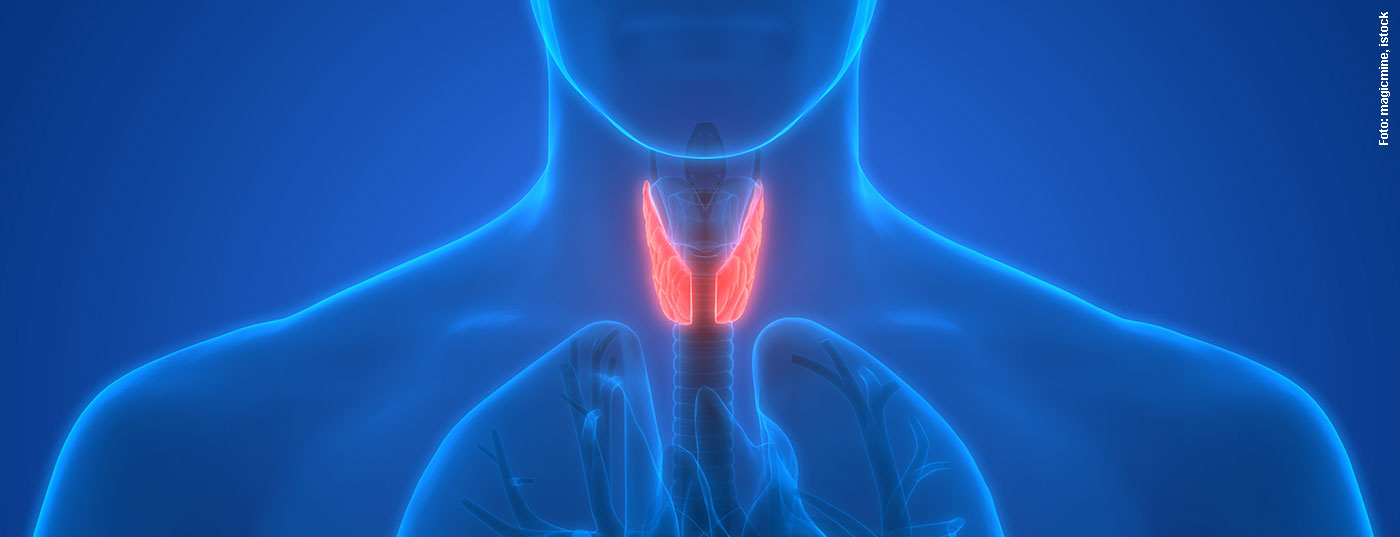
Hormone replacement therapy is still considered the standard treatment for hypothyroidism. Attention should be paid to an adequate dosage regimen. Dose reduction is indicated in those over 60 years of age and in patients with coronary artery disease.

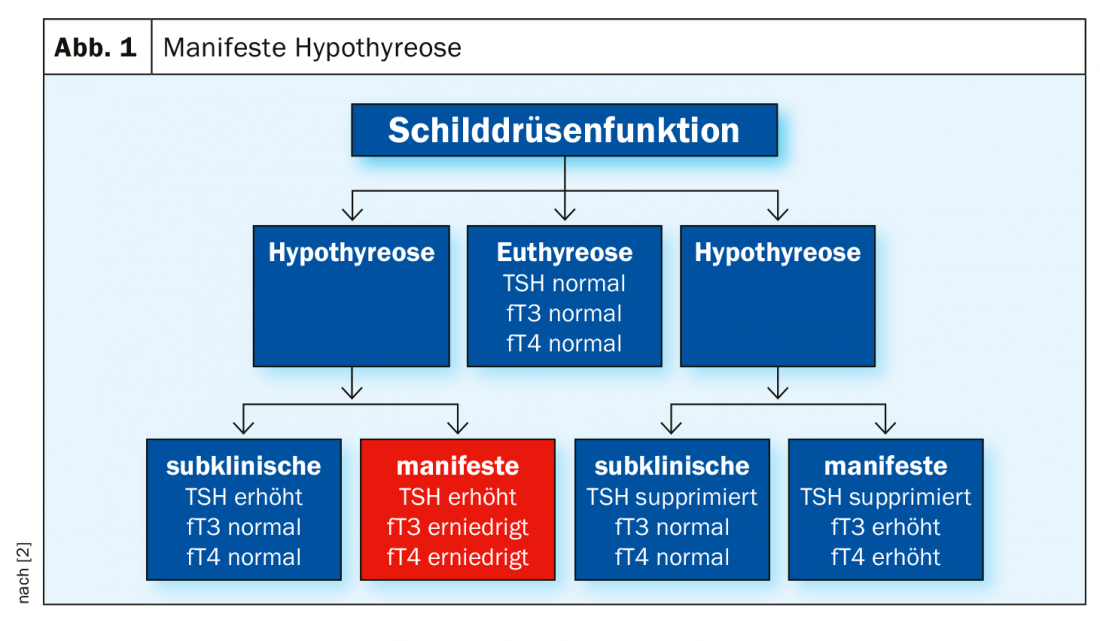
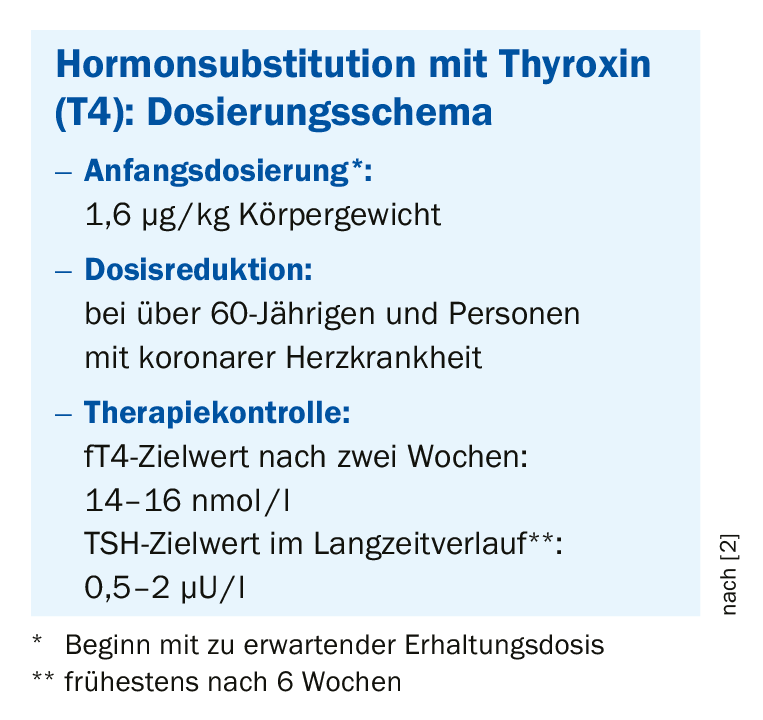
Hypothyroidism is more common than hyperthyroidism, in Europe the prevalence in the general population is about 4% resp. 1% for hyperthyroidism [1,2]. In hypothyroidism, TSH levels are too high and free thyroxine (fT3 and fT4) too low (Fig. 1). Typical symptoms of manifest hypothyroidism include fatigue, listlessness and hypothermia. Other clinical signs include arterial hypertension (especially elevation of diastolic BP) and hyporeflexia, as well as changes in voice (deep, hoarse) and skin (pale). “In old age, hypothyroidism is often oligosymptomatic,” explains Prof. Roger Lehmann, MD, Senior Physician at the Department of Endocrinology, Diabetology and Clinical Nutrition at the University Hospital Zurich [2]. In very rare cases, hypothyroid coma may develop (loss of consciousness, bradypnea). If only the TSH value is elevated, but the peripheral values are normal, this is called subclinical hypothyroidism. Since sufficient thyroid hormones are still produced, there are usually no associated symptoms, but the risk of progression to manifest hypothyroidism is increased. TSH values <5 mU/l are considered the normal range; a clear indication for substitution therapy (Eltroxin®, Euthyrox®) are TSH values >10 mU/l.(Box). The following dosing regimen has proven effective: Start with the expected maintenance dose respectively 1.6 µg/kg body weight, 30 minutes before breakfast [2]. The latter is important because otherwise the drug can be metabolized much less well, the speaker explains. Dose reduction should be made in those over 60 years of age and those with coronary artery disease. If the target values are reached after two weeks, the control interval can be extended. If necessary, a dose adjustment must be made during the course.


Hashimoto’s syndrome is a common cause

In about 40% of cases, hypothyroidism is due to autoimmune thyroiditis. This is a chronic inflammatory disease of the thyroid gland, which is called Hashimoto’s syndrome or chronic lymphocytic thyroiditis. Initially, hyperthyroidism occurs (hashitoxicosis), and later, hypothyroidism develops. In the hypertrophic form of Hashimotos syndrome, diagnostic markers include lymphocytic infiltrates and antibodies to a thyroid enzyme (TPO positive in 80-99%, TAK positive in 35-60%) and diffuse goiter. The second most common cause is idiopathic with more than one third. The third most frequent cause is post-therapeutic hypothyroidism, e.g. after radiation or after total/subtotal thyroidectomy. Among the substances that can trigger drug-induced hypothyroidism is amiodarone. However, the arrhythmic drug does not have to be discontinued; the hypothyroidism can be corrected by substitution therapy with Eltroxin® or Euthyrox®. Thyrostatic drugs, lithium, interferon-α, interleukin-2, and tyrosine kinase inhibitors (checkpoint inhibitors: sunitinib, sorafenib) are other agents that can lead to hypothyroidism. Only rarely occurring in Switzerland are congenital hypothyroidism (cretinism).


Euthyroid Sick Syndrome often occurs in states of weakness

A drop in thyroid hormones is a characteristic allostatic constellation of the thyrotropic control circuit that often occurs in states of starvation and in severe acute or chronic illness. This is called euthyroid sick syndrome or non-thyroidal illness syndrome. This is almost always seen in patients in the ICU, the speaker said. TSH and fT3 (half-life of one day) decrease more rapidly than fT4, which has a half-life of one week. In the convalescent phase, thyroid hormone production is stimulated and there is an increase in TSH (up to 20 mU/l) [3]. Therefore, thyroid levels should be measured repeatedly during this phase. For example, a month later, a previously excessive TSH level may be back within the normal range. In terms of iodine requirements, an adult needs about 150 µg of iodine per day, which in Switzerland is normally covered by the consumption of iodine-containing salt [2].

Literature:

  1. Madariaga AG, et al: The Incidence and Prevalence of Thyroid Dysfunction in Europe: A Meta-Analysis.  J Clin Endocrinol Metab 2014; 99: 923-931.
  2. Lehman R: Hypo- and Hyperthyroidism, Prof. Dr. med. R. Lehmann, FOMF Internal Medicine, Zurich, 24.06.2020.
  3. Lehmann R: Hypo- and Hyperthyroidism, Prof. Dr. med. R. Lehmann, FOMF Internal Medicine, Zurich 04.12.2019.


GP PRACTICE 2020; 15(7): 50
Autoren
  • Mirjam Peter, M.Sc.
Publikation
  • HAUSARZT PRAXIS
Related Topics
  • Age group
  • CHD
  • Dosage scheme
  • dose-reduced substitution
  • Hormone replacement therapy
  • Hypothyroidism
  • Hypothyroidism
  • Standard treatment
Previous Article
  • Rheumatoid arthritis

Using “windows of opportunity” for disease-modifying therapy.

  • Education
  • General Internal Medicine
  • Geriatrics
  • Partner Content
  • Rheumatology
  • RX
View Post
Next Article
  • Antiplatelet agents

Ticagrelor reduces risk of recurrent stroke

  • Cardiology
  • General Internal Medicine
  • Market & Medicine
  • Neurology
  • RX
  • Studies
View Post
You May Also Like
View Post
  • 7 min
  • Geriatric patients

Micronutrient Intake in Older Adults

    • RX
    • Education
    • General Internal Medicine
    • Geriatrics
    • Nutrition
View Post
  • 7 min
  • Crohn's disease: focus on long-term results

“Top-down” approach or classic step therapy?

    • RX
    • Congress Reports
    • Gastroenterology and Hepatology
    • General Internal Medicine
    • Studies
View Post
  • 4 min
  • SwissDiab Study: New Analysis Published

How are diabetes complications associated with quality of life?

    • RX
    • Endocrinology and Diabetology
    • General Internal Medicine
    • Studies
View Post
  • 6 min
  • Pre-acclimatization on Mount Everest

Exploring the physiological limits

    • RX
    • Congress Reports
    • General Internal Medicine
    • Pneumology
    • Studies
    • Tropical and travel medicine
View Post
  • 5 min
  • Viloxazine for ADHD

A non-stimulating option—but with limited evidence

    • RX
    • Education
    • Neurology
    • Pediatrics
    • Pharmacology and toxicology
    • Psychiatry and psychotherapy
    • Studies
View Post
  • 6 min
  • Preclinical study on phytotherapeutic agent

Active ingredient combination of peppermint and caraway oil modified fecal microbiota

    • RX
    • Education
    • Gastroenterology and Hepatology
    • General Internal Medicine
    • Pharmaceutical medicine
    • Phytotherapy
    • Studies
View Post
  • 4 min
  • Casuistry

Rituximab used effectively against IgG4-RD colitis

    • RX
    • Cases
    • Education
    • Gastroenterology and Hepatology
    • General Internal Medicine
    • Radiology
    • Rheumatology
View Post
  • 5 min
  • Sarcoidosis

New options from JAKi to mTOR

    • RX
    • Congress Reports
    • General Internal Medicine
    • Pneumology
    • Studies
  • IBD matters

    Zum Thema
Top CME content
  • 1
    Current State of Knowledge and New Therapeutic Approaches
  • 2
    Why is it so hard to lose weight?
  • 3
    Functional limb preservation between infection control, vascular medicine and resurfacing
  • 4
    Algorithms, avatars and the unburdened mind
  • 5
    Communication as the key to therapy adherence

Newsletter

Sign up and stay up to date

Subscribe
Medizinonline Medizinonline
  • Contact
  • General terms and conditions
  • Imprint

Input your search keywords and press Enter.