Medizinonline Medizinonline
  • News
    • News
    • Market & Medicine
  • Patients
    • Disease patterns
    • Diagnostics
    • Therapy
  • Partner Content
    • Diabetes
      • Dia-Month Club – Type 2 Diabetes
      • Diabetes in Motion
    • Gastroenterology
      • IBD matters
    • Oncology
      • Swiss Oncology in motion
    • Orthopedics
      • Osteoporosis in motion
  • Departments
    • Allergology and clinical immunology
    • General Internal Medicine
    • Anesthesiology
    • Angiology
    • Surgery
    • Dermatology and venereology
    • Endocrinology and Diabetology
    • Nutrition
    • Gastroenterology and Hepatology
    • Genetics
    • Geriatrics
    • Gynecology
    • Hematology
    • Infectiology
    • Cardiology
    • Nephrology
    • Neurology
    • Emergency and intensive care medicine
    • Nuclear Medicine
    • Oncology
    • Ophthalmology
    • ORL
    • Orthopedics
    • Pediatrics
    • Pharmacology and toxicology
    • Pharmaceutical medicine
    • Phlebology
    • Physical medicine and rehabilitation
    • Pneumology
    • Prevention and health care
    • Psychiatry and psychotherapy
    • Radiology
    • Forensic Medicine
    • Rheumatology
    • Sports Medicine
    • Traumatology and trauma surgery
    • Tropical and travel medicine
    • Urology
    • Dentistry
  • CME & Congresses
    • CME continuing education
    • Congress Reports
    • Congress calendar
  • Practice
    • Noctimed
    • Practice Management
    • Jobs
    • Interviews
  • Log In
  • Register
  • My account
  • Contact
  • Publications
  • Contact
  • Deutsch
  • English
  • Français
  • Italiano
  • Português
  • Español
Subscribe
Medizinonline Medizinonline
  • News
    • News
    • Market & Medicine
  • Patienten
    • Krankheitsbilder
    • Diagnostik
    • Therapie
  • Partner Content
    • Diabetes
      • Dia-Month Club – Type 2 Diabetes
      • Diabetes in Motion
    • Gastroenterology
      • IBD matters
    • Oncology
      • Swiss Oncology in motion
    • Orthopedics
      • Osteoporosis in motion
    • Phytotherapie
    • Rheumatology
  • Departments
    • Fachbereiche 1-13
      • Allergology and clinical immunology
      • General Internal Medicine
      • Anesthesiology
      • Angiology
      • Surgery
      • Dermatology and venereology
      • Endocrinology and Diabetology
      • Nutrition
      • Gastroenterology and Hepatology
      • Genetics
      • Geriatrics
      • Gynecology
      • Hematology
    • Fachbereiche 14-26
      • Infectiology
      • Cardiology
      • Nephrology
      • Neurology
      • Emergency and intensive care medicine
      • Nuclear Medicine
      • Oncology
      • Ophthalmology
      • ORL
      • Orthopedics
      • Pediatrics
      • Pharmacology and toxicology
      • Pharmaceutical medicine
    • Fachbereiche 26-38
      • Phlebology
      • Physical medicine and rehabilitation
      • Phytotherapy
      • Pneumology
      • Prevention and health care
      • Psychiatry and psychotherapy
      • Radiology
      • Forensic Medicine
      • Rheumatology
      • Sports Medicine
      • Traumatology and trauma surgery
      • Tropical and travel medicine
      • Urology
      • Dentistry
  • CME & Congresses
    • CME continuing education
    • Congress Reports
    • Congress calendar
  • Practice
    • Noctimed
    • Practice Management
    • Jobs
    • Interviews
Login

Sie haben noch keinen Account? Registrieren

  • Therapeutic Drug Monitoring

For which psychotropic drugs are blood level controls useful?

    • Education
    • Pharmacology and toxicology
    • Psychiatry and psychotherapy
    • RX
  • 3 minute read

Determining blood levels of medications is not only mandatory for some psychotropic drugs, but overall can be very helpful in providing effective therapy. For which preparations may therapeutic drug monitoring be indicated? Fact Sheet.

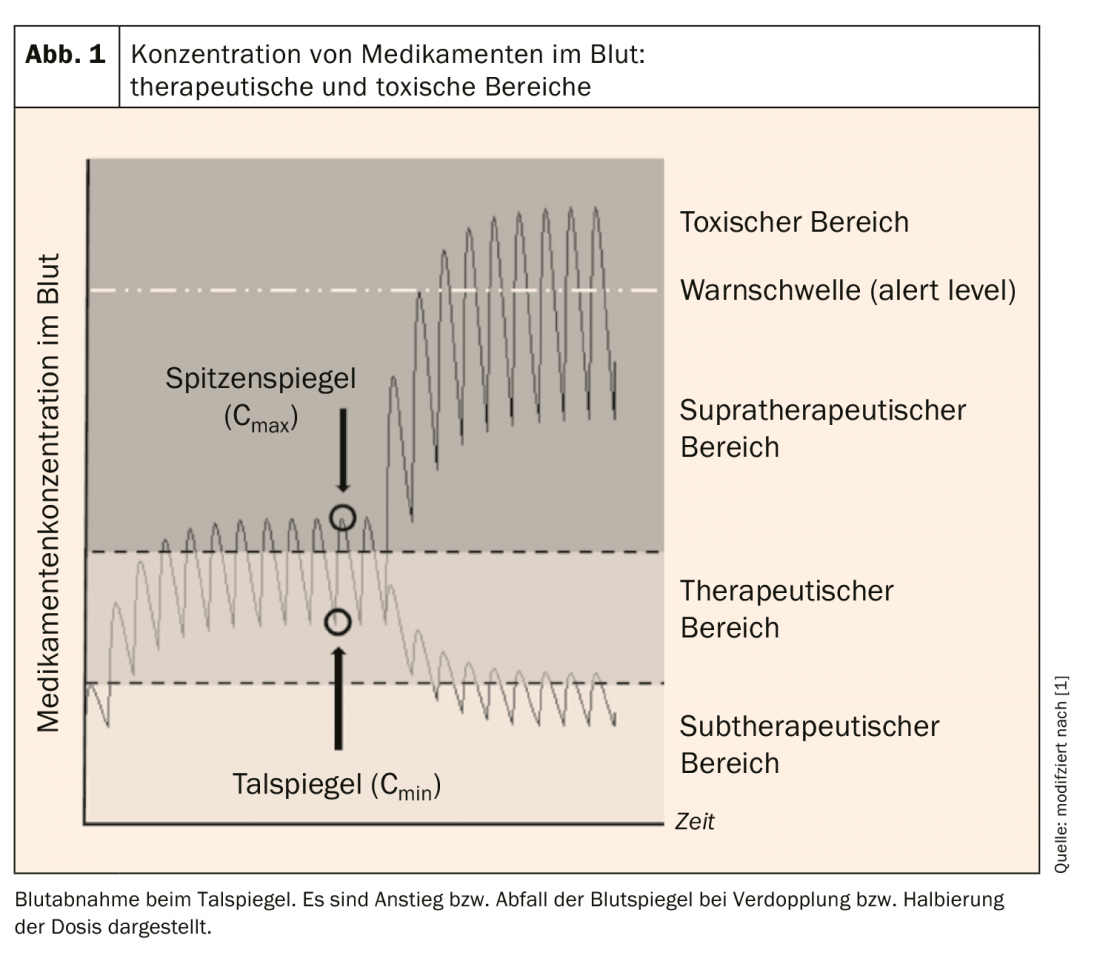
Therapeutic drug monitoring (TDM) – i.e., determining the blood levels of medications – can be very helpful for effective therapy with psychotropic drugs and is even mandatory for some medications. In the case of treatment with lithium, this is known to all practicing psychiatrists. The therapy is adjusted according to the lithium level determined 12 hours after the last tablet intake (“through level”) ( Fig. 1). The general recommendation of a value between 0.6 and 0.8 mml/l lithium may have to be modified depending on the individual situation. Thus, lower levels of lithium may be more beneficial in cases of severe adverse effects (ADEs) or old age. On the other hand, higher levels of lithium may be necessary in the treatment or prophylaxis of mania to achieve the desired therapeutic outcome. The values of the TDM must be evaluated individually.


Psychopharmaceuticals in focus

But what about the other psychotropic drugs? The International Working Group on Neuropsychotropic Drugs (AGNP) has produced a consensus paper on TDM in psychotropic drugs, which is also freely available online: www.agnp.de. This work is very extensive with 89 pages and 1358 references and is not very suitable as a working tool for psychiatrists in practice and in the clinic [1]. An abridged version in “Der Nervenarzt” unfortunately only contains drugs that are available and common in Germany. It also has an error in the level of recommendation regarding carbamazepine and valproate, which was corrected in an ERRATUM [2]. Another abridged version with 13 pages is available in English [3].
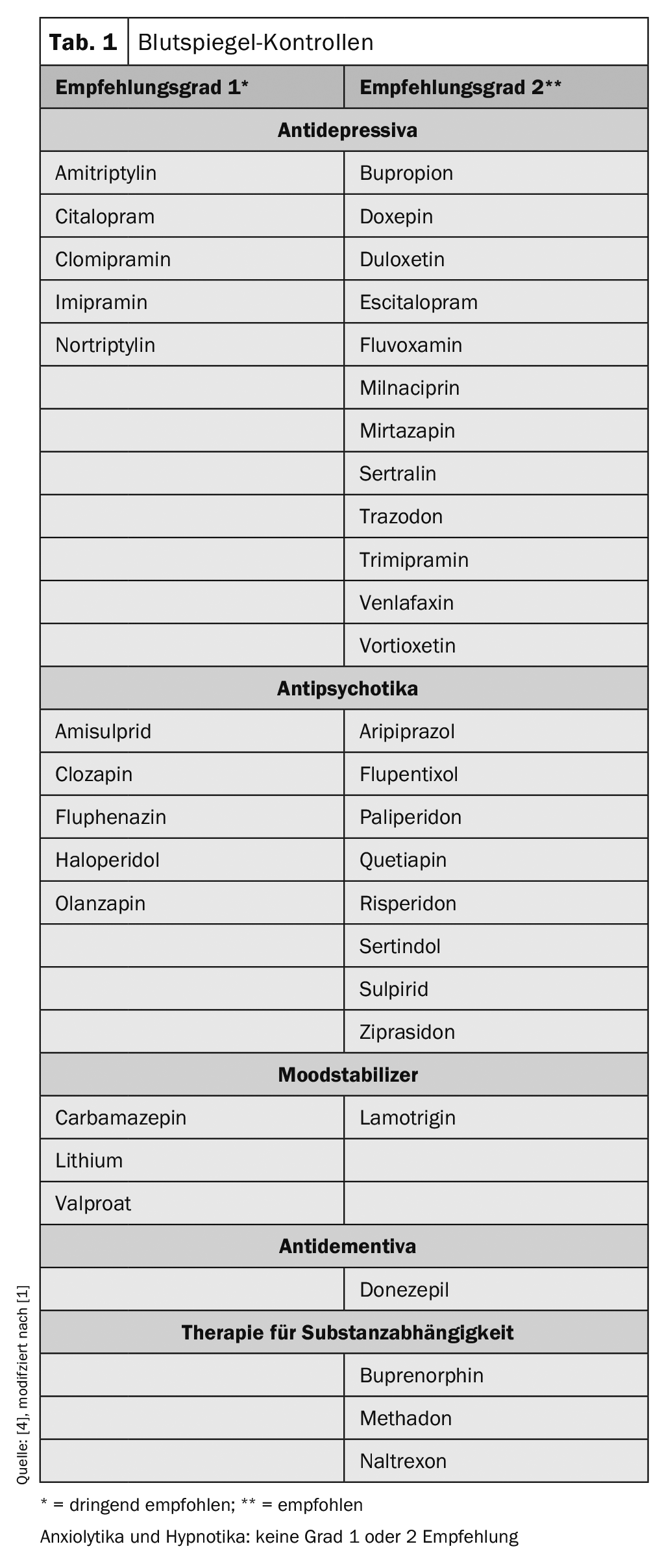


Table 1 lists the psychotropic drugs that are available in Switzerland and Germany, respectively, and for which the AGNP consensus indicates a recommendation grade 1 (“strongly recommended”) or a recommendation grade 2 (“recommended”) [4]. The overview table can help treating physicians to quickly identify the psychotropic drugs for which blood level monitoring makes sense in principle. The blood sample should be taken at the “valley level” before taking the tablets (Fig. 1). No therapeutic ranges of blood levels are given in the list for the individual drugs. These are supplied by the laboratories when the findings are reported [1].
 

When can a blood level control be useful?

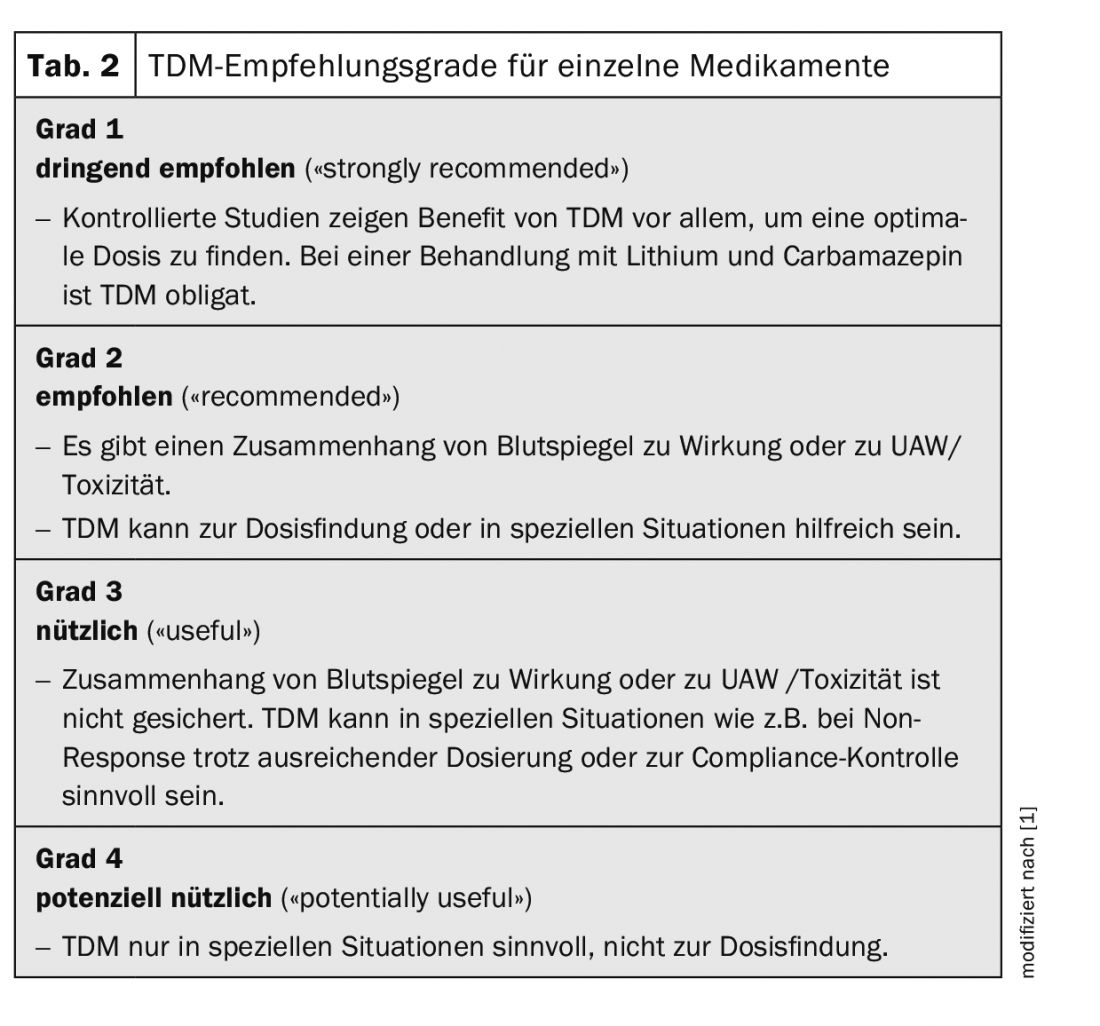
For drugs with recommendation grade 1 or 2, TDM is indicated primarily for dose finding at single dose or at dose change. TDM is also useful for identifying interactions in drug combinations, suspected lack of patient compliance, inadequate efficacy or pronounced ADRs despite therapeutic dosing, or in special patient populations such as pregnant women or the elderly. In all these cases, TDM may also be warranted for drugs that are not in Table 1 (i.e., drugs with recommendation grades 3 or 4; to TDM recommendation grades) (Table 2). Prior to genotyping to test for genetic features in drug metabolism, TDM may also be indicated [5].


Literature:

  1. Hiemke C, Bergemann N, Clement HW, et al: Consensus Guidelines for Therapeutic Drug Monitoring in Neuropsychopharmacology: Update 2017. Pharmacopsychiatry 2018; 51(1-02): e1. doi: 10.1055/s-0037-1600991.
  2. Unterecker S, Hefner G, Baumann P, et al: Therapeutic drug monitoring in neuropsychopharmacology. Summary of the 2017 consensus guidelines of the TDM working group of the AGNP. Neurologist. 2019; 90(5): 463-471. doi: 10.1007/s00115-018-0643-9.
  3. Schoretsanitis G, Paulzen M, Unterecker S, et al: TDM in psychiatry and neurology: A comprehensive summary of the consensus guidelines for therapeutic drug monitoring in neuropsychopharmacology, update 2017; a tool for clinicians. World J Biol Psychiatry. 2018; 19(3): 162-174. doi: 10.1080/15622975.2018.1439595.
  4. Greil W. Inappropriate levels of recommendation for carbamazepine and valproate (letter to the editor) Nervenarzt. 2020; 91(1): 73-74. doi: 10.1007/s00115-019-0763-x. Published online: 19 July 2019
  5. Baumann P, Amstutz U, Jetter A, et al: Principles and evidence for pharmacogenetic testing: personalized therapy for psychotropic drugs. Info Neurology and Psychiatry 2017; 15(6): 21-30.


InFo NEUROLOGY & PSYCHIATRY 2020; 18(2): 18-19.

Autoren
  • Prof. Dr. med. Waldemar Greil
  • Anita Wagner, stud. psych.
Publikation
  • InFo NEUROLOGIE & PSYCHIATRIE
Related Topics
  • Blood level determination
  • psychotropic drugs
  • Therapeutic Drug Monitoring
Previous Article
  • Prevention campaign

It is important to detect cardiovascular diseases and osteoporosis at an early stage!

  • Cardiology
  • Congress Reports
  • General Internal Medicine
  • Geriatrics
  • Market & Medicine
  • Orthopedics
  • Prevention and health care
  • RX
View Post
Next Article
  • Online training Swiss Oncology in Motion

Module: COVID-19 and oncology patients

  • Oncology
  • Partner Content
  • Pneumology
  • RX
  • Training with partner
View Post
You May Also Like
View Post
  • 6 min
  • Innovative Oral Treatment Options for Psoriasis: Icotrokinra and Zasocitinib

First-class immunomodulation combined with convenience—the data available so far is convincing

    • RX
    • Congress Reports
    • Dermatology and venereology
    • Rheumatology
    • Studies
View Post
  • 4 min
  • Preclinical Study on a Special Ginkgo biloba Extract

What role do proanthocyanidins play?

    • RX
    • Education
    • General Internal Medicine
    • Geriatrics
    • Neurology
    • Pharmaceutical medicine
    • Pharmacology and toxicology
    • Phytotherapy
    • Studies
View Post
  • 6 min
  • Myasthenia gravis: immunomodulatory therapies for long-term treatment

Expanded Possibilities Thanks to Innovative Classes of Active Ingredients

    • RX
    • Congress Reports
    • General Internal Medicine
    • Neurology
    • Ophthalmology
    • Studies
View Post
  • 10 min
  • Interstitial Lung Diseases

Update on Idiopathic Pulmonary Fibrosis

    • RX
    • CME continuing education
    • Pneumology
    • Studies
View Post
  • 7 min
  • Plastic surgery and reconstructive microsurgery for DFS

Functional limb preservation between infection control, vascular medicine and resurfacing

    • RX
    • Angiology
    • CME continuing education
    • Dermatology and venereology
    • Endocrinology and Diabetology
    • General Internal Medicine
    • Geriatrics
    • Physical medicine and rehabilitation
    • Surgery
View Post
  • 7 min
  • Ischemic stroke: Are smaller or larger brain arteries affected?

Recent study findings on intravenous lysis therapy with fibrinolytic agents

    • RX
    • Congress Reports
    • Emergency and intensive care medicine
    • General Internal Medicine
    • Neurology
    • Pharmacology and toxicology
    • Studies
    • Surgery
View Post
  • 7 min
  • Interview

“On par with the gold standards for trauma”

    • RX
    • Education
    • Interviews
    • Neurology
    • Physical medicine and rehabilitation
    • Psychiatry and psychotherapy
    • Studies
View Post
  • 5 min
  • Psychology: Emotional Freedom Techniques (EFT)

Emotional Healing Through Tapping

    • RX
    • Education
    • General Internal Medicine
    • Neurology
    • Physical medicine and rehabilitation
    • Psychiatry and psychotherapy
    • Studies
  • IBD matters

    Zum Thema
Top CME content
  • 1
    Functional limb preservation between infection control, vascular medicine and resurfacing
  • 2
    Update on Idiopathic Pulmonary Fibrosis
  • 3
    Update on Idiopathic Pulmonary Fibrosis
  • 4
    Current status of PAT
  • 5
    Darier’s Disease, also known as Follicular Keratosis – Update 2026

Newsletter

Sign up and stay up to date

Subscribe
Medizinonline Medizinonline
  • Contact
  • General terms and conditions
  • Imprint

Input your search keywords and press Enter.