Medizinonline Medizinonline
  • News
    • News
    • Market & Medicine
  • Patients
    • Disease patterns
    • Diagnostics
    • Therapy
  • Partner Content
    • Diabetes
      • Dia-Month Club – Type 2 Diabetes
      • Diabetes in Motion
      • Diabetes Podcasts
    • Gastroenterology
      • IBD matters
    • Oncology
      • Swiss Oncology in motion
    • Orthopedics
      • Osteoporosis in motion
  • Departments
    • Allergology and clinical immunology
    • General Internal Medicine
    • Anesthesiology
    • Angiology
    • Surgery
    • Dermatology and venereology
    • Endocrinology and Diabetology
    • Nutrition
    • Gastroenterology and Hepatology
    • Genetics
    • Geriatrics
    • Gynecology
    • Hematology
    • Infectiology
    • Cardiology
    • Nephrology
    • Neurology
    • Emergency and intensive care medicine
    • Nuclear Medicine
    • Oncology
    • Ophthalmology
    • ORL
    • Orthopedics
    • Pediatrics
    • Pharmacology and toxicology
    • Pharmaceutical medicine
    • Phlebology
    • Physical medicine and rehabilitation
    • Pneumology
    • Prevention and health care
    • Psychiatry and psychotherapy
    • Radiology
    • Forensic Medicine
    • Rheumatology
    • Sports Medicine
    • Traumatology and trauma surgery
    • Tropical and travel medicine
    • Urology
    • Dentistry
  • CME & Congresses
    • CME continuing education
    • Congress Reports
    • Congress calendar
  • Practice
    • Noctimed
    • Practice Management
    • Jobs
    • Interviews
  • Log In
  • Register
  • My account
  • Contact
  • Publications
  • Contact
  • Deutsch
  • English
  • Français
  • Italiano
  • Português
  • Español
Subscribe
Medizinonline Medizinonline
  • News
    • News
    • Market & Medicine
  • Patienten
    • Krankheitsbilder
    • Diagnostik
    • Therapie
  • Partner Content
    • Diabetes
      • Dia-Month Club – Type 2 Diabetes
      • Diabetes in Motion
      • Diabetes Podcasts
    • Gastroenterology
      • IBD matters
    • Oncology
      • Swiss Oncology in motion
    • Orthopedics
      • Osteoporosis in motion
    • Phytotherapie
    • Rheumatology
  • Departments
    • Fachbereiche 1-13
      • Allergology and clinical immunology
      • General Internal Medicine
      • Anesthesiology
      • Angiology
      • Surgery
      • Dermatology and venereology
      • Endocrinology and Diabetology
      • Nutrition
      • Gastroenterology and Hepatology
      • Genetics
      • Geriatrics
      • Gynecology
      • Hematology
    • Fachbereiche 14-26
      • Infectiology
      • Cardiology
      • Nephrology
      • Neurology
      • Emergency and intensive care medicine
      • Nuclear Medicine
      • Oncology
      • Ophthalmology
      • ORL
      • Orthopedics
      • Pediatrics
      • Pharmacology and toxicology
      • Pharmaceutical medicine
    • Fachbereiche 26-38
      • Phlebology
      • Physical medicine and rehabilitation
      • Phytotherapy
      • Pneumology
      • Prevention and health care
      • Psychiatry and psychotherapy
      • Radiology
      • Forensic Medicine
      • Rheumatology
      • Sports Medicine
      • Traumatology and trauma surgery
      • Tropical and travel medicine
      • Urology
      • Dentistry
  • CME & Congresses
    • CME continuing education
    • Congress Reports
    • Congress calendar
  • Practice
    • Noctimed
    • Practice Management
    • Jobs
    • Interviews
Login

Sie haben noch keinen Account? Registrieren

  • Amyloidoses

Heart complaints can give first indication

    • Allergology and clinical immunology
    • Cardiology
    • Hematology
    • Infectiology
    • News
    • Oncology
    • Pediatrics
    • RX
  • 3 minute read

In the field of rare diseases, there is an enormous need to catch up in terms of knowledge, correct diagnosis and therapy. Many primary care physicians are also feeling this right now. After all, what general practitioner would think of light chain (AL) amyloidosis when the patient comes to the office with symptoms that would be diagnosed as mild heart failure on the face of it?

Unfortunately, it often takes a long time until an adequate diagnosis of amyloidosis is made. Patients feel this firsthand because the complaints are steadily increasing. Light-chain amyloidosis is a rare disease and the symptoms are unclear, so that even specialists cannot always classify them immediately. However, because AL amyloidosis is progressive and organ damage increases, rapid and correct diagnosis is central.

Epidemiology

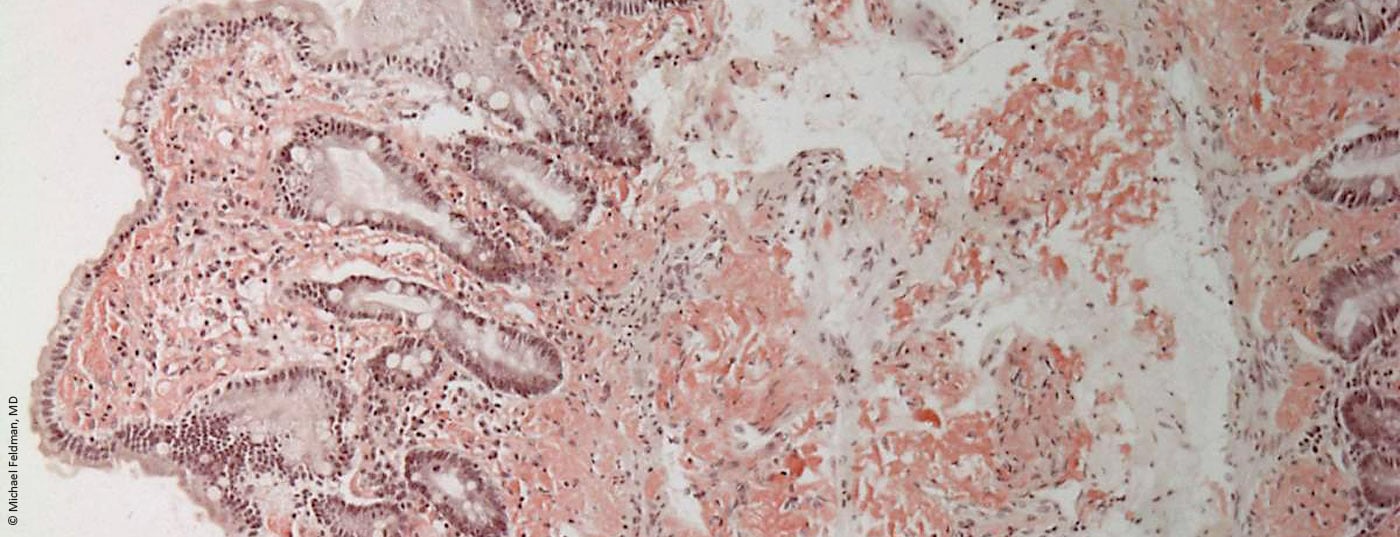
In industrialized countries, AL amyloidosis is the most common form of amyloidosis. Triggers are pathologically increased plasma cells or, rarely, lymphocytes. The antibodies produced as a result are defectively formed in one of the light chains. These therefore clump together and the resulting amyloid is deposited as poorly soluble fibrils in organs. The heart muscles, gastrointestinal tract, kidneys, liver and spleen are particularly often affected. However, unusual tongue swelling along with heart failure may also provide a clue for a more specific diagnosis.

There is a risk of misdiagnosis

Causes of AL amyloidosis include monoclonal gammopathies, previously diagnosed malignant blood disorders, or lymph node disease. However, it can also occur without such and therefore often remains undetected for a very long time in older people. This is also because the classic symptoms, such as shortness of breath, dysrhythmia or edema in the legs, may initially lead to a different diagnosis. However, if additional symptoms such as low blood pressure, weakness, foamy urine, upper abdominal discomfort, numbness or tingling and even stabbing pain, an enlarged tongue and bleeding in the skin around the eyes appear, it is imperative that clarification by a specialist be initiated.

What therapies are available?

Therapeutically, there are so far only limited options for the oncologist. These include moderate to severe chemotherapy in combination with cortisone or stem cell therapy aimed at destroying the bone marrow with reduction of plasma or lymphocytes and antibodies. The severity of chemotherapy here depends on the patient’s age, general condition, and organ resilience. Thalidomide is also used for therapy. However, there is also a potential for side effects here.

Unfortunately, often the side effects of chemotherapy are so severe that patients discontinue it because of them. What other therapies will be available in the future is still uncertain. However, various competence centers are involved in research projects. In a few cases, a few of the symptoms could be alleviated. However, the lost kidney function cannot be restored. Therefore, rapid diagnosis and possible therapeutic intervention is critical to the patient’s quality of life.

In addition to these attempts to halt AL amyloidosis, supportive treatment should be given to the affected organ systems. Here, the informed family doctor takes over the further therapy.

Hopefully, with the increase in knowledge about rare diseases, primary care physicians will be better equipped to consider amyloidosis as a differential diagnosis in the future.

Share and discuss your experiences: Orphanbiotec blog under the topic amyloidosis.
www.blog.orphanbiotec-foundation.com


HAUSARZT PRAXIS 2014; 9(7): 55-56

Partner
  • 20151013_orphan-logo_de
Publikation
  • HAUSARZT PRAXIS
Related Topics
  • AL amyloidosis
  • Heart failure
  • Light chains
  • Orphan Biotec
  • rare diseases
Previous Article
  • Epilepsy

MRI Imaging Overview

  • Education
  • Neurology
  • Oncology
  • Radiology
  • RX
  • Surgery
View Post
Next Article
  • Geriatrics

Dementia and depression in old age

  • Congress Reports
  • Geriatrics
  • Neurology
  • Psychiatry and psychotherapy
  • RX
View Post
You May Also Like
View Post
  • 11 min
  • Peristomal skin health

Focus on preventive care options

    • Cases
    • CME continuing education
    • Dermatology and venereology
    • Gastroenterology and Hepatology
    • Infectiology
    • Physical medicine and rehabilitation
    • Prevention and health care
    • RX
    • Surgery
View Post
  • 7 min
  • Disease-modifying therapies for ATTR-CM

TTR stabilizers, gene silencing and gene scissors: where do we stand?

    • Cardiology
    • Congress Reports
    • Genetics
    • RX
    • Studies
View Post
  • 8 min
  • Proteins in wound healing

Do special amino acids lead to success?

    • CME continuing education
    • Dermatology and venereology
    • Endocrinology and Diabetology
    • Nutrition
    • RX
    • Studies
View Post
  • 4 min
  • HER2+ early breast cancer

DESTINY-Breast11 – neoadjuvant T-DXd without anthracyclines

    • Education
    • Gynecology
    • Oncology
    • RX
    • Studies
View Post
  • 3 min
  • Lavender aromatherapy

Take away the fear of the dentist

    • Dentistry
    • Education
    • Pharmaceutical medicine
    • Phytotherapy
    • Psychiatry and psychotherapy
    • RX
    • Studies
View Post
  • 4 min
  • Digital dermatology: innovative project examples

AI and eHealth tools in HS care

    • Dermatology and venereology
    • General Internal Medicine
    • Practice Management
    • Prevention and health care
    • RX
    • Studies
View Post
  • 5 min
  • Mantle cell lymphoma

Recurrence after BTK inhibition – prognostic factors and treatment options

    • Education
    • Hematology
    • Oncology
    • RX
View Post
  • 3 min
  • Dementia risk with type 2 diabetes

SGLT2 inhibitors with advantages vs. DPP4 inhibitors

    • Education
    • Endocrinology and Diabetology
    • Geriatrics
    • Neurology
    • Pharmacology and toxicology
    • Psychiatry and psychotherapy
    • RX
    • Studies
  • IBD matters

    Zum Thema
Top CME content
  • 1
    Communication as the key to therapy adherence
  • 2
    Solutions to the malnutrition dilemma
  • 3
    Solutions to the malnutrition dilemma
  • 4
    Focus on preventive care options
  • 5
    Fertility preservation from gonads to genomes to genoids

Newsletter

Sign up and stay up to date

Subscribe
Medizinonline Medizinonline
  • Contact
  • General terms and conditions
  • Imprint

Input your search keywords and press Enter.