Medizinonline Medizinonline
  • News
    • News
    • Market & Medicine
  • Patients
    • Disease patterns
    • Diagnostics
    • Therapy
  • Partner Content
    • Diabetes
      • Dia-Month Club – Type 2 Diabetes
      • Diabetes in Motion
      • Diabetes Podcasts
    • Gastroenterology
      • IBD matters
    • Oncology
      • Swiss Oncology in motion
    • Orthopedics
      • Osteoporosis in motion
  • Departments
    • Allergology and clinical immunology
    • General Internal Medicine
    • Anesthesiology
    • Angiology
    • Surgery
    • Dermatology and venereology
    • Endocrinology and Diabetology
    • Nutrition
    • Gastroenterology and Hepatology
    • Genetics
    • Geriatrics
    • Gynecology
    • Hematology
    • Infectiology
    • Cardiology
    • Nephrology
    • Neurology
    • Emergency and intensive care medicine
    • Nuclear Medicine
    • Oncology
    • Ophthalmology
    • ORL
    • Orthopedics
    • Pediatrics
    • Pharmacology and toxicology
    • Pharmaceutical medicine
    • Phlebology
    • Physical medicine and rehabilitation
    • Pneumology
    • Prevention and health care
    • Psychiatry and psychotherapy
    • Radiology
    • Forensic Medicine
    • Rheumatology
    • Sports Medicine
    • Traumatology and trauma surgery
    • Tropical and travel medicine
    • Urology
    • Dentistry
  • CME & Congresses
    • CME continuing education
    • Congress Reports
    • Congress calendar
  • Practice
    • Noctimed
    • Practice Management
    • Jobs
    • Interviews
  • Log In
  • Register
  • My account
  • Contact
  • Publications
  • Contact
  • Deutsch
  • English
  • Français
  • Italiano
  • Português
  • Español
Subscribe
Medizinonline Medizinonline
  • News
    • News
    • Market & Medicine
  • Patienten
    • Krankheitsbilder
    • Diagnostik
    • Therapie
  • Partner Content
    • Diabetes
      • Dia-Month Club – Type 2 Diabetes
      • Diabetes in Motion
      • Diabetes Podcasts
    • Gastroenterology
      • IBD matters
    • Oncology
      • Swiss Oncology in motion
    • Orthopedics
      • Osteoporosis in motion
    • Phytotherapie
    • Rheumatology
  • Departments
    • Fachbereiche 1-13
      • Allergology and clinical immunology
      • General Internal Medicine
      • Anesthesiology
      • Angiology
      • Surgery
      • Dermatology and venereology
      • Endocrinology and Diabetology
      • Nutrition
      • Gastroenterology and Hepatology
      • Genetics
      • Geriatrics
      • Gynecology
      • Hematology
    • Fachbereiche 14-26
      • Infectiology
      • Cardiology
      • Nephrology
      • Neurology
      • Emergency and intensive care medicine
      • Nuclear Medicine
      • Oncology
      • Ophthalmology
      • ORL
      • Orthopedics
      • Pediatrics
      • Pharmacology and toxicology
      • Pharmaceutical medicine
    • Fachbereiche 26-38
      • Phlebology
      • Physical medicine and rehabilitation
      • Phytotherapy
      • Pneumology
      • Prevention and health care
      • Psychiatry and psychotherapy
      • Radiology
      • Forensic Medicine
      • Rheumatology
      • Sports Medicine
      • Traumatology and trauma surgery
      • Tropical and travel medicine
      • Urology
      • Dentistry
  • CME & Congresses
    • CME continuing education
    • Congress Reports
    • Congress calendar
  • Practice
    • Noctimed
    • Practice Management
    • Jobs
    • Interviews
Login

Sie haben noch keinen Account? Registrieren

  • Colon Cancer

New therapeutic perspectives raise hope for improved overall survival

    • Congress Reports
    • Gastroenterology and Hepatology
    • Oncology
    • Prevention and health care
    • RX
    • Studies
  • 3 minute read

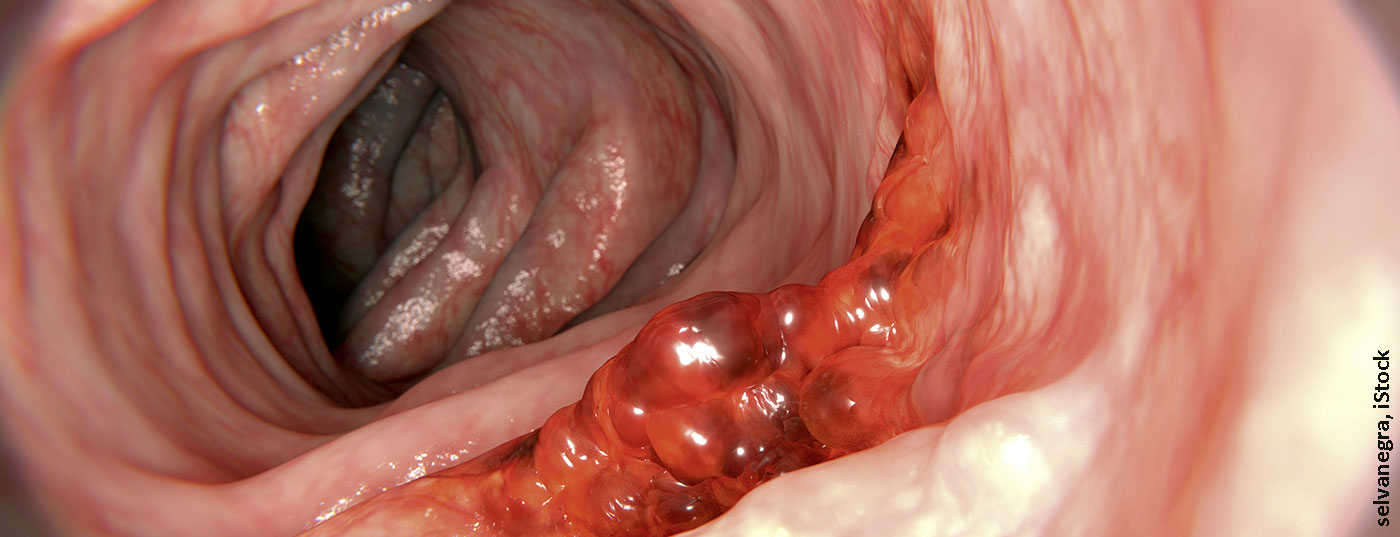
This year’s ASCO brought exciting study results to light. Especially in tumors of the upper and lower gastrointestinal tract, there were developments, some of which had practice-changing potential. In metastatic colon cancer, there were new insights regarding therapy sequence and intensity, and the importance of immunotherapy in tumors with and without microsatellite instability.

Targeted treatment strategies are becoming increasingly important in metastatic colorectal cancer (mCRC). Attention was drawn to the results of the phase III PARADIGM trial comparing panitumumab (PAN) plus mFOLFOX6 or bevacizumab (BEV) plus mFOLFOX6 in patients with chemotherapy-naïve RAS wild-type (WT) mCRC. The primary endpoint was overall survival (OS) in patients with left-sided tumors and in the overall population. Secondary endpoints were progression-free survival (PFS), response rate (RR), and R0 resection rate. 802 patients received either PAN-based or BEV-based treatment in a 1:1 ratio and were followed up for an average of 61 months. PAN was found to significantly improve OS compared to BEV. A significant OS benefit of 3.6 months (37.9 months vs. 34.3 months) was detected in patients with left-sided tumors. For the secondary endpoints, no difference in PFS was observed between the two treatment groups. The rate of response and R0 resection was again higher in the PAN clientele. Accordingly, the combination of PAN with mFOLFOX6 should be established as the new standard for first-line combination therapy in patients with RAS-WT and left-sided mCRC.

In mCRC sufferers with RAS and BRAF wild-type, a chemotherapy doublet (FOLFOX/FOLFIRI) is standard. It was now investigated whether the addition of an anti-EGFR monoclonal antibody (cetuximab or panitumumab) would be useful. For this, 435 patients were treated with either 12 cycles of mFOLFOXIRI plus PAN or 12 cycles of mFOLFOX6 plus PAN, each followed by 5-FU/LV plus PAN until progression. The primary endpoint was defined as the objective response rate (ORR). No significant difference was observed here between the two treatment arms. Disease control rate and tumor shrinkage were also comparable. Accordingly, intensification of chemotherapy does not appear to confer any advantage in treatment management.

Immunotherapy shows sustained survival benefit

Therapy-naïve patients with mCRC tumors and high microsatellite instability (MSI-h) are usually treated with the checkpoint inhibitor pembrolizumab. For pretreated affected individuals, dual immunotherapy with nivolumab (NIVO) plus ipilimumab (IPI) is the standard of care. 5-year follow-up data demonstrate clear benefits for the combination. Patients with dMMR/MSI-h-mCRC were divided into three cohorts until disease progression or the onset of unacceptable toxicity. Be received either NIVO 3 mg/kg Q2W, NIVO 3 mg/kg + IPI 1 mg/kg Q3W (4 doses), followed by NIVO 3 mg/kg Q2W, or first-line NIVO 3 mg/kg Q2W + IPI 1 mg/kg Q6W starting in the second line. The ORR was 39%, 65%, or 71%. The 48-month PFS rates were 36%, 54%, and 51%, and the corresponding 48-month OS rates were 49%, 71%, and 72%.

At 60 months follow-up, PFS rates of 34% and 52% were achieved, respectively. Cohort 3 had not yet reached median follow-up. OS rates were 46% and 68%, respectively. No new safety signals appeared. Therefore, for dual immunotherapy, the solid and persistent PFS and OS benefit was substantiated.

Immunotherapeutic regimens are also being investigated in tumors that do not exhibit microsatellite instability. This is usually a combination of chemotherapy and checkpoint inhibitor. When nivolumab was added to FOLFOXIRI/bevacizumab as first-line therapy in patients with RAS-mutated or BRAF-mutated mCRC regardless of MSS or MSI-h status, promising remission was observed in the MSS group. The ORR was 78.9% and the median duration of response was 7.6 months with an mPFS of 9.8 months. The addition of atezolizumab to the induction treatment regimen of FOLFOXIRI plus bevacizumab versus FOLFOXIRI/bevacizumab alone in mCRC regardless of MSS or MSI-h status was compelling with significantly longer mPFS in the PD-L1 inhibitor arm at 13.1 months vs. 11.5 months. Treatment-refractory MSS-mCRC was treated with avelumab in combination with cetuximab and irinotecan. An initial interim analysis showed that for patients with RAS wild-type, the primary efficacy endpoint of tumor response was met. Encouragingly, 12-month OS was comparable in both RAS wild-type and RAS-mutated tumors, 46.2% vs. 38.5%, respectively.

Congress: ASCO 2022


InFo ONCOLOGY & HEMATOLOGY 2022, 10(4): 26. 
Autoren
  • Leoni Burggraf
Publikation
  • InFo ONKOLOGIE & HÄMATOLOGIE
Related Topics
  • BRAF
  • Colon Cancer
  • Colorectal cancer
  • mCRC
  • RAS
Previous Article
  • Chronic coronary syndrome

Revascularization and drug therapy

  • Cardiology
  • Congress Reports
  • RX
  • Studies
View Post
Next Article
  • Relapsed/refractory chronic lymphocytic leukemia

The treatment of R/R CLL: guidelines, studies and case reports.

  • Cases
  • Hematology
  • Interviews
  • Oncology
  • RX
  • Studies
View Post
You May Also Like
View Post
  • 6 min
  • Secondary prevention after ACS: individually optimized lipid management

Trend towards early combination therapy and new strategies for lowering Lp(a)

    • RX
    • Cardiology
    • Congress Reports
    • General Internal Medicine
    • Studies
View Post
  • 27 min
  • Pediatric Brain Tumors

Psychiatry versus Neuro-Oncology: Diagnostic Pitfalls

    • RX
    • CME continuing education
    • Neurology
    • Oncology
    • Pediatrics
    • Psychiatry and psychotherapy
    • Studies
View Post
  • 13 min
  • What the latest studies on the entire EF spectrum mean for clinical practice

Heart Failure – The 2026 Evidence Update

    • RX
    • Cardiology
    • Education
    • Endocrinology and Diabetology
    • Studies
View Post
  • 5 min
  • Acute ischemic stroke

Alteplase and Tenecteplase Are on the Same Level

    • RX
    • Education
    • Emergency and intensive care medicine
    • Neurology
    • Pharmacology and toxicology
    • Studies
View Post
  • 5 min
  • CKD in People with Type 2 Diabetes: Evidence-Based, Optimized Treatment

SGLT-2 inhibitors and GLP-1 receptor agonists: significant improvement in renal outcomes

    • RX
    • Education
    • Endocrinology and Diabetology
    • General Internal Medicine
    • Nephrology
    • Studies
View Post
  • 2 min
  • Wearables: screening via smartwatch?

New study on atrial fibrillation in high-risk patients

    • RX
    • Cardiology
    • Practice Management
    • Prevention and health care
    • Studies
View Post
  • 11 min
  • Peristomal skin health

Focus on preventive care options

    • RX
    • Cases
    • CME continuing education
    • Dermatology and venereology
    • Gastroenterology and Hepatology
    • Infectiology
    • Physical medicine and rehabilitation
    • Prevention and health care
    • Surgery
View Post
  • 13 min
  • Planning a Family, Pregnancy, and Breastfeeding

Update on Anti-Rheumatic Medications

    • RX
    • CME continuing education
    • General Internal Medicine
    • Gynecology
    • Pharmacology and toxicology
    • Rheumatology
    • Studies
Landingpage Fachinfo Landingpage Button
  • IBD matters

    Zum Thema
Top CME content
  • 1
    Update on Anti-Rheumatic Medications
  • 2
    Psychiatry versus Neuro-Oncology: Diagnostic Pitfalls
  • 3
    Focus on preventive care options
  • 4
    Inflammation as a Treatment Goal in Its Own Right
  • 5
    Personalized Treatment Before a Planned Pregnancy

Newsletter

Sign up and stay up to date

Subscribe
Medizinonline Medizinonline
  • Contact
  • General terms and conditions
  • Imprint

Input your search keywords and press Enter.