Medizinonline Medizinonline
  • News
    • News
    • Market & Medicine
  • Patients
    • Disease patterns
    • Diagnostics
    • Therapy
  • Partner Content
    • Diabetes
      • Dia-Month Club – Type 2 Diabetes
      • Diabetes in Motion
      • Diabetes Podcasts
    • Gastroenterology
      • IBD matters
    • Oncology
      • Swiss Oncology in motion
    • Orthopedics
      • Osteoporosis in motion
  • Departments
    • Allergology and clinical immunology
    • General Internal Medicine
    • Anesthesiology
    • Angiology
    • Surgery
    • Dermatology and venereology
    • Endocrinology and Diabetology
    • Nutrition
    • Gastroenterology and Hepatology
    • Genetics
    • Geriatrics
    • Gynecology
    • Hematology
    • Infectiology
    • Cardiology
    • Nephrology
    • Neurology
    • Emergency and intensive care medicine
    • Nuclear Medicine
    • Oncology
    • Ophthalmology
    • ORL
    • Orthopedics
    • Pediatrics
    • Pharmacology and toxicology
    • Pharmaceutical medicine
    • Phlebology
    • Physical medicine and rehabilitation
    • Pneumology
    • Prevention and health care
    • Psychiatry and psychotherapy
    • Radiology
    • Forensic Medicine
    • Rheumatology
    • Sports Medicine
    • Traumatology and trauma surgery
    • Tropical and travel medicine
    • Urology
    • Dentistry
  • CME & Congresses
    • CME continuing education
    • Congress Reports
    • Congress calendar
  • Practice
    • Noctimed
    • Practice Management
    • Jobs
    • Interviews
  • Log In
  • Register
  • My account
  • Contact
  • Publications
  • Contact
  • Deutsch
  • English
  • Français
  • Italiano
  • Português
  • Español
Subscribe
Medizinonline Medizinonline
  • News
    • News
    • Market & Medicine
  • Patienten
    • Krankheitsbilder
    • Diagnostik
    • Therapie
  • Partner Content
    • Diabetes
      • Dia-Month Club – Type 2 Diabetes
      • Diabetes in Motion
      • Diabetes Podcasts
    • Gastroenterology
      • IBD matters
    • Oncology
      • Swiss Oncology in motion
    • Orthopedics
      • Osteoporosis in motion
    • Phytotherapie
    • Rheumatology
  • Departments
    • Fachbereiche 1-13
      • Allergology and clinical immunology
      • General Internal Medicine
      • Anesthesiology
      • Angiology
      • Surgery
      • Dermatology and venereology
      • Endocrinology and Diabetology
      • Nutrition
      • Gastroenterology and Hepatology
      • Genetics
      • Geriatrics
      • Gynecology
      • Hematology
    • Fachbereiche 14-26
      • Infectiology
      • Cardiology
      • Nephrology
      • Neurology
      • Emergency and intensive care medicine
      • Nuclear Medicine
      • Oncology
      • Ophthalmology
      • ORL
      • Orthopedics
      • Pediatrics
      • Pharmacology and toxicology
      • Pharmaceutical medicine
    • Fachbereiche 26-38
      • Phlebology
      • Physical medicine and rehabilitation
      • Phytotherapy
      • Pneumology
      • Prevention and health care
      • Psychiatry and psychotherapy
      • Radiology
      • Forensic Medicine
      • Rheumatology
      • Sports Medicine
      • Traumatology and trauma surgery
      • Tropical and travel medicine
      • Urology
      • Dentistry
  • CME & Congresses
    • CME continuing education
    • Congress Reports
    • Congress calendar
  • Practice
    • Noctimed
    • Practice Management
    • Jobs
    • Interviews
Login

Sie haben noch keinen Account? Registrieren

  • Polyneuropathies

Optimal treatment of peripheral nerve diseases

    • Education
    • Endocrinology and Diabetology
    • Neurology
    • RX
    • Unkategorisiert
  • 2 minute read

Polyneuropathies are generalized disorders of the peripheral nervous system and, with a prevalence of 5-8%, are most common in patients with chronic alcohol abuse, diabetes, or malignancies. In addition to therapy for the causative disease, analgesics, antidepressants, or anticonvulsants are usually used to alleviate symptoms.

In polyneuropathies (PNP), the motor, sensory and autonomic nerves all affect those parts of the nervous system that lie outside the central nervous system. Distal symmetric PNP is most common, starting in the legs, with a neuronal axonal length-dependent disease process as the causative factor. In addition, polyradiculoneuropathies with proximal and distal involvement or mononeuropathia multiplex with an asymmetric clinical picture may also occur. The pain associated with PNP occurs due to damaged or destroyed nerve fibers, which disrupts the transmission of stimuli.
Multiple causes

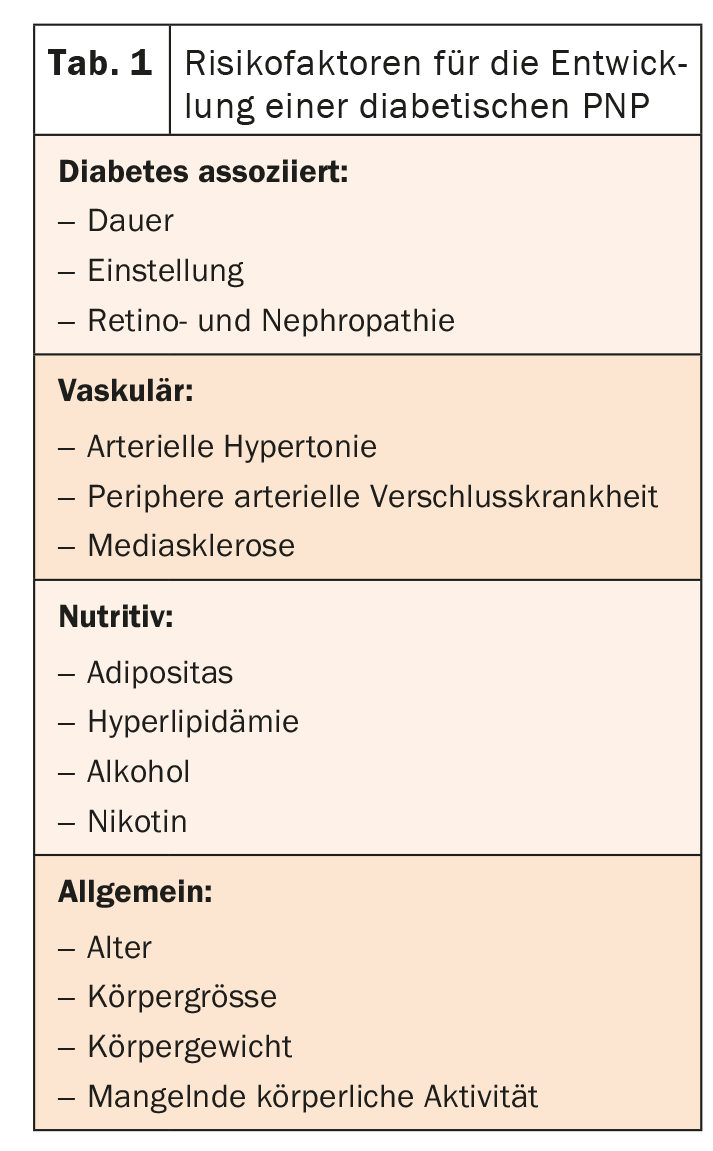
Often PNP are consequences of other diseases such as advanced diabetes. Diabetic neuropathy can be detected in nearly half of all type 2 diabetics. The increased blood sugar is held responsible, which damages the corresponding nerves. However, there are other risk factors (Table 1) . In PNP caused by chronic alcohol abuse, the nerves are toxically damaged. Malnutrition does the rest. The duration of abuse as well as the lifetime amount of alcohol play a role in the development. Chemotherapy-induced neuropathies are the most common neurologic side effect of tumor therapy. However, other drugs and environmental toxins can also trigger PNP (Table 2) .

Comprehensive diagnostics

The main focus of the S1 guideline “Diagnosis of polyneuropathies” is on possible triggers such as cancer drugs, the Zika virus, and gene mutations. Immune checkpoint inhibitors in particular can cause neurological side effects. However, organ transplantation, the hepatitis E and Zika viruses, the anti-FGF3 antibody, and mutations of the SCN9A, SCN10A, SCN11A (small fiber neuropathies) genes and the GLA gene can also cause various polyneuropathies. For diagnostic purposes, history, clinical examination, electrophysiology and standard laboratory are mandatory. In addition, an expanded laboratory, CSF diagnostics, muscle/nerve/skin biopsy, genetics, and diagnostic imaging are recommended.
Consistent therapy of the underlying disease and effective symptom control

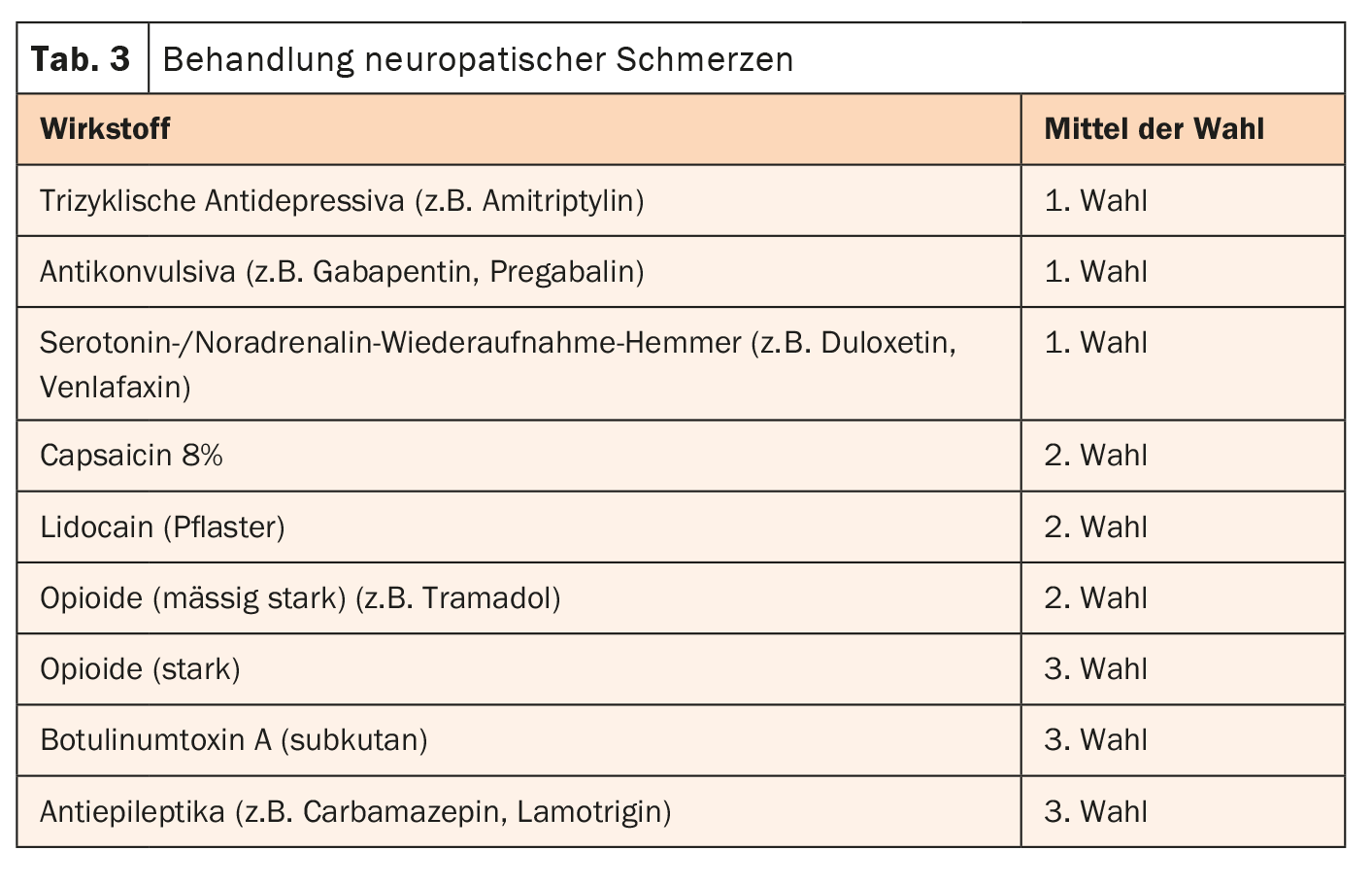
First and foremost, consistent treatment of the causative underlying disease is indicated. Well-controlled blood sugar or abstinence from alcohol can prevent further progression of nerve damage. In addition, the symptoms, first and foremost the pain, must be contained. However, the mechanisms of neuropathic pain are fundamentally different from those of nociceptive pain. Therefore, a special therapy concept is indicated. Analgesics are often not effective. The drugs of choice are primarily tricyclic antidepressants, serotonin/norepinephrine reuptake inhibitors, and anticonvulsants (Table 3) .

Further reading:

  • www.dgn.org/leitlinien/3754-ll-030-067-diagnostik-bei-polyneuropathien-2019 (last accessed on 25.05.2023)
  • www.neurologen-und-psychiater-im-netz.org/neurologie/erkrankungen/polyneuropathie/was-ist-polyneurpathie (last accessed on 25.05.2023)
  • Sommer C, Geber C, Young P, et al: Polyneuropathies – etiology, diagnosis, and treatment options. Dtsch Arztebl Int 2018; 115: 83-90. DOI: 10.3238/arztebl.2018.008.

InFo NEUROLOGY & PSYCHIATRY 2023; 21(3): 24.

Autoren
  • Leoni Burggraf
Publikation
  • InFo NEUROLOGIE & PSYCHIATRIE
Related Topics
  • Alcohol abuse
  • Polyneuropathies
Previous Article
  • Health Promotion

Resilience in the context of general practice

  • General Internal Medicine
  • Practice Management
  • Prevention and health care
  • RX
View Post
Next Article
  • Malignant melanoma of the skin

Current European Guideline at a glance

  • Congress Reports
  • Dermatology and venereology
  • Oncology
  • RX
  • Studies
  • Unkategorisiert
View Post
You May Also Like
View Post
  • 5 min
  • Case study

Discoid Lupus Erythematosus in a 38-Year-Old Woman

    • RX
    • Allergology and clinical immunology
    • Cases
    • Dermatology and venereology
    • Education
    • General Internal Medicine
    • Pharmacology and toxicology
    • Rheumatology
View Post
  • 6 min
  • Hand and Finger Injuries

Preventing Permanent Functional Limitations

    • RX
    • Congress Reports
    • General Internal Medicine
    • Orthopedics
    • Physical medicine and rehabilitation
    • Sports Medicine
    • Surgery
View Post
  • 18 min
  • From an antidiabetic drug to a distinct class of cardiorenal therapies

The Incretin Revolution in Cardiology

    • RX
    • Cardiology
    • Education
    • Endocrinology and Diabetology
    • Nephrology
    • Studies
View Post
  • 3 min
  • Prostate Cancer

Intracrine and Metabolic Tumor Adaptation Under Androgen Deprivation

    • RX
    • Education
    • Oncology
    • Studies
    • Urology
View Post
  • 10 min
  • Alopecia areata in children, adolescents, and adults

New Guideline Classifies the Evidence Base for Topical and Systemic Therapies

    • RX
    • Allergology and clinical immunology
    • Dermatology and venereology
    • Education
    • Studies
View Post
  • 12 min
  • Cardiology and Nutrition

Ultra-Processed Foods and Cardiovascular Risk—The New AHA Position

    • RX
    • Cardiology
    • Endocrinology and Diabetology
    • General Internal Medicine
    • Nutrition
    • Prevention and health care
    • Studies
View Post
  • 7 min
  • Actinic keratoses

Targeted Treatment of Multiple AK Lesions—Balancing Efficacy and Convenience

    • RX
    • Allergology and clinical immunology
    • Congress Reports
    • Dermatology and venereology
    • Studies
View Post
  • 7 min
  • Obesity: A Multimodal and Interdisciplinary Approach

New Swiss Clinical Practice Guideline Provides Guidance

    • RX
    • Congress Reports
    • Endocrinology and Diabetology
    • General Internal Medicine
    • Nutrition
    • Prevention and health care
    • Studies
    • Surgery
  • IBD matters

    Zum Thema
Top CME content
  • 1
    Update on Anti-Rheumatic Medications
  • 2
    Psychiatry versus Neuro-Oncology: Diagnostic Pitfalls
  • 3
    Focus on preventive care options
  • 4
    Inflammation as a Treatment Goal in Its Own Right
  • 5
    Personalized Treatment Before a Planned Pregnancy

Newsletter

Sign up and stay up to date

Subscribe
Medizinonline Medizinonline
  • Contact
  • General terms and conditions
  • Imprint

Input your search keywords and press Enter.