Medizinonline Medizinonline
  • News
    • News
    • Market & Medicine
  • Patients
    • Disease patterns
    • Diagnostics
    • Therapy
  • Partner Content
    • Diabetes
      • Dia-Month Club – Type 2 Diabetes
      • Diabetes in Motion
      • Diabetes Podcasts
    • Gastroenterology
      • IBD matters
    • Oncology
      • Swiss Oncology in motion
    • Orthopedics
      • Osteoporosis in motion
  • Departments
    • Allergology and clinical immunology
    • General Internal Medicine
    • Anesthesiology
    • Angiology
    • Surgery
    • Dermatology and venereology
    • Endocrinology and Diabetology
    • Nutrition
    • Gastroenterology and Hepatology
    • Genetics
    • Geriatrics
    • Gynecology
    • Hematology
    • Infectiology
    • Cardiology
    • Nephrology
    • Neurology
    • Emergency and intensive care medicine
    • Nuclear Medicine
    • Oncology
    • Ophthalmology
    • ORL
    • Orthopedics
    • Pediatrics
    • Pharmacology and toxicology
    • Pharmaceutical medicine
    • Phlebology
    • Physical medicine and rehabilitation
    • Pneumology
    • Prevention and health care
    • Psychiatry and psychotherapy
    • Radiology
    • Forensic Medicine
    • Rheumatology
    • Sports Medicine
    • Traumatology and trauma surgery
    • Tropical and travel medicine
    • Urology
    • Dentistry
  • CME & Congresses
    • CME continuing education
    • Congress Reports
    • Congress calendar
  • Practice
    • Noctimed
    • Practice Management
    • Jobs
    • Interviews
  • Log In
  • Register
  • My account
  • Contact
  • Publications
  • Contact
  • Deutsch
  • English
  • Français
  • Italiano
  • Português
  • Español
Subscribe
Medizinonline Medizinonline
  • News
    • News
    • Market & Medicine
  • Patienten
    • Krankheitsbilder
    • Diagnostik
    • Therapie
  • Partner Content
    • Diabetes
      • Dia-Month Club – Type 2 Diabetes
      • Diabetes in Motion
      • Diabetes Podcasts
    • Gastroenterology
      • IBD matters
    • Oncology
      • Swiss Oncology in motion
    • Orthopedics
      • Osteoporosis in motion
    • Phytotherapie
    • Rheumatology
  • Departments
    • Fachbereiche 1-13
      • Allergology and clinical immunology
      • General Internal Medicine
      • Anesthesiology
      • Angiology
      • Surgery
      • Dermatology and venereology
      • Endocrinology and Diabetology
      • Nutrition
      • Gastroenterology and Hepatology
      • Genetics
      • Geriatrics
      • Gynecology
      • Hematology
    • Fachbereiche 14-26
      • Infectiology
      • Cardiology
      • Nephrology
      • Neurology
      • Emergency and intensive care medicine
      • Nuclear Medicine
      • Oncology
      • Ophthalmology
      • ORL
      • Orthopedics
      • Pediatrics
      • Pharmacology and toxicology
      • Pharmaceutical medicine
    • Fachbereiche 26-38
      • Phlebology
      • Physical medicine and rehabilitation
      • Phytotherapy
      • Pneumology
      • Prevention and health care
      • Psychiatry and psychotherapy
      • Radiology
      • Forensic Medicine
      • Rheumatology
      • Sports Medicine
      • Traumatology and trauma surgery
      • Tropical and travel medicine
      • Urology
      • Dentistry
  • CME & Congresses
    • CME continuing education
    • Congress Reports
    • Congress calendar
  • Practice
    • Noctimed
    • Practice Management
    • Jobs
    • Interviews
Login

Sie haben noch keinen Account? Registrieren

  • Diseases of the scalp

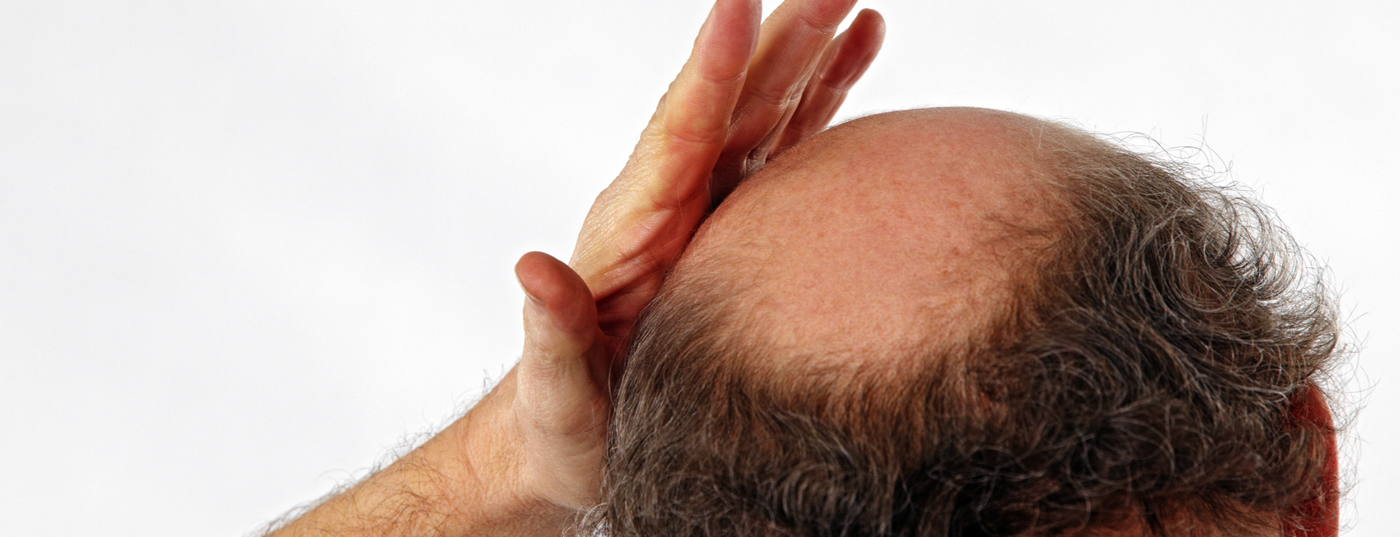
“To some extent, follicular miniaturization is reversible”.

    • Dermatology and venereology
    • Endocrinology and Diabetology
    • Geriatrics
    • Interviews
    • RX
  • 4 minute read

In an interview with DERMATOLOGIE PRAXIS, Dr. med. Myriam Wyss Fopp, FMH specialist in dermatology, allergology and clinical immunology, Meilen, provides information about various trichological diseases associated with hair loss and scalp problems. Emphasis will be placed on causes and treatment options for androgenetic alopecia, scalp irritation, and dandruff.

Dr. Wyss, is it now known from a medical point of view exactly which genes are responsible for androgenetic alopecia or interact in androgenetic alopecia?

Dr. Wyss:
The role of genetics in androgenetic alopecia (AGA) is indisputable. For example, AGA is more common in Caucasians, and there is a familial clustering of occurrence. However: while individual genes have been identified that are associated with AGA. However, the exact pathogenesis is not yet clear. It is known that polymorphisms of the androgen receptor gene, located on the X chromosome, are associated with AGA in males. However, a variety of genes are probably responsible for the manifestation of the “androgenetic alopecia” phenotype. Recently, four new risk loci have been identified on chromosomes 2, 3, 5, and 12. It was also hypothesized that AGA in females and males share common susceptibility genes. Thus, these four loci were studied in 585 women with androgenetic hair loss, but no association was found. The etiology of androgenetic alopecia in women is still poorly understood. Alterations in the aromatase pathway and estrogen receptor 2 gene are thought to play an important role.

Can contemporary therapy achieve regeneration of hair roots or only prevent the progression of AGA?
The primary goal of therapy is to stop hair loss. AGA is a slowly progressive process in which there is a progressive shortening of the anagen phase of the hair in a specific area of the scalp. This results in increasing follicular miniaturization, which fortunately is also reversible to a certain extent. This was demonstrated with both finasteride tablets and minoxidil solution.

What are the therapy methods for men and for women?
Drugs with scientific proof of efficacy that are on the market are finasteride tablets and minoxidil solution for men, and minoxidil solution for women.

Is it possible to treat AGA altogether so that it does not continue even after the drug is discontinued? 
You raise an important point here that should not be missing from patient education: No, the drugs only work as long as they are used.

How important is the timing of the start of therapy?
Very important. The earlier the therapy starts, the more effective it is. It is much easier to preserve hair than to restore lost hair. Often a lot of time and also money is lost until a well-founded clarification of the cause takes place, which is a pity.

If we now move on to quite everyday problems with the scalp: How to distinguish a one-time or temporarily irritated scalp from a permanent problem scalp?
Irritated scalp may manifest as scaling, erythema, pruritus, trichodynia, dysesthesia, sebostasis as well as seborrhea.
Transient scalp irritation is either self-limiting or can often be improved with mild, anti-irritant conditioning shampoos (e.g., containing witch hazel or cardiosperm extracts) or shampoos containing ketoconazole. 
Permanent scalp irritation often occurs in the form of seborrheic scalp dermatitis, as a manifestation of psoriasis or atopic dermatitis.

How to re-grease a dry scalp?
For example, with care packs that can also be left on the hair overnight. The use of mild shampoos enriched with conditioning agents is important. In eczema with a sebostatic character, externals containing alcohol (e.g., in the form of solutions containing corticosteroids) should not be prescribed, but creams, e.g., steroid creams, should be prescribed overnight.

What causes contribute to the overproduction of sebaceous glands (oily scalp)?
Genetic factors also play a role here. Hyperseborrhea is often the result of androgen action and therefore associated with acne, hirsutism, and androgenetic alopecia, as is the case with polycystic ovary syndrome. Men are more often affected by hyperseborrhea than women. A known cause is Parkinsonism, it is called salve face.

Now to the subject of dandruff: Are these primarily to be regarded as a cosmetic problem or do they tend to occur more as an accompanying symptom of a skin disease?
Both. The cause of head dandruff is accelerated proliferation of epidermal cells. They can appear as simple, dry scalp dandruff (pityriasis simplex), or then in the area of inflamed areas of the scalp as a concomitant of the skin disease. Examples are psoriasis capillitii, seborrheic as well as atopic scalp eczema, but rare dermatoses such as pemphigus foliaceus should also be considered. 

How does the therapy of dry and greasy dandruff differ?
This question is important because the treatment actually differs. Salicylic acid is suitable for desquamation in both forms. For dry dandruff (pityrisis simplex) we prefer an oil base, for greasy dandruff (pityriasis steatoides) lotions. If an additional anti-inflammatory effect is desired, a cortisone cream is recommended for dry dandruff, and a steroid-containing lotion, the so-called “scalp application”, for oily dandruff. In addition, medicinal shampoos are of course used, e.g. with the ingredients ketoconazole, piroxolamine or miconazole. For relapse prophylaxis, a gradual therapy over several weeks is recommended or, depending on the case, a maintenance therapy, e.g. once a week.

What recommendations do you give to patients who suffer from dandruff and are dependent on daily hair washing for job and hygiene reasons?
That daily hair washing is harmful or should lead to hair loss is a common misconception that patients need to be educated about. Hair may be washed every day without further ado. In pityriasis amiantacea (asbestos lichen), daily hair washing is crucial for therapeutic success. In my experience, this scalp disease tends to affect female patients who only have their hair washed at the hairdresser’s every one or two weeks. It often takes some convincing to break this habit.

Do the weather and season contribute to head flaking?
Yes, here is an example: In the dry season in winter we observe more often atopic scalp eczema.

Interview: Andreas Grossmann

Dermatology Practice 2014; 24(1): 30-31

Publikation
  • DERMATOLOGIE PRAXIS
Related Topics
  • AGA
  • androgenetic alopecia
  • Cortisone
  • Finasteride
  • follicle miniaturization
  • Genetics
  • hyperseborrhea
  • Minoxidil
  • oily scalp
  • psoriasis capillitii
  • regeneration
  • salicylic acid
  • scalp
Previous Article
  • Medium deep and deep peeling

“Chemical peels are inexpensive, highly effective and have few complications.”

  • Congress Reports
  • Dermatology and venereology
  • RX
View Post
Next Article
  • New section - Pediatric corner

Acute nail loss

  • Cases
  • Dermatology and venereology
  • Pediatrics
  • RX
View Post
You May Also Like
View Post
  • 3 min
  • IBD in childhood

Pneumococcal vaccination without negative consequences

    • RX
    • Education
    • Gastroenterology and Hepatology
    • General Internal Medicine
    • Infectiology
    • Pediatrics
    • Prevention and health care
View Post
  • 7 min
  • Plastic surgery and reconstructive microsurgery for DFS

Functional limb preservation between infection control, vascular medicine and resurfacing

    • RX
    • Angiology
    • CME continuing education
    • Dermatology and venereology
    • Endocrinology and Diabetology
    • General Internal Medicine
    • Geriatrics
    • Physical medicine and rehabilitation
    • Surgery
View Post
  • 14 min
  • Seborrheic Dermatitis in Adults and Adolescents

Current State of Knowledge and New Therapeutic Approaches

    • RX
    • CME continuing education
    • Dermatology and venereology
    • Studies
View Post
  • 7 min
  • Orthobiologics for knee osteoarthritis

PRP and hyaluronic acid injections as building blocks in a multimodal concept

    • RX
    • Congress Reports
    • General Internal Medicine
    • Orthopedics
    • Rheumatology
    • Sports Medicine
    • Studies
    • Surgery
View Post
  • 3 min
  • Soft tissue sarcomas of the lower extremity

Diagnostics, subtypes and treatment options

    • RX
    • Education
    • Oncology
View Post
  • 38 min
  • Psychological dependence on AI assistants, smartphones and short videos

Algorithms, avatars and the unburdened mind

    • RX
    • CME continuing education
    • Neurology
    • Pediatrics
    • Prevention and health care
    • Psychiatry and psychotherapy
    • Studies
View Post
  • 8 min
  • Psychooncology

Communication as the key to therapy adherence

    • CME continuing education
    • Practice Management
    • RX
View Post
  • 12 min
  • The Brain and the Motivation to Eat

Why is it so hard to lose weight?

    • RX
    • CME continuing education
    • Endocrinology and Diabetology
    • General Internal Medicine
    • Nutrition
    • Pharmacology and toxicology
    • Prevention and health care
    • Psychiatry and psychotherapy
    • Studies
  • IBD matters

    Zum Thema
Top CME content
  • 1
    Current State of Knowledge and New Therapeutic Approaches
  • 2
    Why is it so hard to lose weight?
  • 3
    Functional limb preservation between infection control, vascular medicine and resurfacing
  • 4
    Algorithms, avatars and the unburdened mind
  • 5
    Communication as the key to therapy adherence

Newsletter

Sign up and stay up to date

Subscribe
Medizinonline Medizinonline
  • Contact
  • General terms and conditions
  • Imprint

Input your search keywords and press Enter.