Medizinonline Medizinonline
  • News
    • News
    • Market & Medicine
  • Patients
    • Disease patterns
    • Diagnostics
    • Therapy
  • Partner Content
    • Dermatology
      • Atopic dermatitis and psoriasis news
    • Diabetes
      • Dia-Month Club – Type 2 Diabetes
      • Diabetes in Motion
      • Diabetes Podcasts
    • Gastroenterology
      • IBD matters
    • Oncology
      • Swiss Oncology in motion
    • Orthopedics
      • Osteoporosis in motion
  • Departments
    • Allergology and clinical immunology
    • General Internal Medicine
    • Anesthesiology
    • Angiology
    • Surgery
    • Dermatology and venereology
    • Endocrinology and Diabetology
    • Nutrition
    • Gastroenterology and Hepatology
    • Genetics
    • Geriatrics
    • Gynecology
    • Hematology
    • Infectiology
    • Cardiology
    • Nephrology
    • Neurology
    • Emergency and intensive care medicine
    • Nuclear Medicine
    • Oncology
    • Ophthalmology
    • ORL
    • Orthopedics
    • Pediatrics
    • Pharmacology and toxicology
    • Pharmaceutical medicine
    • Phlebology
    • Physical medicine and rehabilitation
    • Pneumology
    • Prevention and health care
    • Psychiatry and psychotherapy
    • Radiology
    • Forensic Medicine
    • Rheumatology
    • Sports Medicine
    • Traumatology and trauma surgery
    • Tropical and travel medicine
    • Urology
    • Dentistry
  • CME & Congresses
    • CME continuing education
    • Congress Reports
    • Congress calendar
  • Practice
    • Noctimed
    • Practice Management
    • Jobs
    • Interviews
  • Log In
  • Register
  • My account
  • Contact
  • Publications
  • Contact
  • Deutsch
  • English
  • Français
  • Italiano
  • Português
  • Español
Subscribe
Medizinonline Medizinonline
  • News
    • News
    • Market & Medicine
  • Patienten
    • Krankheitsbilder
    • Diagnostik
    • Therapie
  • Partner Content
    • Dermatology
      • Atopic dermatitis and psoriasis news
    • Diabetes
      • Dia-Month Club – Type 2 Diabetes
      • Diabetes in Motion
      • Diabetes Podcasts
    • Gastroenterology
      • IBD matters
    • Oncology
      • Swiss Oncology in motion
    • Orthopedics
      • Osteoporosis in motion
    • Phytotherapie
    • Rheumatology
  • Departments
    • Fachbereiche 1-13
      • Allergology and clinical immunology
      • General Internal Medicine
      • Anesthesiology
      • Angiology
      • Surgery
      • Dermatology and venereology
      • Endocrinology and Diabetology
      • Nutrition
      • Gastroenterology and Hepatology
      • Genetics
      • Geriatrics
      • Gynecology
      • Hematology
    • Fachbereiche 14-26
      • Infectiology
      • Cardiology
      • Nephrology
      • Neurology
      • Emergency and intensive care medicine
      • Nuclear Medicine
      • Oncology
      • Ophthalmology
      • ORL
      • Orthopedics
      • Pediatrics
      • Pharmacology and toxicology
      • Pharmaceutical medicine
    • Fachbereiche 26-38
      • Phlebology
      • Physical medicine and rehabilitation
      • Phytotherapy
      • Pneumology
      • Prevention and health care
      • Psychiatry and psychotherapy
      • Radiology
      • Forensic Medicine
      • Rheumatology
      • Sports Medicine
      • Traumatology and trauma surgery
      • Tropical and travel medicine
      • Urology
      • Dentistry
  • CME & Congresses
    • CME continuing education
    • Congress Reports
    • Congress calendar
  • Practice
    • Noctimed
    • Practice Management
    • Jobs
    • Interviews
Login

Sie haben noch keinen Account? Registrieren

  • Obstructive sleep apnea

With mask or splint for better sleep

    • Congress Reports
    • General Internal Medicine
    • ORL
    • Pneumology
    • RX
    • Surgery
  • 3 minute read

Obstructive sleep apnea affects the quality of life of those affected and is also associated with an increased cardiovascular risk. The indication for treatment results from the symptoms that occur. Diagnostic tools and therapeutic options were discussed at the SGAIM Fall Congress.

Obstructive sleep apnea (OSA) can manifest in many ways. Characteristic daytime symptoms include excessive daytime sleepiness (television sleep, car sleep), difficulty concentrating, and headaches. Nighttime symptoms include loud, irregular snoring and pauses in breathing, associated with the feeling of not having had a restful night’s sleep. Resulting complications and long-term consequences include arterial hypertension and other cardiovascular diseases, as well as an increased risk of accidents, e.g., due to falling asleep at the wheel of a car.

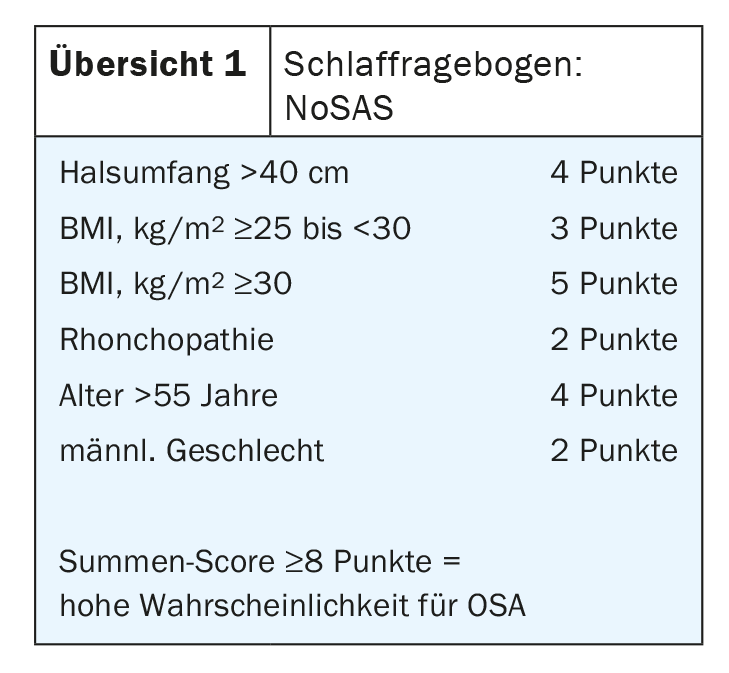
When OSA is suspected, it is advisable to distinguish between male and female patients, as the specific symptoms can be very different, explained PD Dr. Tsogyal Daniela Latshangh, Chief of Pneumology/Sleep Medicine at the Graubünden Cantonal Hospital in Chur: “Women, for example, suffer more frequently from morning headaches and fatigue, and insomnia, restless legs, depression, nightmares and palpitations also occur more frequently in them. Men, on the other hand, suffer more from snoring and observed apneas. In them, the influence of alcohol on OSA is noticeable and the discomfort increases in the supine position. To arrive at the diagnosis of OSA, the expert recommended the use of sleep questionnaires such as NoSAS or STOP Bang (Overviews 1 and 2), which usually reliably point the way.
 

Diagnostics

In order to diagnostically confirm the suspicion of obstructive sleep apnea, the physician has various measurement techniques at his disposal. Advanced pulse oximetry is a screening device that should be worn for at least 6 hours, and the device cannot distinguish whether the patient is asleep or awake during the wearing period. Pulse rate, oxygen saturation and respiratory rate are measured, it should only be used in cases of low pretest probability for reassurance or exclusion. If the findings are unclear, further clarification is indicated. Respiratory polygraphy is somewhat more complex, but also relatively easy and straightforward to perform on an outpatient basis.

Polysomnography is the most accurate examination represents the diagnostic gold standard, Dr. Latshangh elaborated. Again, heart rate, percutaneous O2 saturation, flow (nasal and/or oral), chest and abdominal excursion, body position, and snoring are measured. In addition, however, the EEG, ECG, EMG (M. tibialis ant, submental) and EOG å(eye movements) are measured and the whole thing is recorded on video. This can no longer be done at home, but is done in a sleep lab.


Therapeutic options

Several non-surgical and surgical methods are available to treat obstructive sleep apnea, although surgery is rarely the first option and should only be used when conservative options have been exhausted.

CPAP is still considered the gold standard, but there is a failure rate of over 35%. To achieve an effect, the mask must be worn for at least 4 hours per night on more than 80% of all nights.

Mandibular advancement splint: In the case of normal snoring, those affected must pay for the mandibular advancement splint themselves; in the case of obstructive sleep apnea, at least a portion is covered by the health insurance. The brace prevents the base of the tongue from falling back and also addresses the soft palate if necessary. The acceptance depends on the construction height and design of the rail.

Sleep position therapy: POSA (positional OSA) occurs only in mild and moderate OSAS. For treatment, for example, there are backpacks that you put on and force to the optimal position during sleep.

Behavioral measures: Weight reduction can have a positive impact on OSA: 10-15% of baseline weight less on the scale can result in a 50% reduction in AHI. Quitting smoking can also lead to improvements.

Operational options

Several options are also available for surgical therapy, including tonsillectomy, hypoglossal stimulator, tongue base reduction, epiglottopexy, or bimax. If BMI >35 kg/m2 it is advisable to consult a bariatric team.


Source: “Obstructive sleep apnea: when to diagnose, when to treat?”, PD Dr. Tsogyal Daniela Latshangh, SGAIM Fall Congress, Sept. 23, 2022.


HAUSARZT PRAXIS 2022; 17(10): 56
 

Autoren
  • Jens Dehn
Publikation
  • HAUSARZT PRAXIS
Related Topics
  • apnea
  • Breathing stops
  • Sleep apnea
Previous Article
  • Diabetes

Keeping an eye on weight: New insights in therapy management

  • Congress Reports
  • Endocrinology and Diabetology
  • General Internal Medicine
  • Infectiology
  • Nutrition
  • Partner Content
  • Prevention and health care
  • RX
View Post
Next Article
  • Transgender Medicine

Important aspects for the internal medicine practice

  • CME continuing education
  • Education
  • Endocrinology and Diabetology
  • General Internal Medicine
  • Gynecology
  • Orthopedics
  • Psychiatry and psychotherapy
  • RX
  • Studies
View Post
You May Also Like
View Post
  • 5 min
  • Evidence-based diagnostics and treatment in the medical setting

Anxiety and depression disorders in adolescence

    • Education
    • Pediatrics
    • Pharmacology and toxicology
    • Psychiatry and psychotherapy
    • RX
    • Studies
View Post
  • 25 min
  • Neuroenhancement

Can you swallow intelligence? Relevant substance classes times for healthy people

    • CME continuing education
    • Neurology
    • Pharmacology and toxicology
    • Psychiatry and psychotherapy
    • RX
    • Studies
View Post
  • 9 min
  • Microbiome, inflammaging and affective/cognitive health

Gut-brain axis in old age

    • Education
    • Gastroenterology and Hepatology
    • General Internal Medicine
    • Geriatrics
    • Neurology
    • Nutrition
    • Prevention and health care
    • RX
    • Studies
View Post
  • 6 min
  • Vitiligo - the level of suffering should not be underestimated

A lot can be achieved therapeutically nowadays

    • Congress Reports
    • Dermatology and venereology
    • RX
    • Studies
View Post
  • 12 min
  • Patient-centered rounds in medicine

Aligning care with the patient

    • CME continuing education
    • Education
    • General Internal Medicine
    • Prevention and health care
    • RX
    • Studies
View Post
  • 14 min
  • Adrenogenital syndrome

Clinical care from birth to adulthood

    • CME continuing education
    • Endocrinology and Diabetology
    • Nephrology
    • Pediatrics
    • RX
    • Studies
View Post
  • 4 min
  • Communication between hospitals and outpatient care

How does a digital clinical information system prove itself in everyday practice?

    • Education
    • General Internal Medicine
    • Practice Management
    • Prevention and health care
    • RX
View Post
  • 5 min
  • Chronic and hard-to-heal wounds

Benefit from the advantages of outpatient negative pressure wound therapy

    • Congress Reports
    • Dermatology and venereology
    • Endocrinology and Diabetology
    • General Internal Medicine
    • Geriatrics
    • Physical medicine and rehabilitation
    • RX
    • Studies
  • IBD matters

    Zum Thema
Top CME content
  • 1
    Can you swallow intelligence? Relevant substance classes times for healthy people
  • 2
    Clinical care from birth to adulthood
  • 3
    Aligning care with the patient
  • 4
    Control instead of a flood of data: AI makes big data and wearables usable
  • 5
    Causes and prevention at work

Newsletter

Sign up and stay up to date

Subscribe
Medizinonline Medizinonline
  • Contact
  • General terms and conditions
  • Imprint

Input your search keywords and press Enter.