Medizinonline Medizinonline
  • News
    • News
    • Market & Medicine
  • Patients
    • Disease patterns
    • Diagnostics
    • Therapy
  • Partner Content
    • Dermatology
      • Atopic dermatitis and psoriasis news
    • Diabetes
      • Dia-Month Club – Type 2 Diabetes
      • Diabetes in Motion
      • Diabetes Podcasts
    • Gastroenterology
      • IBD matters
    • Oncology
      • Swiss Oncology in motion
    • Orthopedics
      • Osteoporosis in motion
  • Departments
    • Allergology and clinical immunology
    • General Internal Medicine
    • Anesthesiology
    • Angiology
    • Surgery
    • Dermatology and venereology
    • Endocrinology and Diabetology
    • Nutrition
    • Gastroenterology and Hepatology
    • Genetics
    • Geriatrics
    • Gynecology
    • Hematology
    • Infectiology
    • Cardiology
    • Nephrology
    • Neurology
    • Emergency and intensive care medicine
    • Nuclear Medicine
    • Oncology
    • Ophthalmology
    • ORL
    • Orthopedics
    • Pediatrics
    • Pharmacology and toxicology
    • Pharmaceutical medicine
    • Phlebology
    • Physical medicine and rehabilitation
    • Pneumology
    • Prevention and health care
    • Psychiatry and psychotherapy
    • Radiology
    • Forensic Medicine
    • Rheumatology
    • Sports Medicine
    • Traumatology and trauma surgery
    • Tropical and travel medicine
    • Urology
    • Dentistry
  • CME & Congresses
    • CME continuing education
    • Congress Reports
    • Congress calendar
  • Practice
    • Noctimed
    • Practice Management
    • Jobs
    • Interviews
  • Log In
  • Register
  • My account
  • Contact
  • Publications
  • Contact
  • Deutsch
  • English
  • Français
  • Italiano
  • Português
  • Español
Subscribe
Medizinonline Medizinonline
  • News
    • News
    • Market & Medicine
  • Patienten
    • Krankheitsbilder
    • Diagnostik
    • Therapie
  • Partner Content
    • Dermatology
      • Atopic dermatitis and psoriasis news
    • Diabetes
      • Dia-Month Club – Type 2 Diabetes
      • Diabetes in Motion
      • Diabetes Podcasts
    • Gastroenterology
      • IBD matters
    • Oncology
      • Swiss Oncology in motion
    • Orthopedics
      • Osteoporosis in motion
    • Phytotherapie
    • Rheumatology
  • Departments
    • Fachbereiche 1-13
      • Allergology and clinical immunology
      • General Internal Medicine
      • Anesthesiology
      • Angiology
      • Surgery
      • Dermatology and venereology
      • Endocrinology and Diabetology
      • Nutrition
      • Gastroenterology and Hepatology
      • Genetics
      • Geriatrics
      • Gynecology
      • Hematology
    • Fachbereiche 14-26
      • Infectiology
      • Cardiology
      • Nephrology
      • Neurology
      • Emergency and intensive care medicine
      • Nuclear Medicine
      • Oncology
      • Ophthalmology
      • ORL
      • Orthopedics
      • Pediatrics
      • Pharmacology and toxicology
      • Pharmaceutical medicine
    • Fachbereiche 26-38
      • Phlebology
      • Physical medicine and rehabilitation
      • Phytotherapy
      • Pneumology
      • Prevention and health care
      • Psychiatry and psychotherapy
      • Radiology
      • Forensic Medicine
      • Rheumatology
      • Sports Medicine
      • Traumatology and trauma surgery
      • Tropical and travel medicine
      • Urology
      • Dentistry
  • CME & Congresses
    • CME continuing education
    • Congress Reports
    • Congress calendar
  • Practice
    • Noctimed
    • Practice Management
    • Jobs
    • Interviews
Login

Sie haben noch keinen Account? Registrieren

  • ASC Nanobodies

New approach against chronic inflammation

    • Rheumatology
    • RX
    • Studies
  • 3 minute read

Researchers at the Universities of Bonn and Sao Paulo have succeeded in curbing chronic inflammation in mice. They used customized “mini-antibodies” for this purpose. With these nanobodies, they succeeded in dissolving molecular complexes in the tissue that normally activate the immune system. It is possible that in the future the nanobodies produced could slow down unwanted inflammatory reactions that cause diseases such as arthritis or neurodegeneration.

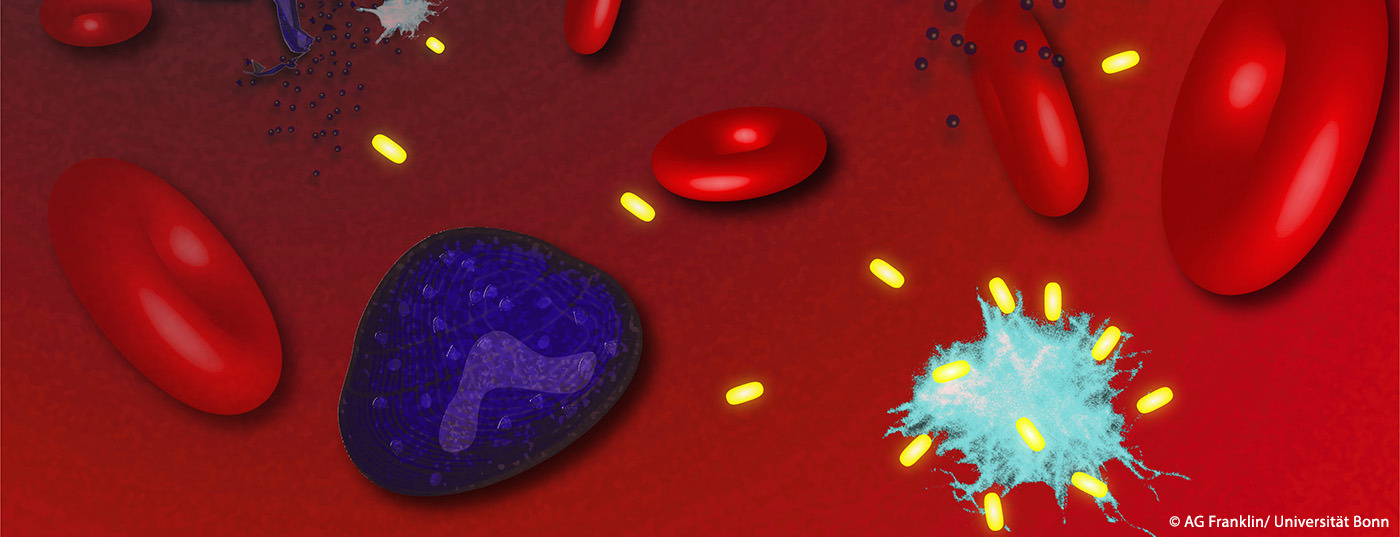
Not only the villas of the rich and famous have a direct line to the police. The cells in our body also have a sophisticated alarm system, the inflammasome. Its central component is the so-called ASC molecule. In the event of danger – such as the attack of a pathogen – many of these protein compounds join together to form a large complex, the ASC speck. This ensures two things: First, its activity causes the cell to accumulate masses of messenger substances with which it can call on the immune system for help. And secondly, numerous pores are formed in the cell membrane through which these warning molecules can reach the outside and fulfill their task.

Last cry for help from the dying cell

These holes ultimately lead to the cell’s demise: “At some point, it virtually explodes and empties its entire contents into the tissue,” explains Prof. Dr. Bernardo Franklin from the Institute for Innate Immunity at the University Hospital Bonn. “The messenger substances that are now abruptly released then act like a last great cry for help. This triggers the immune system to mount a strong inflammatory response that contains the infection.” This is why this mechanism of innate immune defense is also immensely important.

However, ASC specks also enter the tissue in the process and can persist there for a long time under certain circumstances. “We have now been able to show in mice that their activity activates the immune system even after the threat has been averted,” Franklin says. “The result can be chronic inflammation that severely damages the tissue.” Together with researchers from the University of Sao Paulo, Franklin’s team has succeeded in preventing this undesirable effect. For this purpose, they used so-called nanobodies.

These agents are antibody fragments with a very simple structure. “In collaboration with Prof. Dr. Florian Schmidt of the Institute of Innate Immunity, we generated nanobodies that specifically target ASC and can dissolve the specks,” explains Franklin’s collaborator Dr. Damien Bertheloot. The researchers enlisted the help of an alpaca: they injected the animal with the ASC protein so that it developed antibodies that matched it. Some of the alpaca antibodies have a very simple structure. This allows fragments of these antibodies to be produced and tested as so-called nanobodies.

Rheumatism and gout symptoms relieved in mice

The researchers were able to obtain the genetic information for the ASC nanobodies from blood samples of the animal using a complex procedure. “We then incorporated this genetic makeup into bacteria so that we could have them produce the nanobody in large quantities,” Bertheloot explains. The proof that the compound can dissolve ASC specks was provided by the team in human cell cultures, but also in mice. “In our experiments, the mice have rheumatoid and gout-like symptoms,” Bertheloot explains. “After administration of the nanobody, the inflammation and also the health of the rodents improved significantly.”

Nanobodies are very small compared to normal antibodies. Therefore, they are excellent for resolving such molecular complexes. This is because they can still reach places where it would be too crowded for large active ingredients. Moreover, normal antibodies additionally stimulate the immune system and can therefore exacerbate inflammation – a property that nanobodies lack.

The results are also interesting for another reason: studies indicate that ASC specks can also cause significant damage in the brain. There, they seem to serve as a kind of “crystallization nucleus” for the protein Aß. In the brains of Alzheimer’s patients, Aß clumps together to form large protein complexes called plaques. Presumably, ASC bacon can trigger this clumping. “Perhaps it is therefore possible to slow down this process with the help of our nanobodies,” hopes Franklin, a member of the ImmunoSensation2 cluster of excellence at the University of Bonn. “We now plan to investigate this possibility in a follow-up study.”

At the same time, however, he warns against overly high expectations: Even in the ideal case, it will be years before the results possibly lead to new drugs.


Original publication:

Damien Bertheloot et al: Nanobodies dismantle post-pyroptotic ASC specks and counteract inflammation in vivo; EMBO Molecular Medicine; DOI: https://doi.org/10.15252/emmm.202115415

Previous Article
  • ANCA-associated vasculitis

New standard drugs and less cortisone

  • Dermatology and venereology
  • Rheumatology
  • RX
  • Studies
View Post
Next Article
  • Psoriasis and psoriatic arthritis

Secukinumab as a treatment option in pediatric patients – an update.

  • Dermatology and venereology
  • Market & Medicine
  • Pediatrics
  • Rheumatology
  • RX
  • Studies
View Post
You May Also Like
View Post
  • 9 min
  • Neuroprotection, resilience and cognitive health in old age

Longevity & Brain

    • Education
    • General Internal Medicine
    • Geriatrics
    • Neurology
    • Prevention and health care
    • RX
    • Studies
View Post
  • 6 min
  • Obesity as a chronic disease: an interdisciplinary perspective

Neurobiological mechanisms of obesity

    • Congress Reports
    • General Internal Medicine
    • Nutrition
    • Prevention and health care
    • Psychiatry and psychotherapy
    • RX
    • Studies
View Post
  • 5 min
  • Oncolytic virus in stage II melanoma

Innovative method for predicting therapy response

    • Dermatology and venereology
    • Education
    • Oncology
    • RX
    • Studies
View Post
  • 3 min
  • Phimosis and penile cancer under SGLT2i

Increased risk for men with T2D

    • Congress Reports
    • Endocrinology and Diabetology
    • General Internal Medicine
    • RX
    • Studies
    • Urology
View Post
  • 12 min
  • Diabetic ketoacidosis

Recommendations for action in practice

    • Cases
    • CME continuing education
    • Emergency and intensive care medicine
    • Endocrinology and Diabetology
    • Hematology
    • Nephrology
    • RX
View Post
  • 6 min
  • Migraine: better quality of life thanks to multimodal care

Broader selection of innovative migraine prophylactics and acute therapies

    • Congress Reports
    • Neurology
    • Pharmacology and toxicology
    • RX
    • Studies
View Post
  • 4 min
  • Therapy of non-tumor-related pain

Do not prescribe opioids lightly for musculoskeletal pain

    • General Internal Medicine
    • Pharmacology and toxicology
    • Prevention and health care
    • RX
    • Studies
View Post
  • 14 min
  • "Forgotten axis" between plant substances, gut and systemic health

Microbiome and phytotherapy

    • Education
    • Endocrinology and Diabetology
    • Gastroenterology and Hepatology
    • General Internal Medicine
    • Infectiology
    • Neurology
    • Nutrition
    • Pharmaceutical medicine
    • Phytotherapy
    • RX
    • Studies
  • IBD matters

    Zum Thema
Top CME content
  • 1
    Causes and prevention at work
  • 2
    Yellow nail and Swyer-James syndrome
  • 3
    Recommendations for action in practice
  • 4
    From the β-cell to the center: the versatile role of amylin
  • 5
    Communication as the key to therapy adherence

Newsletter

Sign up and stay up to date

Subscribe
Medizinonline Medizinonline
  • Contact
  • General terms and conditions
  • Imprint

Input your search keywords and press Enter.