Medizinonline Medizinonline
  • News
    • News
    • Market & Medicine
  • Patients
    • Disease patterns
    • Diagnostics
    • Therapy
  • Partner Content
    • Dermatology
      • Atopic dermatitis and psoriasis news
    • Diabetes
      • Dia-Month Club – Type 2 Diabetes
      • Diabetes in Motion
      • Diabetes Podcasts
    • Gastroenterology
      • IBD matters
    • Oncology
      • Swiss Oncology in motion
    • Orthopedics
      • Osteoporosis in motion
  • Departments
    • Allergology and clinical immunology
    • General Internal Medicine
    • Anesthesiology
    • Angiology
    • Surgery
    • Dermatology and venereology
    • Endocrinology and Diabetology
    • Nutrition
    • Gastroenterology and Hepatology
    • Genetics
    • Geriatrics
    • Gynecology
    • Hematology
    • Infectiology
    • Cardiology
    • Nephrology
    • Neurology
    • Emergency and intensive care medicine
    • Nuclear Medicine
    • Oncology
    • Ophthalmology
    • ORL
    • Orthopedics
    • Pediatrics
    • Pharmacology and toxicology
    • Pharmaceutical medicine
    • Phlebology
    • Physical medicine and rehabilitation
    • Pneumology
    • Prevention and health care
    • Psychiatry and psychotherapy
    • Radiology
    • Forensic Medicine
    • Rheumatology
    • Sports Medicine
    • Traumatology and trauma surgery
    • Tropical and travel medicine
    • Urology
    • Dentistry
  • CME & Congresses
    • CME continuing education
    • Congress Reports
    • Congress calendar
  • Practice
    • Noctimed
    • Practice Management
    • Jobs
    • Interviews
  • Log In
  • Register
  • My account
  • Contact
  • Publications
  • Contact
  • Deutsch
  • English
  • Français
  • Italiano
  • Português
  • Español
Subscribe
Medizinonline Medizinonline
  • News
    • News
    • Market & Medicine
  • Patienten
    • Krankheitsbilder
    • Diagnostik
    • Therapie
  • Partner Content
    • Dermatology
      • Atopic dermatitis and psoriasis news
    • Diabetes
      • Dia-Month Club – Type 2 Diabetes
      • Diabetes in Motion
      • Diabetes Podcasts
    • Gastroenterology
      • IBD matters
    • Oncology
      • Swiss Oncology in motion
    • Orthopedics
      • Osteoporosis in motion
    • Phytotherapie
    • Rheumatology
  • Departments
    • Fachbereiche 1-13
      • Allergology and clinical immunology
      • General Internal Medicine
      • Anesthesiology
      • Angiology
      • Surgery
      • Dermatology and venereology
      • Endocrinology and Diabetology
      • Nutrition
      • Gastroenterology and Hepatology
      • Genetics
      • Geriatrics
      • Gynecology
      • Hematology
    • Fachbereiche 14-26
      • Infectiology
      • Cardiology
      • Nephrology
      • Neurology
      • Emergency and intensive care medicine
      • Nuclear Medicine
      • Oncology
      • Ophthalmology
      • ORL
      • Orthopedics
      • Pediatrics
      • Pharmacology and toxicology
      • Pharmaceutical medicine
    • Fachbereiche 26-38
      • Phlebology
      • Physical medicine and rehabilitation
      • Phytotherapy
      • Pneumology
      • Prevention and health care
      • Psychiatry and psychotherapy
      • Radiology
      • Forensic Medicine
      • Rheumatology
      • Sports Medicine
      • Traumatology and trauma surgery
      • Tropical and travel medicine
      • Urology
      • Dentistry
  • CME & Congresses
    • CME continuing education
    • Congress Reports
    • Congress calendar
  • Practice
    • Noctimed
    • Practice Management
    • Jobs
    • Interviews
Login

Sie haben noch keinen Account? Registrieren

  • Ehlers-Danlos syndrome

When the connective tissue does not hold

    • Genetics
    • News
    • Rheumatology
    • RX
  • 3 minute read

Ehlers-Danlos syndrome (EDS) is a group of congenital disorders of collagen synthesis. It occurs in about 1:5000 to 1:10,000 people and is about equally common in both sexes. There are 13 subtypes, some of which can vary greatly in expression. Most of them follow an autosomal dominant mode of inheritance, but some forms are also inherited in an autosomal recessive manner.

  Recognize languageAfrikaansAlbanianArabicArmenianAzerbaijaniBasqueBengaliBosnianBulgarianBurmeseCebuanoChichewaChinese (ver)Chinese (trad)DänischDeutschEnglischEsperantoEstnischFinnischFranzösischGalizischGeorgischGriechischGujaratiHaitianischHausaHebräischHindiHmongIgboIndonesischIrischIsländischItalienischJapanischJavanesischJiddischKannadaKasachischKatalanischKhmerKoreanischKroatischLaoLateinishLettischLitauischMalabarischMalagasyMalaysischMaltesischMaoriMarathischMazedonischMongolischNepalesischNiederländischNorwegischPersischPolnischPortugiesischPunjabiRumänischRussischSchwedischSerbischSesothoSinghalesischSlowakischSlowenischSomaliSpanischSuaheliSundanesischTadschikischTagalogTamilTeluguThailändischTschechischTürkischUkrainischUngarischUrduUzbekischVietnamesischWalisischWeißrussischYorubaZulu


AfrikaansAlbanianArabicArmenianAzerbaijaniBasqueBengaliBosnianBulgarianBurmeseCebuanoChichewaChinese (ver)Chinese (trad)DänischDeutschEnglischEsperantoEstnischFinnischFranzösischGalizischGeorgischGriechischGujaratiHaitianischHausaHebräischHindiHmongIgboIndonesischIrischIsländischItalienischJapanischJavanesischJiddischKannadaKasachischKatalanischKhmerKoreanischKroatischLaoLateinishLettischLitauischMalabarischMalagasyMalaysischMaltesischMaoriMarathischMazedonischMongolischNepalesischNiederländischNorwegischPersischPolnischPortugiesischPunjabiRumänischRussischSchwedischSerbischSesothoSinghalesischSlowakischSlowenischSomaliSpanischSuaheliSundanesischTadschikischTagalogTamilTeluguThailändischTschechischTürkischUkrainischUngarischUrduUzbekischVietnamesischWalisischWeißrussischYorubaZulu


The sound function is limited to 200 characters


Options: History: Feedback: Donate Close


“Everyone knows it, the sharp, hot, dull, shrill pain. I know them all, the different shades of pain and the agonizing nuances in between. It accompanies me, with every breath, in my sleep, when I get dressed in the morning, just always.” (Jasmin Polsini)*

The cause of the different symptoms in Ehlers-Danlos syndrome (EDS) are mutations of various genes, which have an influence on the connective tissue. As a result of these mutations, the structure of the connective tissue is disturbed. Because the mutations affect different genes, symptoms can vary widely from patient to patient, making diagnosis of EDS difficult.

EDS presents with a very broad spectrum of symptoms. Characteristics of EDS are hyperextensive joints with frequent (sub)dislocations, hyperelastic skin, and tissue fragility.

The connective tissue of the blood vessels can also be affected. This leads to delayed wound healing and frequent hematoma formation. In addition, large blood vessels may be affected, leading to aortic root dilatation or mitral valve prolapse, for example. Hernias, gastrointestinal disorders such as dyspepsia, gastroesophageal reflux, or irritable bowel syndrome may be identified. Dysautonomia and chronic fatigue are more common than average in EDS patients. Acute and chronic pain conditions can have a wide variety of causes and manifestations and are psychologically very stressful, which can lead to psychological dysfunctions such as depression, anxiety or affective disorders.

Challenging diagnostics

Because of the variability of symptoms, there are a number of possible differential diagnoses. The main symptoms affecting the skin and the musculoskeletal system also occur in many rheumatological diseases. The cause of the wound healing disorder may be, for example, impaired coagulation; Marfan syndrome and cutis laxa also show similar symptoms. Frequently, EDS patients have also been misdiagnosed with fibromyalgia or even “Battered Child Syndrome.”

If connective tissue disease is suspected, a detailed family history is helpful. On clinical examination, joint hypermobility is determined using the Beighton hypermobility score, which may already indicate possible EDS. It should be noted here that mobility is also dependent on other factors such as age, general condition and gender. The collagen structure can be determined after a biopsy under an electron microscope.

Some EDS types can be analyzed by DNA amplification followed by sequence analysis. Important in the diagnosis is the exclusion of other possible causes for the symptoms, which makes an extensive differential diagnosis indispensable.

Ehlers-Danlos syndrome is not curable, but it is treatable. Early diagnosis is therefore extremely important. When EDS is suspected, the new diagnostic criteria allow a clinical diagnosis to be made and corroborated by genetic testing.
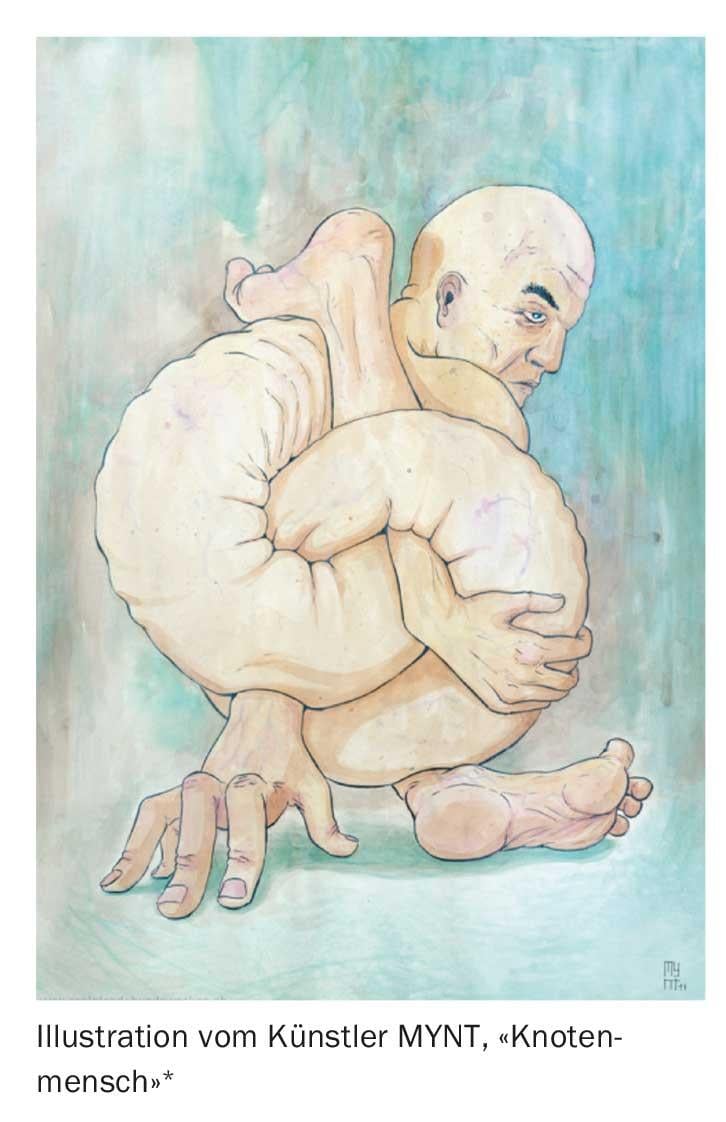


The long road of ED syndrome

A causal therapy for EDS does not yet exist, nor do standardized guidelines for the management of EDS. The primary focus in patients with EDS is the treatment of pain symptoms and multiple symptoms in a multidisciplinary approach. Surgical intervention is hardly an option, as EDS patients show less predictable surgical outcomes in addition to increased surgical risk.

It can often take up to 30 years from the onset of symptoms to the correct diagnosis. Many patients with EDS complain that the time to diagnosis is too long. It has been their experience that doctors and specialists tend to categorize their symptoms as “psychosomatic”, which does not require further clarification, and to exclude a hereditary disease per se because of its rarity.

Authors:
Maximilian Sabev, Simon Schading, Florian Schneider, Jasmin Polsini, Zurich

Information for doctor and patient:
https://ehlers-danlosnetzschweiz.blogspot.ch


*www.schlafendehundewecken.ch

HAUSARZT PRAXIS 2018; 13(3): 10

Partner
  • 20151013_orphan-logo_de
Autoren
  • Dr. Frank Grossmann
Publikation
  • HAUSARZT PRAXIS
Related Topics
  • connective tissue
  • EDS
  • EHLERS-DANLOS
Previous Article
  • Videoscript: SGPP Annual Congress 2017

SGPP treatment recommendations Borderline personality disorder

  • Congress Reports
  • Education
  • Psychiatry and psychotherapy
  • RX
View Post
Next Article
  • Developmental Psychology

The doctor-patient relationship from the perspective of attachment theory

  • Education
  • Psychiatry and psychotherapy
  • RX
View Post
You May Also Like
View Post
  • 14 min
  • "Forgotten axis" between plant substances, gut and systemic health

Microbiome and phytotherapy

    • Education
    • Endocrinology and Diabetology
    • Gastroenterology and Hepatology
    • General Internal Medicine
    • Infectiology
    • Neurology
    • Nutrition
    • Pharmaceutical medicine
    • Phytotherapy
    • RX
    • Studies
View Post
  • 4 min
  • HIV: updated EACS guideline

Individualized approach to sustainable prevention and care

    • Cardiology
    • Education
    • General Internal Medicine
    • Infectiology
    • Prevention and health care
    • RX
    • Studies
View Post
  • 5 min
  • Evidence-based diagnostics and treatment in the medical setting

Anxiety and depression disorders in adolescence

    • Education
    • Pediatrics
    • Pharmacology and toxicology
    • Psychiatry and psychotherapy
    • RX
    • Studies
View Post
  • 25 min
  • Neuroenhancement

Can you swallow intelligence? Relevant substance classes times for healthy people

    • CME continuing education
    • Neurology
    • Pharmacology and toxicology
    • Psychiatry and psychotherapy
    • RX
    • Studies
View Post
  • 9 min
  • Microbiome, inflammaging and affective/cognitive health

Gut-brain axis in old age

    • Education
    • Gastroenterology and Hepatology
    • General Internal Medicine
    • Geriatrics
    • Neurology
    • Nutrition
    • Prevention and health care
    • RX
    • Studies
View Post
  • 6 min
  • Vitiligo - the level of suffering should not be underestimated

A lot can be achieved therapeutically nowadays

    • Congress Reports
    • Dermatology and venereology
    • RX
    • Studies
View Post
  • 7 min
  • Vector-borne infections with skin manifestations

Arboviruses and leishmaniasis in Europe

    • Congress Reports
    • Infectiology
    • Prevention and health care
    • RX
    • Studies
    • Tropical and travel medicine
View Post
  • 12 min
  • Patient-centered rounds in medicine

Aligning care with the patient

    • CME continuing education
    • Education
    • General Internal Medicine
    • Prevention and health care
    • RX
    • Studies
  • IBD matters

    Zum Thema
Top CME content
  • 1
    Can you swallow intelligence? Relevant substance classes times for healthy people
  • 2
    Clinical care from birth to adulthood
  • 3
    Aligning care with the patient
  • 4
    Control instead of a flood of data: AI makes big data and wearables usable
  • 5
    Causes and prevention at work

Newsletter

Sign up and stay up to date

Subscribe
Medizinonline Medizinonline
  • Contact
  • General terms and conditions
  • Imprint

Input your search keywords and press Enter.