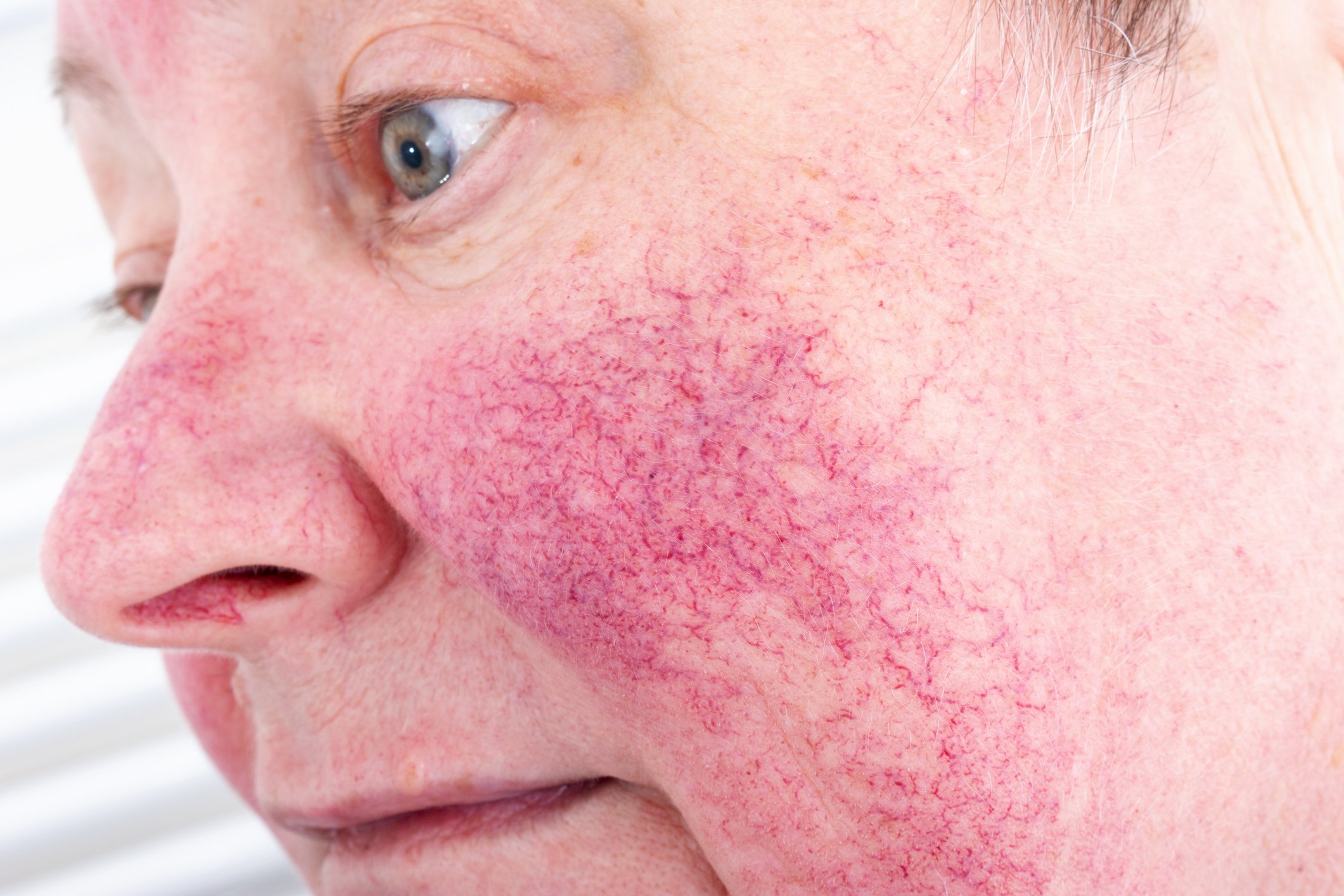
Several risk factors and triggers are known to contribute to the different clinical manifestations of rosacea by activating or modulating neurovascular or immunological processes. Thanks to advances in research into the factors involved in the pathogenesis, the complexity of the disease is increasingly better understood at the molecular level. This is also reflected in the availability of Phase III data on several drug candidates for rosacea. Some of these innovative active substances have now been approved in the USA.
Autoren
- Mirjam Peter, M.Sc.
Publikation
- DERMATOLOGIE PRAXIS

Related Topics
You May Also Like
- Rosacea - multifaceted and multifactorial
Topical and systemic active ingredients: proven and new therapeutic approaches
- Lung cancer
Multidisciplinary teams in oncology
- From diagnostics to personalized therapy
Nuclear medical imaging for Parkinson’s disease
- Psoriasis in difficult localizations: Nail psoriasis
IL-23 and IL-17 as a target – selected study findings
- Artificial intelligence in diabetes prevention
Lifestyle interventions are better accepted with AI
- B-cell lymphomas
Bispecific antibodies – mechanisms, evidence and future role
- Dermatoscopic findings of granulomatous diseases
Cutaneous sarcoidosis, necrobiosis lipoidica and granuloma anulare
- Clostridioides difficile infection: specific therapy