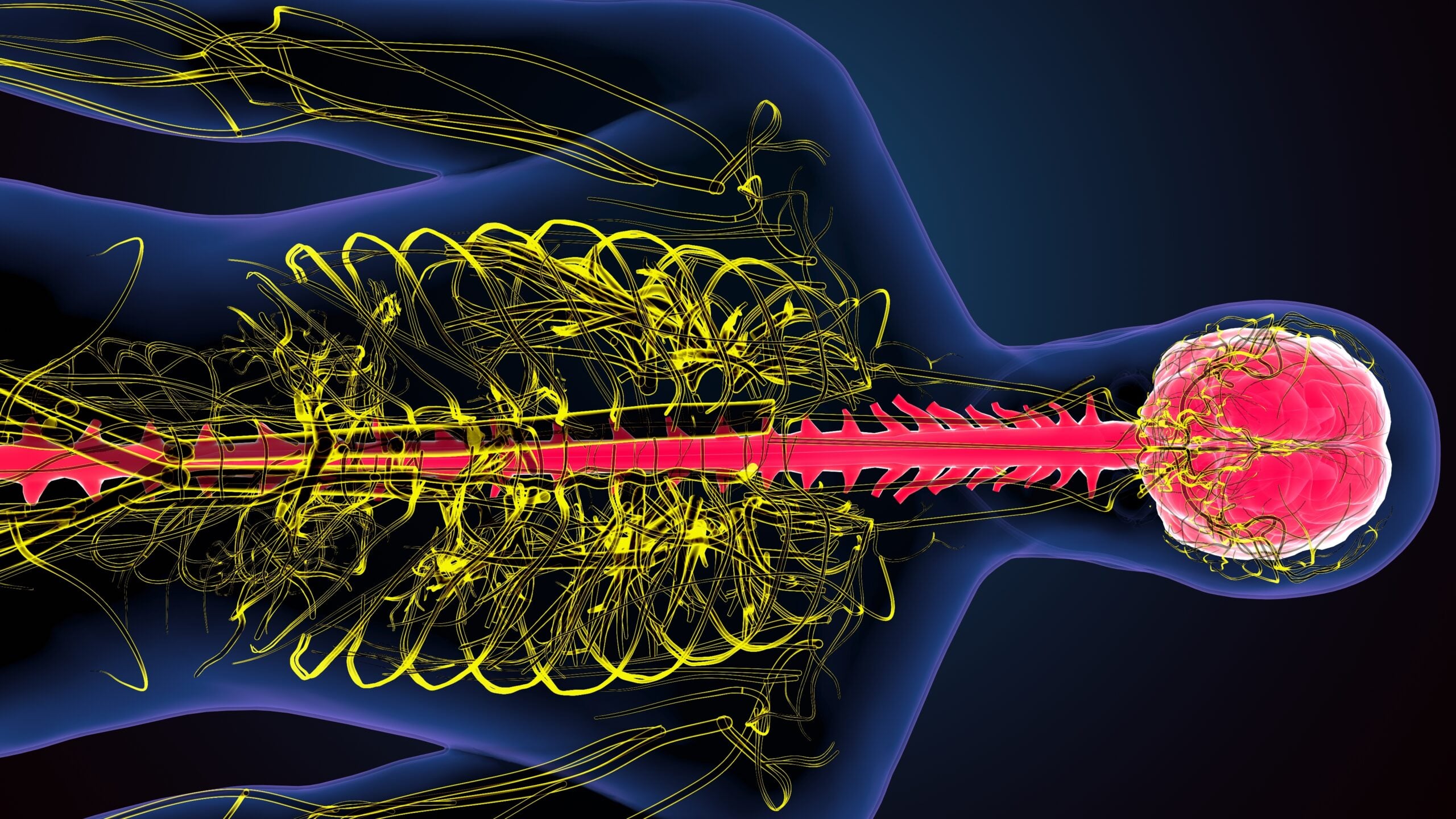
A 38-year-old male patient experienced a transient loss of all brainstem reflexes as part of an unusual course of Guillain-Barré syndrome, which, despite preserved cortical functions, resembled a coma or brain death. As treatment progressed, his condition gradually improved. This demonstrates that early diagnosis, the exclusion of central causes, and timely immunotherapy can lead to significant neurological recovery even in the most severe cases of Guillain-Barré syndrome.
Autoren
- Mirjam Peter, M.Sc.
Publikation
- HAUSARZT PRAXIS

Related Topics
You May Also Like
- Neuropathic Pain
Evidence-Based Neuromodulation Based on Clinical Trials and Real-World Data
- Fibromyalgia Syndrome
Development, Diagnosis, Epidemiology, and Treatment of a Disease Entity
- Juvenile Idiopathic Arthritis
Early Detection and Targeted Treatment in an Interdisciplinary Setting
- Disorders of the Gut-Brain Interaction
Rome V Criteria: What Has Changed, and What Has Remained the Same?
- Tourette Syndrome
What can be done to treat this tic disorder?
- Chronic Hepatitis B: Is a Cure in Sight?
Phase III Trial of Temporary Treatment with Bepirovirsen Was Successful
- Fibromyalgia Syndrome
Development, Diagnosis, Epidemiology, and Treatment of a Disease Entity
- Congenital Vascular Malformations