Medizinonline Medizinonline
  • News
    • News
    • Market & Medicine
  • Patients
    • Disease patterns
    • Diagnostics
    • Therapy
  • Partner Content
    • Diabetes
      • Dia-Month Club – Type 2 Diabetes
      • Diabetes in Motion
      • Diabetes Podcasts
    • Gastroenterology
      • IBD matters
    • Oncology
      • Swiss Oncology in motion
    • Orthopedics
      • Osteoporosis in motion
  • Departments
    • Allergology and clinical immunology
    • General Internal Medicine
    • Anesthesiology
    • Angiology
    • Surgery
    • Dermatology and venereology
    • Endocrinology and Diabetology
    • Nutrition
    • Gastroenterology and Hepatology
    • Genetics
    • Geriatrics
    • Gynecology
    • Hematology
    • Infectiology
    • Cardiology
    • Nephrology
    • Neurology
    • Emergency and intensive care medicine
    • Nuclear Medicine
    • Oncology
    • Ophthalmology
    • ORL
    • Orthopedics
    • Pediatrics
    • Pharmacology and toxicology
    • Pharmaceutical medicine
    • Phlebology
    • Physical medicine and rehabilitation
    • Pneumology
    • Prevention and health care
    • Psychiatry and psychotherapy
    • Radiology
    • Forensic Medicine
    • Rheumatology
    • Sports Medicine
    • Traumatology and trauma surgery
    • Tropical and travel medicine
    • Urology
    • Dentistry
  • CME & Congresses
    • CME continuing education
    • Congress Reports
    • Congress calendar
  • Practice
    • Noctimed
    • Practice Management
    • Jobs
    • Interviews
  • Log In
  • Register
  • My account
  • Contact
  • Publications
  • Contact
  • Deutsch
  • English
  • Français
  • Italiano
  • Português
  • Español
Subscribe
Medizinonline Medizinonline
  • News
    • News
    • Market & Medicine
  • Patienten
    • Krankheitsbilder
    • Diagnostik
    • Therapie
  • Partner Content
    • Diabetes
      • Dia-Month Club – Type 2 Diabetes
      • Diabetes in Motion
      • Diabetes Podcasts
    • Gastroenterology
      • IBD matters
    • Oncology
      • Swiss Oncology in motion
    • Orthopedics
      • Osteoporosis in motion
    • Phytotherapie
    • Rheumatology
  • Departments
    • Fachbereiche 1-13
      • Allergology and clinical immunology
      • General Internal Medicine
      • Anesthesiology
      • Angiology
      • Surgery
      • Dermatology and venereology
      • Endocrinology and Diabetology
      • Nutrition
      • Gastroenterology and Hepatology
      • Genetics
      • Geriatrics
      • Gynecology
      • Hematology
    • Fachbereiche 14-26
      • Infectiology
      • Cardiology
      • Nephrology
      • Neurology
      • Emergency and intensive care medicine
      • Nuclear Medicine
      • Oncology
      • Ophthalmology
      • ORL
      • Orthopedics
      • Pediatrics
      • Pharmacology and toxicology
      • Pharmaceutical medicine
    • Fachbereiche 26-38
      • Phlebology
      • Physical medicine and rehabilitation
      • Phytotherapy
      • Pneumology
      • Prevention and health care
      • Psychiatry and psychotherapy
      • Radiology
      • Forensic Medicine
      • Rheumatology
      • Sports Medicine
      • Traumatology and trauma surgery
      • Tropical and travel medicine
      • Urology
      • Dentistry
  • CME & Congresses
    • CME continuing education
    • Congress Reports
    • Congress calendar
  • Practice
    • Noctimed
    • Practice Management
    • Jobs
    • Interviews
Login

Sie haben noch keinen Account? Registrieren

  • Transsexuality

Dealing with a detabooed phenomenon

    • Congress Reports
    • General Internal Medicine
    • Pediatrics
    • Psychiatry and psychotherapy
    • RX
    • Studies
  • 3 minute read

Transsexuality, tansgender, transidentity are terms that have been read and heard more and more often in recent months. Until recently, was declared a mental disorder, but a more (self-)understandable approach is now being sought. This perception of people’s gender as not purely binary allows for a range of gender identities and requires a new way of thinking.

Until the turn of the millennium, the term “trans” was still used rather disparagingly and pejoratively for people whose gender affiliation could not be clearly assigned. Fortunately, a lot has changed in the meantime. Nevertheless, it is still not easy to keep track and to assign the many new impressions and designations. Basically, a distinction must be made between gender identity and sexual orientation. One describes who you are, the other who you love, as Dr. med. Rahul Gupta, Graubünden, put it in a nutshell. It can be represented in an even more differentiated way if one distinguishes between identity, orientation, expression and biological sex (Fig. 1) .

In a Dutch online survey with 8064 participants, 4.6% of men and 3.2% of women described themselves as ambivalent and/or incongruent toward their own gender. This corresponds to a prevalence of 1.1% and 0.8%, respectively. In a Belgian study, the prevalences were 2.2% and 1.9%, respectively.
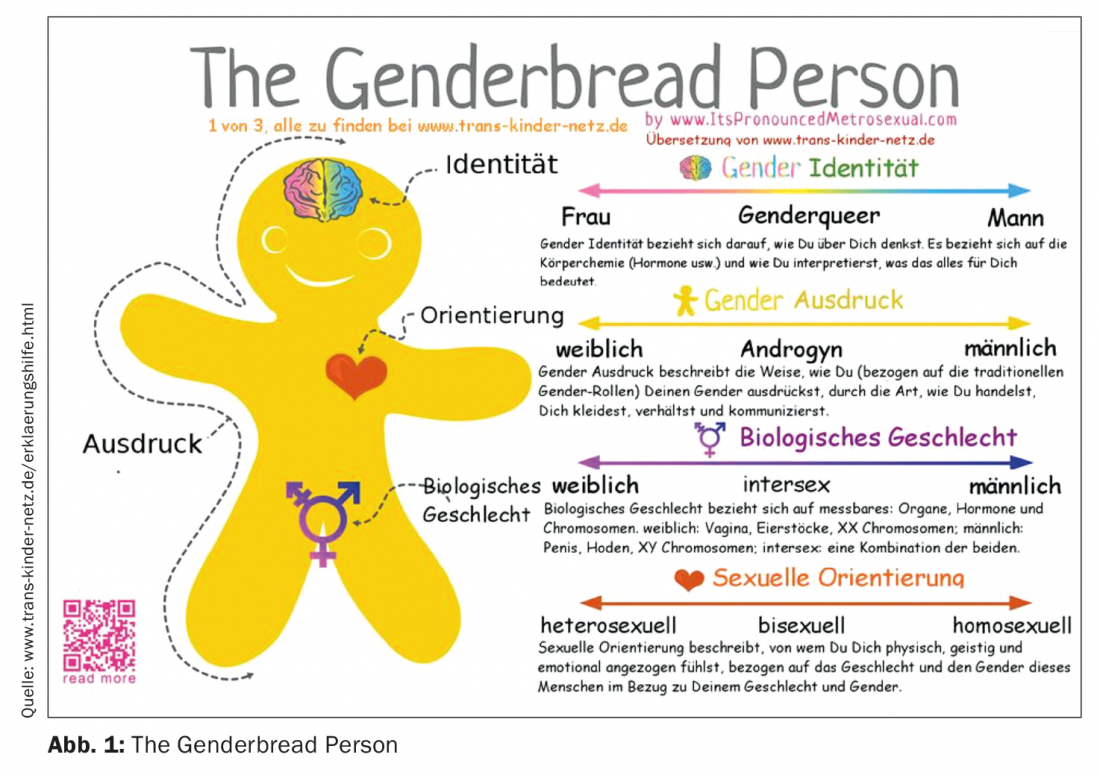
 

www.trans-kinder-netz.de/erklaerungshilfe.html


Guidelines and their handling of transsexuality

Still in the ICD-10 transsexualism was classified as a disorder of gender identity and therefore declared as a mental disorder. In the subsequent classification, which is to come into force at the beginning of 2022, this aspect has been revised. The term “gender incongruence” is intended to express the incongruence between gender and gender of assignment and replaces the previous terminology. The Diagnostic and Statistical Manual of Mental Disorders (DSM), in its 4th edition, introduced the term “gender identity disorder” in place of “transsexualism” and placed it in the category of “sexual and gender identity disorders.” The DSM-5 eventually replaced the term “gender identity disorder” with “gender dysphoria” and no longer considers trans identity itself a mental disorder, but rather the condition created by the incongruence between biological sex and gender identity. This represents an important step toward de-pathologization, with no risk that health insurance would no longer provide benefits. A balancing act that tries to do justice to all aspects. Already in 2002 it was demanded that psychiatry should distance itself from the pathological concept of transsexualism and regard it as a norm variant.

The S3 guideline Gender Incongruence, Gender Dysphoria, and Trans Health points out that limited access to the health care system, stigma, and discrimination are associated with significant health risks. Therefore, those seeking treatment should be guaranteed unrestricted access to health care. This also includes psychosocial support, counseling and, if necessary, psychotherapy in order to be able to cope with and deal with the consequences of trans negativity and trans hostility and to prevent secondary mental disorders.
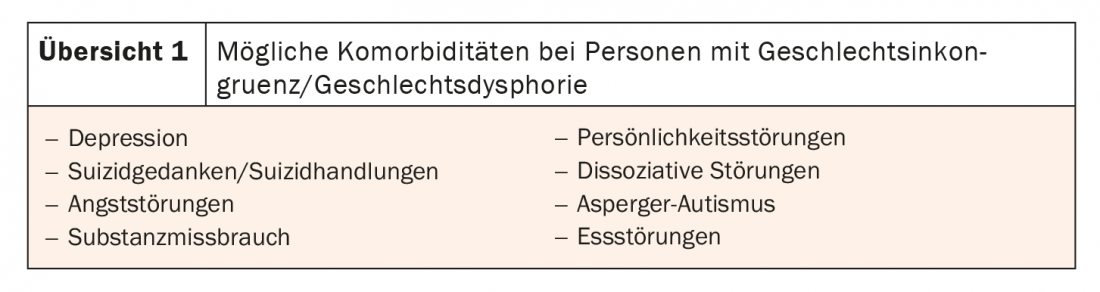


The diagnosis should also cover psychological, physical, social and cultural aspects and result in a holistic view of the person seeking treatment. The history should record whether the gender incongruence and/or gender dysphoria has been constant for at least a few months, is transient, or intermittent. Also, comorbidities should not be disregarded, which have been shown to have increased prevalence rates in clinical trials (review 1).


Congress: 
FomF Update Refresher

InFo NEUROLOGY & PSYCHIATRY 2021; 19(4): 21 (published 8/20-21, ahead of print).

Autoren
  • Leoni Burggraf
Publikation
  • InFo NEUROLOGIE & PSYCHIATRIE
Related Topics
  • Trans identity
  • Transgender
  • Transsexuality
Previous Article
  • Diagnosis and therapy of SSc-ILD

No simple cases

  • Education
  • General Internal Medicine
  • Pneumology
  • Rheumatology
  • RX
View Post
Next Article
  • CAR-T cell therapy

Paving the way to success

  • Congress Reports
  • Hematology
  • Oncology
  • RX
  • Studies
View Post
You May Also Like
View Post
  • 11 min
  • Peristomal skin health

Focus on preventive care options

    • Cases
    • CME continuing education
    • Dermatology and venereology
    • Gastroenterology and Hepatology
    • Infectiology
    • Physical medicine and rehabilitation
    • Prevention and health care
    • RX
    • Surgery
View Post
  • 7 min
  • Disease-modifying therapies for ATTR-CM

TTR stabilizers, gene silencing and gene scissors: where do we stand?

    • Cardiology
    • Congress Reports
    • Genetics
    • RX
    • Studies
View Post
  • 8 min
  • Proteins in wound healing

Do special amino acids lead to success?

    • CME continuing education
    • Dermatology and venereology
    • Endocrinology and Diabetology
    • Nutrition
    • RX
    • Studies
View Post
  • 4 min
  • HER2+ early breast cancer

DESTINY-Breast11 – neoadjuvant T-DXd without anthracyclines

    • Education
    • Gynecology
    • Oncology
    • RX
    • Studies
View Post
  • 3 min
  • Lavender aromatherapy

Take away the fear of the dentist

    • Dentistry
    • Education
    • Pharmaceutical medicine
    • Phytotherapy
    • Psychiatry and psychotherapy
    • RX
    • Studies
View Post
  • 4 min
  • Digital dermatology: innovative project examples

AI and eHealth tools in HS care

    • Dermatology and venereology
    • General Internal Medicine
    • Practice Management
    • Prevention and health care
    • RX
    • Studies
View Post
  • 5 min
  • Mantle cell lymphoma

Recurrence after BTK inhibition – prognostic factors and treatment options

    • Education
    • Hematology
    • Oncology
    • RX
View Post
  • 3 min
  • Dementia risk with type 2 diabetes

SGLT2 inhibitors with advantages vs. DPP4 inhibitors

    • Education
    • Endocrinology and Diabetology
    • Geriatrics
    • Neurology
    • Pharmacology and toxicology
    • Psychiatry and psychotherapy
    • RX
    • Studies
  • IBD matters

    Zum Thema
Top CME content
  • 1
    Communication as the key to therapy adherence
  • 2
    Solutions to the malnutrition dilemma
  • 3
    Solutions to the malnutrition dilemma
  • 4
    Focus on preventive care options
  • 5
    Fertility preservation from gonads to genomes to genoids

Newsletter

Sign up and stay up to date

Subscribe
Medizinonline Medizinonline
  • Contact
  • General terms and conditions
  • Imprint

Input your search keywords and press Enter.