Medizinonline Medizinonline
  • News
    • News
    • Market & Medicine
  • Patients
    • Disease patterns
    • Diagnostics
    • Therapy
  • Partner Content
    • Diabetes
      • Dia-Month Club – Type 2 Diabetes
      • Diabetes in Motion
    • Gastroenterology
      • IBD matters
    • Oncology
      • Swiss Oncology in motion
    • Orthopedics
      • Osteoporosis in motion
  • Departments
    • Allergology and clinical immunology
    • General Internal Medicine
    • Anesthesiology
    • Angiology
    • Surgery
    • Dermatology and venereology
    • Endocrinology and Diabetology
    • Nutrition
    • Gastroenterology and Hepatology
    • Genetics
    • Geriatrics
    • Gynecology
    • Hematology
    • Infectiology
    • Cardiology
    • Nephrology
    • Neurology
    • Emergency and intensive care medicine
    • Nuclear Medicine
    • Oncology
    • Ophthalmology
    • ORL
    • Orthopedics
    • Pediatrics
    • Pharmacology and toxicology
    • Pharmaceutical medicine
    • Phlebology
    • Physical medicine and rehabilitation
    • Pneumology
    • Prevention and health care
    • Psychiatry and psychotherapy
    • Radiology
    • Forensic Medicine
    • Rheumatology
    • Sports Medicine
    • Traumatology and trauma surgery
    • Tropical and travel medicine
    • Urology
    • Dentistry
  • CME & Congresses
    • CME continuing education
    • Congress Reports
    • Congress calendar
  • Practice
    • Noctimed
    • Practice Management
    • Jobs
    • Interviews
  • Log In
  • Register
  • My account
  • Contact
  • Publications
  • Contact
  • Deutsch
  • English
  • Français
  • Italiano
  • Português
  • Español
Subscribe
Medizinonline Medizinonline
  • News
    • News
    • Market & Medicine
  • Patienten
    • Krankheitsbilder
    • Diagnostik
    • Therapie
  • Partner Content
    • Diabetes
      • Dia-Month Club – Type 2 Diabetes
      • Diabetes in Motion
    • Gastroenterology
      • IBD matters
    • Oncology
      • Swiss Oncology in motion
    • Orthopedics
      • Osteoporosis in motion
    • Phytotherapie
    • Rheumatology
  • Departments
    • Fachbereiche 1-13
      • Allergology and clinical immunology
      • General Internal Medicine
      • Anesthesiology
      • Angiology
      • Surgery
      • Dermatology and venereology
      • Endocrinology and Diabetology
      • Nutrition
      • Gastroenterology and Hepatology
      • Genetics
      • Geriatrics
      • Gynecology
      • Hematology
    • Fachbereiche 14-26
      • Infectiology
      • Cardiology
      • Nephrology
      • Neurology
      • Emergency and intensive care medicine
      • Nuclear Medicine
      • Oncology
      • Ophthalmology
      • ORL
      • Orthopedics
      • Pediatrics
      • Pharmacology and toxicology
      • Pharmaceutical medicine
    • Fachbereiche 26-38
      • Phlebology
      • Physical medicine and rehabilitation
      • Phytotherapy
      • Pneumology
      • Prevention and health care
      • Psychiatry and psychotherapy
      • Radiology
      • Forensic Medicine
      • Rheumatology
      • Sports Medicine
      • Traumatology and trauma surgery
      • Tropical and travel medicine
      • Urology
      • Dentistry
  • CME & Congresses
    • CME continuing education
    • Congress Reports
    • Congress calendar
  • Practice
    • Noctimed
    • Practice Management
    • Jobs
    • Interviews
Login

Sie haben noch keinen Account? Registrieren

  • Diagnosis and therapy of SSc-ILD

No simple cases

    • Education
    • General Internal Medicine
    • Pneumology
    • Rheumatology
    • RX
  • 4 minute read

Interstitial lung disease (ILD) is a common organ manifestation in patients with systemic sclerosis (SSc). It is considered a major cause of morbidity and mortality here. Early diagnosis and initiation of therapy for affected patients are therefore all the more important. But early detection of SSc-ILD is proving difficult, and long-term, effective treatment options are scarce.

Because symptoms are usually subclinical, SSc-ILD is often not diagnosed until advanced disease stages. Evidence-based guidelines for screening and early detection are scarce, as is scientific information to guide treatment decisions. Current treatment approaches mostly focus on targeting inflammatory pathways with immunosuppressive therapy. In practice, the initiation of treatment often depends on the presence of factors related to either the expected progression of lung disease or the severity of the underlying disease.

Researchers led by Dr. Anna-Maria Hoffmann-Vold from the Department of Rheumatology at Rikshospitalet in Oslo have compiled the scientific literature on this topic to find decision support tools for screening, management and monitoring of disease progression in patients diagnosed with SSc-ILD [1]. The results of the study formed the basis for an evidence-based consensus statement on the identification and treatment of SSc-ILD. Out of 708 full-text publications, 280 were considered suitable for review and included. The majority of the studies (n=237) were based on observational studies.

Risk factors, screening and diagnosis

Risk factors that might be associated with the presence, severity, and progression of SSc-ILD were sought. High evidence was found for an association between diffuse skin involvement and ILD. In addition, there is evidence, albeit of moderate quality, that anti-centromere (ACA) and anti-topoisomerase I (ATA) antibody statuses are risk factors for ILD, with ACA being protective against ILD and ATA increasing the likelihood of the presence of SSc-ILD.

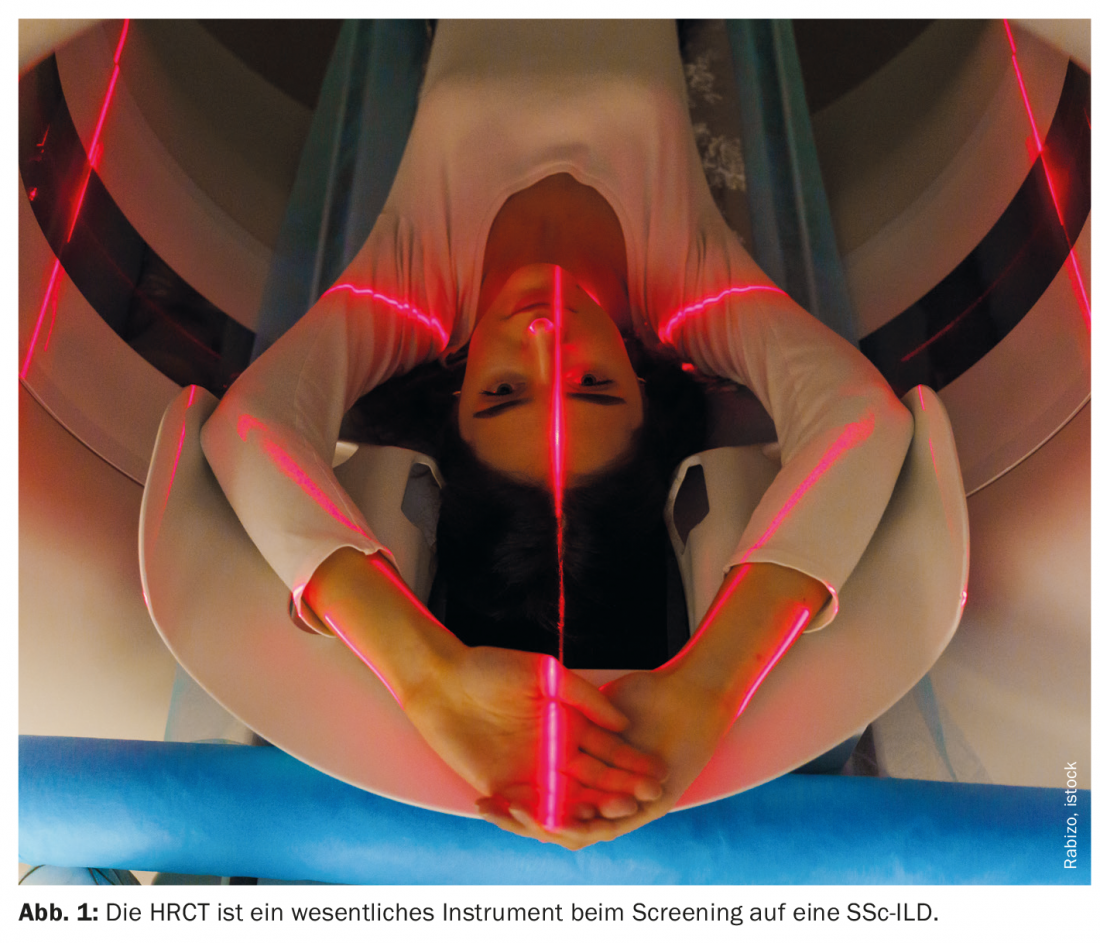
Moderate-quality evidence was found by the research team that pulmonary function tests (including FVC andDLCO) in combination with high-resolution computed tomography (HRCT) may be useful in screening for SSc-ILD. However, it remains unclear from the data when the optimal time for screening should be. Also moderate evidence was identified for lung ultrasound as a potential tool to detect the presence of ILD in patients with SSc.

In the Scleroderma Lung Study (SLS) I, the extent of ILD defined by HRCT was a predictor of FVC decline. In addition, pulmonary function tests (PFTs), including FVC andDLCO, were used as surrogate measures to assess the presence and severity of SSc-ILD at baseline. Frequent cough correlates with the presence and severity of SSc-ILD.

Therapy options

Treatment of SSc-ILD is challenging due to the clinical complexity and heterogeneity of the disease. Immunosuppressants (monotherapy and combination) were predominantly used for treatment in the sources studied. However, there was no evidence or recommendations on when and how to increase doses. High quality evidence was demonstrated for cyclophosphamide (CYC). SLS I reported that treatment with CYC improved lung function compared with placebo in patients with SSc-ILD at 1 year. The results of the review for CYC are consistent with recommendations from the European League Against Rheumatism (EULAR) for the treatment of patients with SSc who suffer from pulmonary disease. Another study showed a trend toward increased efficacy of low-dose prednisolone and intravenous CYC followed by oral azathioprine compared with placebo.

Moderate-quality evidence was also available for treatment with mycophenolate mofetil (MMF). In the SLS II trial, it was found that treatment with CYC for 1 year or MMF for 2 years resulted in significant improvements in predefined measures of lung function, pulmonary imaging, dyspnea, and skin disease. MMF was more tolerable and less toxic, but this study failed to meet its primary endpoint of superiority of 2 years of treatment with MMF over 1 year of treatment with CYC; no other RCTs exist for MMF. These data support the efficacy of both treatments for progressive SSc-ILD and the current preference for MMF because it is more tolerable and associated with fewer side effects, the authors write.

Hematopoietic stem cell transplantation should be considered for the treatment of carefully selected patients with rapidly progressive SSc who are at risk of organ failure. Improvements in FVC were observed during a 2-year follow-up. However, in one study, the adverse event rate was 43% and included two (14%) patients with severe cardiomyopathy, one of whom was fatal (high evidence).


Nintedanib and tocilizumab with Benefit

To date, no randomized, placebo-controlled trials have been conducted to evaluate rituximab in SSc-ILD. Observational and uncontrolled studies have shown that rituximab may benefit patients with SSc-ILD by preventing a decline in lung function, making it a potential future treatment option.

After the review was completed, additional data were published regarding the agents nintedanib and tocilizumab. Results from the SENSCIS trial showed that nintedanib is an effective treatment option for patients with SSc-ILD. The compound is now approved in the U.S. and Europe for the treatment of patients with SSc-ILD. The phase 2 and phase 3 faSScinate and focuSSed trials, respectively, evaluating tocilizumab for the treatment of early inflammatory diffuse cutaneous SSc showed that it had a positive impact on ILD disease progression as measured by FVC decline and HRCT, although focuSSed did not meet its primary endpoint (the modified Rodnan skin score). Nintedanib and tocilizumab were both included in the investigators’ consensus statements based on these results.

Their systematic review underscored the lack of high-quality evidence for guidelines or recommendations for treatment algorithms and therapy selection for patients with SSc-ILD, Dr. Hoffmann-Vold and colleagues conclude. He said there is a need for further clinical research to evaluate alternative safe and effective treatment options for patients with SSc-ILD.


Literature:

  1. Hoffmann-Vold AM, et al: Assessment of recent evidence for the management of patients with systemic sclerosis-associated interstitial lung disease: a systematic review. ERJ Open Res 2021; doi: 10.1183/23120541.00235-2020.


InFo PAIN & GERIATry 2021; 3(1): 43-44.

Autoren
  • Jens Dehn
Publikation
Related Topics
  • ILD
  • SSC-ILD
Previous Article
  • Multiple sclerosis

Diagnosis, differential diagnosis and treatment up to date

  • Congress Reports
  • Education
  • Neurology
  • RX
View Post
Next Article
  • Transsexuality

Dealing with a detabooed phenomenon

  • Congress Reports
  • General Internal Medicine
  • Pediatrics
  • Psychiatry and psychotherapy
  • RX
  • Studies
View Post
You May Also Like
View Post
  • 4 min
  • Psoriatic Arthritis

Older patients at risk for tachyarrhythmias

    • RX
    • Cardiology
    • Dermatology and venereology
    • Education
    • General Internal Medicine
    • Geriatrics
    • Pharmacology and toxicology
    • Rheumatology
    • Studies
View Post
  • 3 min
  • Genetic Kidney Disease: DOUBLE PROTECT Alport

The SGLT-2 inhibitor dapagliflozin as an add-on to RAS blockade

    • RX
    • Education
    • General Internal Medicine
    • Genetics
    • Nephrology
    • Studies
View Post
  • 4 min
  • Case Study: Cystic Fibrosis in Adults

Recurrent Pneumonia as a Manifestation of Cystic Fibrosis

    • RX
    • Education
    • Infectiology
    • Pneumology
View Post
  • 5 min
  • Long COVID/Fatigue Clinic

An Innovative Approach: Neuroplasticity and Predictive Processing

    • RX
    • Congress Reports
    • General Internal Medicine
    • Infectiology
    • Neurology
    • Physical medicine and rehabilitation
    • Pneumology
    • Psychiatry and psychotherapy
View Post
  • 6 min
  • T-cell lymphomas

Diagnostic Challenges and New Treatment Options

    • RX
    • Education
    • Hematology
    • Oncology
    • Studies
View Post
  • 6 min
  • Interbrain Synchrony

Two Brains, One Thought

    • RX
    • Education
    • Neurology
    • Psychiatry and psychotherapy
    • Studies
View Post
  • 8 min
  • Atopic Dermatitis in Children and Adults

Topically Applied “Small Molecules”: Janus Kinases or PDE-4 as Targets?

    • RX
    • Allergology and clinical immunology
    • Dermatology and venereology
    • Education
    • Pharmacology and toxicology
    • Studies
View Post
  • 4 min
  • Dermatomyositis

Glucocorticoids for more than one year

    • RX
    • Dermatology and venereology
    • Education
    • General Internal Medicine
    • Pneumology
    • Rheumatology
    • Studies
  • IBD matters

    Zum Thema
Top CME content
  • 1
    Clinical Presentation, Diagnosis, and Treatment of DSPN
  • 2
    Why is it so hard to lose weight?
  • 3
    Four-Legged Medical Assistants – Therapy Dogs in Clinical Settings
  • 4
    Functional limb preservation between infection control, vascular medicine and resurfacing
  • 5
    Update on Idiopathic Pulmonary Fibrosis

Newsletter

Sign up and stay up to date

Subscribe
Medizinonline Medizinonline
  • Contact
  • General terms and conditions
  • Imprint

Input your search keywords and press Enter.