Medizinonline Medizinonline
  • News
    • News
    • Market & Medicine
  • Patients
    • Disease patterns
    • Diagnostics
    • Therapy
  • Partner Content
    • Diabetes
      • Dia-Month Club – Type 2 Diabetes
      • Diabetes in Motion
      • Diabetes Podcasts
    • Gastroenterology
      • IBD matters
    • Oncology
      • Swiss Oncology in motion
    • Orthopedics
      • Osteoporosis in motion
  • Departments
    • Allergology and clinical immunology
    • General Internal Medicine
    • Anesthesiology
    • Angiology
    • Surgery
    • Dermatology and venereology
    • Endocrinology and Diabetology
    • Nutrition
    • Gastroenterology and Hepatology
    • Genetics
    • Geriatrics
    • Gynecology
    • Hematology
    • Infectiology
    • Cardiology
    • Nephrology
    • Neurology
    • Emergency and intensive care medicine
    • Nuclear Medicine
    • Oncology
    • Ophthalmology
    • ORL
    • Orthopedics
    • Pediatrics
    • Pharmacology and toxicology
    • Pharmaceutical medicine
    • Phlebology
    • Physical medicine and rehabilitation
    • Pneumology
    • Prevention and health care
    • Psychiatry and psychotherapy
    • Radiology
    • Forensic Medicine
    • Rheumatology
    • Sports Medicine
    • Traumatology and trauma surgery
    • Tropical and travel medicine
    • Urology
    • Dentistry
  • CME & Congresses
    • CME continuing education
    • Congress Reports
    • Congress calendar
  • Practice
    • Noctimed
    • Practice Management
    • Jobs
    • Interviews
  • Log In
  • Register
  • My account
  • Contact
  • Publications
  • Contact
  • Deutsch
  • English
  • Français
  • Italiano
  • Português
  • Español
Subscribe
Medizinonline Medizinonline
  • News
    • News
    • Market & Medicine
  • Patienten
    • Krankheitsbilder
    • Diagnostik
    • Therapie
  • Partner Content
    • Diabetes
      • Dia-Month Club – Type 2 Diabetes
      • Diabetes in Motion
      • Diabetes Podcasts
    • Gastroenterology
      • IBD matters
    • Oncology
      • Swiss Oncology in motion
    • Orthopedics
      • Osteoporosis in motion
    • Phytotherapie
    • Rheumatology
  • Departments
    • Fachbereiche 1-13
      • Allergology and clinical immunology
      • General Internal Medicine
      • Anesthesiology
      • Angiology
      • Surgery
      • Dermatology and venereology
      • Endocrinology and Diabetology
      • Nutrition
      • Gastroenterology and Hepatology
      • Genetics
      • Geriatrics
      • Gynecology
      • Hematology
    • Fachbereiche 14-26
      • Infectiology
      • Cardiology
      • Nephrology
      • Neurology
      • Emergency and intensive care medicine
      • Nuclear Medicine
      • Oncology
      • Ophthalmology
      • ORL
      • Orthopedics
      • Pediatrics
      • Pharmacology and toxicology
      • Pharmaceutical medicine
    • Fachbereiche 26-38
      • Phlebology
      • Physical medicine and rehabilitation
      • Phytotherapy
      • Pneumology
      • Prevention and health care
      • Psychiatry and psychotherapy
      • Radiology
      • Forensic Medicine
      • Rheumatology
      • Sports Medicine
      • Traumatology and trauma surgery
      • Tropical and travel medicine
      • Urology
      • Dentistry
  • CME & Congresses
    • CME continuing education
    • Congress Reports
    • Congress calendar
  • Practice
    • Noctimed
    • Practice Management
    • Jobs
    • Interviews
Login

Sie haben noch keinen Account? Registrieren

  • Actinic keratosis

First S3 guideline provides certainty of action

    • Dermatology and venereology
    • Oncology
    • RX
  • 2 minute read

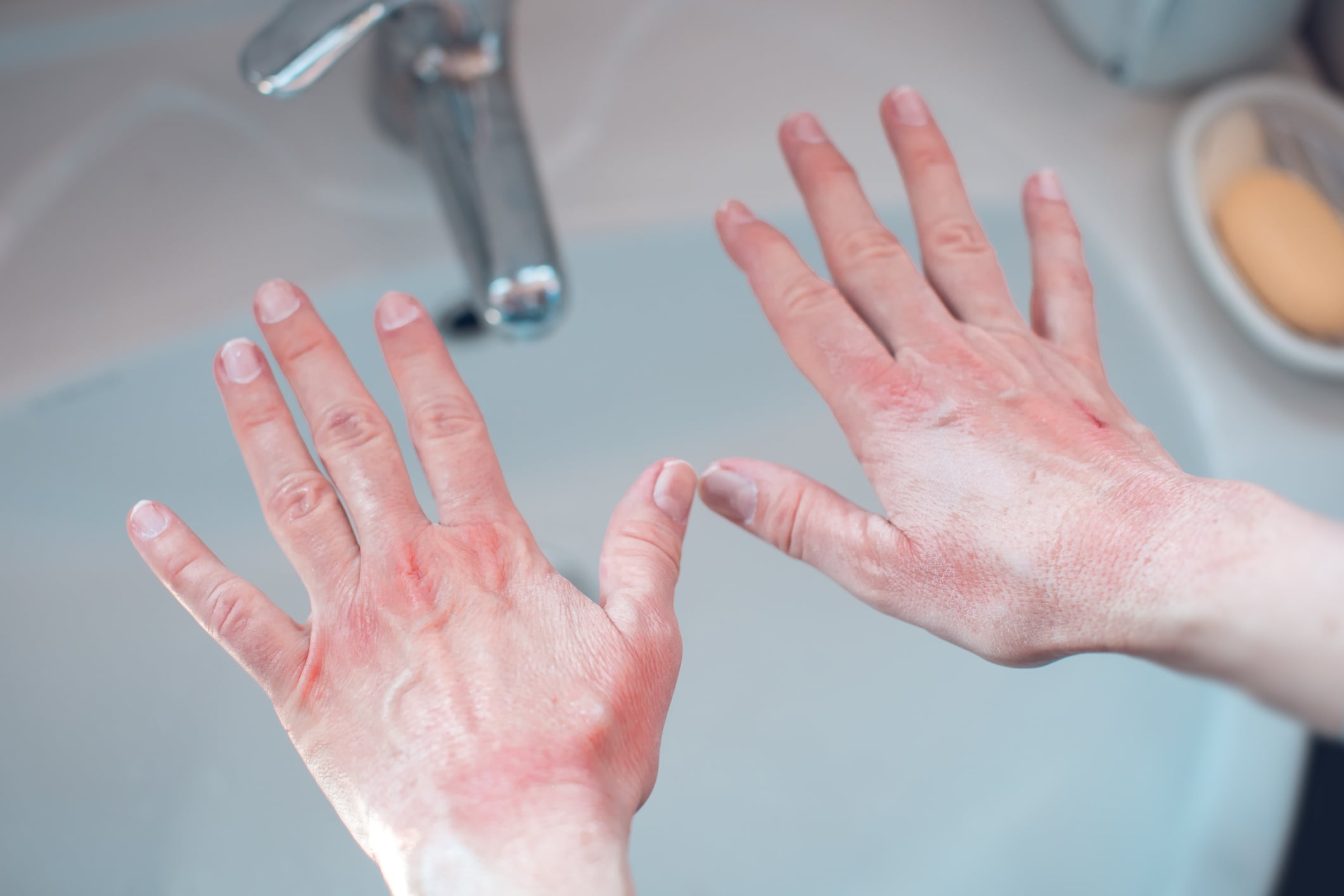
Actinic keratosis is already one of the most frequent clinical pictures in dermatological oncology. However, due to increasing life expectancy, a further increase in the number of affected patients can be assumed. For the first time, an S3 guideline has now been published that makes recommendations for diagnosis and therapy.

Based on the S2k guideline on squamous cell carcinoma and the S1 guideline on actinic keratosis (AK), the German Dermatological Society (DDG), the Working Group of Dermatological Oncology (ADO) and the German Cancer Society (DKG) have developed the new S3 guideline “Actinic keratosis and squamous cell carcinoma of the skin”. The guideline, published this summer, is based on results of a systematic literature search and review through 2018 and reflects the evidence- and consensus-based recommendations of the interdisciplinary panel.

Clinical diagnostics

The diagnosis of AK is basically made by clinical examination and inspection of the affected area. In addition, dermoscopy, confocal laser microscopy and optical coherence tomography are performed if required. In case of unclear appearance, necessary differential diagnosis (e.g. Bowen’s disease) or resistance to therapy, a biopsy should be performed. Data for prognostic factors, i.e., predicting which AK lesion will develop and how and how quickly it will progress to squamous cell carcinoma, are still insufficient. Further research is needed here to be able to make clear statements. For lack of alternatives, the Olsen classification is therefore currently still used.


Early and consistent treatment indicated

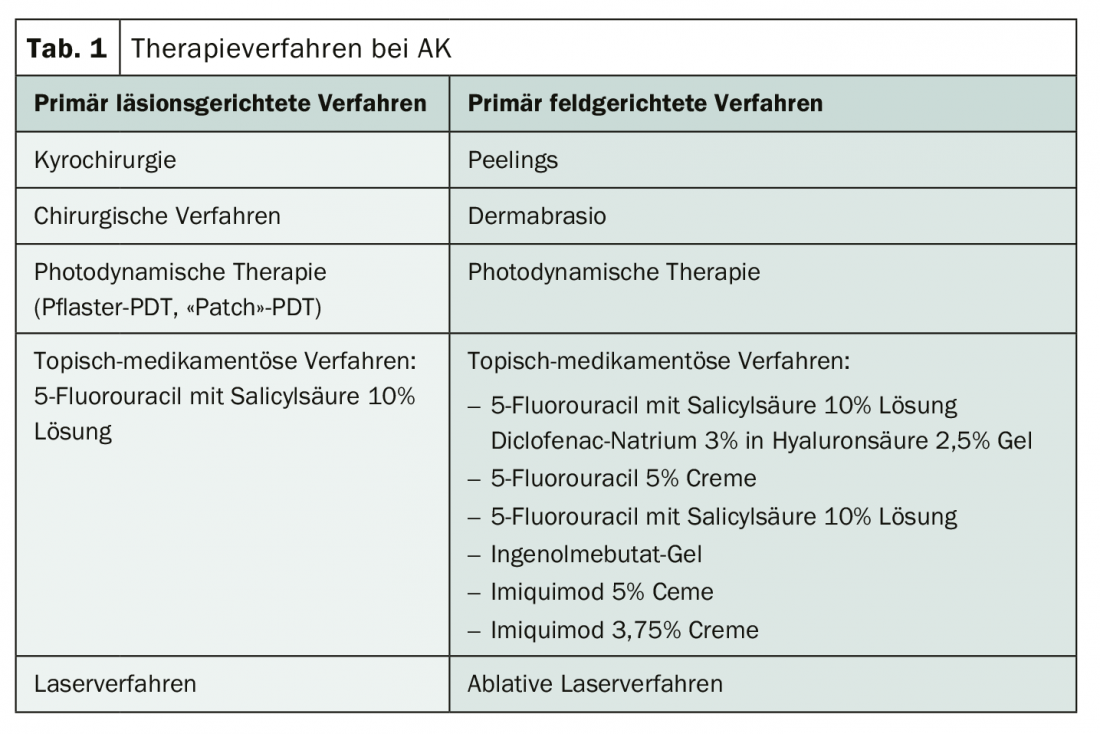
Since progression cannot be predicted, therapy should be given early and consistently. Several options are available based on the number and distribution of lesions as well as patient-related factors such as age, treatment preference, comorbidities, and risks. Particular attention should be paid especially to the field chancellery. According to the guideline, this comprises an area of skin with multiple AKs surrounded by visible UV-related skin damage. For this purpose, exclusive destruction of visible individual lesions would not be sufficient (Tab. 1). In addition to monotherapies, treatment combinations are also used. However, these have not yet been extensively studied systematically. Therefore, there are isolated possible concepts, but an algorithm is still missing. The use of UV protection products is recommended as a preventive measure and a sensible supplement to all therapy concepts.


Further reading:

  • www.awmf.org/uploads/tx-szleitlinien/032-022OLI_S3_Aktinische_Keratosen-Plattenepithelkarzinom-PEK_2019-07.pdf


InFo ONCOLOGY & HEMATOLOGY 2019; 7(6): 22.
Publikation
  • InFo ONKOLOGIE & HÄMATOLOGIE
Related Topics
  • actinic keratosis
  • Dermatooncology
  • squamous cell carcinoma
Previous Article
  • Mild asthma

Controller as demand therapy

  • Congress Reports
  • General Internal Medicine
  • Pneumology
  • RX
  • Studies
View Post
Next Article
  • Remission in rheumatoid arthritis

Every single week counts…

  • Congress Reports
  • General Internal Medicine
  • Geriatrics
  • Orthopedics
  • Rheumatology
  • RX
View Post
You May Also Like
View Post
  • 7 min
  • Vector-borne infections with skin manifestations

Arboviruses and leishmaniasis in Europe

    • Congress Reports
    • Infectiology
    • Prevention and health care
    • RX
    • Studies
    • Tropical and travel medicine
View Post
  • 6 min
  • Multimorbidity and functional capacity in old age

Clarify individual health status and reduce risks

    • Congress Reports
    • General Internal Medicine
    • Geriatrics
    • Neurology
    • Orthopedics
    • Physical medicine and rehabilitation
    • Prevention and health care
    • Rheumatology
    • RX
View Post
  • 6 min
  • Tick season: danger from early summer meningoencephalitis

TBE vaccination recommended for adults and children aged 3 and over

    • Education
    • Infectiology
    • Neurology
    • Prevention and health care
    • RX
    • Studies
View Post
  • 13 min
  • New WHO guideline, updated stimulation protocols, focus on PGT-A

Fertility and reproductive medicine 2026

    • Education
    • Gynecology
    • RX
    • Studies
View Post
  • 12 min
  • Wound treatment

Surgical wound complications

    • CME continuing education
    • Dermatology and venereology
    • Endocrinology and Diabetology
    • Geriatrics
    • Physical medicine and rehabilitation
    • RX
    • Surgery
View Post
  • 8 min
  • Proteins in wound healing

Do special amino acids lead to success?

    • CME continuing education
    • Dermatology and venereology
    • Endocrinology and Diabetology
    • Nutrition
    • RX
    • Studies
View Post
  • 8 min
  • Proteins in wound healing

Do special amino acids lead to success?

    • CME continuing education
    • Dermatology and venereology
    • Endocrinology and Diabetology
    • Nutrition
    • RX
    • Studies
View Post
  • 0 min
  • Psychedelic-assisted therapy

Current status of PAT

    • CME continuing education
    • General Internal Medicine
    • Pharmacology and toxicology
    • Psychiatry and psychotherapy
    • RX
    • Studies
  • IBD matters

    Zum Thema
Top CME content
  • 1
    Do special amino acids lead to success?
  • 2
    Current status of PAT
  • 3
    Surgical wound complications
  • 4
    Do special amino acids lead to success?
  • 5
    Functional limb preservation between infection control, vascular medicine and resurfacing

Newsletter

Sign up and stay up to date

Subscribe
Medizinonline Medizinonline
  • Contact
  • General terms and conditions
  • Imprint

Input your search keywords and press Enter.