Medizinonline Medizinonline
  • News
    • News
    • Market & Medicine
  • Patients
    • Disease patterns
    • Diagnostics
    • Therapy
  • Partner Content
    • Diabetes
      • Dia-Month Club – Type 2 Diabetes
      • Diabetes in Motion
      • Diabetes Podcasts
    • Gastroenterology
      • IBD matters
    • Oncology
      • Swiss Oncology in motion
    • Orthopedics
      • Osteoporosis in motion
  • Departments
    • Allergology and clinical immunology
    • General Internal Medicine
    • Anesthesiology
    • Angiology
    • Surgery
    • Dermatology and venereology
    • Endocrinology and Diabetology
    • Nutrition
    • Gastroenterology and Hepatology
    • Genetics
    • Geriatrics
    • Gynecology
    • Hematology
    • Infectiology
    • Cardiology
    • Nephrology
    • Neurology
    • Emergency and intensive care medicine
    • Nuclear Medicine
    • Oncology
    • Ophthalmology
    • ORL
    • Orthopedics
    • Pediatrics
    • Pharmacology and toxicology
    • Pharmaceutical medicine
    • Phlebology
    • Physical medicine and rehabilitation
    • Pneumology
    • Prevention and health care
    • Psychiatry and psychotherapy
    • Radiology
    • Forensic Medicine
    • Rheumatology
    • Sports Medicine
    • Traumatology and trauma surgery
    • Tropical and travel medicine
    • Urology
    • Dentistry
  • CME & Congresses
    • CME continuing education
    • Congress Reports
    • Congress calendar
  • Practice
    • Noctimed
    • Practice Management
    • Jobs
    • Interviews
  • Log In
  • Register
  • My account
  • Contact
  • Publications
  • Contact
  • Deutsch
  • English
  • Français
  • Italiano
  • Português
  • Español
Subscribe
Medizinonline Medizinonline
  • News
    • News
    • Market & Medicine
  • Patienten
    • Krankheitsbilder
    • Diagnostik
    • Therapie
  • Partner Content
    • Diabetes
      • Dia-Month Club – Type 2 Diabetes
      • Diabetes in Motion
      • Diabetes Podcasts
    • Gastroenterology
      • IBD matters
    • Oncology
      • Swiss Oncology in motion
    • Orthopedics
      • Osteoporosis in motion
    • Phytotherapie
    • Rheumatology
  • Departments
    • Fachbereiche 1-13
      • Allergology and clinical immunology
      • General Internal Medicine
      • Anesthesiology
      • Angiology
      • Surgery
      • Dermatology and venereology
      • Endocrinology and Diabetology
      • Nutrition
      • Gastroenterology and Hepatology
      • Genetics
      • Geriatrics
      • Gynecology
      • Hematology
    • Fachbereiche 14-26
      • Infectiology
      • Cardiology
      • Nephrology
      • Neurology
      • Emergency and intensive care medicine
      • Nuclear Medicine
      • Oncology
      • Ophthalmology
      • ORL
      • Orthopedics
      • Pediatrics
      • Pharmacology and toxicology
      • Pharmaceutical medicine
    • Fachbereiche 26-38
      • Phlebology
      • Physical medicine and rehabilitation
      • Phytotherapy
      • Pneumology
      • Prevention and health care
      • Psychiatry and psychotherapy
      • Radiology
      • Forensic Medicine
      • Rheumatology
      • Sports Medicine
      • Traumatology and trauma surgery
      • Tropical and travel medicine
      • Urology
      • Dentistry
  • CME & Congresses
    • CME continuing education
    • Congress Reports
    • Congress calendar
  • Practice
    • Noctimed
    • Practice Management
    • Jobs
    • Interviews
Login

Sie haben noch keinen Account? Registrieren

  • Lipid Management

Guideline-compliant care up to date

    • Cardiology
    • Congress Reports
    • RX
  • 2 minute read

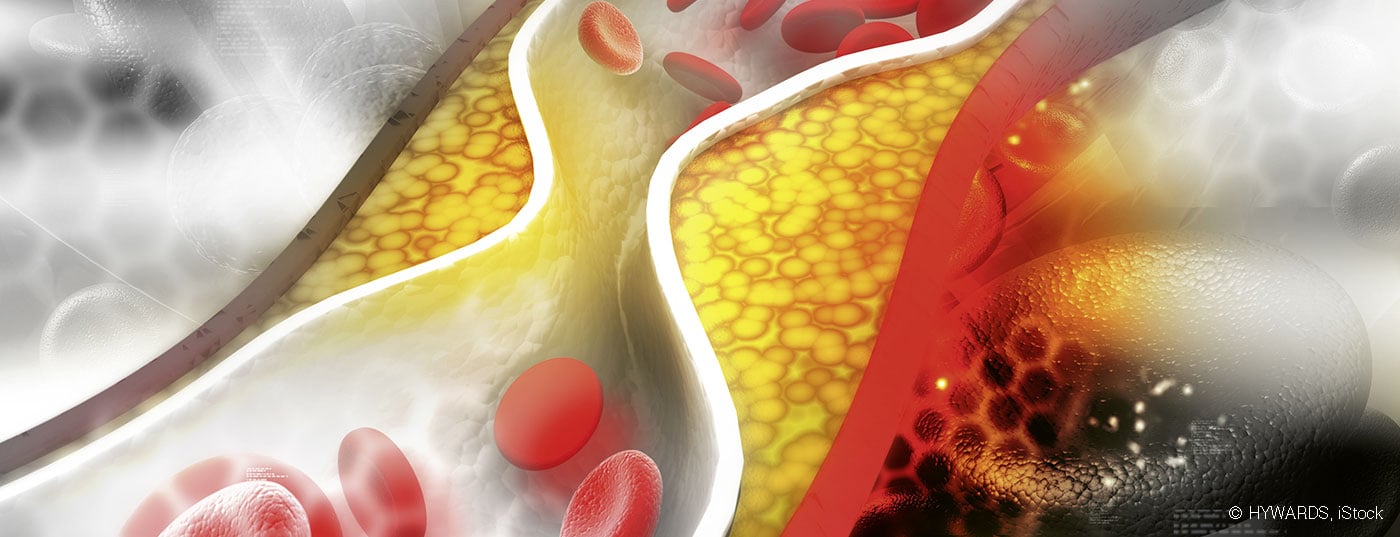
A fundamental factor in the field of cardiology is LDL cholesterol. Because without cholesterol, there is no atherosclerosis. Therefore, effective lipid management is paramount for the prevention of cardiovascular events. The new ESC guideline has incorporated the latest evidence into its recommendations. However, intensive research continues to enable new treatment options in a timely manner.

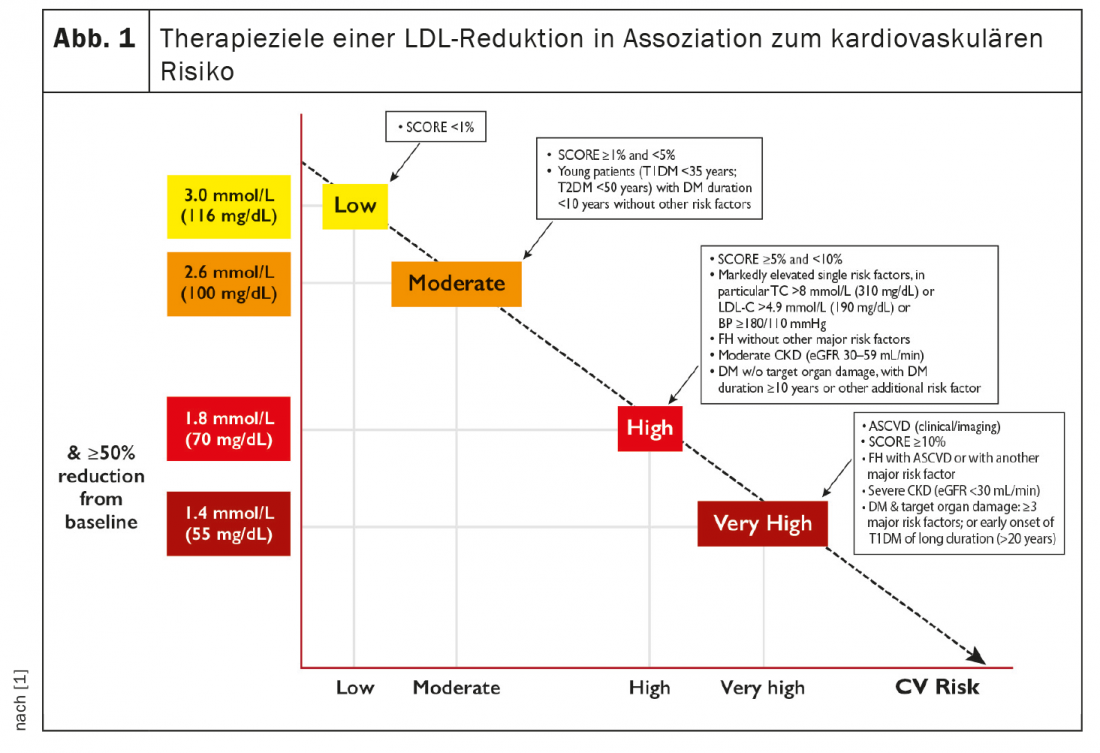
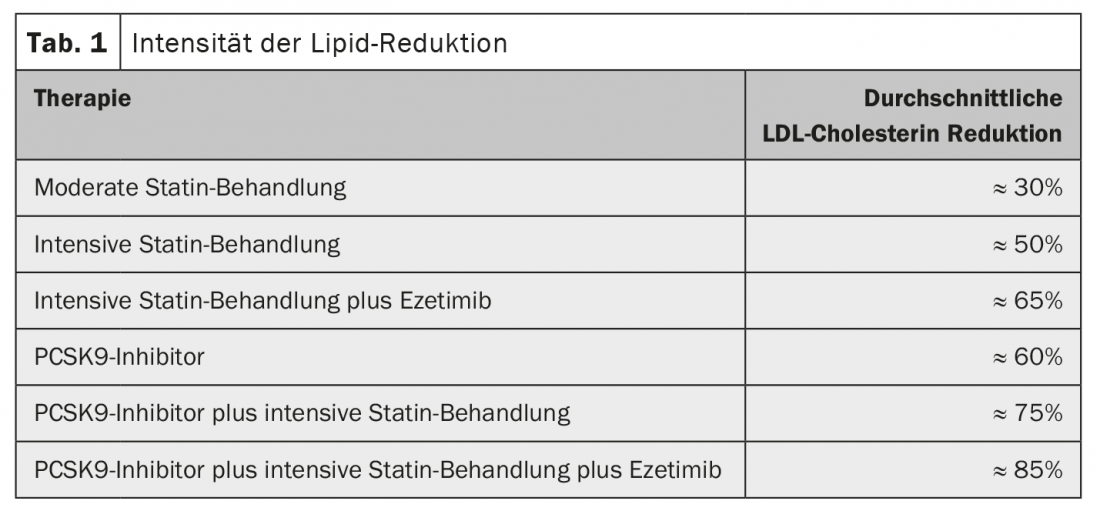
Intensive research efforts in recent years have established a clear link between LDL cholesterol and cardiovascular disease. Accordingly, LDL-C is a significant factor in the development of atherosclerosis. This has now been addressed by the new ESC guidelines for lipid management presented by Prof. François Mach, MD, Geneva. The guideline advocates significant LDL-C lowering with statins, ezetimibe, or PCSK9 inhibitors to <1.4 mmol/L (55 mg/dL) in patients at very high risk. This is because clinical studies have clearly shown that without a lower limit for LDL-C levels, the lower the LDL-C levels achieved, the lower the risk of future cardiovascular events. Intensification of therapy should be based on risk and baseline LDL cholesterol (Fig. 1) . For this, cardiovascular risk is defined, target LDL parameters are set, and the best lipid-lowering strategy is chosen. Depending on the therapy strategy, a reduction of between 30% and 85% can be achieved (Tab. 1) . The new therapy concept also provides for an early start, significantly more aggressive treatment and the use of combination therapies.


Focus Lipoprotein(a)

Lipoprotein(a) (Lp[a]) combines proinflammatory, prothrombotic, and proatherogenic properties and is closely associated not only with atherosclerosis but also with aortic stenosis. However, with respect to the frequency distribution of cardiovascular risk, there is no normal Gaussian curve but an extreme leftward shift. The vast majority have serum concentrations below 20-30 mg/dl. Only a few people have very high concentrations, but these are then associated with a very high risk. An Lp(a) >50 mg/dl indicates increased cardiovascular risk. Elevated levels can be lowered with antisense oligonucleotides, lipoprotein apheresis, or even PCSK9 inhibitors. The focus is primarily on optimal LDL-C reduction. New RNA drugs are currently in clinical trials.


A look into the future

Currently, intensive research is being conducted on molecular therapeutic options for dyslipidemias. Already well advanced in development is the possibility of PCSK9 siRNA, which appears to be interesting mainly because of the application form required only twice a year. An average reduction in LDL-C of 52% was observed over an 18-month period. Safety data to date are very promising. Currently, there are no indications of liver or kidney problems or muscular side effects. In addition, there are development programs that address ANGPLT3 as well as Apo-CIII. Genetic studies have clearly shown that these proteins are causal for the development of coronary heart disease.

Source: DGK 2020


Literature:

  1. 2019 ESC/EAS Guidelines for the management of dyslipidaemias: lipid modification to rescue cardiovascular risk. European Heart Journal 2020; 41: 111-188.


CARDIOVASC 2020; 19(4): 28 (published 10/12/20, ahead of print).
Autoren
  • Leoni Burggraf
Publikation
  • CARDIOVASC
Related Topics
  • Atherosclerosis
  • LDL cholesterol
  • Lipid Management
Previous Article
  • Functional gastrointestinal disorders

Combination of peppermint and caraway oil significantly reduces visceral hyperalgesia

  • Education
  • Gastroenterology and Hepatology
  • General Internal Medicine
  • Market & Medicine
  • RX
View Post
Next Article
  • Gastroesophageal reflux disease (GERD)

Alginate as an as-needed add-on therapy increases patient satisfaction

  • Education
  • Gastroenterology and Hepatology
  • General Internal Medicine
  • RX
  • Studies
View Post
You May Also Like
View Post
  • 13 min
  • Why lipoprotein(a) is the biggest therapeutic vacuum in cardiology

Lp(a): The underestimated risk factor before the turning point

    • Cardiology
    • Education
    • Endocrinology and Diabetology
    • RX
    • Studies
View Post
  • 11 min
  • Modern system therapeutics for hidradenitis suppurativa

Immunological dysregulation in the sights of several biologics and “small molecules”

    • Allergology and clinical immunology
    • Dermatology and venereology
    • Education
    • RX
    • Studies
View Post
  • 15 min
  • Perimenopausal depression, PMDS and tokophobia

Psychosomatics and mental health in gynecology

    • Education
    • Gynecology
    • Psychiatry and psychotherapy
    • RX
    • Studies
View Post
  • 8 min
  • Proteins in wound healing

Do special amino acids lead to success?

    • CME continuing education
    • Dermatology and venereology
    • Endocrinology and Diabetology
    • Nutrition
    • RX
    • Studies
View Post
  • 7 min
  • Plastic surgery and reconstructive microsurgery for DFS

Functional limb preservation between infection control, vascular medicine and resurfacing

    • Angiology
    • CME continuing education
    • Endocrinology and Diabetology
    • General Internal Medicine
    • Geriatrics
    • Physical medicine and rehabilitation
    • RX
    • Surgery
View Post
  • 9 min
  • Polycystic ovary syndrome 2025/2026

New pathophysiology, updated diagnostics and the age of incretin mimetics

    • Education
    • Gastroenterology and Hepatology
    • General Internal Medicine
    • Gynecology
    • Pharmacology and toxicology
    • RX
    • Studies
View Post
  • 14 min
  • Heart failure and type 2 diabetes

Oral semaglutide and cardiac decompensation in type 2 diabetes

    • Cardiology
    • Education
    • Endocrinology and Diabetology
    • RX
    • Studies
View Post
  • 7 min
  • Atopic dermatitis as a door opener for an atopic cascade?

AD trajectories: Summary of current findings

    • Allergology and clinical immunology
    • Congress Reports
    • Dermatology and venereology
    • RX
    • Studies
  • IBD matters

    Zum Thema
Top CME content
  • 1
    Functional limb preservation between infection control, vascular medicine and resurfacing
  • 2
    Do special amino acids lead to success?
  • 3
    Do special amino acids lead to success?
  • 4
    Current status of PAT
  • 5
    Surgical wound complications

Newsletter

Sign up and stay up to date

Subscribe
Medizinonline Medizinonline
  • Contact
  • General terms and conditions
  • Imprint

Input your search keywords and press Enter.