Medizinonline Medizinonline
  • News
    • News
    • Market & Medicine
  • Patients
    • Disease patterns
    • Diagnostics
    • Therapy
  • Partner Content
    • Diabetes
      • Dia-Month Club – Type 2 Diabetes
      • Diabetes in Motion
      • Diabetes Podcasts
    • Gastroenterology
      • IBD matters
    • Oncology
      • Swiss Oncology in motion
    • Orthopedics
      • Osteoporosis in motion
  • Departments
    • Allergology and clinical immunology
    • General Internal Medicine
    • Anesthesiology
    • Angiology
    • Surgery
    • Dermatology and venereology
    • Endocrinology and Diabetology
    • Nutrition
    • Gastroenterology and Hepatology
    • Genetics
    • Geriatrics
    • Gynecology
    • Hematology
    • Infectiology
    • Cardiology
    • Nephrology
    • Neurology
    • Emergency and intensive care medicine
    • Nuclear Medicine
    • Oncology
    • Ophthalmology
    • ORL
    • Orthopedics
    • Pediatrics
    • Pharmacology and toxicology
    • Pharmaceutical medicine
    • Phlebology
    • Physical medicine and rehabilitation
    • Pneumology
    • Prevention and health care
    • Psychiatry and psychotherapy
    • Radiology
    • Forensic Medicine
    • Rheumatology
    • Sports Medicine
    • Traumatology and trauma surgery
    • Tropical and travel medicine
    • Urology
    • Dentistry
  • CME & Congresses
    • CME continuing education
    • Congress Reports
    • Congress calendar
  • Practice
    • Noctimed
    • Practice Management
    • Jobs
    • Interviews
  • Log In
  • Register
  • My account
  • Contact
  • Publications
  • Contact
  • Deutsch
  • English
  • Français
  • Italiano
  • Português
  • Español
Subscribe
Medizinonline Medizinonline
  • News
    • News
    • Market & Medicine
  • Patienten
    • Krankheitsbilder
    • Diagnostik
    • Therapie
  • Partner Content
    • Diabetes
      • Dia-Month Club – Type 2 Diabetes
      • Diabetes in Motion
      • Diabetes Podcasts
    • Gastroenterology
      • IBD matters
    • Oncology
      • Swiss Oncology in motion
    • Orthopedics
      • Osteoporosis in motion
    • Phytotherapie
    • Rheumatology
  • Departments
    • Fachbereiche 1-13
      • Allergology and clinical immunology
      • General Internal Medicine
      • Anesthesiology
      • Angiology
      • Surgery
      • Dermatology and venereology
      • Endocrinology and Diabetology
      • Nutrition
      • Gastroenterology and Hepatology
      • Genetics
      • Geriatrics
      • Gynecology
      • Hematology
    • Fachbereiche 14-26
      • Infectiology
      • Cardiology
      • Nephrology
      • Neurology
      • Emergency and intensive care medicine
      • Nuclear Medicine
      • Oncology
      • Ophthalmology
      • ORL
      • Orthopedics
      • Pediatrics
      • Pharmacology and toxicology
      • Pharmaceutical medicine
    • Fachbereiche 26-38
      • Phlebology
      • Physical medicine and rehabilitation
      • Phytotherapy
      • Pneumology
      • Prevention and health care
      • Psychiatry and psychotherapy
      • Radiology
      • Forensic Medicine
      • Rheumatology
      • Sports Medicine
      • Traumatology and trauma surgery
      • Tropical and travel medicine
      • Urology
      • Dentistry
  • CME & Congresses
    • CME continuing education
    • Congress Reports
    • Congress calendar
  • Practice
    • Noctimed
    • Practice Management
    • Jobs
    • Interviews
Login

Sie haben noch keinen Account? Registrieren

  • Sunscreen

How effective are sun creams?

    • Dermatology and venereology
    • News
    • Oncology
    • RX
  • 4 minute read

Primarily, sun protection should take place by means of large-area body covering and moderate sun exposure. In addition, there is a wide range of prophylactic measures and products to prevent light-induced skin damage: sun creams in particular are considered to be good protection against potentially harmful UV radiation.

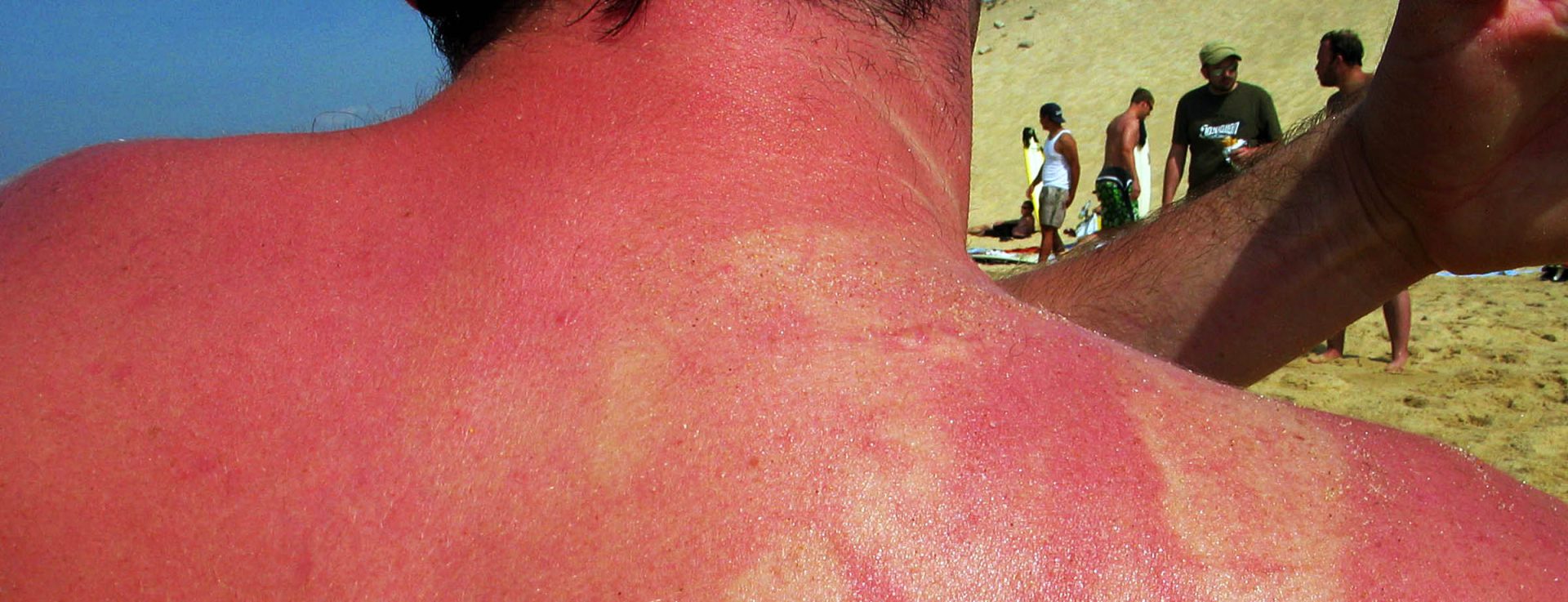
(ag) But even the most prominent of all sunscreens, the sunscreen, is repeatedly suspected of being harmful itself. Thus, although it absorbs UV-B radiation very effectively, which causes burning of the skin (acute erythema), as well as UV-A light, which can have e.g. actinically influenced skin damage, premature skin aging (elastosis) and (somewhat less frequently than UV-B) skin cancer as late consequences. It is possible, however, that the use of sun creams leads to a false sense of security about sunbathing and thus to more extensive exposure to the sun. This theory carries a contradiction in that it criticizes not so much the product itself, but rather the reckless behavior of the sun hungry. That is why experts worldwide agree that good sun protection always includes a sun cream with a high sun protection factor. Especially you need to pay attention to the correct application of cream. Patients should be advised to use at least 2 g/cm2 of skin for initial application. This is about the amount that patients already find uncomfortable. Informative conversation about the proper way to sunbathe remains just as important, if not the most important, component of preventing sun-related skin damage.

Study situation unclear

Good quality creams absorb more than 90% of UV radiation, effectively preventing burns, which are crucial for the development of pigmented nevi, especially in childhood, and for the increased risk of melanoma in the long term.

Furthermore, randomized controlled trials with adult participants exist that indicate a decreased risk of actinic keratosis with regular sunscreen use [1]. The prevention of melanoma using sunscreens is controversial [2]. For example, a long-term follow-up [3] showed that ten years after the end of a randomized trial with 1621 participants, 11 new primary melanomas occurred in the sunscreen group (daily) and 22 in the group allowed to perform discretionary sun protection. The reduction was not significant (p=0.051), but more pronounced in invasive forms. The authors conclude that regular use of sunscreen could prevent melanoma in adults.

The methods used to verify protection are also criticized in some cases. The testing of UV-A protection in particular was not standardized for a long time, but in the meantime the French-modified so-called “Persistent Pigment Darkening” (PPD) method has become the standard in Europe and is widely accepted. Scientifically controversial, however, is the “In Vitro UVA Test Method” recommended by the European Cosmetic Association COLIPA.

What to do in case of allergies and irritations?

In prevention in children, creams with physical rather than chemical mechanisms are used, i.e. it is not so much the absorption but rather the reflection and scattering of light that play a role. In addition, it makes sense to avoid colorants and perfumes.

Even if the above-mentioned criticism regarding the inducement to wrong behavior can be largely refuted, the sun creams nevertheless harbor a risk of side effects: Allergies (contact dermatitis), skin irritations, but also phototoxic or -allergic reactions are more frequent compared to other cosmetic products and due to the high density of chemical substances, but can be reduced by a targeted avoidance of the irritating or sensitizing ingredients. Overall, the risk is low when the sheer mass of sunscreens used is factored into the equation.

In pharmacies, products are available especially for children, allergy sufferers or patients with light dermatoses which, in addition to photostable filters (organic/mineral), also contain antioxidants (e.g. flavonoids, vitamin E), repair enzymes and soothing, caring active ingredients such as dexpanthenol and glycerin. In severe cases, an epicutaneous test can provide information about the specific ingredients to which the patient is allergic.

The endocrine effects of some chemical sunscreen filters remain unclear. A 2008 study showed significantly elevated concentrations of the substances benzophenone-3 (BP-3), octyl methoxycinnamate (OMC), and 4-methylbenzylidenecamphor (4-MBC) in the blood and urine of study participants, even a few hours after application [4].

Sources:

  1. Thompson SC, Jolley D, Marks R: Reduction of solar keratoses by regular sunscreen use. N Engl J Med 1993 Oct 14; 329(16): 1147-1151.
  2. Gefeller O, Pfahlberg A: Sunscreen use and melanoma: a case of evidence-based prevention? Photodermatol Photoimmunol Photomed 2002 Jun; 18(3): 153-156; discussion 156.
  3. Green AC, et al: Reduced melanoma after regular sunscreen use: randomized trial follow-up. J Clin Oncol 2011 Jan 20; 29(3): 257-263. doi: 10.1200/JCO.2010.28.7078. epub 2010 Dec 6.
  4. Janjua NR, et al: Sunscreens in human plasma and urine after repeated whole-body topical application. J Eur Acad Dermatol Venereol 2008 Apr; 22(4): 456-461. doi: 10.1111/j.1468-3083.2007.02492.x. Epub 2008 Jan 23.
  5. Furrer HJ (Interview): Do sunscreens increase the risk of cancer? Ars Medici 2005; 11: 492-493.
  6. Gabard B: UV to IR: Global sun protection is the order of the day. Ars Medici Dossier 2007; VII: 28-31.
  7. Stauber G: Sunscreens. For sensitive skin and prevention of skin diseases. Ars Medici Dossier 2011; VIII: 20-22.
  8. Gessner C: How skin cancer prevention succeeds. Medical Tribune. www.medical-tribune.de/medizin/fokus-medizin/artikeldetail/so-gelingt-die-hautkrebs-praevention.html
  9. Guideline of the GD Gesellschaft Dermopharmazie e.V. “Dermocosmetic sun protection”, in the version of 23.11.2007.

DERMATOLOGIE PRAXIS 2014; 24(2): 37-38

Autoren
  • Andreas Grossmann
Publikation
  • DERMATOLOGIE PRAXIS
Related Topics
  • Body covering
  • Elastose
  • Erythema
  • Skin aging
  • Skin cancer
  • Sun cream
  • Sunburn
  • Sunscreen
  • UV radiation
  • UV-A
  • UV-B
Previous Article
  • Annual Congress of the SGAI

News in anaphylaxis treatment

  • Allergology and clinical immunology
  • Congress Reports
  • RX
View Post
Next Article
  • 4th Swiss Rare Disease Day

The goal is a national strategy for rare diseases

  • Allergology and clinical immunology
  • Dermatology and venereology
  • News
  • Oncology
  • Pediatrics
  • RX
View Post
You May Also Like
View Post
  • 8 min
  • Psychooncology

Communication as the key to therapy adherence

    • RX
    • CME continuing education
    • General Internal Medicine
    • Practice Management
View Post
  • 9 min
  • Cardiology

Minimally invasive – the quiet triumph of modern heart surgery

    • RX
    • Cardiology
    • CME continuing education
    • Studies
    • Surgery
View Post
  • 6 min
  • Schizophrenia in the early-onset stage

Which antipsychotic should be used for treatment-naive patients?

    • RX
    • Education
    • Pharmacology and toxicology
    • Psychiatry and psychotherapy
    • Studies
View Post
  • 4 min
  • Diarrhea in children

The problem of parental expectations

    • RX
    • Education
    • Gastroenterology and Hepatology
    • General Internal Medicine
    • Infectiology
    • Pediatrics
    • Studies
View Post
  • 4 min
  • From symptom to diagnosis

Multilocular cystic renal cell carcinoma (MCRCC)

    • RX
    • Cases
    • Education
    • Nephrology
    • Oncology
    • Radiology
    • Studies
    • Surgery
View Post
  • 3 min
  • Shaping the Future with LLM & Co.

AI in Everyday Clinical Practice: Friend or Foe?

    • RX
    • General Internal Medicine
    • Practice Management
    • Prevention and health care
View Post
  • 5 min
  • Ulcerative colitis: current evidence on anti-inflammatory therapies

Remission induction and maintenance with biologics and JAK-i

    • RX
    • Congress Reports
    • Gastroenterology and Hepatology
    • General Internal Medicine
    • Studies
View Post
  • 4 min
  • Bronchiectasis

New strategies against neutrophilic inflammation

    • RX
    • Congress Reports
    • General Internal Medicine
    • Infectiology
    • Pneumology
    • Studies
  • IBD matters

    Zum Thema
Top CME content
  • 1
    Current State of Knowledge and New Therapeutic Approaches
  • 2
    Why is it so hard to lose weight?
  • 3
    Functional limb preservation between infection control, vascular medicine and resurfacing
  • 4
    Algorithms, avatars and the unburdened mind
  • 5
    Communication as the key to therapy adherence

Newsletter

Sign up and stay up to date

Subscribe
Medizinonline Medizinonline
  • Contact
  • General terms and conditions
  • Imprint

Input your search keywords and press Enter.