Medizinonline Medizinonline
  • News
    • News
    • Market & Medicine
  • Patients
    • Disease patterns
    • Diagnostics
    • Therapy
  • Partner Content
    • Dermatology
      • Atopic dermatitis and psoriasis news
    • Diabetes
      • Dia-Month Club – Type 2 Diabetes
      • Diabetes in Motion
      • Diabetes Podcasts
    • Gastroenterology
      • IBD matters
    • Oncology
      • Swiss Oncology in motion
    • Orthopedics
      • Osteoporosis in motion
  • Departments
    • Allergology and clinical immunology
    • General Internal Medicine
    • Anesthesiology
    • Angiology
    • Surgery
    • Dermatology and venereology
    • Endocrinology and Diabetology
    • Nutrition
    • Gastroenterology and Hepatology
    • Genetics
    • Geriatrics
    • Gynecology
    • Hematology
    • Infectiology
    • Cardiology
    • Nephrology
    • Neurology
    • Emergency and intensive care medicine
    • Nuclear Medicine
    • Oncology
    • Ophthalmology
    • ORL
    • Orthopedics
    • Pediatrics
    • Pharmacology and toxicology
    • Pharmaceutical medicine
    • Phlebology
    • Physical medicine and rehabilitation
    • Pneumology
    • Prevention and health care
    • Psychiatry and psychotherapy
    • Radiology
    • Forensic Medicine
    • Rheumatology
    • Sports Medicine
    • Traumatology and trauma surgery
    • Tropical and travel medicine
    • Urology
    • Dentistry
  • CME & Congresses
    • CME continuing education
    • Congress Reports
    • Congress calendar
  • Practice
    • Noctimed
    • Practice Management
    • Jobs
    • Interviews
  • Log In
  • Register
  • My account
  • Contact
  • Publications
  • Contact
  • Deutsch
  • English
  • Français
  • Italiano
  • Português
  • Español
Subscribe
Medizinonline Medizinonline
  • News
    • News
    • Market & Medicine
  • Patienten
    • Krankheitsbilder
    • Diagnostik
    • Therapie
  • Partner Content
    • Dermatology
      • Atopic dermatitis and psoriasis news
    • Diabetes
      • Dia-Month Club – Type 2 Diabetes
      • Diabetes in Motion
      • Diabetes Podcasts
    • Gastroenterology
      • IBD matters
    • Oncology
      • Swiss Oncology in motion
    • Orthopedics
      • Osteoporosis in motion
    • Phytotherapie
    • Rheumatology
  • Departments
    • Fachbereiche 1-13
      • Allergology and clinical immunology
      • General Internal Medicine
      • Anesthesiology
      • Angiology
      • Surgery
      • Dermatology and venereology
      • Endocrinology and Diabetology
      • Nutrition
      • Gastroenterology and Hepatology
      • Genetics
      • Geriatrics
      • Gynecology
      • Hematology
    • Fachbereiche 14-26
      • Infectiology
      • Cardiology
      • Nephrology
      • Neurology
      • Emergency and intensive care medicine
      • Nuclear Medicine
      • Oncology
      • Ophthalmology
      • ORL
      • Orthopedics
      • Pediatrics
      • Pharmacology and toxicology
      • Pharmaceutical medicine
    • Fachbereiche 26-38
      • Phlebology
      • Physical medicine and rehabilitation
      • Phytotherapy
      • Pneumology
      • Prevention and health care
      • Psychiatry and psychotherapy
      • Radiology
      • Forensic Medicine
      • Rheumatology
      • Sports Medicine
      • Traumatology and trauma surgery
      • Tropical and travel medicine
      • Urology
      • Dentistry
  • CME & Congresses
    • CME continuing education
    • Congress Reports
    • Congress calendar
  • Practice
    • Noctimed
    • Practice Management
    • Jobs
    • Interviews
Login

Sie haben noch keinen Account? Registrieren

  • From symptom to diagnosis

Mammary tumors of the male

    • Cases
    • Education
    • Oncology
    • Radiology
    • RX
  • 3 minute read

Malignancies of the male breast are very rare. In case of a suspected diagnosis, a careful clarification of clinical symptoms and anamnestic data is very important. Information sharing with the radiologist can be critical. Imaging examination is primarily performed by mammography, with sonography providing complementary information.

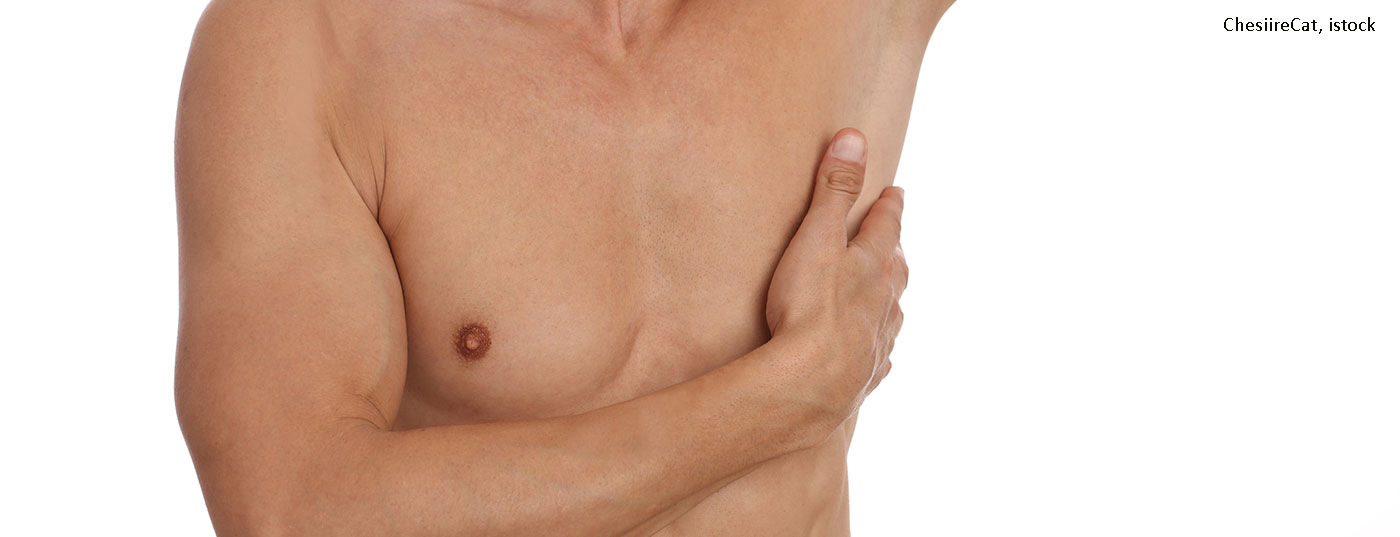
Benign and malignant tumors of the mammae of women were reported in detail in issues 6/2019 and 7/2019 of HAUSARZT PRAXIS. The criteria of imaging evaluation were discussed there and are also valid for masculine breast tumors. Spacious lesions of the male breast are relatively rare. In most cases, they are benign changes (gynecomastia, pseudogynecomastia), and breast carcinomas are relatively rare.  For example, in the United States, the prevalence of male breast carcinomas is reported to be 1% of all malignant breast tumors [1]. This figure also applies to the other Western countries [2], with the rate of new cases increasing with increasing age per year. It is 0.1:100,000 for 35-year-olds and 11:100,000 for 85-year-olds. The main age of onset is between 61 and 65 years.

In principle, mainly three different entities can lead to space-occupying changes in the male breast (Table 1).
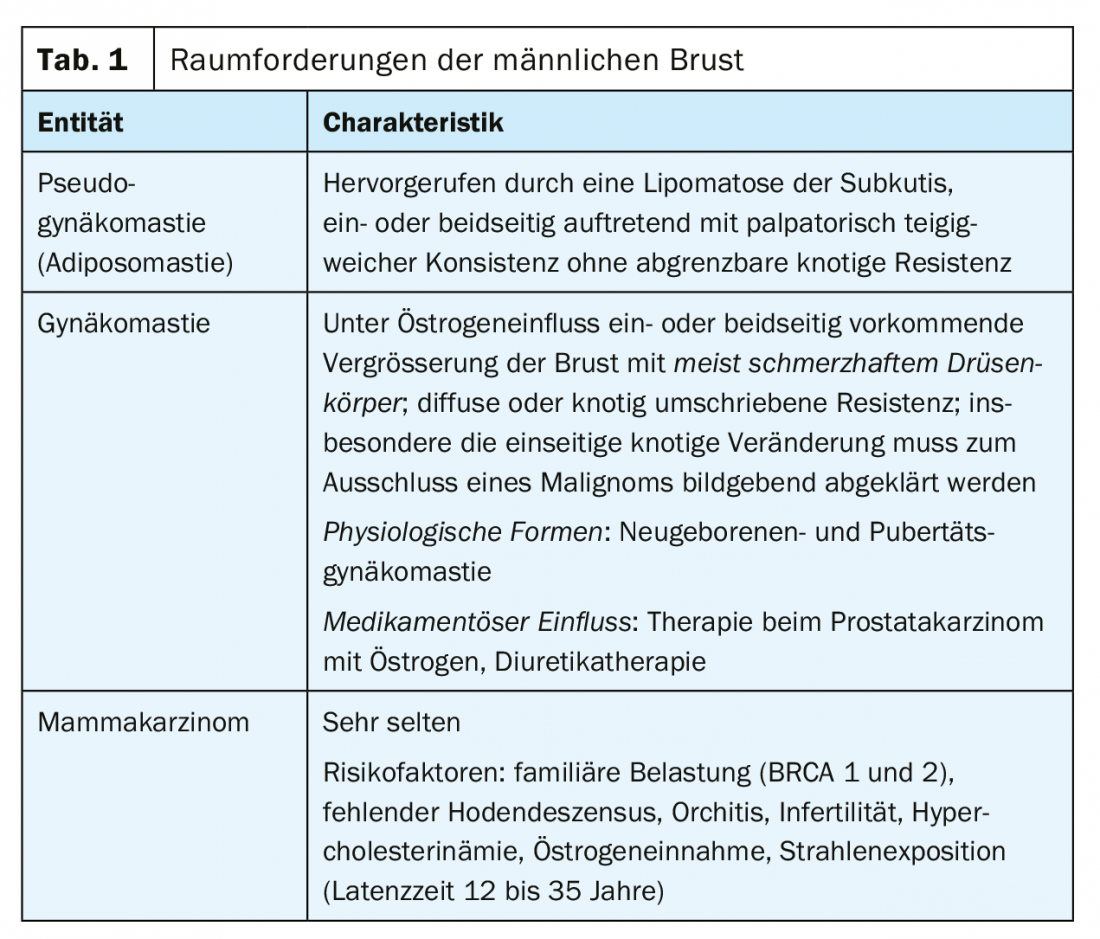


In addition to taking an exact medical history, especially with regard to drug therapies, relevant previous diseases and possible family history of tumors, clinical examinations and mammography are of decisive importance. Breast ultrasonography can provide complementary information on soft tissue structures and local lymph node status. For imaging purposes, the same malignancy criteria apply in men as in women. Adiposomastia (pseudogynecomastia) usually occurs in connection with increased fatty tissue of the body trunk, whereas true gynecomastia can be observed even without further fatty tissue increase of the body. In principle, enlargements of the male breast can trigger psychological problems of the patients, which then also lead to surgical corrections [4]. Surgical treatment of male breast carcinoma is inevitable, adjuvant therapy measures included. The prevalence of breast carcinoma in preexisting gynecomastia is reported to be 0.11 to 0.18%. Unilateral cases dominate.

Computed tomographic and magnetic resonance imaging examinations play no role in the primary diagnosis of male breast tumors.

Case studies

The cases listed here document the different causalities of male breast space-occupying lesions. History and clinical examination may already be indicative, but do not preclude imaging for definite verification of tissue proliferation.
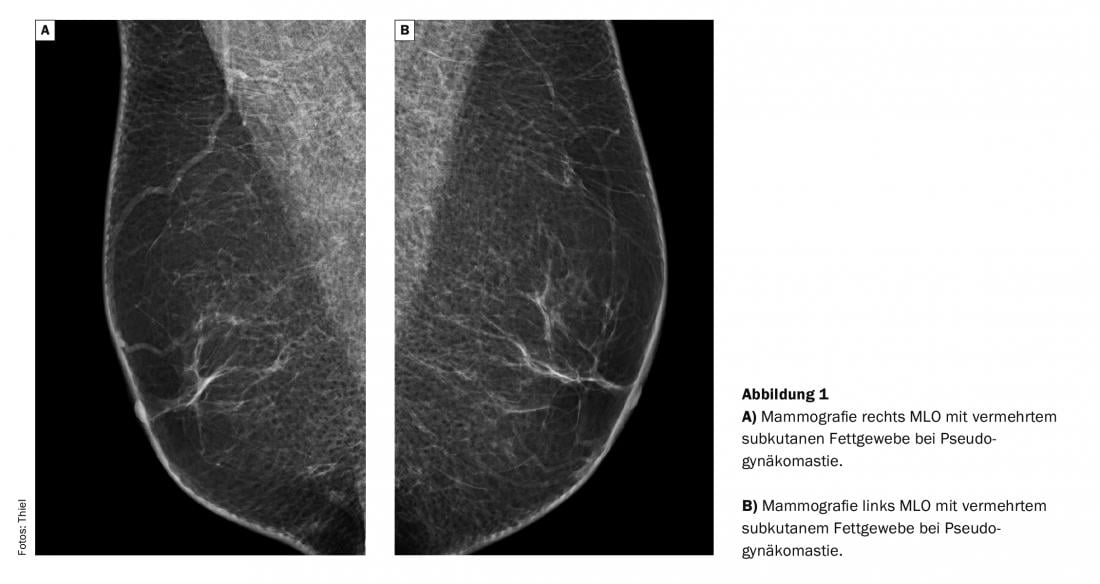


Case 1 (Fig. 1) shows mediolateral oblique (MLO) imaging of the right and left mamma (Figs. 1A and 1B) of a 68-year-old obese man in whom gynecomastia should be excluded. Disposing factors were not present, nor were there any pain symptoms with doughy-lipomatous palpation.
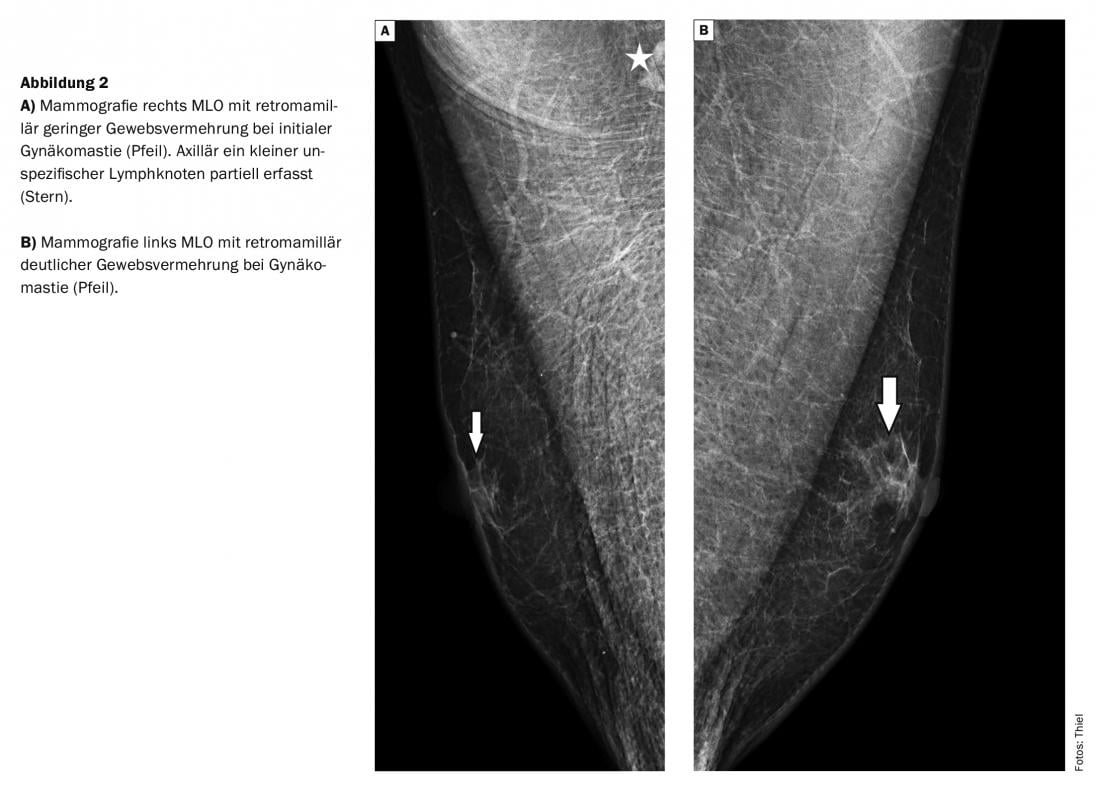
In case 2 (Fig. 2), a 49-year-old man without an obese habitus complained of a painful nodular retromammary change on the left side for several weeks. He received antihypertensive drug therapy. Mammography (Fig. 2A and 2B) each MLO images) demonstrated bilateral left dominant gynecomastia. A small nonspecific fatty degenerated axillary lymph node was included on the right axillary side.


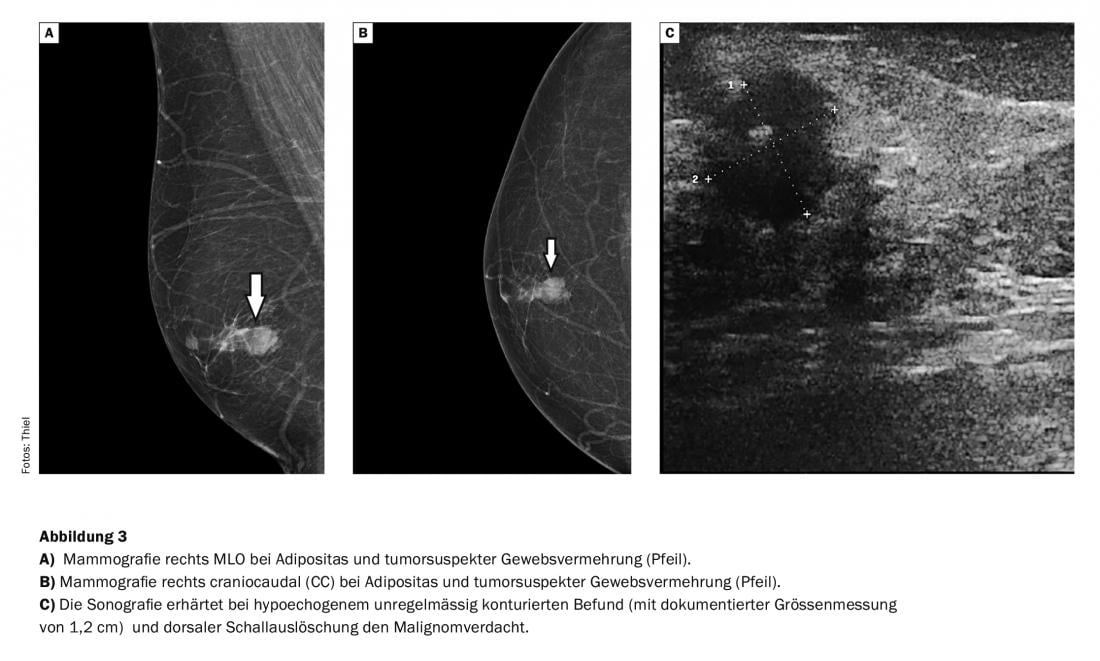
In case 3 (Fig. 3), a routine examination of a 66-year-old severely obese man revealed an indolent mobile retromammillary nodule that appeared tumor-suspect mammographically (Figs. 3A and 3B) . Supplementary sonography (Fig. 3C) confirmed the malignant findings. Histology confirmed the image morphologic diagnosis.


Take-Home Messages

  • When diagnosing tissue proliferation of the male breast, the exact recording of family and personal history, clarification of drug therapy and clinical symptoms are very important and should also be reported to the radiologist.
  • Malignancies of the male breast are very rare, and the risk of degeneration of gynecomastia is low.
  • Imaging assessment of male breast tissue proliferation is primarily performed by mammography, with sonography providing complementary information.
  • BI-RADS classification is the same for breast tumors of both sexes.


Literature:

  1. Leon-Ferre RA, et al: A contemporary review of male breast cancer: current evidence and unanswered questions. Cancer Metastasis Rev 2018; 37(4): 599-614.
  2. Fischer U (ed.): X-ray mammography. Georg Thieme Verlag Stuttgart, New York, 2003: 226-227.
  3. Heywang-Köbrunner SH, Schreer I: Imaging breast diagnostics. Georg Thieme Verlag Stuttgart, New York, 2996: 143-145.
  4. Lapid O, Jolink F, Meijer SL: Pathological findings in gynecomastia: analysis of 5113 breasts. Ann Plast Surg 2015; 74(2): 163-166.


HAUSARZT PRAXIS 2020; 15(7): 46-48
Autoren
  • Dr. med. Hans-Joachim Thiel
Publikation
  • HAUSARZT PRAXIS
Related Topics
  • Breast Cancer
  • mammary tumor
Previous Article
  • Chronic wounds

Modern wound management is interdisciplinary and individualized

  • Congress Reports
  • Dermatology and venereology
  • Endocrinology and Diabetology
  • Geriatrics
  • RX
View Post
Next Article
  • Multiple Myeloma

Focus on symptom control – treatment options at a glance

  • Education
  • Hematology
  • Oncology
  • RX
View Post
You May Also Like
View Post
  • 3 min
  • Development of a quintuple agonist

New strategy in the fight against obesity and T2D

    • Congress Reports
    • Endocrinology and Diabetology
    • Pharmacology and toxicology
    • RX
    • Studies
View Post
  • 4 min
  • From symptom to diagnosis

Oncocytoma

    • Cases
    • Education
    • Nephrology
    • Oncology
    • Radiology
    • RX
    • Surgery
View Post
  • 7 min
  • Arterial elasticity, vascular ageing, endothelial function

Longevity and cardiovascular health 2025

    • Angiology
    • Cardiology
    • Education
    • General Internal Medicine
    • Geriatrics
    • Prevention and health care
    • RX
    • Studies
View Post
  • 5 min
  • AI-supported risk stratification for chest pain in the emergency room

Performance of a fully automated ECG model

    • Cardiology
    • Education
    • Emergency and intensive care medicine
    • Prevention and health care
    • RX
    • Studies
View Post
  • 11 min
  • Alternative to insulin and GLP1

From the β-cell to the center: the versatile role of amylin

    • CME continuing education
    • Endocrinology and Diabetology
    • RX
    • Studies
View Post
  • 6 min
  • Hormone balance and longevity

Ageing is not a substitution diagnosis

    • Education
    • Endocrinology and Diabetology
    • General Internal Medicine
    • Geriatrics
    • Gynecology
    • Pharmacology and toxicology
    • Prevention and health care
    • RX
    • Studies
View Post
  • 6 min
  • Cardiovascular risk

Bad news for young men with T2D

    • Cardiology
    • Congress Reports
    • Endocrinology and Diabetology
    • Prevention and health care
    • RX
    • Studies
View Post
  • 0 min
  • Case Report

6-year-old child with central retinal artery occlusion

    • Cases
    • Education
    • Ophthalmology
    • Pediatrics
    • RX
    • Studies
  • IBD matters

    Zum Thema
Top CME content
  • 1
    Control instead of a flood of data: AI makes big data and wearables usable
  • 2
    Causes and prevention at work
  • 3
    Yellow nail and Swyer-James syndrome
  • 4
    Recommendations for action in practice
  • 5
    From the β-cell to the center: the versatile role of amylin

Newsletter

Sign up and stay up to date

Subscribe
Medizinonline Medizinonline
  • Contact
  • General terms and conditions
  • Imprint

Input your search keywords and press Enter.