Medizinonline Medizinonline
  • News
    • News
    • Market & Medicine
  • Patients
    • Disease patterns
    • Diagnostics
    • Therapy
  • Partner Content
    • Diabetes
      • Dia-Month Club – Type 2 Diabetes
      • Diabetes in Motion
      • Diabetes Podcasts
    • Gastroenterology
      • IBD matters
    • Oncology
      • Swiss Oncology in motion
    • Orthopedics
      • Osteoporosis in motion
  • Departments
    • Allergology and clinical immunology
    • General Internal Medicine
    • Anesthesiology
    • Angiology
    • Surgery
    • Dermatology and venereology
    • Endocrinology and Diabetology
    • Nutrition
    • Gastroenterology and Hepatology
    • Genetics
    • Geriatrics
    • Gynecology
    • Hematology
    • Infectiology
    • Cardiology
    • Nephrology
    • Neurology
    • Emergency and intensive care medicine
    • Nuclear Medicine
    • Oncology
    • Ophthalmology
    • ORL
    • Orthopedics
    • Pediatrics
    • Pharmacology and toxicology
    • Pharmaceutical medicine
    • Phlebology
    • Physical medicine and rehabilitation
    • Pneumology
    • Prevention and health care
    • Psychiatry and psychotherapy
    • Radiology
    • Forensic Medicine
    • Rheumatology
    • Sports Medicine
    • Traumatology and trauma surgery
    • Tropical and travel medicine
    • Urology
    • Dentistry
  • CME & Congresses
    • CME continuing education
    • Congress Reports
    • Congress calendar
  • Practice
    • Noctimed
    • Practice Management
    • Jobs
    • Interviews
  • Log In
  • Register
  • My account
  • Contact
  • Publications
  • Contact
  • Deutsch
  • English
  • Français
  • Italiano
  • Português
  • Español
Subscribe
Medizinonline Medizinonline
  • News
    • News
    • Market & Medicine
  • Patienten
    • Krankheitsbilder
    • Diagnostik
    • Therapie
  • Partner Content
    • Diabetes
      • Dia-Month Club – Type 2 Diabetes
      • Diabetes in Motion
      • Diabetes Podcasts
    • Gastroenterology
      • IBD matters
    • Oncology
      • Swiss Oncology in motion
    • Orthopedics
      • Osteoporosis in motion
    • Phytotherapie
    • Rheumatology
  • Departments
    • Fachbereiche 1-13
      • Allergology and clinical immunology
      • General Internal Medicine
      • Anesthesiology
      • Angiology
      • Surgery
      • Dermatology and venereology
      • Endocrinology and Diabetology
      • Nutrition
      • Gastroenterology and Hepatology
      • Genetics
      • Geriatrics
      • Gynecology
      • Hematology
    • Fachbereiche 14-26
      • Infectiology
      • Cardiology
      • Nephrology
      • Neurology
      • Emergency and intensive care medicine
      • Nuclear Medicine
      • Oncology
      • Ophthalmology
      • ORL
      • Orthopedics
      • Pediatrics
      • Pharmacology and toxicology
      • Pharmaceutical medicine
    • Fachbereiche 26-38
      • Phlebology
      • Physical medicine and rehabilitation
      • Phytotherapy
      • Pneumology
      • Prevention and health care
      • Psychiatry and psychotherapy
      • Radiology
      • Forensic Medicine
      • Rheumatology
      • Sports Medicine
      • Traumatology and trauma surgery
      • Tropical and travel medicine
      • Urology
      • Dentistry
  • CME & Congresses
    • CME continuing education
    • Congress Reports
    • Congress calendar
  • Practice
    • Noctimed
    • Practice Management
    • Jobs
    • Interviews
Login

Sie haben noch keinen Account? Registrieren

  • Multiple Myeloma

Focus on symptom control – treatment options at a glance

    • Education
    • Hematology
    • Oncology
    • RX
  • 2 minute read

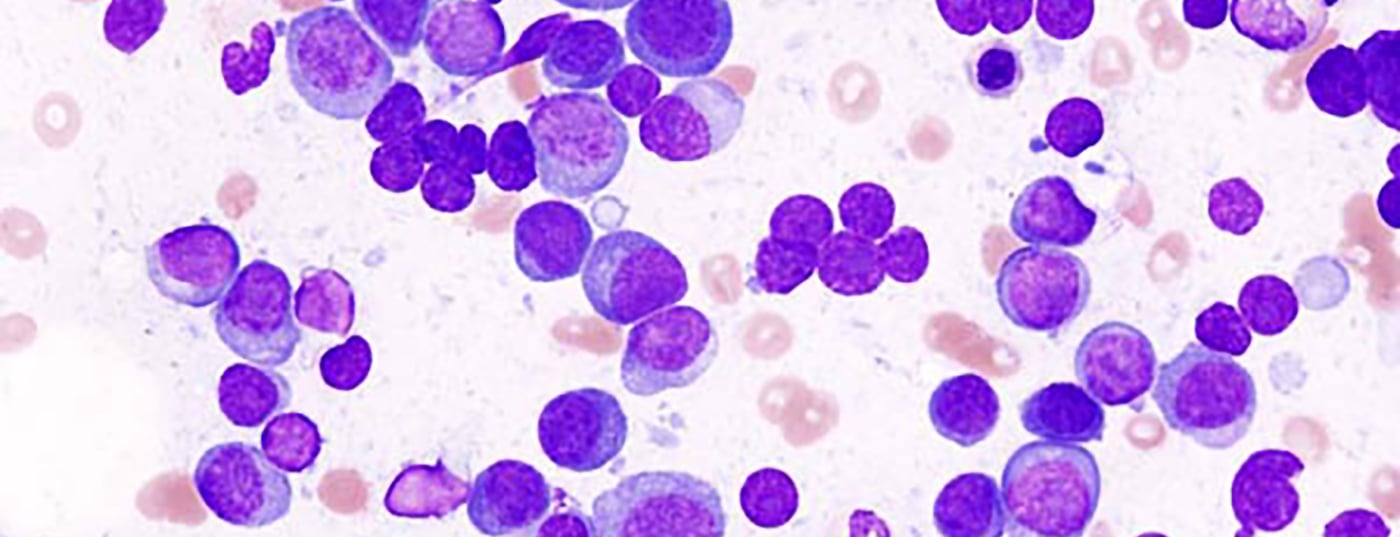
One of the most important decisions that must be made at the onset of symptomatic myeloma is that of adequate therapy. While not yet curable, a number of good options exist that can delay progression. Based on intensive research and better understanding of the pathophysiology, effective treatment options could be added to chemotherapy.

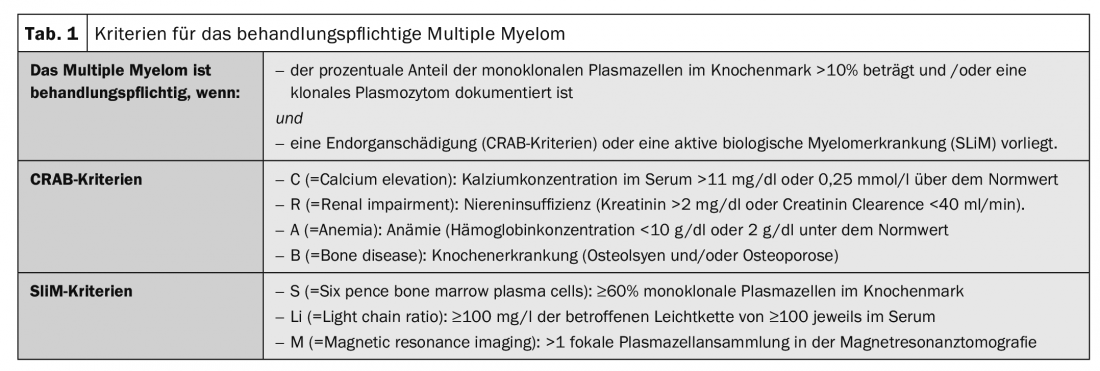
Not all multiple myeloma requires therapy from the outset. If there are no clinical signs yet, the patient can be closely monitored and observed for the time being. However, as soon as bone changes become apparent, for example, effective treatment is indicated. Symptomatic disease is present when the CRAB criteria are met: C = elevated blood calcium concentration (hypercalcemia), R = renal dysfunction (renal insufficiency), A = anemia, B = bone destruction ( Table 1) . In order to decide on a suitable therapy regime, staging and prognostic classification are essential. The goal is to improve myeloma symptomatology, lower M protein, and thus control the disease.


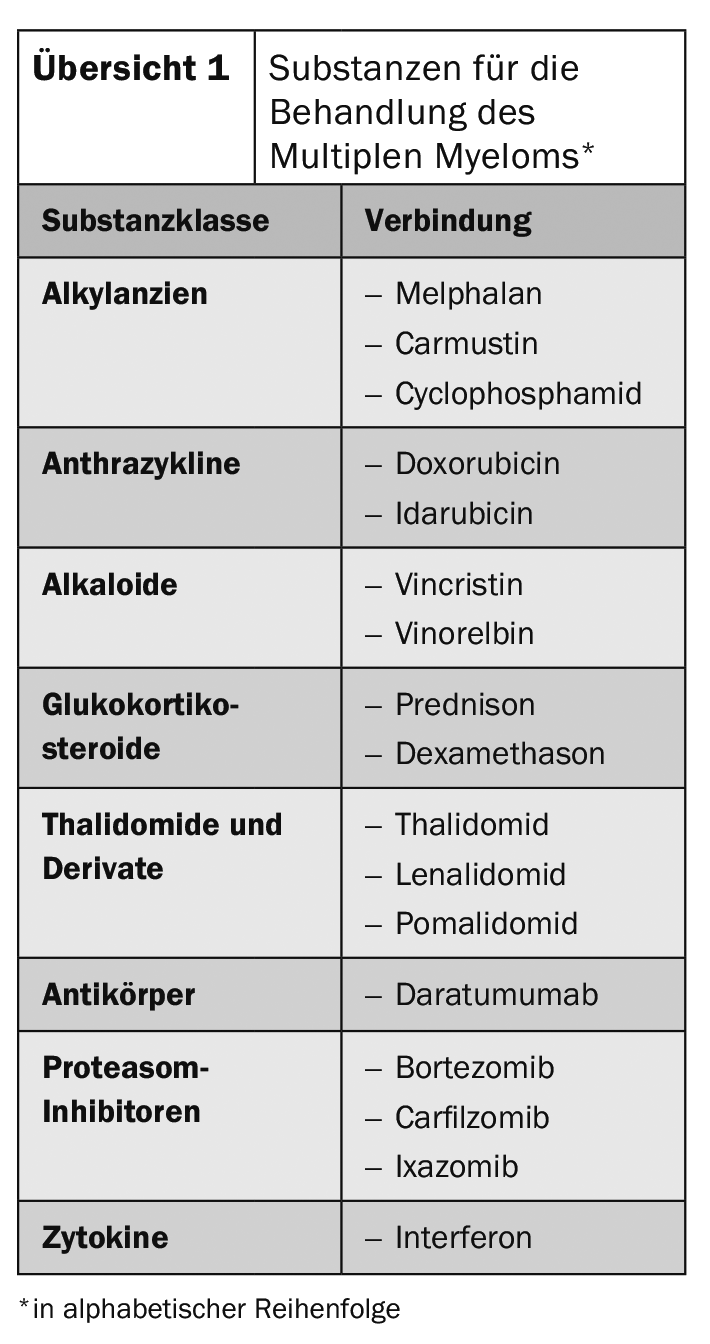
The various therapeutic approaches are based on conventional chemotherapy, high-dose chemotherapy with autologous blood stem cell transplantation, and newer substances such as bortezomib, lenalidomide, thalidomide, or antibodies (overview 1) . In order to achieve the greatest possible effect against the tumor cells during chemotherapy and at the same time reduce side effects, combinations of cytostatic drugs with different effects are frequently used. However, high-dose chemotherapy with autologous stem cell transplantation is the treatment of choice for patients up to about 70 years of age. Success also depends on the choice of treatment before and after chemotherapy. A combination of the two most important substance classes, proteasome inhibitors and immunomodulators, seems promising for this purpose.


Established and effective

Thalidomide, bortezomib, lenalidomide have already been shown to be effective in multiple therapeutic regimens, although thalidomide is now rarely used. As a proteasome inhibitor, bortezomib has a high response rate in primary and relapse therapy. Among other things, it blocks the activation of certain signaling pathways as well as DNA repair mechanisms in the myeloma cell so that the cells’ resistance to cytostatic drugs can be overcome. As a triple combination, bortezomib is often used with dexamethasone and cyclophosphamide. Lenalidomide belongs to the group of immunomodulators. It impairs the release of pro-inflammatory substances and increases the production of anti-inflammatory substances.

For the treatment of elderly patients >70 years or sufferers with many comorbidities, the only option for a long time was a combination therapy of melphalan and prednisone. A significant improvement in efficacy was achieved by adding bortezomib. This combination resulted in a significant improvement in the prognosis of affected patients compared with MP. Recent results suggest that an extension of this treatment regimen to include an antibody could lead to further improvement in therapeutic outcomes.


Further reading:

  • https://multiples-myelom.ch/de/multiples-myelom/therapien/ (last accessed on 05.08.2020)
  • https://lymphome.de/multiples-myelom/therapie/ (last accessed on 05.08.2020)
  • www.myelom-deutschland.de/das-multiple-myelom/therapie-des-multiplen-myeloms (last accessed on 05.08.2020)
  • www.krebsgesellschaft.de/onko-internetportal/basis-informationen-krebs/krebsarten/multiples-myelom-plasmozytom-morbus-kahler/therapie.html (last accessed on 05.08.2020)


InFo ONCOLOGY & HEMATOLOGY 2020; 8(4): 16.
Autoren
  • Leoni Burggraf
Publikation
  • InFo ONKOLOGIE & HÄMATOLOGIE
Related Topics
  • Immunomodulators
  • Multiple Myeloma
  • Proteasome Inhibitors
Previous Article
  • From symptom to diagnosis

Mammary tumors of the male

  • Cases
  • Education
  • Oncology
  • Radiology
  • RX
View Post
Next Article
  • Mental health

Modern treatment options for common anxiety disorders

  • Congress Reports
  • General Internal Medicine
  • Psychiatry and psychotherapy
  • RX
View Post
You May Also Like
View Post
  • 11 min
  • Peristomal skin health

Focus on preventive care options

    • Cases
    • CME continuing education
    • Dermatology and venereology
    • Gastroenterology and Hepatology
    • Infectiology
    • Physical medicine and rehabilitation
    • Prevention and health care
    • RX
    • Surgery
View Post
  • 7 min
  • Disease-modifying therapies for ATTR-CM

TTR stabilizers, gene silencing and gene scissors: where do we stand?

    • Cardiology
    • Congress Reports
    • Genetics
    • RX
    • Studies
View Post
  • 8 min
  • Proteins in wound healing

Do special amino acids lead to success?

    • CME continuing education
    • Dermatology and venereology
    • Endocrinology and Diabetology
    • Nutrition
    • RX
    • Studies
View Post
  • 4 min
  • HER2+ early breast cancer

DESTINY-Breast11 – neoadjuvant T-DXd without anthracyclines

    • Education
    • Gynecology
    • Oncology
    • RX
    • Studies
View Post
  • 3 min
  • Lavender aromatherapy

Take away the fear of the dentist

    • Dentistry
    • Education
    • Pharmaceutical medicine
    • Phytotherapy
    • Psychiatry and psychotherapy
    • RX
    • Studies
View Post
  • 4 min
  • Digital dermatology: innovative project examples

AI and eHealth tools in HS care

    • Dermatology and venereology
    • General Internal Medicine
    • Practice Management
    • Prevention and health care
    • RX
    • Studies
View Post
  • 5 min
  • Mantle cell lymphoma

Recurrence after BTK inhibition – prognostic factors and treatment options

    • Education
    • Hematology
    • Oncology
    • RX
View Post
  • 3 min
  • Dementia risk with type 2 diabetes

SGLT2 inhibitors with advantages vs. DPP4 inhibitors

    • Education
    • Endocrinology and Diabetology
    • Geriatrics
    • Neurology
    • Pharmacology and toxicology
    • Psychiatry and psychotherapy
    • RX
    • Studies
  • IBD matters

    Zum Thema
Top CME content
  • 1
    Communication as the key to therapy adherence
  • 2
    Solutions to the malnutrition dilemma
  • 3
    Solutions to the malnutrition dilemma
  • 4
    Focus on preventive care options
  • 5
    Fertility preservation from gonads to genomes to genoids

Newsletter

Sign up and stay up to date

Subscribe
Medizinonline Medizinonline
  • Contact
  • General terms and conditions
  • Imprint

Input your search keywords and press Enter.