Medizinonline Medizinonline
  • News
    • News
    • Market & Medicine
  • Patients
    • Disease patterns
    • Diagnostics
    • Therapy
  • Partner Content
    • Diabetes
      • Dia-Month Club – Type 2 Diabetes
      • Diabetes in Motion
      • Diabetes Podcasts
    • Gastroenterology
      • IBD matters
    • Oncology
      • Swiss Oncology in motion
    • Orthopedics
      • Osteoporosis in motion
  • Departments
    • Allergology and clinical immunology
    • General Internal Medicine
    • Anesthesiology
    • Angiology
    • Surgery
    • Dermatology and venereology
    • Endocrinology and Diabetology
    • Nutrition
    • Gastroenterology and Hepatology
    • Genetics
    • Geriatrics
    • Gynecology
    • Hematology
    • Infectiology
    • Cardiology
    • Nephrology
    • Neurology
    • Emergency and intensive care medicine
    • Nuclear Medicine
    • Oncology
    • Ophthalmology
    • ORL
    • Orthopedics
    • Pediatrics
    • Pharmacology and toxicology
    • Pharmaceutical medicine
    • Phlebology
    • Physical medicine and rehabilitation
    • Pneumology
    • Prevention and health care
    • Psychiatry and psychotherapy
    • Radiology
    • Forensic Medicine
    • Rheumatology
    • Sports Medicine
    • Traumatology and trauma surgery
    • Tropical and travel medicine
    • Urology
    • Dentistry
  • CME & Congresses
    • CME continuing education
    • Congress Reports
    • Congress calendar
  • Practice
    • Noctimed
    • Practice Management
    • Jobs
    • Interviews
  • Log In
  • Register
  • My account
  • Contact
  • Publications
  • Contact
  • Deutsch
  • English
  • Français
  • Italiano
  • Português
  • Español
Subscribe
Medizinonline Medizinonline
  • News
    • News
    • Market & Medicine
  • Patienten
    • Krankheitsbilder
    • Diagnostik
    • Therapie
  • Partner Content
    • Diabetes
      • Dia-Month Club – Type 2 Diabetes
      • Diabetes in Motion
      • Diabetes Podcasts
    • Gastroenterology
      • IBD matters
    • Oncology
      • Swiss Oncology in motion
    • Orthopedics
      • Osteoporosis in motion
    • Phytotherapie
    • Rheumatology
  • Departments
    • Fachbereiche 1-13
      • Allergology and clinical immunology
      • General Internal Medicine
      • Anesthesiology
      • Angiology
      • Surgery
      • Dermatology and venereology
      • Endocrinology and Diabetology
      • Nutrition
      • Gastroenterology and Hepatology
      • Genetics
      • Geriatrics
      • Gynecology
      • Hematology
    • Fachbereiche 14-26
      • Infectiology
      • Cardiology
      • Nephrology
      • Neurology
      • Emergency and intensive care medicine
      • Nuclear Medicine
      • Oncology
      • Ophthalmology
      • ORL
      • Orthopedics
      • Pediatrics
      • Pharmacology and toxicology
      • Pharmaceutical medicine
    • Fachbereiche 26-38
      • Phlebology
      • Physical medicine and rehabilitation
      • Phytotherapy
      • Pneumology
      • Prevention and health care
      • Psychiatry and psychotherapy
      • Radiology
      • Forensic Medicine
      • Rheumatology
      • Sports Medicine
      • Traumatology and trauma surgery
      • Tropical and travel medicine
      • Urology
      • Dentistry
  • CME & Congresses
    • CME continuing education
    • Congress Reports
    • Congress calendar
  • Practice
    • Noctimed
    • Practice Management
    • Jobs
    • Interviews
Login

Sie haben noch keinen Account? Registrieren

  • Polyneuropathy

Multidisciplinary therapy of a complex disease

    • Education
    • General Internal Medicine
    • Neurology
    • Orthopedics
    • Physical medicine and rehabilitation
    • RX
  • 3 minute read

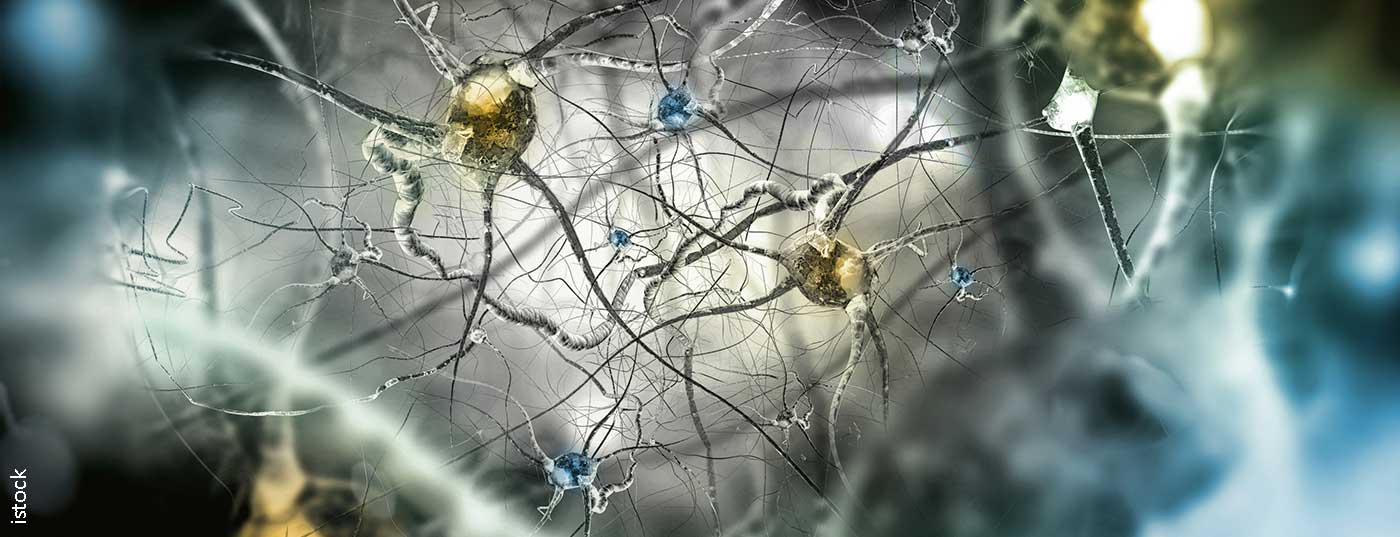
In polyneuropathies, all those parts of the nervous system that are outside the central nervous system are affected. In most cases, these impairments can be attributed to chronic alcohol abuse, diabetes, or malignancies. Therefore, the therapy of these causes is also the focus of management. In addition, analgesics, antidepressants or anticonvulsants may be used to alleviate symptoms.

Polyneuropathies (PNP) are generalized disorders of the peripheral nervous system and, with a prevalence of 5-8%, are most common in patients with chronic alcohol abuse, diabetes, or malignancies. In addition to distally symmetric PNP starting in the legs and caused by a neuronal axonal length-dependent disease process, polyradiculoneuropathies with proximal and distal involvement or mononeuropathia multiplex with an asymmetric disease pattern may occur. Due to impaired transmission of stimuli in the damaged or destroyed nerve fibers, sensory stimuli are not transmitted to the brain at all, or are transmitted in a reduced or amplified form. Abnormal sensations such as tingling, burning and pain can be the result. Due to the length of the nerves in the legs and arms, the symptoms are particularly noticeable here.

Basically, more than 200 different causes of polyneuropathy are known. Most often, however, it can be attributed to diabetes mellitus or alcoholism. However, infectious or metabolic diseases, malnutrition (e.g. vitamin deficiency), exposure to toxins or drugs, and hereditary diseases can also promote the development of nerve damage. Chemotherapy-induced neuropathies are the most common neurologic side effect of tumor therapy. As malignancies have increased, the incidence is also rising. Neurotoxicity depends on the amount of the single dose, the total cumulative dose, and the duration of chemotherapy.

Guideline recommendations facilitate diagnostics

The S1 guideline “Diagnostics in Polyneuropathies” supports diagnosis planning. Therefore, in addition to the known triggers, aspects such as organ transplantation, the hepatitis E and Zika viruses, the antibody anti-FGF3 and mutations of the genes SCN9A, SCN10A, SCN11A (small fiber neuropathies) and the GLA gene (M. Fabry with painful neuropathy) will be highlighted. Immune checkpoint inhibitors can also cause neurologic side effects. Mandatory for diagnosis are history, clinical examination, electrophysiology and standard laboratory. In addition, an expanded laboratory, CSF diagnostics, muscle/nerve/skin biopsies, genetics, and diagnostic imaging are recommended.

Comprehensive treatment management

Consistent therapy of the underlying disease should be the basis of multimodal treatment management. Well-controlled blood sugar or abstinence from alcohol can prevent further progression of nerve damage. In addition, the symptoms, first and foremost the pain, must be contained. However, the mechanisms of neuropathic pain are fundamentally different from those of nociceptive pain. Therefore, a special therapy concept is indicated.

Polyneuropathic pain is often difficult to control with analgesics. Occasional symptoms often respond to therapy with acetylsalicylic acid (ASA) or related medications. If adequate symptom relief cannot be achieved in this way, a variety of other analgesics are available whose efficacy must be systematically tested. Tricyclic antidepressants, serotonin/norepinephrine reuptake inhibitors, and anticonvulsants should then be used in the first instance (Table 1) .


Non-medication interventions

Physical therapy can also support pain management. Different applications aim to improve blood circulation, strengthen weakened muscles and maintain mobility for as long as possible. For this purpose, physiotherapy, alternating and motion baths, electric treatment of paralyzed muscles, as well as warm and cold wraps are used.


Further reading:

  • www.neurologen-und-psychiater-im-netz.org/neurologie/erkrankungen/polyneuropathie/therapie (last accessed on 31.01.2022)
  • https://dgn.org/wp-content/uploads/2012/12/030067_LL_Polyneuropathien_2019.pdf (last accessed on 31.01.2022)
  • Sommer C, Geber C, Young P, et al: Polyneuropathies – etiology, diagnosis, and treatment options. Dtsch Arztebl Int 2018; 115: 83-90. DOI: 10.3238/arztebl.2018.008

InFo NEUROLOGY & PSYCHIATRY 2022; 20(1): 36.
InFo PAIN & GERIATrIa 2022; 4(1-2): 29.
Autoren
  • Leoni Burggraf
Publikation
  • InFo NEUROLOGIE & PSYCHIATRIE
Related Topics
  • Analgesics
  • Pain
  • Polyneuropathy
Previous Article
  • Vaccinations and prophylaxis

Vaccination recommendations for adults

  • Congress Reports
  • General Internal Medicine
  • Infectiology
  • Prevention and health care
  • RX
View Post
Next Article
  • Hypothyroidism

Hashimoto’s thyroiditis as the most common cause of hypothyroidism

  • Congress Reports
  • Endocrinology and Diabetology
  • General Internal Medicine
  • RX
View Post
You May Also Like
View Post
  • 3 min
  • Neuroendocrine tumors

Precision medicine in diagnostics and therapy

    • Education
    • Endocrinology and Diabetology
    • Oncology
    • Radiology
    • RX
    • Studies
View Post
  • 10 min
  • Irritable Bowel Syndrome

Functional disorder of gut-brain interaction – a biopsychosocial concept

    • Congress Reports
    • Gastroenterology and Hepatology
    • General Internal Medicine
    • Nutrition
    • RX
    • Studies
View Post
  • 4 min
  • GLP1 receptor agonists

Positive influence on substance use and addiction

    • Education
    • Endocrinology and Diabetology
    • General Internal Medicine
    • RX
    • Studies
View Post
  • 11 min
  • Sleep apnea and cardiovascular diseases

Breathless through the night

    • Cardiology
    • Education
    • General Internal Medicine
    • ORL
    • Pneumology
    • RX
    • Studies
View Post
  • 15 min
  • Diagnostics, differentiation and multimodal therapy

Vulvar diseases and vulvodynia

    • Dermatology and venereology
    • Education
    • Gynecology
    • Infectiology
    • RX
    • Studies
View Post
  • 3 min
  • From symptom to diagnosis

Abdominal pain – Prostate lipoma

    • Cases
    • Education
    • General Internal Medicine
    • Radiology
    • RX
    • Surgery
    • Urology
View Post
  • 6 min
  • Acute pulmonary embolism: new AHA/ACC guideline

Practical recommendations for risk-stratified triage

    • Cardiology
    • Education
    • Pneumology
    • RX
    • Studies
View Post
  • 13 min
  • Why lipoprotein(a) is the biggest therapeutic vacuum in cardiology

Lp(a): The underestimated risk factor before the turning point

    • Cardiology
    • Education
    • Endocrinology and Diabetology
    • RX
    • Studies
  • IBD matters

    Zum Thema
Top CME content
  • 1
    Functional limb preservation between infection control, vascular medicine and resurfacing
  • 2
    Do special amino acids lead to success?
  • 3
    Do special amino acids lead to success?
  • 4
    Current status of PAT
  • 5
    Surgical wound complications

Newsletter

Sign up and stay up to date

Subscribe
Medizinonline Medizinonline
  • Contact
  • General terms and conditions
  • Imprint

Input your search keywords and press Enter.