Medizinonline Medizinonline
  • News
    • News
    • Market & Medicine
  • Patients
    • Disease patterns
    • Diagnostics
    • Therapy
  • Partner Content
    • Dermatology
      • Atopic dermatitis and psoriasis news
    • Diabetes
      • Dia-Month Club – Type 2 Diabetes
      • Diabetes in Motion
      • Diabetes Podcasts
    • Gastroenterology
      • IBD matters
    • Oncology
      • Swiss Oncology in motion
    • Orthopedics
      • Osteoporosis in motion
  • Departments
    • Allergology and clinical immunology
    • General Internal Medicine
    • Anesthesiology
    • Angiology
    • Surgery
    • Dermatology and venereology
    • Endocrinology and Diabetology
    • Nutrition
    • Gastroenterology and Hepatology
    • Genetics
    • Geriatrics
    • Gynecology
    • Hematology
    • Infectiology
    • Cardiology
    • Nephrology
    • Neurology
    • Emergency and intensive care medicine
    • Nuclear Medicine
    • Oncology
    • Ophthalmology
    • ORL
    • Orthopedics
    • Pediatrics
    • Pharmacology and toxicology
    • Pharmaceutical medicine
    • Phlebology
    • Physical medicine and rehabilitation
    • Pneumology
    • Prevention and health care
    • Psychiatry and psychotherapy
    • Radiology
    • Forensic Medicine
    • Rheumatology
    • Sports Medicine
    • Traumatology and trauma surgery
    • Tropical and travel medicine
    • Urology
    • Dentistry
  • CME & Congresses
    • CME continuing education
    • Congress Reports
    • Congress calendar
  • Practice
    • Noctimed
    • Practice Management
    • Jobs
    • Interviews
  • Log In
  • Register
  • My account
  • Contact
  • Publications
  • Contact
  • Deutsch
  • English
  • Français
  • Italiano
  • Português
  • Español
Subscribe
Medizinonline Medizinonline
  • News
    • News
    • Market & Medicine
  • Patienten
    • Krankheitsbilder
    • Diagnostik
    • Therapie
  • Partner Content
    • Dermatology
      • Atopic dermatitis and psoriasis news
    • Diabetes
      • Dia-Month Club – Type 2 Diabetes
      • Diabetes in Motion
      • Diabetes Podcasts
    • Gastroenterology
      • IBD matters
    • Oncology
      • Swiss Oncology in motion
    • Orthopedics
      • Osteoporosis in motion
    • Phytotherapie
    • Rheumatology
  • Departments
    • Fachbereiche 1-13
      • Allergology and clinical immunology
      • General Internal Medicine
      • Anesthesiology
      • Angiology
      • Surgery
      • Dermatology and venereology
      • Endocrinology and Diabetology
      • Nutrition
      • Gastroenterology and Hepatology
      • Genetics
      • Geriatrics
      • Gynecology
      • Hematology
    • Fachbereiche 14-26
      • Infectiology
      • Cardiology
      • Nephrology
      • Neurology
      • Emergency and intensive care medicine
      • Nuclear Medicine
      • Oncology
      • Ophthalmology
      • ORL
      • Orthopedics
      • Pediatrics
      • Pharmacology and toxicology
      • Pharmaceutical medicine
    • Fachbereiche 26-38
      • Phlebology
      • Physical medicine and rehabilitation
      • Phytotherapy
      • Pneumology
      • Prevention and health care
      • Psychiatry and psychotherapy
      • Radiology
      • Forensic Medicine
      • Rheumatology
      • Sports Medicine
      • Traumatology and trauma surgery
      • Tropical and travel medicine
      • Urology
      • Dentistry
  • CME & Congresses
    • CME continuing education
    • Congress Reports
    • Congress calendar
  • Practice
    • Noctimed
    • Practice Management
    • Jobs
    • Interviews
Login

Sie haben noch keinen Account? Registrieren

  • Parkinson's disease

Updates in the management of Parkinson’s syndrome

    • Congress Reports
    • Neurology
    • RX
  • 2 minute read

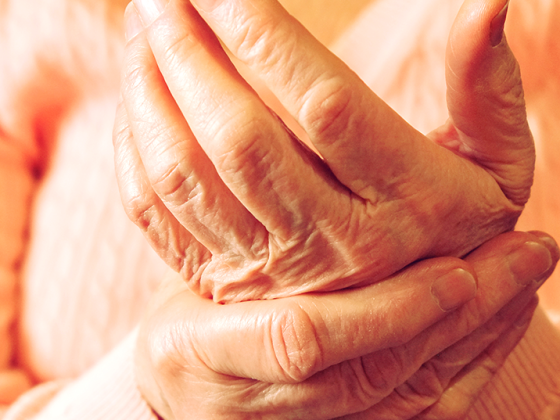
Shaking hands, stiff muscles, unsteady gait – the typical signs of Parkinson’s disease. Up to now only symptomatically treatable, intensive research is being conducted to find an individual therapeutic approach. One thing is clear: the more individually the pathophysiology of the disease can be addressed, the more promising the result. But even today, there is a wide range of treatment options that can at least be tailored to the symptoms.

Along with Alzheimer’s dementia and stroke, Parkinson’s disease is one of the most common diseases of the nervous system in older age. In Switzerland, more than 15,000 people are affected – and the number is rising. At the time of diagnosis, most affected individuals are over 60 years of age [1]. Cardinal symptoms include hypokinesia, rigor, tremor, and impaired postural stability [1,2]. Nevertheless, the disease manifests itself very differently from individual to individual. This is because there is underlying multi-system and multi-neurotransmitter dysfunction that characterizes the heterogeneity of the phenotype. Basically, however, Parkinson’s syndrome can be divided into three phases: the early phase, which usually does not yet involve any restrictions, the middle phase, in which the first symptoms manifest themselves, and the late phase. This is associated primarily with significant motor impairments such as fluctuations, freezing, hyperkinesias, and akinesia, in addition to nonmotor disturbances.

From symptom to cause

Medication interventions are available to alleviate symptoms in addition to exercise therapies. Primarily, dopamine, dopamine agonists or MAO inhibitors are used. However, the use of COMT inhibitors is also possible for motor fluctuations or dyskinesias. In the late phase of the disease, deep brain stimulation or apomorphine or duodopa pump may then have to be resorted to. The question now arises to what extent individualized treatment is already possible in this therapeutic spectrum. Prof. Dr. med. Karla Maria Eggert, Marburg (D), showed that in the case of a mild manifestation, initial therapy should be with an MAO inhibitor. This decreases striatal dopamine depletion but often has limited efficacy due to fixed dosing. Dopamine agonists are predominantly used in patients with lower disease age <70 years and/or without relevant comorbidities. They have a long half-life and are made available to the brain evenly and in a dose-dependent manner. Levodopa has a short half-life and is delivered to the brain in a pulsatile and dose-dependent manner rather than uniformly. Therefore, it is administered primarily to elderly patients and those with relevant comorbidities. Motor complications such as fluctuations, can be treated with COMT inhibitors or MAO inhibitors, and antiglutamatergic agents are used for dyskinesias.

In the future, however, personalized medicine should take much more account of genetic, epigenetic, and molecular pathological factors, she said. For this purpose, disease entities are no longer defined only syndromally, but molecularly and pathologically. This is because genetic variability influences the efficacy and side effect profile of drugs. On this basis, causal therapeutic approaches can be developed.

Congress: German Congress for Parkinson and Movement Disorders


Literature:

  1. www.parkinson.ch/parkinsonkrankheit/was-ist-parkinson (last accessed 21.05.2021)
  2. www.neurologen-und-psychiater-im-netz.org/neurologie/erkrankungen/parkinson-syndrom/was-ist-das-parkinson-syndrom (last accessed 21.05.2021)


InFo NEUROLOGY & PSYCHIATRY 2021; 19(3): 31 (published 6/3/21, ahead of print).
Autoren
  • Leoni Burggraf
Publikation
  • InFo NEUROLOGIE & PSYCHIATRIE
Related Topics
  • Dopamine
  • Parkinson's
  • Parkinson's disease
Previous Article
  • Diabetes Management

Fresh wind through new possibilities – what is now possible

  • Cardiology
  • Congress Reports
  • Endocrinology and Diabetology
  • Partner Content
  • RX
  • Studies
View Post
Next Article
  • Rheumatoid arthritis

Halting joint destruction through early use of DMARDs

  • Congress Reports
  • General Internal Medicine
  • Rheumatology
  • RX
  • Studies
View Post
You May Also Like
View Post
  • 14 min
  • Adrenogenital syndrome

Clinical care from birth to adulthood

    • CME continuing education
    • Endocrinology and Diabetology
    • Nephrology
    • Pediatrics
    • RX
    • Studies
View Post
  • 14 min
  • New approvals, current study data and ADC development

Antibody-drug conjugates in gynecologic oncology

    • Education
    • Gynecology
    • Oncology
    • RX
    • Studies
View Post
  • 5 min
  • From symptom to diagnosis

Pneumology – Covid-19: a review

    • Cases
    • Education
    • Infectiology
    • Pneumology
    • Prevention and health care
    • Radiology
    • RX
View Post
  • 6 min
  • Abdominal aortic aneurysms in primary care

Risk-stratified screening and prophylaxis

    • Angiology
    • Congress Reports
    • Prevention and health care
    • Radiology
    • RX
    • Studies
    • Surgery
View Post
  • 9 min
  • Cardiology

Minimally invasive – the quiet triumph of modern heart surgery

    • Cardiology
    • CME continuing education
    • RX
    • Studies
    • Surgery
View Post
  • 0 min
  • Plastic surgery and reconstructive microsurgery for DFS

Functional limb preservation between infection control, vascular medicine and resurfacing

    • Angiology
    • CME continuing education
    • Endocrinology and Diabetology
    • General Internal Medicine
    • Geriatrics
    • Physical medicine and rehabilitation
    • RX
    • Surgery
View Post
  • 6 min
  • Age-related neurocognitive disorders

Neuroprotective effects of Ginkgo biloba extract

    • Education
    • Geriatrics
    • Neurology
    • Pharmaceutical medicine
    • Phytotherapy
    • RX
    • Studies
View Post
  • 6 min
    • Education
    • Endocrinology and Diabetology
    • Pneumology
    • Psychiatry and psychotherapy
    • RX
    • Studies

How origin and place of residence promote CF-associated diabetes

  • IBD matters

    Zum Thema
Top CME content
  • 1
    Functional limb preservation between infection control, vascular medicine and resurfacing
  • 2
    Minimally invasive – the quiet triumph of modern heart surgery
  • 3
    HPV prevention, screening innovation and sentinel lymph node biopsy
  • 4
    Clinical care from birth to adulthood
  • 5
    Multidisciplinary teams in oncology

Newsletter

Sign up and stay up to date

Subscribe
Medizinonline Medizinonline
  • Contact
  • General terms and conditions
  • Imprint

Input your search keywords and press Enter.