Medizinonline Medizinonline
  • News
    • News
    • Market & Medicine
  • Patients
    • Disease patterns
    • Diagnostics
    • Therapy
  • Partner Content
    • Dermatology
      • Atopic dermatitis and psoriasis news
    • Diabetes
      • Dia-Month Club – Type 2 Diabetes
      • Diabetes in Motion
      • Diabetes Podcasts
    • Gastroenterology
      • IBD matters
      • Ozanimod: ulcerative colitis
      • Reflux Update
    • Immunology
      • Primary immunodeficiency – exchange of experience
    • Vaccinate
      • Herpes zoster
    • Infektiologie
    • Neurology
      • EXPERT ULTRASONIC: Introduction to ultrasound-guided injection
      • MS News
      • MS Therapy in Transition
    • Oncology
      • Swiss Oncology in motion
    • Orthopedics
      • Osteoporosis in motion
    • Phytotherapie
    • Practice Management
      • Aargau Cantonal Bank
      • Claraspital
    • Psychiatry
      • Geriatric Psychiatry
    • Rheumatology
  • Departments
    • Allergology and clinical immunology
    • General Internal Medicine
    • Anesthesiology
    • Angiology
    • Surgery
    • Dermatology and venereology
    • Endocrinology and Diabetology
    • Nutrition
    • Gastroenterology and Hepatology
    • Genetics
    • Geriatrics
    • Gynecology
    • Hematology
    • Infectiology
    • Cardiology
    • Nephrology
    • Neurology
    • Emergency and intensive care medicine
    • Nuclear Medicine
    • Oncology
    • Ophthalmology
    • ORL
    • Orthopedics
    • Pediatrics
    • Pharmacology and toxicology
    • Pharmaceutical medicine
    • Phlebology
    • Physical medicine and rehabilitation
    • Pneumology
    • Prevention and health care
    • Psychiatry and psychotherapy
    • Radiology
    • Forensic Medicine
    • Rheumatology
    • Sports Medicine
    • Traumatology and trauma surgery
    • Tropical and travel medicine
    • Urology
    • Dentistry
  • CME & Congresses
    • CME continuing education
    • Congress Reports
    • Congress calendar
  • Practice
    • Noctimed
    • Practice Management
    • Jobs
    • Interviews
  • Log In
  • Register
  • My account
  • Contact
  • English
    • Deutsch
    • Français
    • Italiano
    • Português
    • Español
  • Publications
  • Contact
  • Deutsch
  • English
  • Français
  • Italiano
  • Português
  • Español
Subscribe
Medizinonline Medizinonline
  • News
    • News
    • Market & Medicine
  • Patienten
    • Krankheitsbilder
    • Diagnostik
    • Therapie
  • Partner Content
    • Dermatology
      • Atopic dermatitis and psoriasis news
    • Diabetes
      • Dia-Month Club – Type 2 Diabetes
      • Diabetes in Motion
      • Diabetes Podcasts
    • Gastroenterology
      • IBD matters
      • Ozanimod: ulcerative colitis
      • Reflux Update
    • Immunology
      • Primary immunodeficiency – exchange of experience
    • Vaccinate
      • Herpes zoster
    • Infektiologie
    • Neurology
      • EXPERT ULTRASONIC: Introduction to ultrasound-guided injection
      • MS News
      • MS Therapy in Transition
    • Oncology
      • Swiss Oncology in motion
    • Orthopedics
      • Osteoporosis in motion
    • Phytotherapie
    • Practice Management
      • Aargau Cantonal Bank
      • Claraspital
    • Psychiatry
      • Geriatric Psychiatry
    • Rheumatology
  • Departments
    • Fachbereiche 1-13
      • Allergology and clinical immunology
      • General Internal Medicine
      • Anesthesiology
      • Angiology
      • Surgery
      • Dermatology and venereology
      • Endocrinology and Diabetology
      • Nutrition
      • Gastroenterology and Hepatology
      • Genetics
      • Geriatrics
      • Gynecology
      • Hematology
    • Fachbereiche 14-26
      • Infectiology
      • Cardiology
      • Nephrology
      • Neurology
      • Emergency and intensive care medicine
      • Nuclear Medicine
      • Oncology
      • Ophthalmology
      • ORL
      • Orthopedics
      • Pediatrics
      • Pharmacology and toxicology
      • Pharmaceutical medicine
    • Fachbereiche 26-38
      • Phlebology
      • Physical medicine and rehabilitation
      • Phytotherapy
      • Pneumology
      • Prevention and health care
      • Psychiatry and psychotherapy
      • Radiology
      • Forensic Medicine
      • Rheumatology
      • Sports Medicine
      • Traumatology and trauma surgery
      • Tropical and travel medicine
      • Urology
      • Dentistry
  • CME & Congresses
    • CME continuing education
    • Congress Reports
    • Congress calendar
  • Practice
    • Noctimed
    • Practice Management
    • Jobs
    • Interviews
Login

Sie haben noch keinen Account? Registrieren

  • Supplementation with food supplements

Useful during pregnancy?

    • Congress Reports
    • Endocrinology and Diabetology
    • Gynecology
    • Nutrition
    • RX
  • 3 minute read

The worse the blood sugar around the time of conception, the greater the risk of malformations in the child. Animal studies indicate that supplementation with vitamins and other nutrients can be used to prevent congenital malformations in children of diabetic mothers, but good human studies are lacking. At the DIP Symposium (The7th international Symposium on Diabetes, Hypertension, Metabolic Syndrome and Pregnancy) in Florence, Moshe Zloczower, MD, Haifa, Israel, presented the main ones.

Population studies show that the risk of cardiovascular malformations in children of diabetic mothers is five times higher than in the normal population. At the same time, the risk of neural tube defects and urinary tract anomalies is more than doubled [1–6]. In addition, congenital malformations increase the risk of stillbirths and perinatal mortality. Such malformations are responsible for nearly 50% of all deaths of children born to diabetic mothers [7, 8].

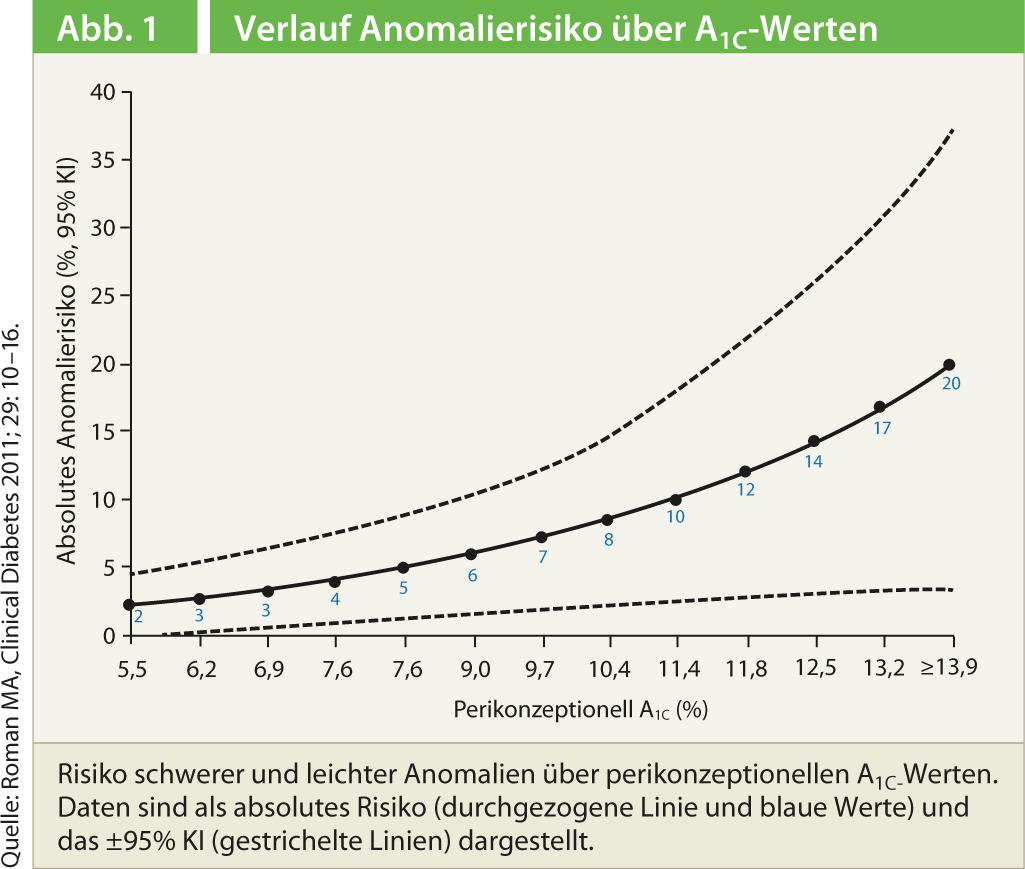
The higher the HbA1c level at the time of conception, the greater the risk of malformations in the child: if the HbA1c is lower than 8.5%, complications occur in 3.4% of cases; at higher HbA1c levels, the risk of malformations increases up to 22.4% (Fig. 1) [9].
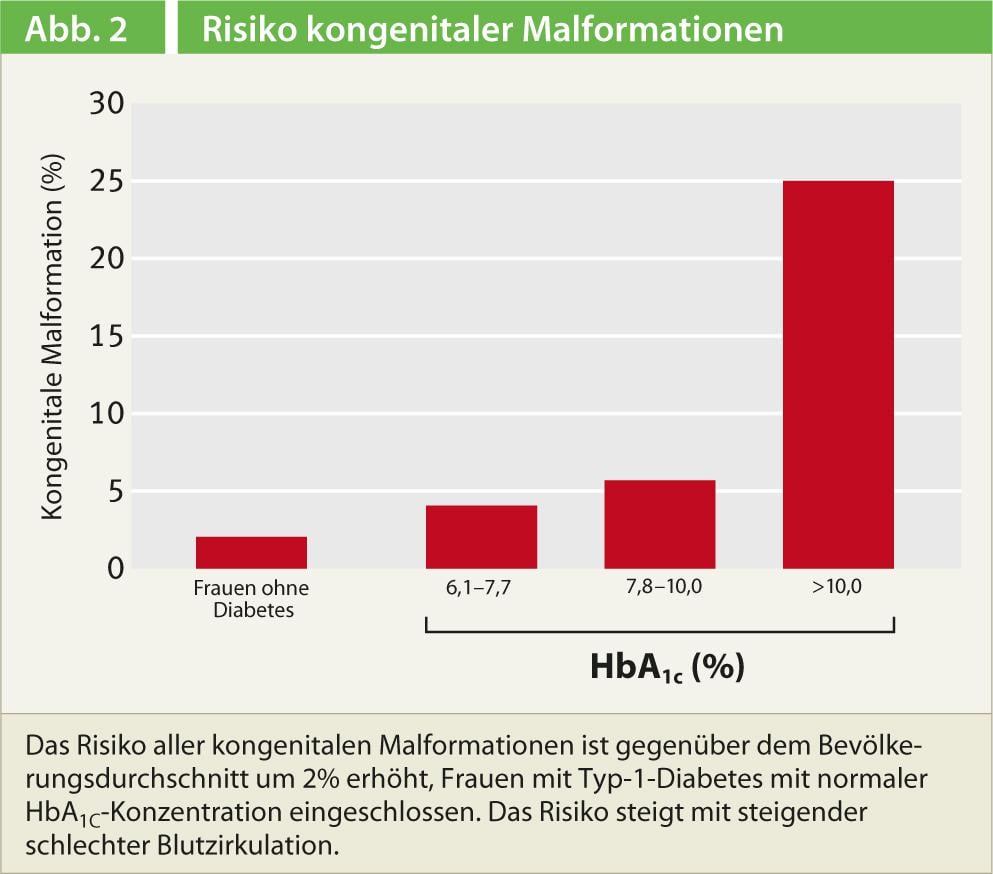
Poor glycemic control increases the risk of malformations by over 25%, but improved glucose levels can significantly reduce this (Fig. 2) [10]. “Even when HbA1c levels are normal, there are always shorter periods of hyperglycemia,” explained Moshe Zloczower, MD, Haifa, Israel, “Even these short periods can already harm the embryo.” Hyperglycemia primarily affects the embryo during organogenesis, which occurs in the first 42 days of pregnancy. The brain and heart, for example, begin to develop by the third week. “If we don’t start supplementation until then, it’s too late. To prevent malformations of the central nervous system, for example, we need to start supplementation before conception,” Dr. Zloczower said.
Several pathophysiologic mechanisms would contribute to the development of the malformations, Dr. Zloczower explained. On the one hand, lipid metabolism in the cells is disturbed. This damages the structure in the cells, free oxygen radicals are released and the oxidative stress on the tissue is increased. Second, there are fewer endogenous antioxidants. In addition, proangiogenic effects play a further role.

The molecular biological mechanisms for the teratogenic effects are not yet fully understood. A crucial role seems to be played by changes in gene expression in the embryo and yolk sac: in the signaling pathways of the Wnt gene [11, 12], protein kinase C [13], in Pax3 [14] and p53 [14], and responses of the body to hypoxia and oxidative stress [16–19].

Good evidence that supplements can be used to reduce the risk of birth defects comes from animal studies, Dr. Zloczower said. Thus, supplementation of pregnant animals with vitamins C and E [19–22], lipoic acid [23], arachidonic acid [24, 25], myo-inositol [26] or folic acid [27–29] reduced the risk of congenital anomalies. Researchers from Singapore recently showed that supplementation with zinc prevented congenital heart defects in the offspring of diabetic mice [30].

Oxidative stress caused by maternal diabetes may play a role in the development of cardiac embryopathy, the scientists suggest. Further, zinc supplementation could be a potential therapy of cardiac embryopathy.

Data on pregnant women mainly from retrospective analyses.

Studies in pregnant women have been few and of good quality, Dr. Zloczower reported. Scientists from the National Center on Birth Defects and Developmental Disabilities at the Centers for Disease Control and Prevention in the United States retrospectively analyzed data from 3278 children with birth defects associated with diabetes in 2003 and compared them with 3029 children without congenital anomalies. Babies born to mothers with diabetes had a higher risk of birth defects if they did not take multivitamins during conception. In contrast, the risk was not increased when vitamins were taken [31]. However, these and other retrospective analyses would not allow any conclusion about a true causal relationship, according to Dr. Zloczower’s assessment.
Researchers from the National Birth Defects Prevention Study at Stanford also retrospectively analyzed the influence of maternal diet on birth defects. Mothers of 3824 infants with birth defects and 6807 controls were interviewed using a standardized dietary questionnaire. A healthier diet, as measured by the Mediterranean Diet Score (MDS), was associated with a lower risk of neural tube defects and cleft palate [32]. Another option for preventing embryonic malformations could be epigallocatechin-3-gallate (EGCG), better known as green tea. In rats, EGCG prevented hyperglycemia-induced embryopathy [33].


Literature list at the publisher

Source: DIP 2013. The7th international Symposium on Diabetes, Hypertension, Metabolic Syndrome and Pregnancy. March 13-16, 2013.

Autoren
  • Dr. med. Felicitas Witte
Publikation
  • HAUSARZT PRAXIS
Related Topics
  • congenital malformation
  • Food supplements
  • HbA1c
  • Metabolism
  • Pregnancy
  • Supplementation
Previous Article
  • Secure and affordable IT solution

Arrived in the cloud – the family practice

  • News
  • Prevention and health care
  • RX
View Post
Next Article
  • Interview on actinic keratosis

“Fifteen to 20 percent of lesions can progress to carcinoma.”

  • Dermatology and venereology
  • Interviews
  • Oncology
  • RX
View Post
You May Also Like
View Post
  • 5 min
  • Eosinophilic esophagitis

EoE rarely occurs in isolation

    • Education
    • Gastroenterology and Hepatology
    • General Internal Medicine
    • ORL
    • Pneumology
    • RX
    • Studies
View Post
  • 8 min
  • Lung cancer with EGFR mutation

New perspectives in first-line therapy

    • Congress Reports
    • Oncology
    • Pneumology
    • RX
    • Studies
View Post
  • 3 min
  • Sleep disorder

Sleep medicine in transition: new goals and a reassessment of old hypnotics

    • Education
    • Neurology
    • Pharmacology and toxicology
    • Psychiatry and psychotherapy
    • RX
View Post
  • 3 min
  • Ginkgo biloba extract in the Alzheimer's mouse model

Effects on disease-associated microglia subpopulations

    • Education
    • General Internal Medicine
    • Geriatrics
    • Neurology
    • Pharmaceutical medicine
    • Phytotherapy
    • RX
    • Studies
View Post
  • 3 min
  • "Patients W.A.I.T Indicator"

Access to medicines – how does Switzerland compare across Europe?

    • General Internal Medicine
    • Practice Management
    • Prevention and health care
    • RX
    • Studies
View Post
  • 5 min
  • Osteoporosis

Risk-stratified therapy with osteoanabolic agents improves outcomes

    • Congress Reports
    • General Internal Medicine
    • Geriatrics
    • Pharmacology and toxicology
    • Rheumatology
    • RX
View Post
  • 5 min
  • Adherence in severe or poorly controlled asthma

Digital monitoring with potential for greater treatment adherence

    • Education
    • Pneumology
    • RX
    • Studies
View Post
  • 3 min
  • GLA:D® program for back pain patients

Fewer consultations and reduction in the use of painkillers

    • Congress Reports
    • General Internal Medicine
    • Rheumatology
    • RX
    • Studies
Top Partner Content
  • Herpes zoster

    Zum Thema
Top CME content
  • 1
    Dr. ChatGPT: Large language models in everyday clinical practice
  • 2
    Treatment of comorbidities in older people
  • 3
    Fecal incontinence from the perspective of gastroenterology
  • 4
    What is tested when and on whom?
  • 5
    From the β-cell to the center: the versatile role of amylin

Newsletter

Sign up and stay up to date

Subscribe
Medizinonline Medizinonline
  • Contact
  • General terms and conditions
  • Imprint

Input your search keywords and press Enter.