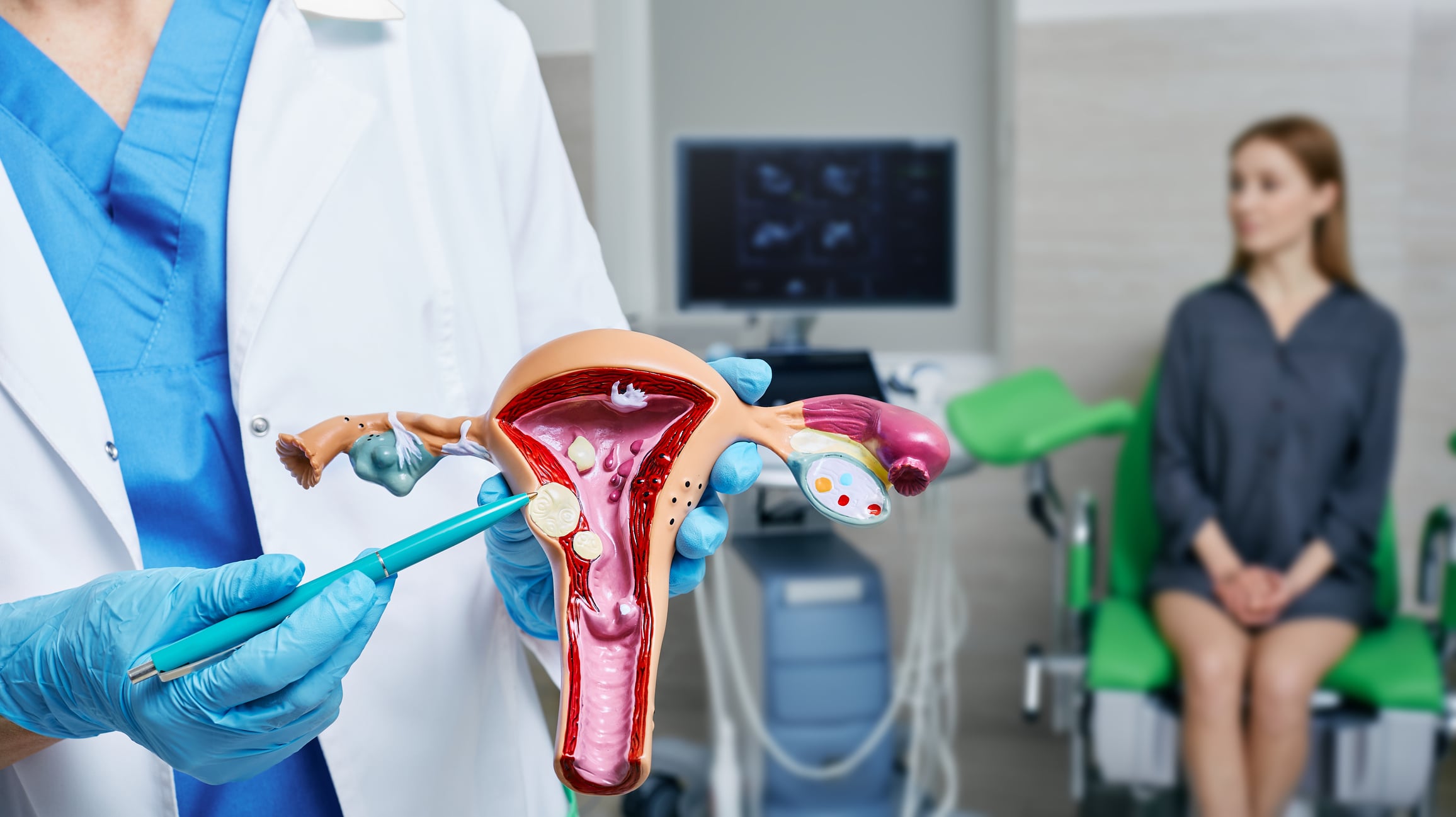
Uterine fibroids are the most common tumors of the female reproductive organs, but only about one-quarter of affected women develop symptoms that require treatment. The most common symptoms are heavy or prolonged menstrual bleeding, which can lead to iron deficiency and, consequently, fatigue and anemia. In addition, fibroid-related hypermenorrhea is often more painful than normal menstrual bleeding, and the pain lasts longer, which can significantly impair quality of life [6]. Until a few years ago, surgical procedures—particularly hysterectomy—were the most common treatment option; medication options were very limited [6]. Since February 2023, an alternative has been approved in Switzerland in the form of an oral fixed-dose combination of a GnRH receptor antagonist and low-dose hormonal add-back therapy, for which data spanning two years of treatment are now available.
Publikation
- GYNÄKOLOGIE PRAXIS