Medizinonline Medizinonline
  • News
    • News
    • Market & Medicine
  • Patients
    • Disease patterns
    • Diagnostics
    • Therapy
  • Partner Content
    • Dermatology
      • Atopic dermatitis and psoriasis news
    • Diabetes
      • Dia-Month Club – Type 2 Diabetes
      • Diabetes in Motion
      • Diabetes Podcasts
    • Gastroenterology
      • IBD matters
    • Oncology
      • Swiss Oncology in motion
    • Orthopedics
      • Osteoporosis in motion
  • Departments
    • Allergology and clinical immunology
    • General Internal Medicine
    • Anesthesiology
    • Angiology
    • Surgery
    • Dermatology and venereology
    • Endocrinology and Diabetology
    • Nutrition
    • Gastroenterology and Hepatology
    • Genetics
    • Geriatrics
    • Gynecology
    • Hematology
    • Infectiology
    • Cardiology
    • Nephrology
    • Neurology
    • Emergency and intensive care medicine
    • Nuclear Medicine
    • Oncology
    • Ophthalmology
    • ORL
    • Orthopedics
    • Pediatrics
    • Pharmacology and toxicology
    • Pharmaceutical medicine
    • Phlebology
    • Physical medicine and rehabilitation
    • Pneumology
    • Prevention and health care
    • Psychiatry and psychotherapy
    • Radiology
    • Forensic Medicine
    • Rheumatology
    • Sports Medicine
    • Traumatology and trauma surgery
    • Tropical and travel medicine
    • Urology
    • Dentistry
  • CME & Congresses
    • CME continuing education
    • Congress Reports
    • Congress calendar
  • Practice
    • Noctimed
    • Practice Management
    • Jobs
    • Interviews
  • Log In
  • Register
  • My account
  • Contact
  • Publications
  • Contact
  • Deutsch
  • English
  • Français
  • Italiano
  • Português
  • Español
Subscribe
Medizinonline Medizinonline
  • News
    • News
    • Market & Medicine
  • Patienten
    • Krankheitsbilder
    • Diagnostik
    • Therapie
  • Partner Content
    • Dermatology
      • Atopic dermatitis and psoriasis news
    • Diabetes
      • Dia-Month Club – Type 2 Diabetes
      • Diabetes in Motion
      • Diabetes Podcasts
    • Gastroenterology
      • IBD matters
    • Oncology
      • Swiss Oncology in motion
    • Orthopedics
      • Osteoporosis in motion
    • Phytotherapie
    • Rheumatology
  • Departments
    • Fachbereiche 1-13
      • Allergology and clinical immunology
      • General Internal Medicine
      • Anesthesiology
      • Angiology
      • Surgery
      • Dermatology and venereology
      • Endocrinology and Diabetology
      • Nutrition
      • Gastroenterology and Hepatology
      • Genetics
      • Geriatrics
      • Gynecology
      • Hematology
    • Fachbereiche 14-26
      • Infectiology
      • Cardiology
      • Nephrology
      • Neurology
      • Emergency and intensive care medicine
      • Nuclear Medicine
      • Oncology
      • Ophthalmology
      • ORL
      • Orthopedics
      • Pediatrics
      • Pharmacology and toxicology
      • Pharmaceutical medicine
    • Fachbereiche 26-38
      • Phlebology
      • Physical medicine and rehabilitation
      • Phytotherapy
      • Pneumology
      • Prevention and health care
      • Psychiatry and psychotherapy
      • Radiology
      • Forensic Medicine
      • Rheumatology
      • Sports Medicine
      • Traumatology and trauma surgery
      • Tropical and travel medicine
      • Urology
      • Dentistry
  • CME & Congresses
    • CME continuing education
    • Congress Reports
    • Congress calendar
  • Practice
    • Noctimed
    • Practice Management
    • Jobs
    • Interviews
Login

Sie haben noch keinen Account? Registrieren

  • Atrial fibrillation

Anticoagulation in the elderly patient

    • Cardiology
    • Education
    • Geriatrics
    • RX
  • 3 minute read

Atrial fibrillation is the most common sustained cardiac arrhythmia, occurring in 1-2% of the population and increasing up to 15% with age. However, especially in elderly and very old patients with atrial fibrillation, effective stroke prophylaxis using oral anticoagulants is often not performed because of concerns about increased bleeding complications. Which risk weighs more heavily?

Practitioners with older patients always face significant challenges. Because not only is atrial fibrillation common, the lifetime risk of stroke increases [1,2]. In addition, there is an increased risk of venous thromboembolism by up to 28 times, associated with a significantly increased risk of major bleeding under anticoagulation [3–6]. In fact, anticoagulants are one of the greatest risk factors for adverse drug-associated events in elderly patients [7]. However, one in four ischemic strokes in the elderly is due to cardioembolism due to atrial fibrillation [8]. So what is to be done?

Clinical concerns prevent effective prophylaxis

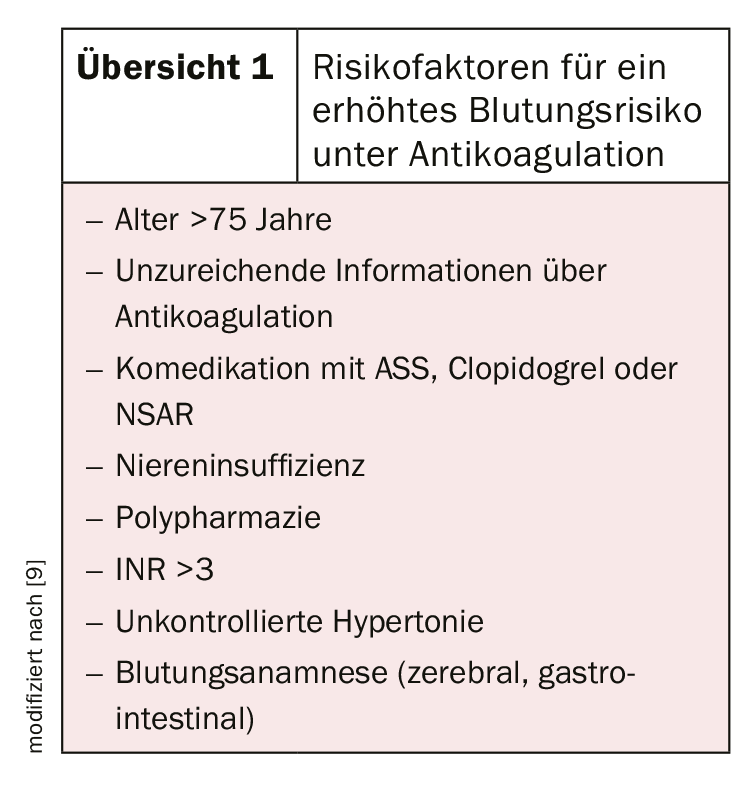
There are a number of good reasons why stroke prophylaxis should be used with caution in an elderly clientele. These include often impaired cognition, increased risk of falls, difficulties in INR setting, nutritional status, comedications, and possible comorbidities. This is because the risk of bleeding increases, for example, in patients older than 75 years, comedication with ASA, clopidogrel, or NSAIDs, or renal insufficiency (review 1) [9]. However, studies have shown that the benefit of oral anticoagulation is far greater than the risk of bleeding, even in elderly and very elderly patients [10].


Oral anticoagulation also useful in elderly patients

In addition to vitamin K antagonists (e.g., phenprocumom, warfarin, acenocumarol), direct factor Xa antagonists (e.g., rivaroxaban, apixaban, edoxaban) and direct thrombin antagonists (e.g., dabigatran) are available for oral anticoagulation. DOAKs in particular have gained in importance in recent years. They demonstrate superior efficacy (through fewer hemorrhagic strokes and reduction in mortality) and safety (through less intracranial hemorrhage) in nonvalvular atrial fibrillation compared with vitamin K antagonists [11]. Consistent effects were also observed in elderly patients [12].
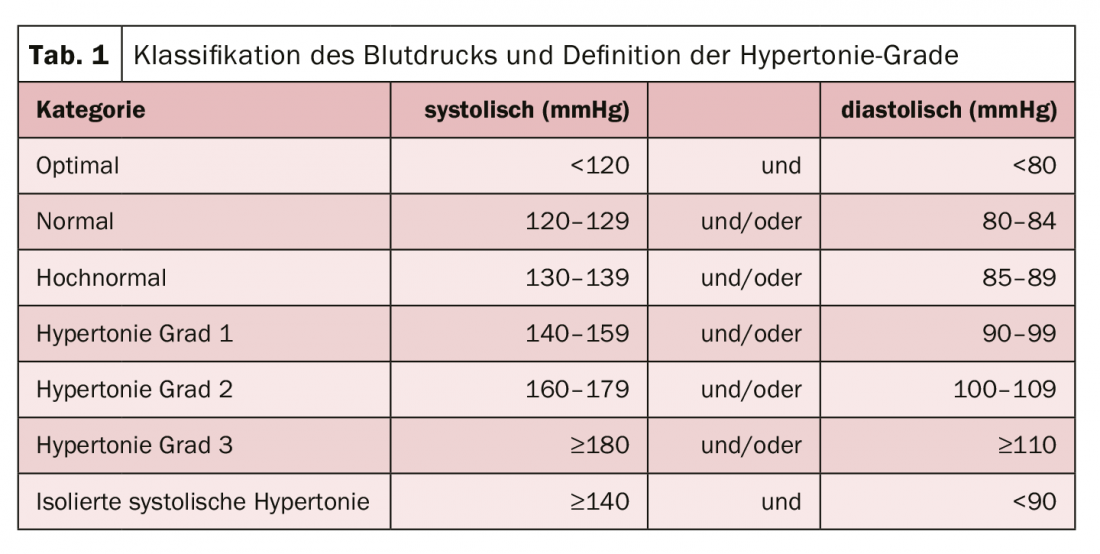


Despite all the advantages, a few aspects should nevertheless be taken into account in practice (tab. 1) . These include dose adjustments or the higher rate of gastrointestinal bleeding. Therefore, renal function should always be assessed by creatinine clearance prior to initiation of therapy with DOAC. During treatment, it should also be monitored regularly. Discontinuation of anticoagulation should be considered when life expectancy is very short, advanced tumor disease, severe dementia, very high bleeding risk, poor functional status/dependence on care, poor compliance, or alcohol abuse.


Literature:

  1. Ng KH, et al: Cardiol Ther. 2013; 2(2): 135.
  2. Wolf PA, et al: Stroke 1991; 22(8): 983.
  3. Stein PD, et al: Arch Int Med 2004; 164(20): 2260.
  4. Pautas E, et al Drugs Againg. 2006; 23(1): 13-25.
  5. Pengo V, et al: Thromb Haemost. 2001; 85/3): 418.
  6. Hajjar ER, et al: Am J Geriatr Pharmacother. 2003; 1(2): 82.
  7. Nieuwlaat R, et al: Eur Heart J. 2006; 27(24): 3018.
  8. Gladstone DJ, et al: Stroke 2009; 40: 235-240.
  9. Kagansky N, et al: Arch Intern Med. 2004; 164(18): 2044.
  10. Patti, et al: J Am Heart Assoc. 2017,6: e005657.
  11. Ruff, et al: Lancet. 2014; 383: 955-962.
  12. Saldon AH, Tsakiris DA: Swiss Med Wkly 2016; 146: w14246.
  13. Granziera, et al: JAMDA 2015; 16: 358-364.


CARDIOVASC 2020; 18(3): 24

Autoren
  • Leoni Burggraf
Publikation
  • CARDIOVASC
Previous Article
  • Valerian and lemon balm extract

Herbal preparation alleviates subsyndromal ADHD symptoms in school children

  • General Internal Medicine
  • Market & Medicine
  • Pediatrics
  • Pharmacology and toxicology
  • Psychiatry and psychotherapy
  • RX
  • Studies
View Post
Next Article
  • Depression

Psychopharmacotherapy of depression – what comes after the SSRI?

  • Education
  • Pharmacology and toxicology
  • Psychiatry and psychotherapy
  • RX
View Post
You May Also Like
View Post
  • 9 min
  • Diagnostics of respiratory viral infections

What is tested when and on whom?

    • CME continuing education
    • General Internal Medicine
    • Infectiology
    • ORL
    • Pneumology
    • RX
    • Studies
View Post
  • 14 min
  • Lung cancer

Multidisciplinary teams in oncology

    • CME continuing education
    • General Internal Medicine
    • Neurology
    • Nuclear Medicine
    • Oncology
    • Pneumology
    • Prevention and health care
    • RX
    • Studies
    • Surgery
    • Urology
View Post
  • 5 min
  • Seborrheic dermatitis in adults

Do not underestimate the symptom burden

    • Allergology and clinical immunology
    • Dermatology and venereology
    • Education
    • Pharmacology and toxicology
    • RX
    • Studies
View Post
  • 5 min
  • SGLT2 inhibitors

Clear, simple language improves patient safety

    • Cardiology
    • Education
    • Endocrinology and Diabetology
    • General Internal Medicine
    • Nephrology
    • Prevention and health care
    • RX
    • Studies
View Post
  • 5 min
  • Moderate to severe atopic dermatitis

Established and novel biologics – the therapeutic landscape is in flux

    • Allergology and clinical immunology
    • Dermatology and venereology
    • Education
    • RX
    • Studies
View Post
  • 6 min
  • Recognize CKD early and avoid dialysis

Screen diabetics and hypertensive patients regularly and use modern therapies

    • Cardiology
    • Congress Reports
    • Endocrinology and Diabetology
    • General Internal Medicine
    • Nephrology
    • RX
    • Studies
View Post
  • 4 min
  • From symptom to diagnosis

Abdominal pain – Inguinal testicles

    • Cases
    • Education
    • Endocrinology and Diabetology
    • General Internal Medicine
    • Pediatrics
    • Radiology
    • RX
    • Surgery
    • Urology
View Post
  • 4 min
  • Case series

Mast cell activation syndrome (MCAS)

    • Allergology and clinical immunology
    • Dermatology and venereology
    • Education
    • Gastroenterology and Hepatology
    • General Internal Medicine
    • RX
Banner Landingpage Kurzfachinfo
  • IBD matters

    Zum Thema
Top CME content
  • 1
    Multidisciplinary teams in oncology
  • 2
    What is tested when and on whom?
  • 3
    Molecular mechanisms of tumor plasticity
  • 4
    Interplay between cancer and mental illness
  • 5
    Can you swallow intelligence? Relevant substance classes times for healthy people

Newsletter

Sign up and stay up to date

Subscribe
Medizinonline Medizinonline
  • Contact
  • General terms and conditions
  • Imprint

Input your search keywords and press Enter.