Medizinonline Medizinonline
  • News
    • News
    • Market & Medicine
  • Patients
    • Disease patterns
    • Diagnostics
    • Therapy
  • Partner Content
    • Diabetes
      • Dia-Month Club – Type 2 Diabetes
      • Diabetes in Motion
      • Diabetes Podcasts
    • Gastroenterology
      • IBD matters
    • Oncology
      • Swiss Oncology in motion
    • Orthopedics
      • Osteoporosis in motion
  • Departments
    • Allergology and clinical immunology
    • General Internal Medicine
    • Anesthesiology
    • Angiology
    • Surgery
    • Dermatology and venereology
    • Endocrinology and Diabetology
    • Nutrition
    • Gastroenterology and Hepatology
    • Genetics
    • Geriatrics
    • Gynecology
    • Hematology
    • Infectiology
    • Cardiology
    • Nephrology
    • Neurology
    • Emergency and intensive care medicine
    • Nuclear Medicine
    • Oncology
    • Ophthalmology
    • ORL
    • Orthopedics
    • Pediatrics
    • Pharmacology and toxicology
    • Pharmaceutical medicine
    • Phlebology
    • Physical medicine and rehabilitation
    • Pneumology
    • Prevention and health care
    • Psychiatry and psychotherapy
    • Radiology
    • Forensic Medicine
    • Rheumatology
    • Sports Medicine
    • Traumatology and trauma surgery
    • Tropical and travel medicine
    • Urology
    • Dentistry
  • CME & Congresses
    • CME continuing education
    • Congress Reports
    • Congress calendar
  • Practice
    • Noctimed
    • Practice Management
    • Jobs
    • Interviews
  • Log In
  • Register
  • My account
  • Contact
  • Publications
  • Contact
  • Deutsch
  • English
  • Français
  • Italiano
  • Português
  • Español
Subscribe
Medizinonline Medizinonline
  • News
    • News
    • Market & Medicine
  • Patienten
    • Krankheitsbilder
    • Diagnostik
    • Therapie
  • Partner Content
    • Diabetes
      • Dia-Month Club – Type 2 Diabetes
      • Diabetes in Motion
      • Diabetes Podcasts
    • Gastroenterology
      • IBD matters
    • Oncology
      • Swiss Oncology in motion
    • Orthopedics
      • Osteoporosis in motion
    • Phytotherapie
    • Rheumatology
  • Departments
    • Fachbereiche 1-13
      • Allergology and clinical immunology
      • General Internal Medicine
      • Anesthesiology
      • Angiology
      • Surgery
      • Dermatology and venereology
      • Endocrinology and Diabetology
      • Nutrition
      • Gastroenterology and Hepatology
      • Genetics
      • Geriatrics
      • Gynecology
      • Hematology
    • Fachbereiche 14-26
      • Infectiology
      • Cardiology
      • Nephrology
      • Neurology
      • Emergency and intensive care medicine
      • Nuclear Medicine
      • Oncology
      • Ophthalmology
      • ORL
      • Orthopedics
      • Pediatrics
      • Pharmacology and toxicology
      • Pharmaceutical medicine
    • Fachbereiche 26-38
      • Phlebology
      • Physical medicine and rehabilitation
      • Phytotherapy
      • Pneumology
      • Prevention and health care
      • Psychiatry and psychotherapy
      • Radiology
      • Forensic Medicine
      • Rheumatology
      • Sports Medicine
      • Traumatology and trauma surgery
      • Tropical and travel medicine
      • Urology
      • Dentistry
  • CME & Congresses
    • CME continuing education
    • Congress Reports
    • Congress calendar
  • Practice
    • Noctimed
    • Practice Management
    • Jobs
    • Interviews
Login

Sie haben noch keinen Account? Registrieren

  • Acute lymphoblastic leukemia

Bispecific antibody in heavily pretreated patients.

    • Hematology
    • News
    • Oncology
    • RX
    • Studies
  • 3 minute read

Blinatumomab forms a bridge between T cells and cancer cells. The bispecific antibody is proving its worth in a new phase III trial. It has been approved in Switzerland for B-precursor ALL since 2016.

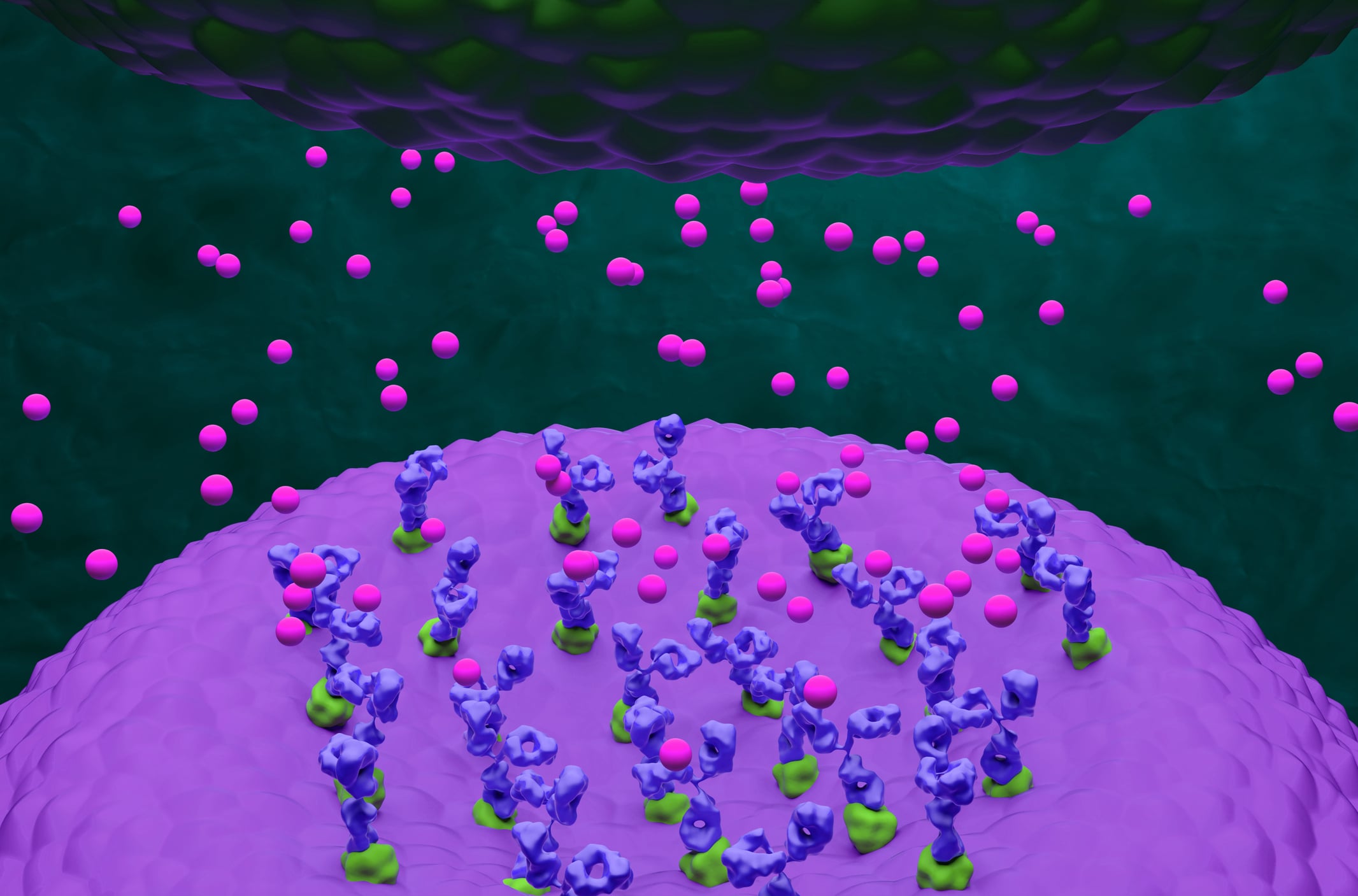
The mechanism of action of blinatumomab is innovative: it is a so-called BiTE® antibody construct (bispecific T-cell engager). As such, blinatumomab binds specifically to CD19 on the surface of B-lineage cells and simultaneously to CD3 on the surface of T cells. Now, by linking CD3 in the T-cell receptor (TCR) complex with CD19 on benign and malignant B cells, it activates endogenous T cells to destroy CD19-positive cells. Simply put, blinatumomab is the first approved drug that, by combining the two surface proteins CD19 and CD3, engages or enables the body’s own cytotoxic T cells to recognize and destroy leukemia cells (blasts).

In this sense, the antibody functions as a kind of “bridge” between cancer cells and T cells. Once the CD3-positive T cells are within range of the target cells, i.e. the CD19-positive ALL blasts, they are activated and can introduce cytotoxic components, leading to apoptosis/lysis of the target cell.

CD19 is ideally suited for this therapeutic approach, as over 90% of B-precursor ALL blasts express the antigen specific for B-lines. Thus, blinatumomab ultimately prevents the evasion of the body’s own immune system, which is specifically driven by cancer cells.

TOWER Study

Although the antibody is already approved in Switzerland for the treatment of adults with relapsed or refractory Philadelphia chromosome-negative B-precursor ALL, it is nevertheless worth taking a closer look at the data from the open-label TOWER study (phase III) [1] recently published in NEJM. How effective is the antibody really and how does it perform in the relapse situation versus chemotherapy? With the latter, patients with relapsed or refractory disease currently achieve remission rates of %–44%, but usually only over a short period of time.

In TOWER, 405 heavily pretreated adult patients with B-precursor ALL were randomized in a 2:1 ratio to blinatumomab or to one of four standard chemotherapies, with 376 of the subjects also having received at least one dose of the assigned therapy.

The sample consisted exclusively of Philadelphia chromosome-negative relapsed or refractory cases, thus matching the current registration population. Over 100 centers from 21 countries took part.

Superior in effectiveness

The primary endpoint was overall survival. Here, a median prolongation of 4 months under chemotherapy to 7.7 months under blinatumomab was seen, equivalent to a significant 29% reduction in the risk of death (0.71; 95% CI 0.55-0.93; p=0.01).

The new agent was also superior to the previous therapy in terms of remission:

  • It allowed a complete remission with complete hematologic recovery of the patient of 34% versus 16% with chemotherapy (within twelve weeks)
  • When all patients with complete remission and complete, partial or incomplete hematologic recovery were combined, the antibody was also found to be 44% vs. 25% superior (within 12 weeks).

The differences were significant in each case. In patients with complete remission, blinatumomab reduced the risk of recurrence (or death) by 45% (also p<0.001). Thus, at six months, the rates of patients without recurrence were 31% vs. 12%. The median duration of remission was 7.3 vs. 4.6 months.

Stem cell transplantation possible?

Achieving complete remission and subsequent stem cell transplantation are major goals in the management of relapsed patients. A sufficiently long remission provides the prerequisite for preparation for allogeneic stem cell transplantation, which was the case in a good quarter of the patients in the study.

Serious adverse events of grade 3 or higher were found in 87% and 92% of patients (blinatumomab vs. chemotherapy). Due to such complications, 12% and 8% discontinued the respective therapy in the above order.

In summary, the approach of supporting the body’s own T cells in combating cancer cells – instead of genetically modifying them ex vivo as in the so-called CART therapy, for example, and in this way equipping them with a chimeric antigen receptor (CAR) directed against CD19 – is proving successful.

Literature:

  1. Kantarjian H, et al: Blinatumomab versus chemotherapy for advanced acute lymphoblastic leukemia. N Engl J Med 2017; 376: 836-847.


InFo ONCOLOGY & HEMATOLOGY 2017; 5(2): 4.

Autoren
  • Andreas Grossmann
Publikation
  • InFo ONKOLOGIE & HÄMATOLOGIE
Related Topics
  • AcUTE lymphocytic leukemia
  • bispecific antibody
  • Blinatumomab
  • CD19
  • CD3
  • TOWER
Previous Article
  • Cervical canal stenosis

When to operate – when conservative?

  • Education
  • Neurology
  • RX
  • Surgery
View Post
Next Article
  • 8th SGAD Symposium, Zurich

Update on treatment recommendations for depression and burnout

  • Congress Reports
  • Psychiatry and psychotherapy
  • RX
View Post
You May Also Like
View Post
  • 6 min
  • Autoimmune Liver Diseases

Innovative Treatment Approaches for PBC, PSC, and AIH: What’s New?

    • RX
    • Congress Reports
    • Gastroenterology and Hepatology
    • General Internal Medicine
    • Studies
View Post
  • 8 min
  • Myelofibrosis

Mutations and Molecular Diagnostics in Treatment Decisions

    • RX
    • Education
    • Hematology
    • Oncology
    • Studies
View Post
  • 5 min
  • Psoriasis in the Age of Precision Medicine

Systemic Therapy for Patients with Comorbidities: What Is the Best Choice?

    • RX
    • Cardiology
    • Congress Reports
    • Dermatology and venereology
    • Gastroenterology and Hepatology
    • Nutrition
    • Rheumatology
    • Studies
View Post
  • 13 min
  • The AMALFI study and the limits of digital screening for atrial fibrillation

Remote monitoring for atrial fibrillation: lots of detection, little stroke prevention?

    • RX
    • Cardiology
    • Education
    • Studies
View Post
  • 4 min
  • MASH

Pharmacotherapies as “Game Changers”—What Are the Upcoming Challenges?

    • RX
    • Congress Reports
    • Endocrinology and Diabetology
    • Gastroenterology and Hepatology
    • General Internal Medicine
    • Studies
View Post
  • 13 min
  • Obesity Treatment

Oral GLP-1 Therapies: ATTAIN-1 and OASIS-4—The Next Leap Forward

    • RX
    • Education
    • Endocrinology and Diabetology
    • General Internal Medicine
    • Nutrition
    • Prevention and health care
    • Studies
View Post
  • 5 min
  • Older patients with atopic dermatitis

Why the Use of Biologics Is Recommended

    • RX
    • Allergology and clinical immunology
    • Congress Reports
    • Dermatology and venereology
    • Studies
View Post
  • 4 min
  • Disorders of the Gut-Brain Interaction

Peppermint-Caraway Oil Supplement Proves Effective in Phase IV Trial

    • RX
    • Education
    • Gastroenterology and Hepatology
    • General Internal Medicine
    • Pharmaceutical medicine
    • Pharmacology and toxicology
    • Phytotherapy
    • Studies
  • IBD matters

    Zum Thema
Top CME content
  • 1
    Update on Anti-Rheumatic Medications
  • 2
    Psychiatry versus Neuro-Oncology: Diagnostic Pitfalls
  • 3
    Focus on preventive care options
  • 4
    Inflammation as a Treatment Goal in Its Own Right
  • 5
    Personalized Treatment Before a Planned Pregnancy

Newsletter

Sign up and stay up to date

Subscribe
Medizinonline Medizinonline
  • Contact
  • General terms and conditions
  • Imprint

Input your search keywords and press Enter.