Medizinonline Medizinonline
  • News
    • News
    • Market & Medicine
  • Patients
    • Disease patterns
    • Diagnostics
    • Therapy
  • Partner Content
    • Diabetes
      • Dia-Month Club – Type 2 Diabetes
      • Diabetes in Motion
      • Diabetes Podcasts
    • Gastroenterology
      • IBD matters
    • Oncology
      • Swiss Oncology in motion
    • Orthopedics
      • Osteoporosis in motion
  • Departments
    • Allergology and clinical immunology
    • General Internal Medicine
    • Anesthesiology
    • Angiology
    • Surgery
    • Dermatology and venereology
    • Endocrinology and Diabetology
    • Nutrition
    • Gastroenterology and Hepatology
    • Genetics
    • Geriatrics
    • Gynecology
    • Hematology
    • Infectiology
    • Cardiology
    • Nephrology
    • Neurology
    • Emergency and intensive care medicine
    • Nuclear Medicine
    • Oncology
    • Ophthalmology
    • ORL
    • Orthopedics
    • Pediatrics
    • Pharmacology and toxicology
    • Pharmaceutical medicine
    • Phlebology
    • Physical medicine and rehabilitation
    • Pneumology
    • Prevention and health care
    • Psychiatry and psychotherapy
    • Radiology
    • Forensic Medicine
    • Rheumatology
    • Sports Medicine
    • Traumatology and trauma surgery
    • Tropical and travel medicine
    • Urology
    • Dentistry
  • CME & Congresses
    • CME continuing education
    • Congress Reports
    • Congress calendar
  • Practice
    • Noctimed
    • Practice Management
    • Jobs
    • Interviews
  • Log In
  • Register
  • My account
  • Contact
  • Publications
  • Contact
  • Deutsch
  • English
  • Français
  • Italiano
  • Português
  • Español
Subscribe
Medizinonline Medizinonline
  • News
    • News
    • Market & Medicine
  • Patienten
    • Krankheitsbilder
    • Diagnostik
    • Therapie
  • Partner Content
    • Diabetes
      • Dia-Month Club – Type 2 Diabetes
      • Diabetes in Motion
      • Diabetes Podcasts
    • Gastroenterology
      • IBD matters
    • Oncology
      • Swiss Oncology in motion
    • Orthopedics
      • Osteoporosis in motion
    • Phytotherapie
    • Rheumatology
  • Departments
    • Fachbereiche 1-13
      • Allergology and clinical immunology
      • General Internal Medicine
      • Anesthesiology
      • Angiology
      • Surgery
      • Dermatology and venereology
      • Endocrinology and Diabetology
      • Nutrition
      • Gastroenterology and Hepatology
      • Genetics
      • Geriatrics
      • Gynecology
      • Hematology
    • Fachbereiche 14-26
      • Infectiology
      • Cardiology
      • Nephrology
      • Neurology
      • Emergency and intensive care medicine
      • Nuclear Medicine
      • Oncology
      • Ophthalmology
      • ORL
      • Orthopedics
      • Pediatrics
      • Pharmacology and toxicology
      • Pharmaceutical medicine
    • Fachbereiche 26-38
      • Phlebology
      • Physical medicine and rehabilitation
      • Phytotherapy
      • Pneumology
      • Prevention and health care
      • Psychiatry and psychotherapy
      • Radiology
      • Forensic Medicine
      • Rheumatology
      • Sports Medicine
      • Traumatology and trauma surgery
      • Tropical and travel medicine
      • Urology
      • Dentistry
  • CME & Congresses
    • CME continuing education
    • Congress Reports
    • Congress calendar
  • Practice
    • Noctimed
    • Practice Management
    • Jobs
    • Interviews
Login

Sie haben noch keinen Account? Registrieren

  • Depression

Depression management in daily practice: what is up-to date?

    • Congress Reports
    • Psychiatry and psychotherapy
    • RX
  • 3 minute read

Depression has come back into the focus of scientific investigation, and not just since the challenges of the Corona pandemic. This is because they are among the most common mental illnesses and can also take a chronic course. This makes effective therapy management based on the latest scientific findings all the more important .

The treatment of depression is usually multimodal with psychotherapy and pharmacological intervention – especially in severe courses. With regard to psychotherapy, it could be shown that all methods can be regarded as equivalent, Prof. Dr. med. Mathias Berger, Freiburg (D), pointed out in his lecture. However, it would take 548 patients in clinical trials for two study arms to even detect significant efficacy differences.

It was concluded that only psychotherapies for which at least ten randomized studies are available should be used in daily practice. In addition, the patient’s wishes and previous experience should be taken into account, and undesirable side effects of each form of psychotherapy should also be considered. “Ultimately, the only undoubted advantage that psychotherapy can claim over pharmacotherapy is sustainability,” the expert said. This is because antidepressants respond much more quickly, but they only work for as long as they are taken, whereas psychotherapy steadily improves symptoms. As a rule, 75% of the effect is achieved after 20 sessions.

Acute treatment with antidepressants

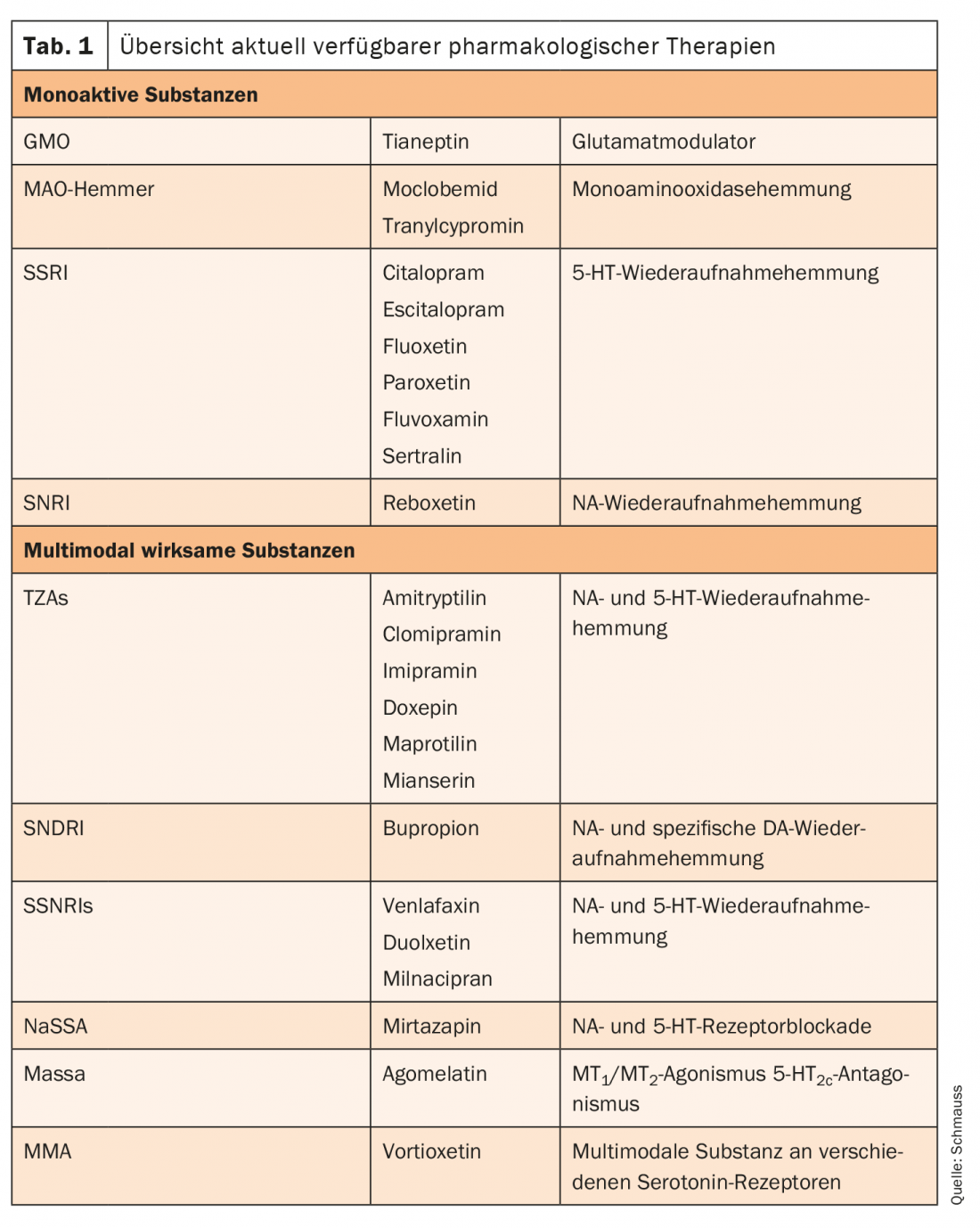
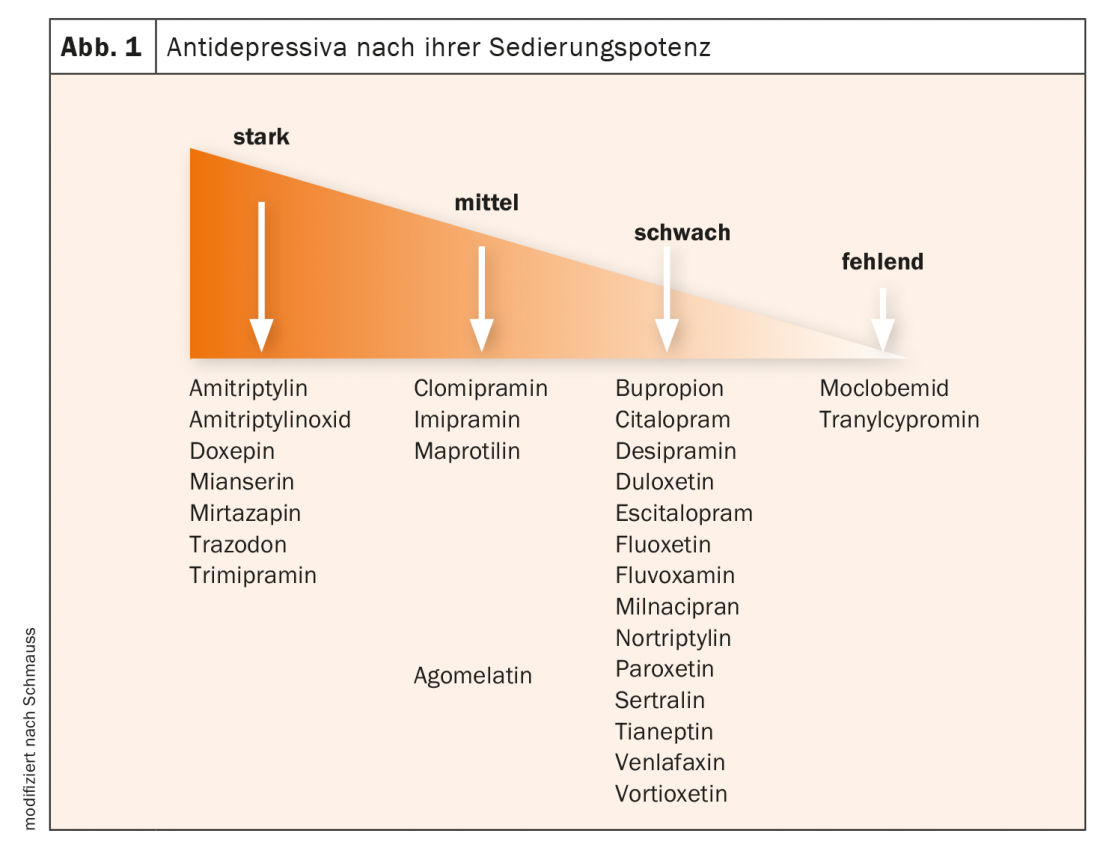
The goal of any treatment is remission, as Prof. Dr. med. Max Schmauss, Augsburg (D), explained. For depression, this corresponds to a HAMD score ≤7. These patients demonstrate improved physical and social functioning and a lower risk of relapse. To achieve this, pharmacological interventions are resorted to, especially in moderate and severe forms – as monotherapy or in combination with psychotherapy. There are currently a number of antidepressants available. Pharmacologically, these can be divided into monoactive substances and dual- or multimodal-acting substances (Table 1) . “Clinically, we tend to distinguish the antidepressants according to their initial sedation potent,” Schmauss further reported. An antidepressant should be selected based on several considerations. For example, the tolerability profiles of SSRIs and TCAs differ significantly. Before especially with TZA, serious complications such as delirium, cardiac problems, or urinary retention are more common. In addition, taking a week’s supply of TZA can be lethal in suicidal patients. Therefore, only small package sizes should be prescribed in the outpatient setting. In addition, response in previous episodes of illness, manageability, and the physician’s experience with use play a role in the selection of the appropriate antidepressant.


Plasma level control in non-responders.

If a patient does not respond to the medication after adequate treatment duration and dose and taking it as directed, the plasma level should be monitored. There are now established recommendations for this. With the exception of SSRIs, high-dose therapy (consistent with the recommendations for use) may then be appropriate.

However, augmentation, switching to another agent, or combination administration with another antidepressant may also be considered. Switching antidepressants is the most common strategy implemented after nonresponse to antidepressant therapy. However, its effectiveness is not well enlivened by studies. Overwhelmingly, it is recommended to also change the substance class when changing antidepressants, the expert said. Substances that may be considered for augmentation include lithium, antipsychotics, thyroid hormones, or dopaminergic agents. For example, lithium augmentation should be performed for at least two weeks until remission. However, if there is no improvement after four weeks, it should be discontinued.


Focus on recurrence prophylaxis

After the first episode of major depression, relapse occurs in 41% of patients after one year. After five years, the figure is already 74%, Schmauss cautioned. Each depressive episode increases the risk for another episode. Discontinuation of treatment further increases this. Therefore, effective maintenance therapy is essential. Here, antidepressants show a convincing and lasting effect, Schmauss summed up.

Source: DGPPN 2020


InFo NEUROLOGY & PSYCHIATRY 2021, 19(1): 24-25 (published 2.2.21, ahead of print).

Autoren
  • Leoni Burggraf
Publikation
  • InFo NEUROLOGIE & PSYCHIATRIE
Related Topics
  • Antidepressants
  • Depression
Previous Article
  • Non-infectious complications after HSCT

Lungs at high risk!

  • Education
  • Hematology
  • Infectiology
  • Pneumology
  • RX
View Post
Next Article
  • Triple-negative stage I-III breast carcinoma

Attack on an untouchable

  • Congress Reports
  • Gynecology
  • Oncology
  • RX
  • Studies
View Post
You May Also Like
View Post
  • 6 min
  • Prurigo nodularis: evidence-based treatment

Targeted therapy options on the rise

    • Allergology and clinical immunology
    • Dermatology and venereology
    • Education
    • Pharmacology and toxicology
    • RX
    • Studies
View Post
  • 13 min
  • MACE risk, heart failure incidence and all-cause mortality

Metabolic syndrome as a cardiovascular risk factor

    • Cardiology
    • Education
    • Endocrinology and Diabetology
    • General Internal Medicine
    • RX
    • Studies
View Post
  • 9 min
  • Glaucoma in old age: slowing down progression

IOP lowering is currently the only evidence-based treatment

    • Education
    • General Internal Medicine
    • Ophthalmology
    • Prevention and health care
    • RX
    • Studies
View Post
  • 7 min
  • Vector-borne infections with skin manifestations

Arboviruses and leishmaniasis in Europe

    • Congress Reports
    • Infectiology
    • Prevention and health care
    • RX
    • Studies
    • Tropical and travel medicine
View Post
  • 6 min
  • Multimorbidity and functional capacity in old age

Clarify individual health status and reduce risks

    • Congress Reports
    • General Internal Medicine
    • Geriatrics
    • Neurology
    • Orthopedics
    • Physical medicine and rehabilitation
    • Prevention and health care
    • Rheumatology
    • RX
View Post
  • 6 min
  • Tick season: danger from early summer meningoencephalitis

TBE vaccination recommended for adults and children aged 3 and over

    • Education
    • Infectiology
    • Neurology
    • Prevention and health care
    • RX
    • Studies
View Post
  • 13 min
  • New WHO guideline, updated stimulation protocols, focus on PGT-A

Fertility and reproductive medicine 2026

    • Education
    • Gynecology
    • RX
    • Studies
View Post
  • 12 min
  • Wound treatment

Surgical wound complications

    • CME continuing education
    • Dermatology and venereology
    • Endocrinology and Diabetology
    • Geriatrics
    • Physical medicine and rehabilitation
    • RX
    • Surgery
  • IBD matters

    Zum Thema
Top CME content
  • 1
    Do special amino acids lead to success?
  • 2
    Current status of PAT
  • 3
    Surgical wound complications
  • 4
    Do special amino acids lead to success?
  • 5
    Functional limb preservation between infection control, vascular medicine and resurfacing

Newsletter

Sign up and stay up to date

Subscribe
Medizinonline Medizinonline
  • Contact
  • General terms and conditions
  • Imprint

Input your search keywords and press Enter.