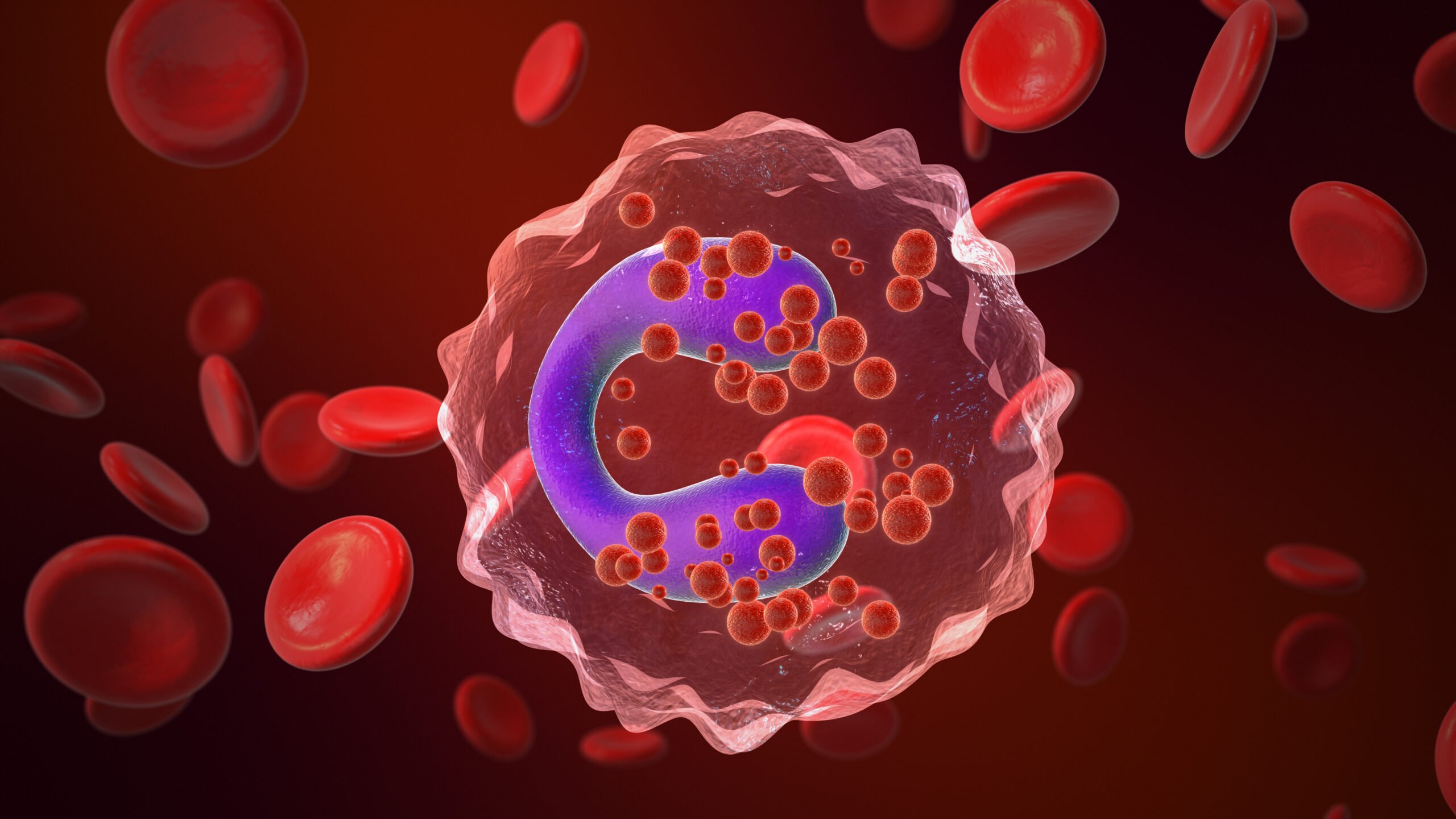
For a long time, eosinophils were regarded as the central effector cells of asthma and were interpreted in the classical model as a direct damaging agent of the epithelium, as an amplifier of bronchial hyperresponsiveness and as the main driver of type 2-mediated airway inflammation. Scientific developments over the past two decades have differentiated, expanded and in some cases questioned this picture. Are eosinophils in fact primary culprits – or merely markers of more complex immunological patterns? A new Lancet publication sheds some light on this.
Publikation
- Asthma/COPD-Special