Medizinonline Medizinonline
  • News
    • News
    • Market & Medicine
  • Patients
    • Disease patterns
    • Diagnostics
    • Therapy
  • Partner Content
    • Diabetes
      • Dia-Month Club – Type 2 Diabetes
      • Diabetes in Motion
    • Gastroenterology
      • IBD matters
    • Oncology
      • Swiss Oncology in motion
    • Orthopedics
      • Osteoporosis in motion
  • Departments
    • Allergology and clinical immunology
    • General Internal Medicine
    • Anesthesiology
    • Angiology
    • Surgery
    • Dermatology and venereology
    • Endocrinology and Diabetology
    • Nutrition
    • Gastroenterology and Hepatology
    • Genetics
    • Geriatrics
    • Gynecology
    • Hematology
    • Infectiology
    • Cardiology
    • Nephrology
    • Neurology
    • Emergency and intensive care medicine
    • Nuclear Medicine
    • Oncology
    • Ophthalmology
    • ORL
    • Orthopedics
    • Pediatrics
    • Pharmacology and toxicology
    • Pharmaceutical medicine
    • Phlebology
    • Physical medicine and rehabilitation
    • Pneumology
    • Prevention and health care
    • Psychiatry and psychotherapy
    • Radiology
    • Forensic Medicine
    • Rheumatology
    • Sports Medicine
    • Traumatology and trauma surgery
    • Tropical and travel medicine
    • Urology
    • Dentistry
  • CME & Congresses
    • CME continuing education
    • Congress Reports
    • Congress calendar
  • Practice
    • Noctimed
    • Practice Management
    • Jobs
    • Interviews
  • Log In
  • Register
  • My account
  • Contact
  • Publications
  • Contact
  • Deutsch
  • English
  • Français
  • Italiano
  • Português
  • Español
Subscribe
Medizinonline Medizinonline
  • News
    • News
    • Market & Medicine
  • Patienten
    • Krankheitsbilder
    • Diagnostik
    • Therapie
  • Partner Content
    • Diabetes
      • Dia-Month Club – Type 2 Diabetes
      • Diabetes in Motion
    • Gastroenterology
      • IBD matters
    • Oncology
      • Swiss Oncology in motion
    • Orthopedics
      • Osteoporosis in motion
    • Phytotherapie
    • Rheumatology
  • Departments
    • Fachbereiche 1-13
      • Allergology and clinical immunology
      • General Internal Medicine
      • Anesthesiology
      • Angiology
      • Surgery
      • Dermatology and venereology
      • Endocrinology and Diabetology
      • Nutrition
      • Gastroenterology and Hepatology
      • Genetics
      • Geriatrics
      • Gynecology
      • Hematology
    • Fachbereiche 14-26
      • Infectiology
      • Cardiology
      • Nephrology
      • Neurology
      • Emergency and intensive care medicine
      • Nuclear Medicine
      • Oncology
      • Ophthalmology
      • ORL
      • Orthopedics
      • Pediatrics
      • Pharmacology and toxicology
      • Pharmaceutical medicine
    • Fachbereiche 26-38
      • Phlebology
      • Physical medicine and rehabilitation
      • Phytotherapy
      • Pneumology
      • Prevention and health care
      • Psychiatry and psychotherapy
      • Radiology
      • Forensic Medicine
      • Rheumatology
      • Sports Medicine
      • Traumatology and trauma surgery
      • Tropical and travel medicine
      • Urology
      • Dentistry
  • CME & Congresses
    • CME continuing education
    • Congress Reports
    • Congress calendar
  • Practice
    • Noctimed
    • Practice Management
    • Jobs
    • Interviews
Login

Sie haben noch keinen Account? Registrieren

  • Iron supplementation

Heart failure and iron deficiency – what to do in the multimodality patient?

    • Cardiology
    • Education
    • General Internal Medicine
    • Hematology
    • RX
  • 2 minute read

Iron deficiency is a common comorbidity in patients with heart failure and is associated with increased mortality and hospitalizations. Effective iron supplementation significantly reduces this risk without increasing the risk of adverse events.

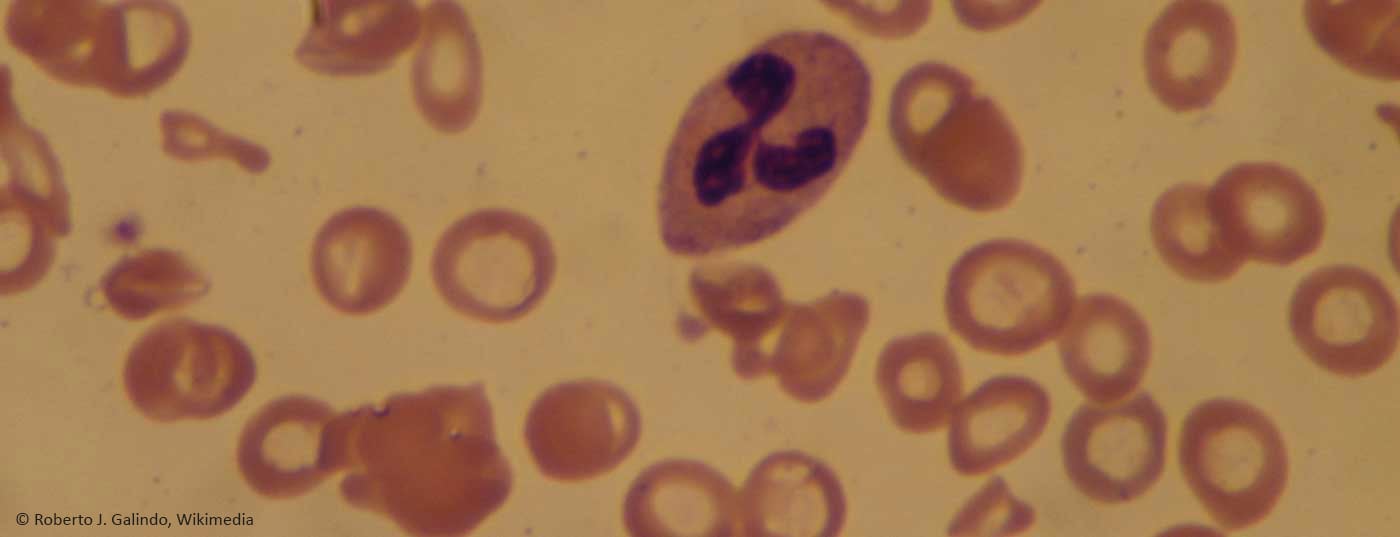
Iron deficiency is the most common deficiency disease in humans. About 600 million people worldwide suffer from iron deficiency of various causes. Iron deficiency is also a common and relevant comorbidity in chronic heart failure. It affects symptoms, quality of life, and hospitalization rates and is a negative prognostic factor. Clinical symptoms of iron deficiency include fatigue, lassitude, performance insufficiency, shortness of breath, cognitive dysfunction, dizziness, headache, and susceptibility to infection, as well as a general impairment of quality of life. Approximately 50% of patients with chronic heart failure suffer the consequences of iron deficiency. Via peripheral vasodilation, blood pressure drop and activation of neurohormones, chronic anemia can trigger a veritable vicious circle.

Several mechanisms are discussed regarding the causes of iron deficiency in heart failure, including chronic inflammation, decreased iron absorption, decreased reabsorption of iron, and last but not least, drug-induced bleeding anemia. In addition, NYHA stage appears to correlate with iron deficiency. Absolute iron deficiency is defined as serum ferritin <100 μg/l, functional iron deficiency is present with serum ferritin 100-300 μg/l with concomitant transferrin saturation <20%.

Iron deficiency mainly affects the patient’s quality of life through symptom worsening of heart failure, physical performance, muscle function, and the number of hospitalizations due to worsening heart failure. This is because iron is necessary for optimal hematopoiesis, but also plays a central role in oxygen transport (hemoglobin), storage (myoglobin), metabolism of cardiac and skeletal muscles, synthesis and degradation of proteins, lipids, ribonucleic acids, and mitochondrial function.

Balance quickly, effectively and safely

Iron requirements in patients with chronic heart failure can be determined as a function of body weight and hemoglobin level (Tab. 1). Oral iron substitution, which is normally considered the drug of choice, is poorly absorbed, especially in patients with chronic diseases such as heart failure, and have limited bioavailability. In addition, tolerability is limited due to unfavorable gastrointestinal effects. Several months of oral iron therapy would be required to replicate the iron deficiency.
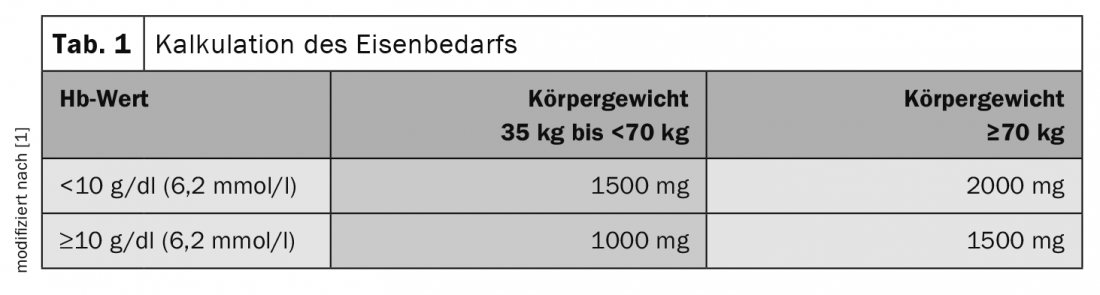


Therefore, intravenous iron therapy should be resorted to. Compared to the old preparations, the dextran-free complexes now available show anaphylactic reactions extremely rarely and can be infused relatively quickly due to their high structural stability – both properties that also allow their use in the outpatient setting.


Literature:

  1. Link H, Schiefke I, Balck K, et al: Diagnostic and treatment principles of iron deficiency anemia. MMW Fortschr Med 2015; 157: 56-59.


CARDIOVASC 2021; 20(4): 31
Autoren
  • Leoni Burggraf
Publikation
  • CARDIOVASC
Related Topics
  • Anemia
  • Heart failure
  • Iron deficiency
Previous Article
  • From symptom to diagnosis

Peripatellar pain – Bursitis prepatellaris

  • Cases
  • Education
  • General Internal Medicine
  • Orthopedics
  • Radiology
  • RX
  • Sports Medicine
  • Surgery
View Post
Next Article
  • Psychooncology

Preventing brain metastases of melanoma

  • Congress Reports
  • Dermatology and venereology
  • Neurology
  • Oncology
  • RX
View Post
You May Also Like
View Post
  • 6 min
  • Acute nonspecific back pain

Implementing a biopsychosocial approach

    • RX
    • Congress Reports
    • General Internal Medicine
    • Orthopedics
    • Physical medicine and rehabilitation
    • Studies
    • Surgery
    • Traumatology and trauma surgery
View Post
  • 9 min
  • Psychedelic-assisted therapy

Current status of PAT

    • RX
    • CME continuing education
    • General Internal Medicine
    • Pharmacology and toxicology
    • Psychiatry and psychotherapy
    • Studies
View Post
  • 10 min
  • Neuropathic Pain

Evidence-Based Neuromodulation Based on Clinical Trials and Real-World Data

    • RX
    • CME continuing education
    • Neurology
    • Physical medicine and rehabilitation
    • Studies
    • Surgery
View Post
  • 14 min
  • Fibromyalgia Syndrome

Development, Diagnosis, Epidemiology, and Treatment of a Disease Entity

    • General Internal Medicine
    • CME continuing education
    • Geriatrics
    • Neurology
    • Orthopedics
    • Rheumatology
    • RX
View Post
  • 7 min
  • Juvenile Idiopathic Arthritis

Early Detection and Targeted Treatment in an Interdisciplinary Setting

    • RX
    • Education
    • General Internal Medicine
    • Pediatrics
    • Rheumatology
View Post
  • 6 min
  • Disorders of the Gut-Brain Interaction

Rome V Criteria: What Has Changed, and What Has Remained the Same?

    • RX
    • Education
    • Gastroenterology and Hepatology
    • General Internal Medicine
View Post
  • 5 min
  • Tourette Syndrome

What can be done to treat this tic disorder?

    • RX
    • Education
    • General Internal Medicine
    • Neurology
    • Pharmacology and toxicology
    • Studies
View Post
  • 4 min
  • Chronic Hepatitis B: Is a Cure in Sight?

Phase III Trial of Temporary Treatment with Bepirovirsen Was Successful

    • RX
    • Congress Reports
    • General Internal Medicine
    • Infectiology
    • Studies
  • IBD matters

    Zum Thema
Top CME content
  • 1
    Evidence-Based Neuromodulation Based on Clinical Trials and Real-World Data
  • 2
    Current status of PAT
  • 3
    Development, Diagnosis, Epidemiology, and Treatment of a Disease Entity
  • 4
    Development, Diagnosis, Epidemiology, and Treatment of a Disease Entity
  • 5
    Personalized Treatment Before a Planned Pregnancy

Newsletter

Sign up and stay up to date

Subscribe
Medizinonline Medizinonline
  • Contact
  • General terms and conditions
  • Imprint

Input your search keywords and press Enter.