Medizinonline Medizinonline
  • News
    • News
    • Market & Medicine
  • Patients
    • Disease patterns
    • Diagnostics
    • Therapy
  • Partner Content
    • Diabetes
      • Dia-Month Club – Type 2 Diabetes
      • Diabetes in Motion
    • Gastroenterology
      • IBD matters
    • Oncology
      • Swiss Oncology in motion
    • Orthopedics
      • Osteoporosis in motion
  • Departments
    • Allergology and clinical immunology
    • General Internal Medicine
    • Anesthesiology
    • Angiology
    • Surgery
    • Dermatology and venereology
    • Endocrinology and Diabetology
    • Nutrition
    • Gastroenterology and Hepatology
    • Genetics
    • Geriatrics
    • Gynecology
    • Hematology
    • Infectiology
    • Cardiology
    • Nephrology
    • Neurology
    • Emergency and intensive care medicine
    • Nuclear Medicine
    • Oncology
    • Ophthalmology
    • ORL
    • Orthopedics
    • Pediatrics
    • Pharmacology and toxicology
    • Pharmaceutical medicine
    • Phlebology
    • Physical medicine and rehabilitation
    • Pneumology
    • Prevention and health care
    • Psychiatry and psychotherapy
    • Radiology
    • Forensic Medicine
    • Rheumatology
    • Sports Medicine
    • Traumatology and trauma surgery
    • Tropical and travel medicine
    • Urology
    • Dentistry
  • CME & Congresses
    • CME continuing education
    • Congress Reports
    • Congress calendar
  • Practice
    • Noctimed
    • Practice Management
    • Jobs
    • Interviews
  • Log In
  • Register
  • My account
  • Contact
  • Publications
  • Contact
  • Deutsch
  • English
  • Français
  • Italiano
  • Português
  • Español
Subscribe
Medizinonline Medizinonline
  • News
    • News
    • Market & Medicine
  • Patienten
    • Krankheitsbilder
    • Diagnostik
    • Therapie
  • Partner Content
    • Diabetes
      • Dia-Month Club – Type 2 Diabetes
      • Diabetes in Motion
    • Gastroenterology
      • IBD matters
    • Oncology
      • Swiss Oncology in motion
    • Orthopedics
      • Osteoporosis in motion
    • Phytotherapie
    • Rheumatology
  • Departments
    • Fachbereiche 1-13
      • Allergology and clinical immunology
      • General Internal Medicine
      • Anesthesiology
      • Angiology
      • Surgery
      • Dermatology and venereology
      • Endocrinology and Diabetology
      • Nutrition
      • Gastroenterology and Hepatology
      • Genetics
      • Geriatrics
      • Gynecology
      • Hematology
    • Fachbereiche 14-26
      • Infectiology
      • Cardiology
      • Nephrology
      • Neurology
      • Emergency and intensive care medicine
      • Nuclear Medicine
      • Oncology
      • Ophthalmology
      • ORL
      • Orthopedics
      • Pediatrics
      • Pharmacology and toxicology
      • Pharmaceutical medicine
    • Fachbereiche 26-38
      • Phlebology
      • Physical medicine and rehabilitation
      • Phytotherapy
      • Pneumology
      • Prevention and health care
      • Psychiatry and psychotherapy
      • Radiology
      • Forensic Medicine
      • Rheumatology
      • Sports Medicine
      • Traumatology and trauma surgery
      • Tropical and travel medicine
      • Urology
      • Dentistry
  • CME & Congresses
    • CME continuing education
    • Congress Reports
    • Congress calendar
  • Practice
    • Noctimed
    • Practice Management
    • Jobs
    • Interviews
Login

Sie haben noch keinen Account? Registrieren

  • Comorbidity Research

Psychosocial impact of rosacea

    • Dermatology and venereology
    • Education
    • RX
    • Studies
  • 3 minute read

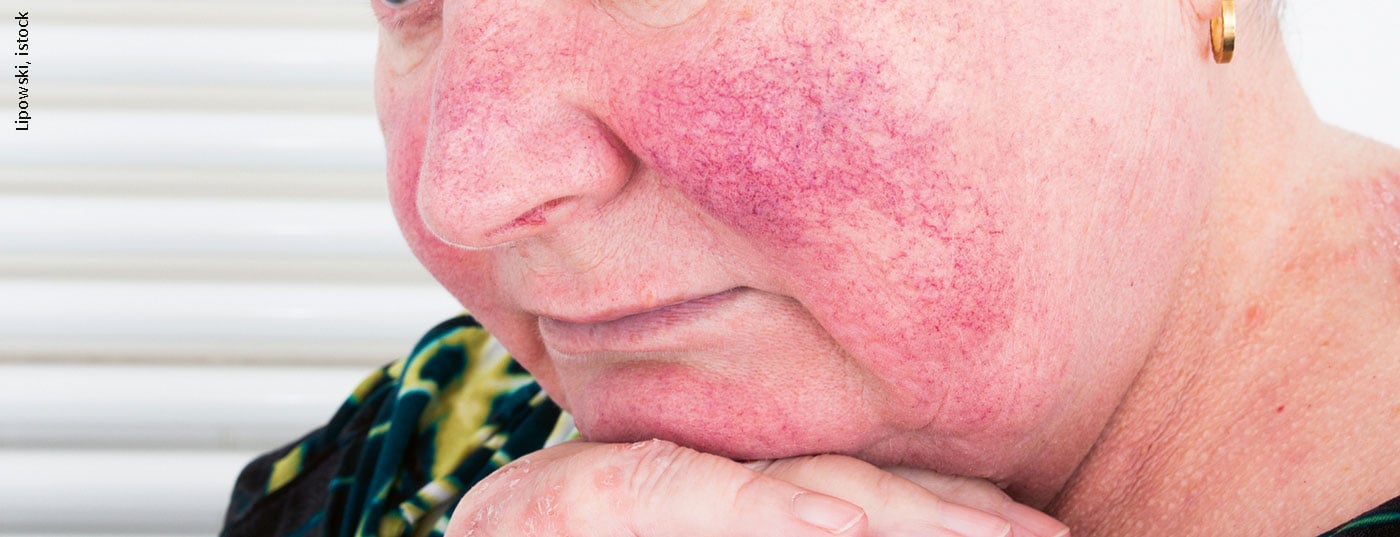
Rosacea can have a significant impact on the psychological well-being of sufferers. “Awareness” of the psychological dimension of this dermatosis and of the multiple treatment options is important to improve the care of rosacea patients. This was the starting point for a questionnaire study by a British research team.    

The often highly visible skin changes represent a cosmetic disfigurement for patients, which has a negative impact on their self-esteem and can lead to rumination [1]. Social stigma and negative self-perception contribute to psychosocial stress. This can result in depression and anxiety [2]. Dissatisfaction and annoyance/embarrassment related to the appearance of their face often leads to social isolation [3]. This, in turn, has a detrimental effect on the patients’ quality of life, as it results in social exclusion and further worsens psychological well-being. On the other hand, psychosocial stress caused by rosacea is a trigger factor for rosacea attacks, which can lead to a vicious cycle [4].

Women are particularly affected by stigmatization

In a UK study of 60,042 patients published in 2021, 61.5% of study participants were female [4]. From further studies, the impairment in quality of life caused by rosacea is higher in females than in males [4]. Despite the higher prevalence of rosacea in women, there have been few studies on the psychosocial impact of this dermatosis in this patient subpopulation. Increased awareness of rosacea treatment options could reduce the negative psychological effects. With this in mind, a British research group conducted an empirical study focusing on psychosocial effects of rosacea in female patients [6].

Questionnaire Study: RosaQoL and Rosenberg Self Esteem Scale

The RosaQoL is a questionnaire with 21 items. The impact of rosacea on quality of life will be assessed with a focus on emotional well-being, symptom expression and impairment in daily life. The response format corresponds to a 5-point Likert scale (1=never, 5=always). Furthermore, an adapted version of the Rosenberg Self Esteem Scale (RSES) was used. Self-esteem and self-perception are assessed by means of 10 items. The response format is a 4-point Likert scale (strongly disagree, disagree, agree, strongly agree).

A total of 19 female patients participated in the survey, 13 of whom were in the 41-50 age group, 5 were 51-60 years old, and one patient was over 61 years old. Study participation was voluntary. All subjects had been suffering from rosacea for at least 5 years and were receiving treatment as outpatients at New Cross Hospital, Wolverhampton (UK), from January to June 2019.

Conclusion: high psychological suffering pressure

Data analysis shows that over half of the participants (53%) reported suffering from feelings of frustration “all the time” due to rosacea, and about one-third (32%) felt frustrated “often.” Annoyance/embarrassment due to skin appearance was felt “all the time” by a proportion of 37% of study participants, and “often” by as many. It is noteworthy that none of the subjects answered this with “rarely” or “never.”

The findings of the present study provide further evidence of the significant psychosocial impact of rosacea, and this questionnaire study focused on the subpopulation of female patients. The researchers point out that further studies with larger samples should be conducted to find out more about the psychosocial impacts of rosacea, even independent of gender effects.


Literature:

  1. Heisig M, Reich A: Psychosocial aspects of rosacea with a focus on anxiety and depression. Clinical Cosmetic Investigation 2018; 11: 103-107.
  2. Oge LK, et al: Rosacea: Diagnosis and Treatment. American Family Physician 2015 ; 92: 187-196.
  3. Powell FC : Rosacea and the pilosebaceous follicle. Cutis 2004; 74: 9-12.
  4. Spoendlin J, et al: A study on the epidemiology of rosacea in the UK. Br J Dermatol 2021; 167: 598-605.
  5. Huynh TT : Burden of Disease: The Psychosocial Impact of Rosacea on a Patients Quality of Life. Am Health Drug Benefits 2013; 6: 348-354.
  6. Al Abadie M, Asharaff F, Al Abadie D: Psychosocial Impact of Rosacea on Women. J Dermatol Res Ther 2019; 5: 074. doi.org/10.23937/2469-5750/1510074.


DERMATOLOGY PRACTICE 2022; 32(2): 35
Autoren
  • Mirjam Peter, M.Sc.
Publikation
  • DERMATOLOGIE PRAXIS
Related Topics
  • psychosocial
  • Rosacea
  • Rosacea
Previous Article
  • Moderate to severe atopic dermatitis

“Flares” affect the quality of life

  • Allergology and clinical immunology
  • Congress Reports
  • Dermatology and venereology
  • RX
  • Studies
View Post
Next Article
  • Outsourcing of complex patient cases

Centers for rare diseases

  • Education
  • General Internal Medicine
  • Prevention and health care
  • RX
View Post
You May Also Like
View Post
  • 4 min
  • Multiple sclerosis

Physical and psychosocial fatigue have the greatest impact on HRQoL

    • RX
    • Education
    • Neurology
    • Psychiatry and psychotherapy
    • Studies
View Post
  • 8 min
  • Hyperhidrosis: Keep a Cool Head

An Overview of Important Treatment Options

    • RX
    • Dermatology and venereology
    • Education
    • General Internal Medicine
    • Pharmacology and toxicology
    • Studies
View Post
  • 6 min
  • This article was sponsored by Johnson & Johnson.

Give your patients a chance to live longer without progression with TECVAYLI® + DARZALEX® compared to DPd/DVd1

    • RX
    • Hematology
    • Oncology
    • Partner Content
    • Studies
View Post
  • 6 min
  • Sjögren's Syndrome in Early Childhood

Children often develop lymphomas

    • RX
    • Education
    • Pediatrics
    • Rheumatology
    • Studies
View Post
  • 12 min
  • Multidrug-Resistant Pathogens in Wound Care

An Enemy in the Microbiome?

    • Dermatology and venereology
    • CME continuing education
    • Infectiology
    • Physical medicine and rehabilitation
    • Prevention and health care
    • RX
    • Surgery
View Post
  • 14 min
  • Rare Genodermatoses: From Diagnosis to Treatment

Darier’s Disease, also known as Follicular Keratosis – Update 2026

    • CME continuing education
    • Cases
    • Dermatology and venereology
    • Pharmacology and toxicology
    • RX
    • Studies
View Post
  • 9 min
  • Psychedelic-assisted therapy

Current status of PAT

    • RX
    • CME continuing education
    • General Internal Medicine
    • Pharmacology and toxicology
    • Psychiatry and psychotherapy
    • Studies
View Post
  • 7 min
  • Osgood-Schlatter Disease

Clinical Presentation, Diagnosis, and Treatment

    • RX
    • Cases
    • Education
    • Orthopedics
    • Pediatrics
  • IBD matters

    Zum Thema
Top CME content
  • 1
    Darier’s Disease, also known as Follicular Keratosis – Update 2026
  • 2
    An Enemy in the Microbiome?
  • 3
    Evidence-Based Neuromodulation Based on Clinical Trials and Real-World Data
  • 4
    Current status of PAT
  • 5
    Development, Diagnosis, Epidemiology, and Treatment of a Disease Entity

Newsletter

Sign up and stay up to date

Subscribe
Medizinonline Medizinonline
  • Contact
  • General terms and conditions
  • Imprint

Input your search keywords and press Enter.