Medizinonline Medizinonline
  • News
    • News
    • Market & Medicine
  • Patients
    • Disease patterns
    • Diagnostics
    • Therapy
  • Partner Content
    • Diabetes
      • Dia-Month Club – Type 2 Diabetes
      • Diabetes in Motion
    • Gastroenterology
      • IBD matters
    • Oncology
      • Swiss Oncology in motion
    • Orthopedics
      • Osteoporosis in motion
  • Departments
    • Allergology and clinical immunology
    • General Internal Medicine
    • Anesthesiology
    • Angiology
    • Surgery
    • Dermatology and venereology
    • Endocrinology and Diabetology
    • Nutrition
    • Gastroenterology and Hepatology
    • Genetics
    • Geriatrics
    • Gynecology
    • Hematology
    • Infectiology
    • Cardiology
    • Nephrology
    • Neurology
    • Emergency and intensive care medicine
    • Nuclear Medicine
    • Oncology
    • Ophthalmology
    • ORL
    • Orthopedics
    • Pediatrics
    • Pharmacology and toxicology
    • Pharmaceutical medicine
    • Phlebology
    • Physical medicine and rehabilitation
    • Pneumology
    • Prevention and health care
    • Psychiatry and psychotherapy
    • Radiology
    • Forensic Medicine
    • Rheumatology
    • Sports Medicine
    • Traumatology and trauma surgery
    • Tropical and travel medicine
    • Urology
    • Dentistry
  • CME & Congresses
    • CME continuing education
    • Congress Reports
    • Congress calendar
  • Practice
    • Noctimed
    • Practice Management
    • Jobs
    • Interviews
  • Log In
  • Register
  • My account
  • Contact
  • Publications
  • Contact
  • Deutsch
  • English
  • Français
  • Italiano
  • Português
  • Español
Subscribe
Medizinonline Medizinonline
  • News
    • News
    • Market & Medicine
  • Patienten
    • Krankheitsbilder
    • Diagnostik
    • Therapie
  • Partner Content
    • Diabetes
      • Dia-Month Club – Type 2 Diabetes
      • Diabetes in Motion
    • Gastroenterology
      • IBD matters
    • Oncology
      • Swiss Oncology in motion
    • Orthopedics
      • Osteoporosis in motion
    • Phytotherapie
    • Rheumatology
  • Departments
    • Fachbereiche 1-13
      • Allergology and clinical immunology
      • General Internal Medicine
      • Anesthesiology
      • Angiology
      • Surgery
      • Dermatology and venereology
      • Endocrinology and Diabetology
      • Nutrition
      • Gastroenterology and Hepatology
      • Genetics
      • Geriatrics
      • Gynecology
      • Hematology
    • Fachbereiche 14-26
      • Infectiology
      • Cardiology
      • Nephrology
      • Neurology
      • Emergency and intensive care medicine
      • Nuclear Medicine
      • Oncology
      • Ophthalmology
      • ORL
      • Orthopedics
      • Pediatrics
      • Pharmacology and toxicology
      • Pharmaceutical medicine
    • Fachbereiche 26-38
      • Phlebology
      • Physical medicine and rehabilitation
      • Phytotherapy
      • Pneumology
      • Prevention and health care
      • Psychiatry and psychotherapy
      • Radiology
      • Forensic Medicine
      • Rheumatology
      • Sports Medicine
      • Traumatology and trauma surgery
      • Tropical and travel medicine
      • Urology
      • Dentistry
  • CME & Congresses
    • CME continuing education
    • Congress Reports
    • Congress calendar
  • Practice
    • Noctimed
    • Practice Management
    • Jobs
    • Interviews
Login

Sie haben noch keinen Account? Registrieren

  • "No sports?"

Rare case of vertebral dissection while playing tennis

    • Cases
    • Neurology
    • RX
    • Sports Medicine
  • 2 minute read

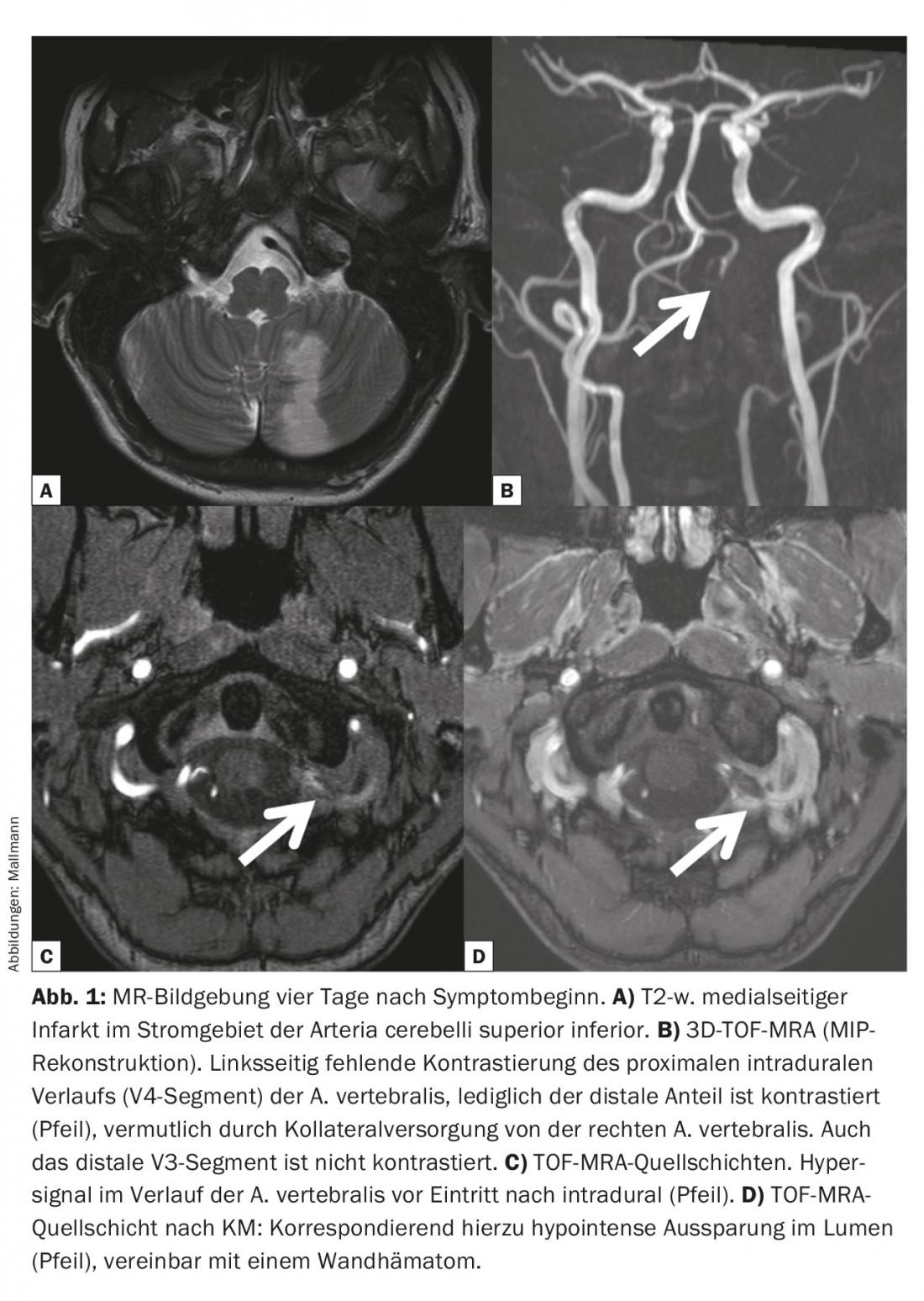
Case report: The then 37-year-old physiotherapist had received a ball to the right temple while playing tennis during her vacation in Turkey. After a brief headache and throbbing in the left ear, severe dizziness and balance problems with inability to stand and walk occurred the following morning. She vomited several times and was admitted to a local hospital. There, imaging demonstrated a left PICA infarct due to vertebral dissection.

Primary therapy consisted of combined administration of Aspirin®, clopidogrel, and Clexane® (2.0 × 0.6 ml). After repatriation to our clinic, we confirmed persistent vertebral dissection on ultrasound and MRI (Fig. 1) and switched to Aspirin®, 100 mg daily, as monotherapy according to the current data and extension of the dissection to intradural.
In addition, the patient received a low molecular weight heparin (Fragmin®) for thrombosis prophylaxis. After prompt transfer to neurological rehabilitation, the condition improved protractedly until complete freedom from symptoms. Follow-up checks by ultrasound and MRI confirmed complete recanalization of the vessel (Fig. 2). In the meantime, the patient has returned to work at 100 percent capacity and, apart from occasional attacks of dizziness in “stress situations”, is symptom-free.
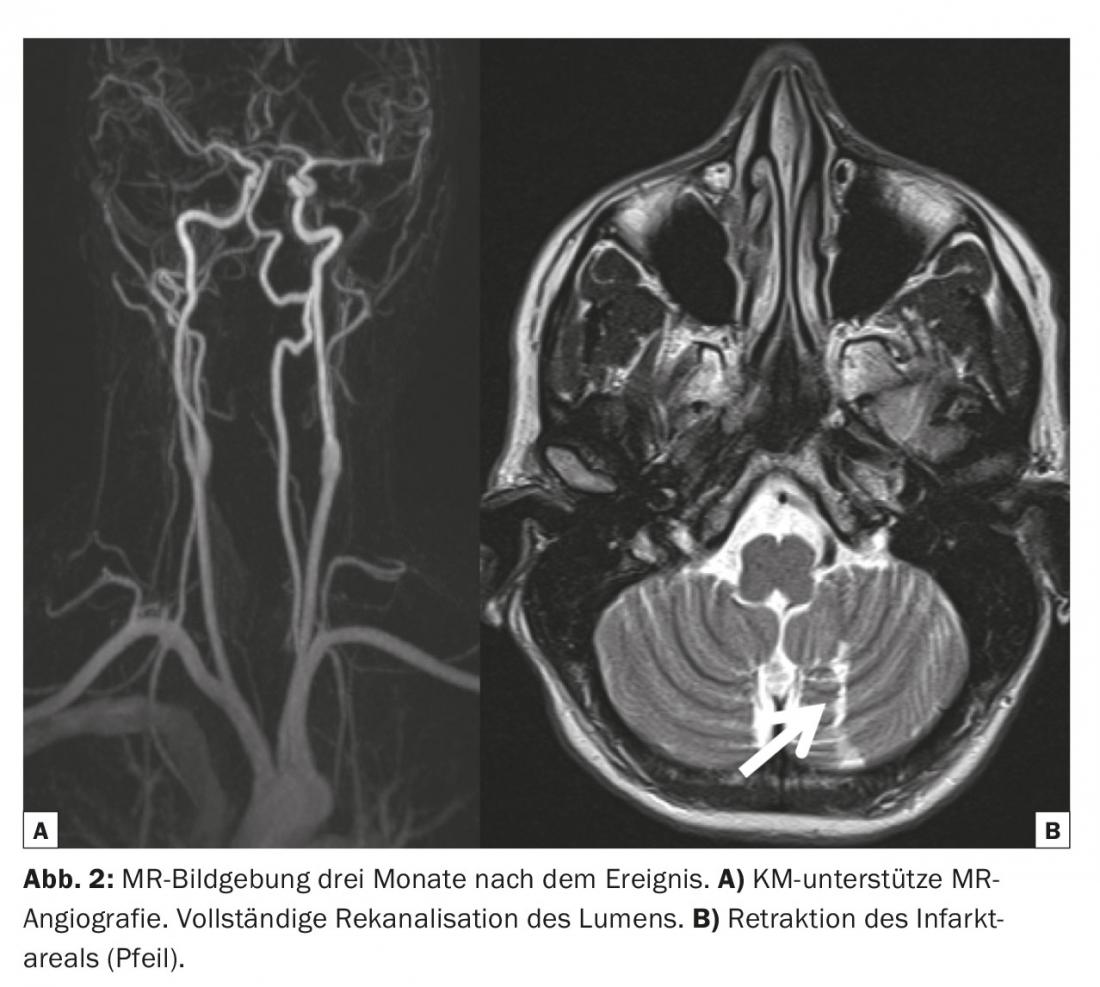
Of note from the history is a right vertebral dissection sustained several years earlier after chiropractic maneuver, which was not detectable on current imaging. Neurologic symptoms or imaging signs of cerebral ischemia had not existed at that time.

Discussion: If even mild neurological symptoms, (dissection-typical) pain, and/or Horner’s syndrome (which had not been observed in our patient) occur after sudden, possibly jerky head movements – in our case report, a sudden reflexive head turn after tennis ball hit to the temple – then this must suggest a dissection of the carotid and/or vertebral arteries.

Various diagnostic modalities (CT, MRI, and ultrasound) are very good at documenting dissection or its hemodynamic effects in the acute phase and can provide noninvasive evidence of recanalization during follow-up visits. Meanwhile confirmed in the CADISS study [1], Aspirin® in monotherapy is the current therapy recommendation in secondary prophylaxis.

The course after dissections of the neck arteries is often more benign and the risk of recurrence is lower than in cerebral strokes of arteriosclerotic origin [2]. Although dissections may occur with exercise, this certainly does not translate into the “no sports” recommendation attributed to Winston Churchill.


Literature:

  1. CADISS trial investigators: Lancet Neurol 2015 Apr; 14(4): 361-367.
  2. Georgiadis D, et al: Neurology 2009; 72: 1810-1815.


InFo NEUROLOGY & PSYCHIATRY 2015; 13(5): 30-31.
Autoren
  • Dr. med. Achim Mallmann
  • Prof. Dr. med. Adam Czaplinski
  • Prof. Dr. med. Stephan G. Wetzel
Publikation
  • InFo NEUROLOGIE & PSYCHIATRIE
Related Topics
  • Aspirin
  • Balance disorder
  • CADISS
  • Dizziness
  • Horner's syndrome
  • Vertebral dissection
Previous Article
  • Helpful for Parkinson's disease, dystonia and tremor

Deep brain stimulation for movement disorders: Indications and outcome

  • Education
  • Neurology
  • RX
View Post
Next Article
  • Torn ligaments, cartilage and meniscus

Sports injuries of the knee – diagnostics and therapy

  • Education
  • Orthopedics
  • RX
  • Sports Medicine
  • Surgery
  • Traumatology and trauma surgery
View Post
You May Also Like
View Post
  • 4 min
  • Multiple sclerosis

Physical and psychosocial fatigue have the greatest impact on HRQoL

    • RX
    • Education
    • Neurology
    • Psychiatry and psychotherapy
    • Studies
View Post
  • 8 min
  • Hyperhidrosis: Keep a Cool Head

An Overview of Important Treatment Options

    • RX
    • Dermatology and venereology
    • Education
    • General Internal Medicine
    • Pharmacology and toxicology
    • Studies
View Post
  • 6 min
  • This article was sponsored by Johnson & Johnson.

Give your patients a chance to live longer without progression with TECVAYLI® + DARZALEX® compared to DPd/DVd1

    • RX
    • Hematology
    • Oncology
    • Partner Content
    • Studies
View Post
  • 6 min
  • Sjögren's Syndrome in Early Childhood

Children often develop lymphomas

    • RX
    • Education
    • Pediatrics
    • Rheumatology
    • Studies
View Post
  • 12 min
  • Multidrug-Resistant Pathogens in Wound Care

An Enemy in the Microbiome?

    • Dermatology and venereology
    • CME continuing education
    • Infectiology
    • Physical medicine and rehabilitation
    • Prevention and health care
    • RX
    • Surgery
View Post
  • 14 min
  • Rare Genodermatoses: From Diagnosis to Treatment

Darier’s Disease, also known as Follicular Keratosis – Update 2026

    • CME continuing education
    • Cases
    • Dermatology and venereology
    • Pharmacology and toxicology
    • RX
    • Studies
View Post
  • 9 min
  • Psychedelic-assisted therapy

Current status of PAT

    • RX
    • CME continuing education
    • General Internal Medicine
    • Pharmacology and toxicology
    • Psychiatry and psychotherapy
    • Studies
View Post
  • 7 min
  • Osgood-Schlatter Disease

Clinical Presentation, Diagnosis, and Treatment

    • RX
    • Cases
    • Education
    • Orthopedics
    • Pediatrics
  • IBD matters

    Zum Thema
Top CME content
  • 1
    Darier’s Disease, also known as Follicular Keratosis – Update 2026
  • 2
    An Enemy in the Microbiome?
  • 3
    Evidence-Based Neuromodulation Based on Clinical Trials and Real-World Data
  • 4
    Current status of PAT
  • 5
    Development, Diagnosis, Epidemiology, and Treatment of a Disease Entity

Newsletter

Sign up and stay up to date

Subscribe
Medizinonline Medizinonline
  • Contact
  • General terms and conditions
  • Imprint

Input your search keywords and press Enter.