Medizinonline Medizinonline
  • News
    • News
    • Market & Medicine
  • Patients
    • Disease patterns
    • Diagnostics
    • Therapy
  • Partner Content
    • Diabetes
      • Dia-Month Club – Type 2 Diabetes
      • Diabetes in Motion
      • Diabetes Podcasts
    • Gastroenterology
      • IBD matters
    • Oncology
      • Swiss Oncology in motion
    • Orthopedics
      • Osteoporosis in motion
  • Departments
    • Allergology and clinical immunology
    • General Internal Medicine
    • Anesthesiology
    • Angiology
    • Surgery
    • Dermatology and venereology
    • Endocrinology and Diabetology
    • Nutrition
    • Gastroenterology and Hepatology
    • Genetics
    • Geriatrics
    • Gynecology
    • Hematology
    • Infectiology
    • Cardiology
    • Nephrology
    • Neurology
    • Emergency and intensive care medicine
    • Nuclear Medicine
    • Oncology
    • Ophthalmology
    • ORL
    • Orthopedics
    • Pediatrics
    • Pharmacology and toxicology
    • Pharmaceutical medicine
    • Phlebology
    • Physical medicine and rehabilitation
    • Pneumology
    • Prevention and health care
    • Psychiatry and psychotherapy
    • Radiology
    • Forensic Medicine
    • Rheumatology
    • Sports Medicine
    • Traumatology and trauma surgery
    • Tropical and travel medicine
    • Urology
    • Dentistry
  • CME & Congresses
    • CME continuing education
    • Congress Reports
    • Congress calendar
  • Practice
    • Noctimed
    • Practice Management
    • Jobs
    • Interviews
  • Log In
  • Register
  • My account
  • Contact
  • Publications
  • Contact
  • Deutsch
  • English
  • Français
  • Italiano
  • Português
  • Español
Subscribe
Medizinonline Medizinonline
  • News
    • News
    • Market & Medicine
  • Patienten
    • Krankheitsbilder
    • Diagnostik
    • Therapie
  • Partner Content
    • Diabetes
      • Dia-Month Club – Type 2 Diabetes
      • Diabetes in Motion
      • Diabetes Podcasts
    • Gastroenterology
      • IBD matters
    • Oncology
      • Swiss Oncology in motion
    • Orthopedics
      • Osteoporosis in motion
    • Phytotherapie
    • Rheumatology
  • Departments
    • Fachbereiche 1-13
      • Allergology and clinical immunology
      • General Internal Medicine
      • Anesthesiology
      • Angiology
      • Surgery
      • Dermatology and venereology
      • Endocrinology and Diabetology
      • Nutrition
      • Gastroenterology and Hepatology
      • Genetics
      • Geriatrics
      • Gynecology
      • Hematology
    • Fachbereiche 14-26
      • Infectiology
      • Cardiology
      • Nephrology
      • Neurology
      • Emergency and intensive care medicine
      • Nuclear Medicine
      • Oncology
      • Ophthalmology
      • ORL
      • Orthopedics
      • Pediatrics
      • Pharmacology and toxicology
      • Pharmaceutical medicine
    • Fachbereiche 26-38
      • Phlebology
      • Physical medicine and rehabilitation
      • Phytotherapy
      • Pneumology
      • Prevention and health care
      • Psychiatry and psychotherapy
      • Radiology
      • Forensic Medicine
      • Rheumatology
      • Sports Medicine
      • Traumatology and trauma surgery
      • Tropical and travel medicine
      • Urology
      • Dentistry
  • CME & Congresses
    • CME continuing education
    • Congress Reports
    • Congress calendar
  • Practice
    • Noctimed
    • Practice Management
    • Jobs
    • Interviews
Login

Sie haben noch keinen Account? Registrieren

  • Paroxysmal Nocturnal Hemoglobinuria

Relief for patients due to longer infusion intervals

    • Congress Reports
    • Hematology
    • RX
  • 2 minute read

Chronic destruction of red blood cells is characteristic of paroxysmal nocturnal hemoglobinuria. Mutations in the PIG-A gene lead to a GPI-AP deficit that results in uncontrolled complement activation. C5 complement inhibition, which only needs to be administered every eight weeks for the first time, may help.

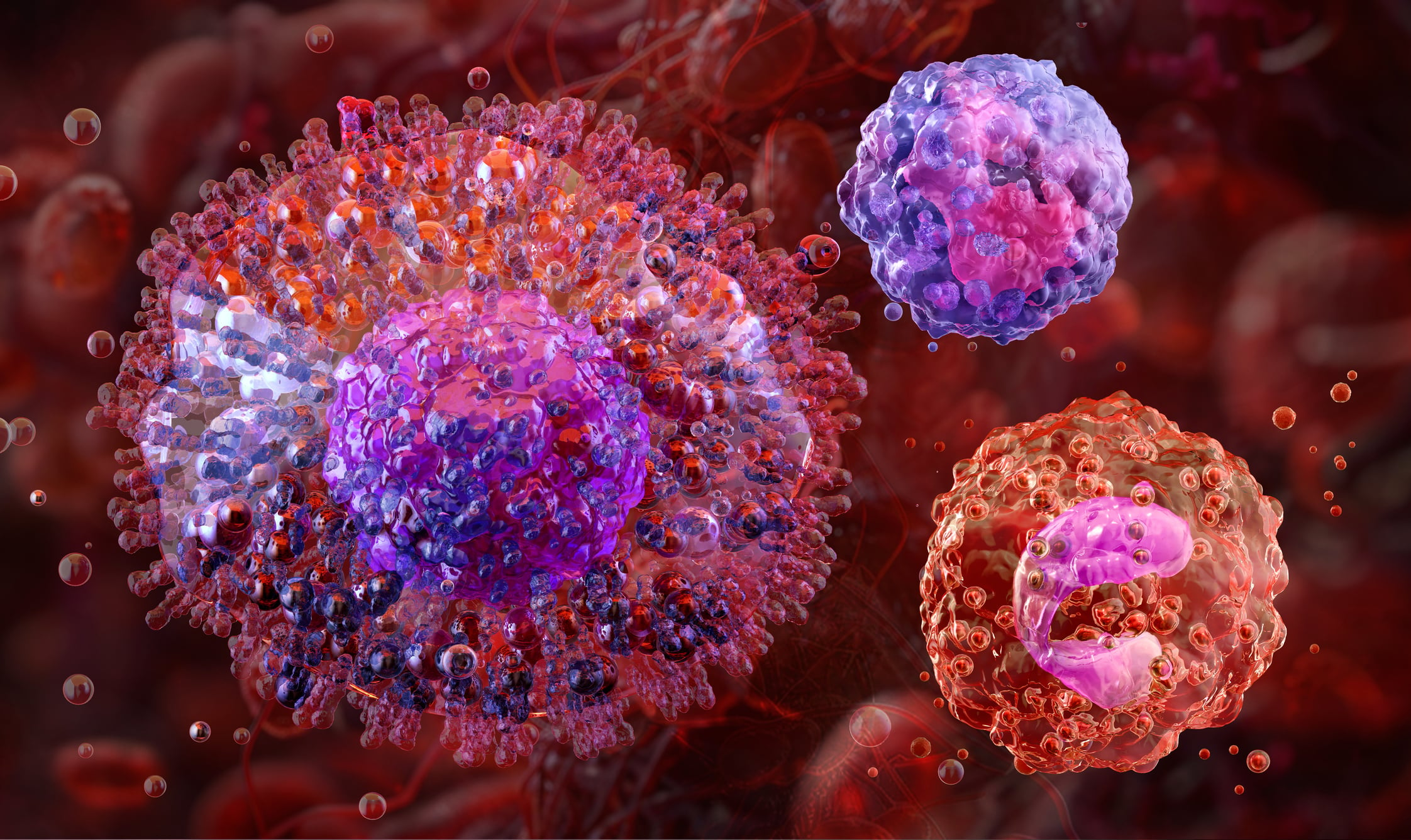
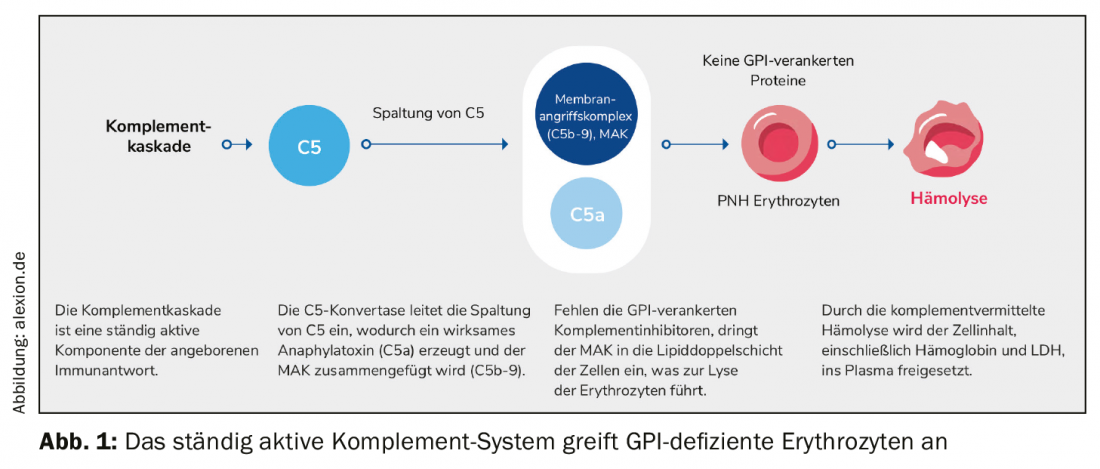
The main feature of rare, chronic and progressive paroxysmal nocturnal hemoglobinuria (PNH) is complement-mediated hemolysis. Due to an acquired mutation, glycophosphatidylinostiol (GPI) anchor proteins are absent in bone marrow hematopoietic stem cells. As a result, GPI-anchored proteins cannot be formed, especially on the surface of red erythrocytes. Protection from the complement system, part of the body’s immune system, is eliminated. The red blood cells are mistaken for invaders, attacked and destroyed. The membrane attack complex (MAK) penetrates the lipid bilayer of the cell and triggers lysis of the erythrocytes there. The entire cell content, including hemoglobin and LDH, is released into the plasma (Fig. 1).


Complex disease with variable symptoms

Characteristics of the disease include hemolytic anemia, hemoglobinuria, and bone marrow insufficiency or failure. It is classically manifested mainly by fatigue, a reduced quality of life and dyspnea on exertion. However, nonspecific symptoms often associated with hemolytic crises may also occur. However, the main cause of increased patient morbidity and mortality is thrombophilia. Up to 50% of all affected individuals develop thrombosis without specific therapeutic measures. 35% of patients die within 5 years of diagnosis.

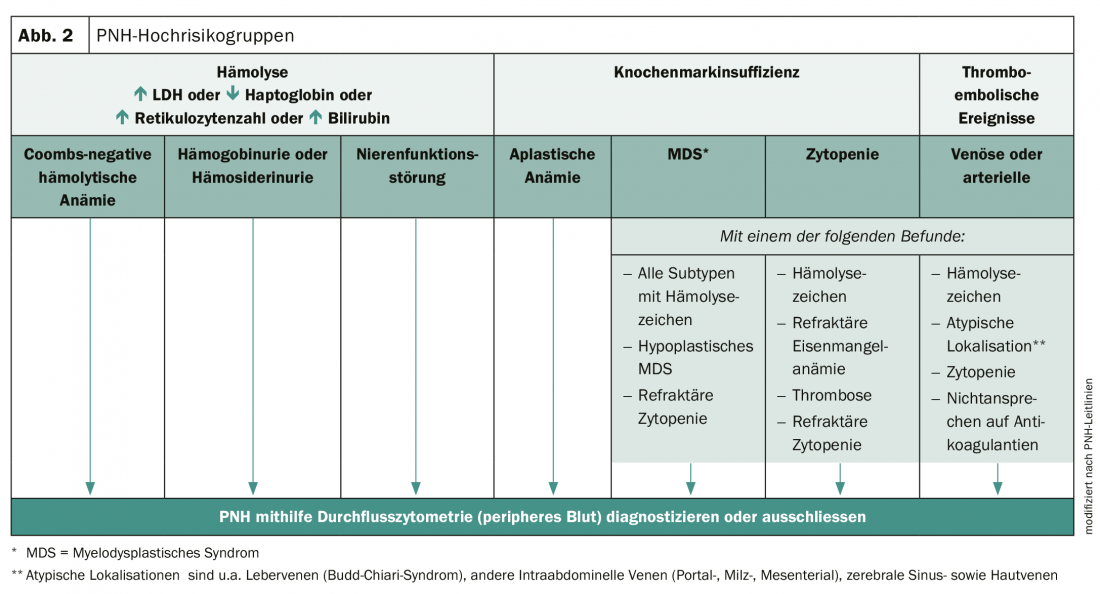
Early diagnosis is essential to improve the prognosis of those affected. PNH can be diagnosed using high-sensitivity flow cytometry and a comprehensive clinical examination. However, many physicians are unaware of the complexity of symptoms and variability of the disease. As a result, PNH is often not recognized and diagnosis is delayed from one to more than 5 years. However, there are high-risk groups in whom the presence of PNH should be considered (Fig. 2).


Therapy management improves

To halt hemolysis, complement inhibitor is used to interfere with the terminal functions of the complement cascade. Proximal functions, on the other hand, remain. For example, the rate of thromboembolic events (TE) in anticoagulant-treated patients was significantly reduced from 11.54 to 0.72. The inhibitor also showed convincing long-term clinical benefits. The only drawback: the short infusion interval. Now the inhibitor could be further developed and the half-life extended (Ravulizumab). The reduction to 6-7 infusions per year significantly improves the quality of life of those affected and also reduces the risk of breakthrough hemolysis from 10.7% to 4%.

Source: Annual Meeting 2019 of the German-Speaking Societies of Hematology and Medical Oncology (DGHO)


InFo ONCOLOGY & HEMATOLOGY 2019; 7(6): 32-33 (published 12/6/19, ahead of print).
 

Publikation
  • InFo ONKOLOGIE & HÄMATOLOGIE
Related Topics
  • C5 complement inhibition
  • Mutations
  • Paroxysmal Nocturnal Hemoglobinuria
Previous Article
  • Systemic sclerosis

Raynaud’s syndrome characteristic in early stage of disease

  • Allergology and clinical immunology
  • Dermatology and venereology
  • Education
  • Rheumatology
  • RX
View Post
Next Article
  • Stroke

Neuroprotection in focus

  • Education
  • Neurology
  • RX
  • Studies
View Post
You May Also Like
View Post
  • 6 min
  • Multimorbidity and functional capacity in old age

Clarify individual health status and reduce risks

    • Congress Reports
    • General Internal Medicine
    • Geriatrics
    • Neurology
    • Orthopedics
    • Physical medicine and rehabilitation
    • Prevention and health care
    • Rheumatology
    • RX
View Post
  • 6 min
  • Tick season: danger from early summer meningoencephalitis

TBE vaccination recommended for adults and children aged 3 and over

    • Education
    • Infectiology
    • Neurology
    • Prevention and health care
    • RX
    • Studies
View Post
  • 13 min
  • New WHO guideline, updated stimulation protocols, focus on PGT-A

Fertility and reproductive medicine 2026

    • Education
    • Gynecology
    • RX
    • Studies
View Post
  • 12 min
  • Wound treatment

Surgical wound complications

    • CME continuing education
    • Dermatology and venereology
    • Endocrinology and Diabetology
    • Geriatrics
    • Physical medicine and rehabilitation
    • RX
    • Surgery
View Post
  • 8 min
  • Proteins in wound healing

Do special amino acids lead to success?

    • CME continuing education
    • Dermatology and venereology
    • Endocrinology and Diabetology
    • Nutrition
    • RX
    • Studies
View Post
  • 8 min
  • Proteins in wound healing

Do special amino acids lead to success?

    • CME continuing education
    • Dermatology and venereology
    • Endocrinology and Diabetology
    • Nutrition
    • RX
    • Studies
View Post
  • 0 min
  • Psychedelic-assisted therapy

Current status of PAT

    • CME continuing education
    • General Internal Medicine
    • Pharmacology and toxicology
    • Psychiatry and psychotherapy
    • RX
    • Studies
View Post
  • 5 min
  • Hepatitis B prophylaxis

Vaccination protection for healthcare staff with patient contact – an update

    • Congress Reports
    • General Internal Medicine
    • Infectiology
    • Prevention and health care
    • RX
  • IBD matters

    Zum Thema
Top CME content
  • 1
    Do special amino acids lead to success?
  • 2
    Current status of PAT
  • 3
    Surgical wound complications
  • 4
    Do special amino acids lead to success?
  • 5
    Functional limb preservation between infection control, vascular medicine and resurfacing

Newsletter

Sign up and stay up to date

Subscribe
Medizinonline Medizinonline
  • Contact
  • General terms and conditions
  • Imprint

Input your search keywords and press Enter.