Medizinonline Medizinonline
  • News
    • News
    • Market & Medicine
  • Patients
    • Disease patterns
    • Diagnostics
    • Therapy
  • Partner Content
    • Diabetes
      • Dia-Month Club – Type 2 Diabetes
      • Diabetes in Motion
      • Diabetes Podcasts
    • Gastroenterology
      • IBD matters
    • Oncology
      • Swiss Oncology in motion
    • Orthopedics
      • Osteoporosis in motion
  • Departments
    • Allergology and clinical immunology
    • General Internal Medicine
    • Anesthesiology
    • Angiology
    • Surgery
    • Dermatology and venereology
    • Endocrinology and Diabetology
    • Nutrition
    • Gastroenterology and Hepatology
    • Genetics
    • Geriatrics
    • Gynecology
    • Hematology
    • Infectiology
    • Cardiology
    • Nephrology
    • Neurology
    • Emergency and intensive care medicine
    • Nuclear Medicine
    • Oncology
    • Ophthalmology
    • ORL
    • Orthopedics
    • Pediatrics
    • Pharmacology and toxicology
    • Pharmaceutical medicine
    • Phlebology
    • Physical medicine and rehabilitation
    • Pneumology
    • Prevention and health care
    • Psychiatry and psychotherapy
    • Radiology
    • Forensic Medicine
    • Rheumatology
    • Sports Medicine
    • Traumatology and trauma surgery
    • Tropical and travel medicine
    • Urology
    • Dentistry
  • CME & Congresses
    • CME continuing education
    • Congress Reports
    • Congress calendar
  • Practice
    • Noctimed
    • Practice Management
    • Jobs
    • Interviews
  • Log In
  • Register
  • My account
  • Contact
  • Publications
  • Contact
  • Deutsch
  • English
  • Français
  • Italiano
  • Português
  • Español
Subscribe
Medizinonline Medizinonline
  • News
    • News
    • Market & Medicine
  • Patienten
    • Krankheitsbilder
    • Diagnostik
    • Therapie
  • Partner Content
    • Diabetes
      • Dia-Month Club – Type 2 Diabetes
      • Diabetes in Motion
      • Diabetes Podcasts
    • Gastroenterology
      • IBD matters
    • Oncology
      • Swiss Oncology in motion
    • Orthopedics
      • Osteoporosis in motion
    • Phytotherapie
    • Rheumatology
  • Departments
    • Fachbereiche 1-13
      • Allergology and clinical immunology
      • General Internal Medicine
      • Anesthesiology
      • Angiology
      • Surgery
      • Dermatology and venereology
      • Endocrinology and Diabetology
      • Nutrition
      • Gastroenterology and Hepatology
      • Genetics
      • Geriatrics
      • Gynecology
      • Hematology
    • Fachbereiche 14-26
      • Infectiology
      • Cardiology
      • Nephrology
      • Neurology
      • Emergency and intensive care medicine
      • Nuclear Medicine
      • Oncology
      • Ophthalmology
      • ORL
      • Orthopedics
      • Pediatrics
      • Pharmacology and toxicology
      • Pharmaceutical medicine
    • Fachbereiche 26-38
      • Phlebology
      • Physical medicine and rehabilitation
      • Phytotherapy
      • Pneumology
      • Prevention and health care
      • Psychiatry and psychotherapy
      • Radiology
      • Forensic Medicine
      • Rheumatology
      • Sports Medicine
      • Traumatology and trauma surgery
      • Tropical and travel medicine
      • Urology
      • Dentistry
  • CME & Congresses
    • CME continuing education
    • Congress Reports
    • Congress calendar
  • Practice
    • Noctimed
    • Practice Management
    • Jobs
    • Interviews
Login

Sie haben noch keinen Account? Registrieren

  • Dementia

Still forgetful or already demented? Effective treatment from the beginning

    • Congress Reports
    • Geriatrics
    • Neurology
    • Psychiatry and psychotherapy
    • RX
    • Studies
  • 3 minute read

The first signs of dementia are often not recognized, because the changes in the brain occur gradually. Often, a depressive episode also masks the actual symptoms. However, in order to preserve memory performance for as long as possible and thus also stabilize everyday functions, early diagnosis is required – so that treatment management can take effect in good time.

When dementia is diagnosed, it’s a shock at first – for everyone involved. Because in the end, no one knows where the journey will lead. In addition, there is a close link to depression, so that it is not really clear whether depression is a risk factor for dementia, perhaps even a prodromal symptom, or whether depression should rather be seen as a consequence of dementia. Various studies have attempted to find answers to these questions. A follow-up study over a 28-year period concluded that depressive episodes occurring early in the study did not increase the risk of dementia, reported Irene Bopp-Kistler, MD, Zurich. However, depression as a prodromal symptom of dementia should not be disregarded in everyday practice – although the differential diagnosis is difficult, especially in the case of listlessness. Therefore, above all, the anamnesis is of crucial importance, according to the expert.


Ways to find the diagnosis

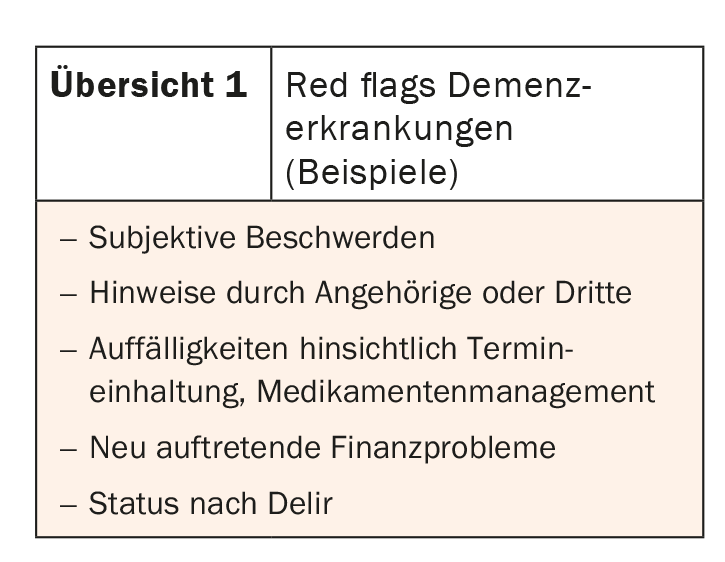
In addition to subjective cognitive impairment, although this need not always represent a dementia risk, behavioral changes and problems in Advanced Activities of Daily Living (AADL) may provide initial clues. In addition, there are then reports of decline in instrumented daily functions (IDAL). These include, for example, dealing with finances, shopping, cooking, perceiving the events of the day, reading, keeping appointments, taking medications, or riding public transportation. In the further course, problems with the basal activities of daily living (BADL) then also occur (overview 1). The first impressions should then be supplemented by a BrainCheck or IQCODE survey. In addition, the Montreal Cognitive Assessment (MoCA) is recommended. The MMSE, on the other hand, is not sensitive enough for detecting early stages, the expert explained. This should then be supplemented by the watch test. In Switzerland, the DemTect is also commonly used. Additional examination by imaging should include a dementia protocol, i.e., special imaging of the mesiotemporal structures) (Fig. 1) .
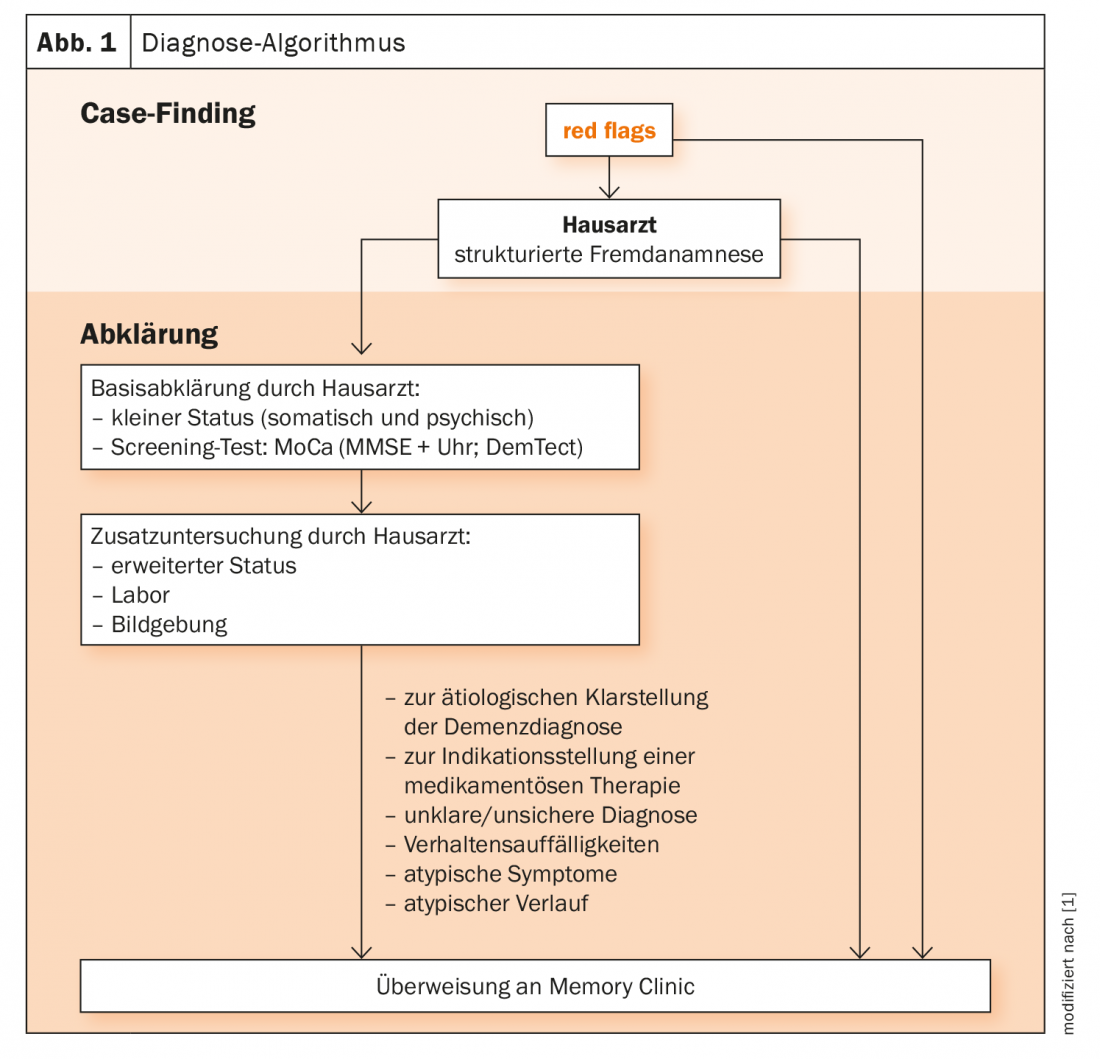


The severity of dementia ultimately depends on everyday functions. Mild dementia exists when instrumented skills decline, moderate dementia exists when there are BADL problems such as feeding or dressing, and severe dementia exists when the patient is completely dependent on external assistance.

Danger recognized, danger averted – or at least delayed

Timely diagnosis is of great importance as conflicts in the relationship and family can be avoided, a better understanding of the problems can be built and timely decision making regarding the future can be made. These include wishes with regard to care, a living will, but also the arrangement of finances. In addition, early diagnosis also paves the way to comprehensive treatment management. This often allows those affected a longer period of time in which they can still live independently. Different measures are aimed at improving or at least partially stabilizing symptoms and everyday abilities. Therapy is built on three pillars: treatment of correctable causes such as vitamin deficiency or hypothyroidism, non-drug interventions such as brain performance training or occupational therapy, and drug interventions. To date, there are few medications approved to treat the main symptoms of dementia. In Alzheimer’s dementia, antidementia drugs are primarily used. These can alleviate memory impairment, helping to improve daily living skills. Cholinesterase inhibitors are used in mild to moderate Alzheimer’s dementia and inhibit the breakdown of acetylcholine. A glutamate antagonist is available for moderate to severe disease. It counteracts excessive glutamate release. Herbal preparations based on Ginkgo biloba play a special role. They promote blood flow in the brain and can assist with mild Alzheimer’s or vascular dementia, as well as mixed forms.

Congress: FomF Update Refresher


Source:

  1. Bürge M, et al: Practice 2018; 107:435-451.


InFo NEUROLOGY & PSYCHIATRY 2021; 19(4): 30-31 (published 8/21, ahead of print).
Autoren
  • Leoni Burggraf
Publikation
  • InFo NEUROLOGIE & PSYCHIATRIE
Related Topics
  • Dementia
  • Depression
  • Forgetfulness
Previous Article
  • "Mild Cognitive Impairment" (MCI).

Ginkgo biloba for the improvement of neurocognitive symptoms

  • Education
  • General Internal Medicine
  • Neurology
  • RX
  • Studies
View Post
Next Article
  • Seborrheic dermatitis

Miconazole nitrate and ketaconazole as equivalent topical therapy options.

  • Allergology and clinical immunology
  • Dermatology and venereology
  • Education
  • RX
  • Studies
View Post
You May Also Like
View Post
  • 5 min
  • Heterogeneous safety profiles for dermatological and endocrine AEs

Not all GLP1-RA are the same

    • Education
    • Endocrinology and Diabetology
    • RX
    • Studies
View Post
  • 3 min
  • Neuroendocrine tumors

Precision medicine in diagnostics and therapy

    • Education
    • Endocrinology and Diabetology
    • Oncology
    • Radiology
    • RX
    • Studies
View Post
  • 10 min
  • Irritable Bowel Syndrome

Functional disorder of gut-brain interaction – a biopsychosocial concept

    • Congress Reports
    • Gastroenterology and Hepatology
    • General Internal Medicine
    • Nutrition
    • RX
    • Studies
View Post
  • 4 min
  • GLP1 receptor agonists

Positive influence on substance use and addiction

    • Education
    • Endocrinology and Diabetology
    • General Internal Medicine
    • RX
    • Studies
View Post
  • 11 min
  • Sleep apnea and cardiovascular diseases

Breathless through the night

    • Cardiology
    • Education
    • General Internal Medicine
    • ORL
    • Pneumology
    • RX
    • Studies
View Post
  • 15 min
  • Diagnostics, differentiation and multimodal therapy

Vulvar diseases and vulvodynia

    • Dermatology and venereology
    • Education
    • Gynecology
    • Infectiology
    • RX
    • Studies
View Post
  • 3 min
  • From symptom to diagnosis

Abdominal pain – Prostate lipoma

    • Cases
    • Education
    • General Internal Medicine
    • Radiology
    • RX
    • Surgery
    • Urology
View Post
  • 6 min
  • Acute pulmonary embolism: new AHA/ACC guideline

Practical recommendations for risk-stratified triage

    • Cardiology
    • Education
    • Pneumology
    • RX
    • Studies
  • IBD matters

    Zum Thema
Top CME content
  • 1
    Functional limb preservation between infection control, vascular medicine and resurfacing
  • 2
    Do special amino acids lead to success?
  • 3
    Do special amino acids lead to success?
  • 4
    Current status of PAT
  • 5
    Surgical wound complications

Newsletter

Sign up and stay up to date

Subscribe
Medizinonline Medizinonline
  • Contact
  • General terms and conditions
  • Imprint

Input your search keywords and press Enter.