Medizinonline Medizinonline
  • News
    • News
    • Market & Medicine
  • Patients
    • Disease patterns
    • Diagnostics
    • Therapy
  • Partner Content
    • Diabetes
      • Dia-Month Club – Type 2 Diabetes
      • Diabetes in Motion
      • Diabetes Podcasts
    • Gastroenterology
      • IBD matters
    • Oncology
      • Swiss Oncology in motion
    • Orthopedics
      • Osteoporosis in motion
  • Departments
    • Allergology and clinical immunology
    • General Internal Medicine
    • Anesthesiology
    • Angiology
    • Surgery
    • Dermatology and venereology
    • Endocrinology and Diabetology
    • Nutrition
    • Gastroenterology and Hepatology
    • Genetics
    • Geriatrics
    • Gynecology
    • Hematology
    • Infectiology
    • Cardiology
    • Nephrology
    • Neurology
    • Emergency and intensive care medicine
    • Nuclear Medicine
    • Oncology
    • Ophthalmology
    • ORL
    • Orthopedics
    • Pediatrics
    • Pharmacology and toxicology
    • Pharmaceutical medicine
    • Phlebology
    • Physical medicine and rehabilitation
    • Pneumology
    • Prevention and health care
    • Psychiatry and psychotherapy
    • Radiology
    • Forensic Medicine
    • Rheumatology
    • Sports Medicine
    • Traumatology and trauma surgery
    • Tropical and travel medicine
    • Urology
    • Dentistry
  • CME & Congresses
    • CME continuing education
    • Congress Reports
    • Congress calendar
  • Practice
    • Noctimed
    • Practice Management
    • Jobs
    • Interviews
  • Log In
  • Register
  • My account
  • Contact
  • Publications
  • Contact
  • Deutsch
  • English
  • Français
  • Italiano
  • Português
  • Español
Subscribe
Medizinonline Medizinonline
  • News
    • News
    • Market & Medicine
  • Patienten
    • Krankheitsbilder
    • Diagnostik
    • Therapie
  • Partner Content
    • Diabetes
      • Dia-Month Club – Type 2 Diabetes
      • Diabetes in Motion
      • Diabetes Podcasts
    • Gastroenterology
      • IBD matters
    • Oncology
      • Swiss Oncology in motion
    • Orthopedics
      • Osteoporosis in motion
    • Phytotherapie
    • Rheumatology
  • Departments
    • Fachbereiche 1-13
      • Allergology and clinical immunology
      • General Internal Medicine
      • Anesthesiology
      • Angiology
      • Surgery
      • Dermatology and venereology
      • Endocrinology and Diabetology
      • Nutrition
      • Gastroenterology and Hepatology
      • Genetics
      • Geriatrics
      • Gynecology
      • Hematology
    • Fachbereiche 14-26
      • Infectiology
      • Cardiology
      • Nephrology
      • Neurology
      • Emergency and intensive care medicine
      • Nuclear Medicine
      • Oncology
      • Ophthalmology
      • ORL
      • Orthopedics
      • Pediatrics
      • Pharmacology and toxicology
      • Pharmaceutical medicine
    • Fachbereiche 26-38
      • Phlebology
      • Physical medicine and rehabilitation
      • Phytotherapy
      • Pneumology
      • Prevention and health care
      • Psychiatry and psychotherapy
      • Radiology
      • Forensic Medicine
      • Rheumatology
      • Sports Medicine
      • Traumatology and trauma surgery
      • Tropical and travel medicine
      • Urology
      • Dentistry
  • CME & Congresses
    • CME continuing education
    • Congress Reports
    • Congress calendar
  • Practice
    • Noctimed
    • Practice Management
    • Jobs
    • Interviews
Login

Sie haben noch keinen Account? Registrieren

  • German-speaking European School of Oncology in St. Gallen

The pros and cons of antiangiogenic therapy in first-line treatment.

    • Congress Reports
    • Gastroenterology and Hepatology
    • Oncology
    • RX
  • 2 minute read

At a DESO advanced training course in St. Gallen, Prof. Volker Heinemann, MD, Munich, and Prof. Werner Scheithauer, MD, Vienna, led a discussion on the use of first-line antiangiogenic therapies. The high age at diagnosis (80-84 years according to the Dutch Cancer Registry) of colorectal cancer (mCRC) is an important aspect in this question.

(dk) The FIRE-3 trial provides important arguments in the question of first-line antiangiogenic therapy in metastatic colorectal cancer (mCRC), although the data are not yet strong enough to bring about a change in clinical practice.

In this context, Prof. Dr. med. Volker Heinemann, Munich, emphasized the importance of molecular pathological KRAS mutation testing as the most important innovation in the therapy of metastatic colorectal cancer. For example, recent analyses confirmed that colorectal cancer patients with metastases have a significant survival advantage if their tumor cells contain a wild-type RAS gene without genetic alterations and they receive anti-EGFR therapy in addition to chemotherapy. “FIRE-3 compares a therapy that inhibits tumor-associated vascularization of the tumor with an anti-EGFR treatment that stops uncontrolled cell growth in the tumor,” explained Prof. Heinemann in his role as principal investigator of the Comprehensive Cancer Center at Ludwig Maximilian University in Munich. The result of the KRAS test should be used in the decision for first-line therapy in any patient with metastatic colorectal cancer. For patients with RAS wild-type status, the results of the FIRE-3 trial are encouraging, whereas for patients with a RAS mutation, these are much less certain. This affects 50% of all patients with metastatic colorectal cancer, according to Prof. Heinemann. For this reason, further studies are needed to achieve optimal therapy. He further emphasized the relevance of first-line therapy, as its response is critical to overall survival. Therefore, he advocates giving cetuximab directly to wild-type patients.
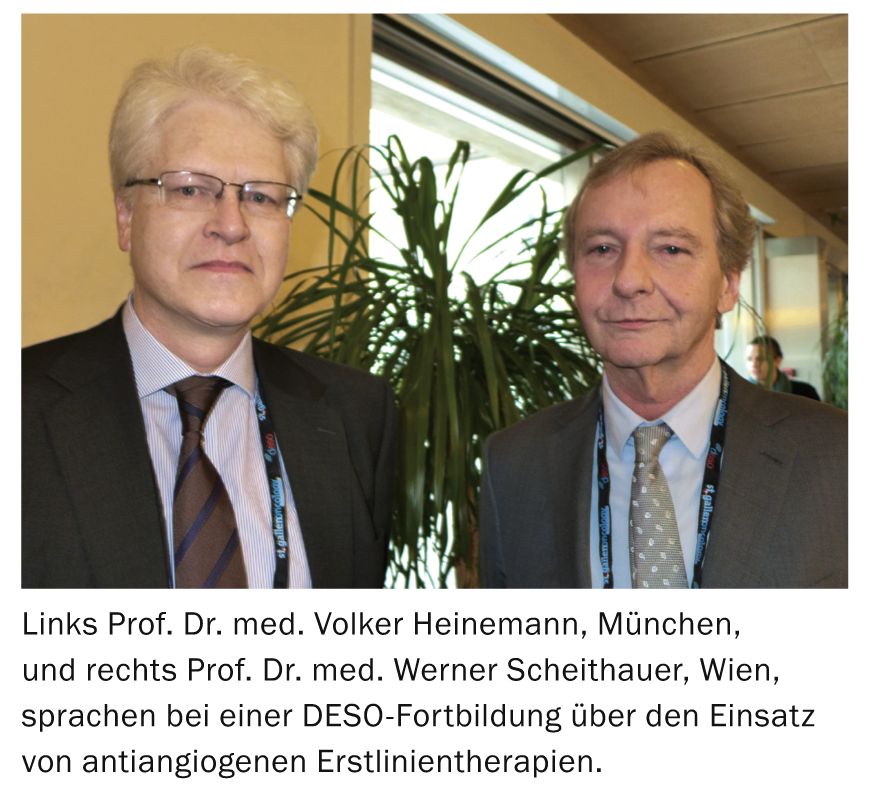
Prof. Werner Scheithauer, MD, Vienna, argued, “In disease dissemination, indolent disease, and elderly comorbid patients, sequential therapy with FU ± bevacizumab should be the primary approach.” At the same time, he would like to see a randomized phase III trial in RAS wild-type patients (standard vs. X + cetuximab). In mCRC ± RAS wild-type, bevacizumab offers a number of advantages as a frontline biologic (Table 1) if downsizing or at least averting progression were the primary therapeutic goal.
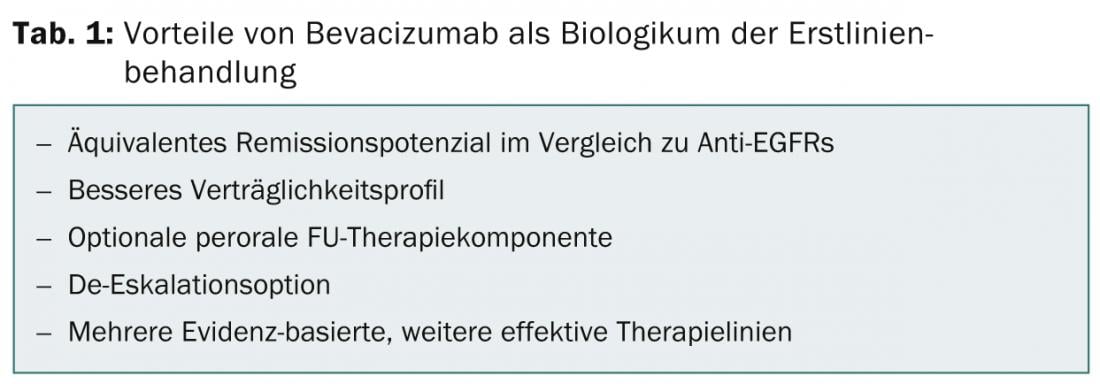
According to Prof. Scheithauer, FIRE-3 data do not yet carry the weight to change current clinical practice. Too many questions remain unanswered, such as those about bias, chance, and clinical reality. The data from CALGB-80405 could answer a few things here. In the positive case, Prof. Scheithauer would also give his consent for all, RAS mutants excluded, to be provided with anti-EGFR therapy.

Source: 24th Physician Continuing Education Course in Clinical Oncology, February 20-22, 2014, St. Gallen, Switzerland.

InFo Oncology & Hematology 2014; 2(5): 35-36.
Publikation
  • InFo ONKOLOGIE & HÄMATOLOGIE
Related Topics
  • Colorectal cancer
  • DESO
  • FIRE-3
  • KRAS test
  • RAS game type
Previous Article
  • Actinic keratosis

Early treatment is indicated

  • Dermatology and venereology
  • Education
  • Oncology
  • RX
View Post
Next Article
  • Advanced training Hautnah

Guidelines – what to consider for diagnostics?

  • Allergology and clinical immunology
  • Dermatology and venereology
  • Education
  • Oncology
  • RX
View Post
You May Also Like
View Post
  • 6 min
  • Multimorbidity and functional capacity in old age

Clarify individual health status and reduce risks

    • Congress Reports
    • General Internal Medicine
    • Geriatrics
    • Neurology
    • Orthopedics
    • Physical medicine and rehabilitation
    • Prevention and health care
    • Rheumatology
    • RX
View Post
  • 6 min
  • Tick season: danger from early summer meningoencephalitis

TBE vaccination recommended for adults and children aged 3 and over

    • Education
    • Infectiology
    • Neurology
    • Prevention and health care
    • RX
    • Studies
View Post
  • 13 min
  • New WHO guideline, updated stimulation protocols, focus on PGT-A

Fertility and reproductive medicine 2026

    • Education
    • Gynecology
    • RX
    • Studies
View Post
  • 12 min
  • Wound treatment

Surgical wound complications

    • CME continuing education
    • Dermatology and venereology
    • Endocrinology and Diabetology
    • Geriatrics
    • Physical medicine and rehabilitation
    • RX
    • Surgery
View Post
  • 8 min
  • Proteins in wound healing

Do special amino acids lead to success?

    • CME continuing education
    • Dermatology and venereology
    • Endocrinology and Diabetology
    • Nutrition
    • RX
    • Studies
View Post
  • 8 min
  • Proteins in wound healing

Do special amino acids lead to success?

    • CME continuing education
    • Dermatology and venereology
    • Endocrinology and Diabetology
    • Nutrition
    • RX
    • Studies
View Post
  • 0 min
  • Psychedelic-assisted therapy

Current status of PAT

    • CME continuing education
    • General Internal Medicine
    • Pharmacology and toxicology
    • Psychiatry and psychotherapy
    • RX
    • Studies
View Post
  • 5 min
  • Hepatitis B prophylaxis

Vaccination protection for healthcare staff with patient contact – an update

    • Congress Reports
    • General Internal Medicine
    • Infectiology
    • Prevention and health care
    • RX
  • IBD matters

    Zum Thema
Top CME content
  • 1
    Do special amino acids lead to success?
  • 2
    Current status of PAT
  • 3
    Surgical wound complications
  • 4
    Do special amino acids lead to success?
  • 5
    Functional limb preservation between infection control, vascular medicine and resurfacing

Newsletter

Sign up and stay up to date

Subscribe
Medizinonline Medizinonline
  • Contact
  • General terms and conditions
  • Imprint

Input your search keywords and press Enter.