Medizinonline Medizinonline
  • News
    • News
    • Market & Medicine
  • Patients
    • Disease patterns
    • Diagnostics
    • Therapy
  • Partner Content
    • Diabetes
      • Dia-Month Club – Type 2 Diabetes
      • Diabetes in Motion
      • Diabetes Podcasts
    • Gastroenterology
      • IBD matters
    • Oncology
      • Swiss Oncology in motion
    • Orthopedics
      • Osteoporosis in motion
  • Departments
    • Allergology and clinical immunology
    • General Internal Medicine
    • Anesthesiology
    • Angiology
    • Surgery
    • Dermatology and venereology
    • Endocrinology and Diabetology
    • Nutrition
    • Gastroenterology and Hepatology
    • Genetics
    • Geriatrics
    • Gynecology
    • Hematology
    • Infectiology
    • Cardiology
    • Nephrology
    • Neurology
    • Emergency and intensive care medicine
    • Nuclear Medicine
    • Oncology
    • Ophthalmology
    • ORL
    • Orthopedics
    • Pediatrics
    • Pharmacology and toxicology
    • Pharmaceutical medicine
    • Phlebology
    • Physical medicine and rehabilitation
    • Pneumology
    • Prevention and health care
    • Psychiatry and psychotherapy
    • Radiology
    • Forensic Medicine
    • Rheumatology
    • Sports Medicine
    • Traumatology and trauma surgery
    • Tropical and travel medicine
    • Urology
    • Dentistry
  • CME & Congresses
    • CME continuing education
    • Congress Reports
    • Congress calendar
  • Practice
    • Noctimed
    • Practice Management
    • Jobs
    • Interviews
  • Log In
  • Register
  • My account
  • Contact
  • Publications
  • Contact
  • Deutsch
  • English
  • Français
  • Italiano
  • Português
  • Español
Subscribe
Medizinonline Medizinonline
  • News
    • News
    • Market & Medicine
  • Patienten
    • Krankheitsbilder
    • Diagnostik
    • Therapie
  • Partner Content
    • Diabetes
      • Dia-Month Club – Type 2 Diabetes
      • Diabetes in Motion
      • Diabetes Podcasts
    • Gastroenterology
      • IBD matters
    • Oncology
      • Swiss Oncology in motion
    • Orthopedics
      • Osteoporosis in motion
    • Phytotherapie
    • Rheumatology
  • Departments
    • Fachbereiche 1-13
      • Allergology and clinical immunology
      • General Internal Medicine
      • Anesthesiology
      • Angiology
      • Surgery
      • Dermatology and venereology
      • Endocrinology and Diabetology
      • Nutrition
      • Gastroenterology and Hepatology
      • Genetics
      • Geriatrics
      • Gynecology
      • Hematology
    • Fachbereiche 14-26
      • Infectiology
      • Cardiology
      • Nephrology
      • Neurology
      • Emergency and intensive care medicine
      • Nuclear Medicine
      • Oncology
      • Ophthalmology
      • ORL
      • Orthopedics
      • Pediatrics
      • Pharmacology and toxicology
      • Pharmaceutical medicine
    • Fachbereiche 26-38
      • Phlebology
      • Physical medicine and rehabilitation
      • Phytotherapy
      • Pneumology
      • Prevention and health care
      • Psychiatry and psychotherapy
      • Radiology
      • Forensic Medicine
      • Rheumatology
      • Sports Medicine
      • Traumatology and trauma surgery
      • Tropical and travel medicine
      • Urology
      • Dentistry
  • CME & Congresses
    • CME continuing education
    • Congress Reports
    • Congress calendar
  • Practice
    • Noctimed
    • Practice Management
    • Jobs
    • Interviews
Login

Sie haben noch keinen Account? Registrieren

  • Breast Cancer

Three-dimensional tumor models as a prognostic tool

    • Gynecology
    • News
    • Oncology
    • RX
  • 3 minute read

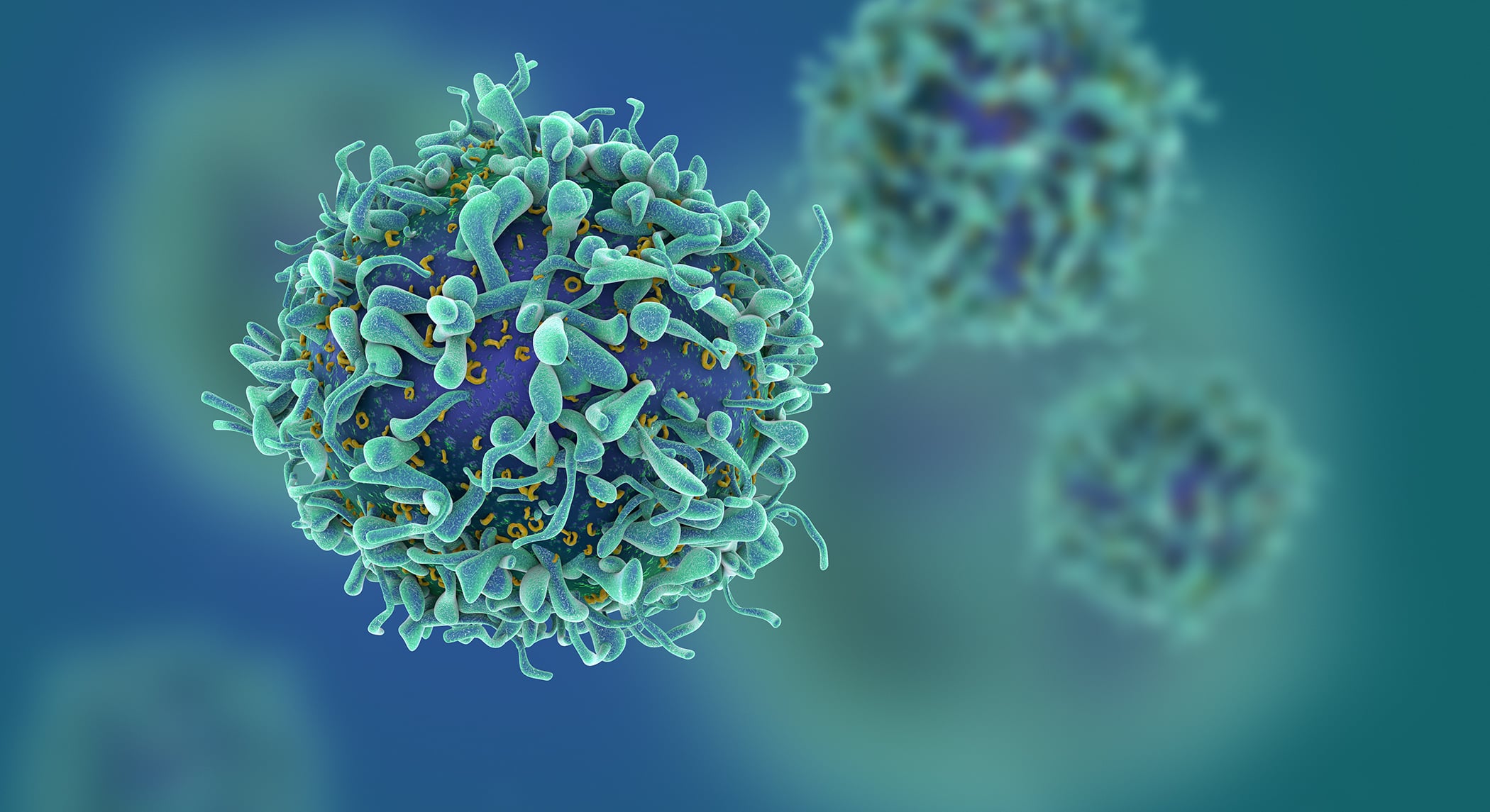
Using so-called spheroid models of breast tumors, German researchers have been able to predict the response to neoadjuvant chemotherapy with great accuracy. This method is based on the “replication” of the tumor in vitro. This allows analysis of how cells behave in a 3D aggregate resembling in vivo carcinoma. Already in the petri dish, it is thus possible to predict whether the therapy will be effective or not. Patients were thus spared the inconvenience of a failed treatment attempt. 

In the prospective study, researchers generated three-dimensional, spherical spheroids from tumor biopsies of 78 patients with breast carcinoma from several thousand tumor cells. These are complex micromodels of the respective in vivo tumors. All participants were eligible for neoadjuvant chemotherapy and were therefore eligible for the in vivo arm.

The spheroids were exposed to the same drugs as the patients’ tumors, and after a predetermined time, the correlation between the in vivo and in vitro response was determined. Variables used were in vitro tumor cell survival counts and in vivo pathological complete response (pCR) determined at the time of surgery. A pCR was present at status ypT0 ypN0, when no vital tumor cells remained in the breast and axillae.

Specific prediction possible

A tumor cell survival of 35% was set as a cut-off value to determine the sensitivity and specificity of the in vitro models. A cell count below this value was associated with pCR (i.e., tumor cell survival <35% significantly increased the probability of a complete response). The odds ratio compared to higher cell counts above 35% was 0.011 (95% CI 0.001-0.096; p=0.000132).

The researchers now tested the extent to which a test with such a cut-off can predict effectiveness or response to therapy. A positive test result (<35%) means that a pCR can also be achieved in vivo, i.e. that the therapy will be effective. A negative test result (≥35%) means that no pCR can be achieved in vivo, i.e. the therapy will not be effective (and would therefore not even have to be started in these patients in the future). In fact, the test seemed to work well:
The spheroids of 32 patients were below threshold (i.e., had lower in vitro cell counts). Twenty-one of these patients, or 65.6%, and one patient with spheroid cell survival greater than 35% achieved pCR in vivo. Specifically, the in vitro test correctly predicted a positive pCR in 21 participants but gave a false negative result in one. Thus, the sensitivity was 95.5% (21 of 22 patients).

The spheroids of 46 patients were above the threshold. Forty-five of these patients, as well as eleven patient with spheroid cell survival below 35%, did not achieve pCR in vivo. Specifically, the in vitro test correctly negatively predicted that no pCR would occur in 45 participants, but yielded false positive results in eleven. Thus, the specificity was 80.4% (45 of 56 patients).

Promising approach

In addition, the extent of residual disease correlated with the increased number of surviving cells in the spheroid (p=0.021).

Overall, the 22 subjects with pCR were found to have an average tumor cell survival in the spheroid of 21.8%. In contrast, for those 56 participants who did not achieve pCR, the mean score was 63.8%. This difference was statistically significant (p=0.001).

To validate the convincing results of this exploratory study, a randomized controlled intervention trial is now planned. Here, the cut-off that proved successful in the present cohort will be tested again for stability in a larger population. In addition, follow-up data from the present study will continue to be analyzed and evaluated.

Source: Halfter K, et al: Prospective cohort study using the breast cancer spheroid model as a predictor for response to neoadjuvant therapy – the SpheroNEO study. BMC Cancer 2015; 15: 519.  


InFo ONCOLOGY & HEMATOLOGY 2015; 3(11-12): 2
Autoren
  • Andreas Grossmann
Publikation
  • InFo ONKOLOGIE & HÄMATOLOGIE
Related Topics
  • 3d aggregate
  • Breast Cancer
  • chemotherapy
  • In vitro
  • pCR
  • Spheroid model
Previous Article
  • Advanced training course in aesthetic dermatology

Who is eligible for peeling and how to avoid complications?

  • Dermatology and venereology
  • Education
  • RX
View Post
Next Article
  • Evidence base and practical considerations

Anticoagulation in patients with renal insufficiency and atrial fibrillation.

  • Cardiology
  • Education
  • Hematology
  • Nephrology
  • RX
View Post
You May Also Like
View Post
  • 3 min
  • From symptom to diagnosis

Abdominal pain – Prostate cysts

    • RX
    • Cases
    • Education
    • General Internal Medicine
    • Radiology
    • Surgery
    • Urology
View Post
  • 0 min
  • Multimodal Parkinson's Treatment

Positive Effects of a Music-Based Intervention

    • RX
    • Education
    • Geriatrics
    • Neurology
    • Physical medicine and rehabilitation
    • Psychiatry and psychotherapy
View Post
  • 8 min
  • Psychooncology

Communication as the key to therapy adherence

    • RX
    • CME continuing education
    • General Internal Medicine
    • Practice Management
View Post
  • 9 min
  • Cardiology

Minimally invasive – the quiet triumph of modern heart surgery

    • RX
    • Cardiology
    • CME continuing education
    • Studies
    • Surgery
View Post
  • 6 min
  • Schizophrenia in the early-onset stage

Which antipsychotic should be used for treatment-naive patients?

    • RX
    • Education
    • Pharmacology and toxicology
    • Psychiatry and psychotherapy
    • Studies
View Post
  • 4 min
  • Diarrhea in children

The problem of parental expectations

    • RX
    • Education
    • Gastroenterology and Hepatology
    • General Internal Medicine
    • Infectiology
    • Pediatrics
    • Studies
View Post
  • 4 min
  • From symptom to diagnosis

Multilocular cystic renal cell carcinoma (MCRCC)

    • RX
    • Cases
    • Education
    • Nephrology
    • Oncology
    • Radiology
    • Studies
    • Surgery
View Post
  • 3 min
  • Shaping the Future with LLM & Co.

AI in Everyday Clinical Practice: Friend or Foe?

    • RX
    • General Internal Medicine
    • Practice Management
    • Prevention and health care
  • IBD matters

    Zum Thema
Top CME content
  • 1
    Current State of Knowledge and New Therapeutic Approaches
  • 2
    Why is it so hard to lose weight?
  • 3
    Functional limb preservation between infection control, vascular medicine and resurfacing
  • 4
    Algorithms, avatars and the unburdened mind
  • 5
    Communication as the key to therapy adherence

Newsletter

Sign up and stay up to date

Subscribe
Medizinonline Medizinonline
  • Contact
  • General terms and conditions
  • Imprint

Input your search keywords and press Enter.