Medizinonline Medizinonline
  • News
    • News
    • Market & Medicine
  • Patients
    • Disease patterns
    • Diagnostics
    • Therapy
  • Partner Content
    • Diabetes
      • Dia-Month Club – Type 2 Diabetes
      • Diabetes in Motion
      • Diabetes Podcasts
    • Gastroenterology
      • IBD matters
    • Oncology
      • Swiss Oncology in motion
    • Orthopedics
      • Osteoporosis in motion
  • Departments
    • Allergology and clinical immunology
    • General Internal Medicine
    • Anesthesiology
    • Angiology
    • Surgery
    • Dermatology and venereology
    • Endocrinology and Diabetology
    • Nutrition
    • Gastroenterology and Hepatology
    • Genetics
    • Geriatrics
    • Gynecology
    • Hematology
    • Infectiology
    • Cardiology
    • Nephrology
    • Neurology
    • Emergency and intensive care medicine
    • Nuclear Medicine
    • Oncology
    • Ophthalmology
    • ORL
    • Orthopedics
    • Pediatrics
    • Pharmacology and toxicology
    • Pharmaceutical medicine
    • Phlebology
    • Physical medicine and rehabilitation
    • Pneumology
    • Prevention and health care
    • Psychiatry and psychotherapy
    • Radiology
    • Forensic Medicine
    • Rheumatology
    • Sports Medicine
    • Traumatology and trauma surgery
    • Tropical and travel medicine
    • Urology
    • Dentistry
  • CME & Congresses
    • CME continuing education
    • Congress Reports
    • Congress calendar
  • Practice
    • Noctimed
    • Practice Management
    • Jobs
    • Interviews
  • Log In
  • Register
  • My account
  • Contact
  • Publications
  • Contact
  • Deutsch
  • English
  • Français
  • Italiano
  • Português
  • Español
Subscribe
Medizinonline Medizinonline
  • News
    • News
    • Market & Medicine
  • Patienten
    • Krankheitsbilder
    • Diagnostik
    • Therapie
  • Partner Content
    • Diabetes
      • Dia-Month Club – Type 2 Diabetes
      • Diabetes in Motion
      • Diabetes Podcasts
    • Gastroenterology
      • IBD matters
    • Oncology
      • Swiss Oncology in motion
    • Orthopedics
      • Osteoporosis in motion
    • Phytotherapie
    • Rheumatology
  • Departments
    • Fachbereiche 1-13
      • Allergology and clinical immunology
      • General Internal Medicine
      • Anesthesiology
      • Angiology
      • Surgery
      • Dermatology and venereology
      • Endocrinology and Diabetology
      • Nutrition
      • Gastroenterology and Hepatology
      • Genetics
      • Geriatrics
      • Gynecology
      • Hematology
    • Fachbereiche 14-26
      • Infectiology
      • Cardiology
      • Nephrology
      • Neurology
      • Emergency and intensive care medicine
      • Nuclear Medicine
      • Oncology
      • Ophthalmology
      • ORL
      • Orthopedics
      • Pediatrics
      • Pharmacology and toxicology
      • Pharmaceutical medicine
    • Fachbereiche 26-38
      • Phlebology
      • Physical medicine and rehabilitation
      • Phytotherapy
      • Pneumology
      • Prevention and health care
      • Psychiatry and psychotherapy
      • Radiology
      • Forensic Medicine
      • Rheumatology
      • Sports Medicine
      • Traumatology and trauma surgery
      • Tropical and travel medicine
      • Urology
      • Dentistry
  • CME & Congresses
    • CME continuing education
    • Congress Reports
    • Congress calendar
  • Practice
    • Noctimed
    • Practice Management
    • Jobs
    • Interviews
Login

Sie haben noch keinen Account? Registrieren

  • Actinic keratosis

Photodynamic therapy still has high priority

    • Allergology and clinical immunology
    • Dermatology and venereology
    • Education
    • RX
    • Studies
  • 3 minute read

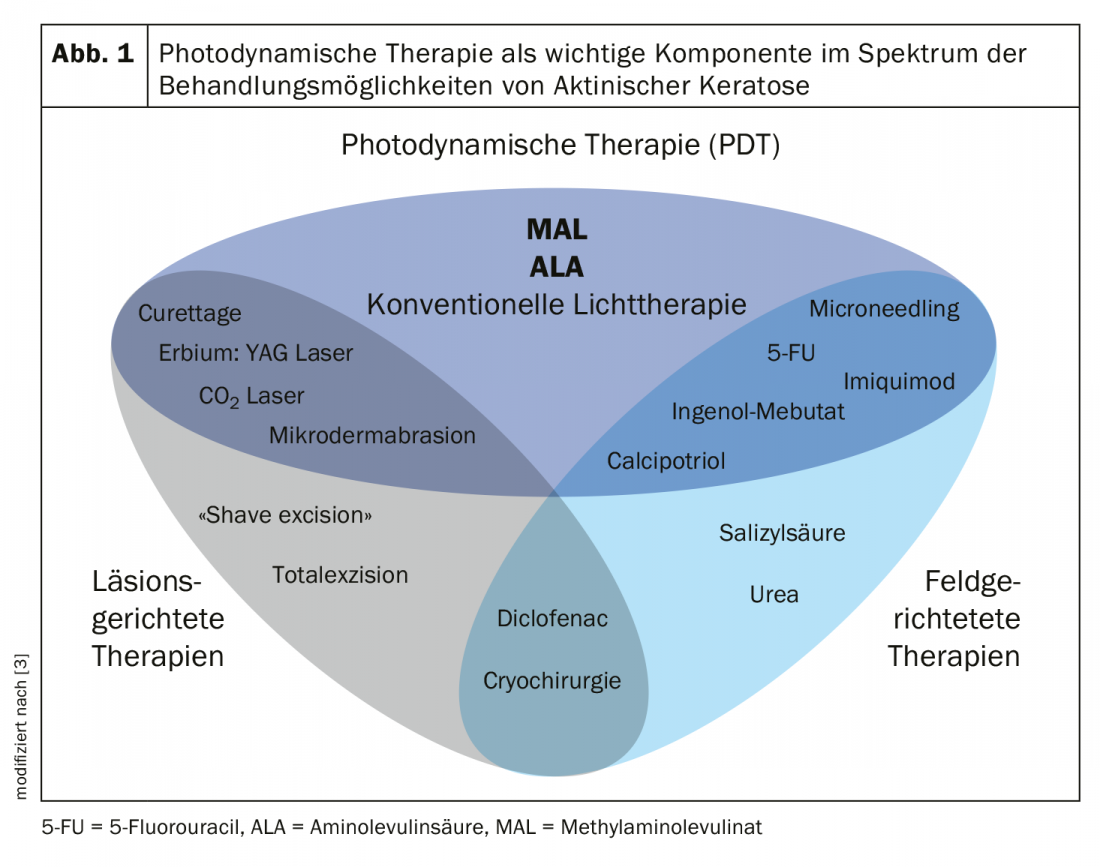
There are numerous methods of intervention for the treatment of actinic keratosis, including lesion- and field-guided approaches. Photodynamic therapy is among the established treatment modalities for these common precancerous lesions of the skin. Several recent studies address the question of how therapy quality and outcomes can still be optimized. 

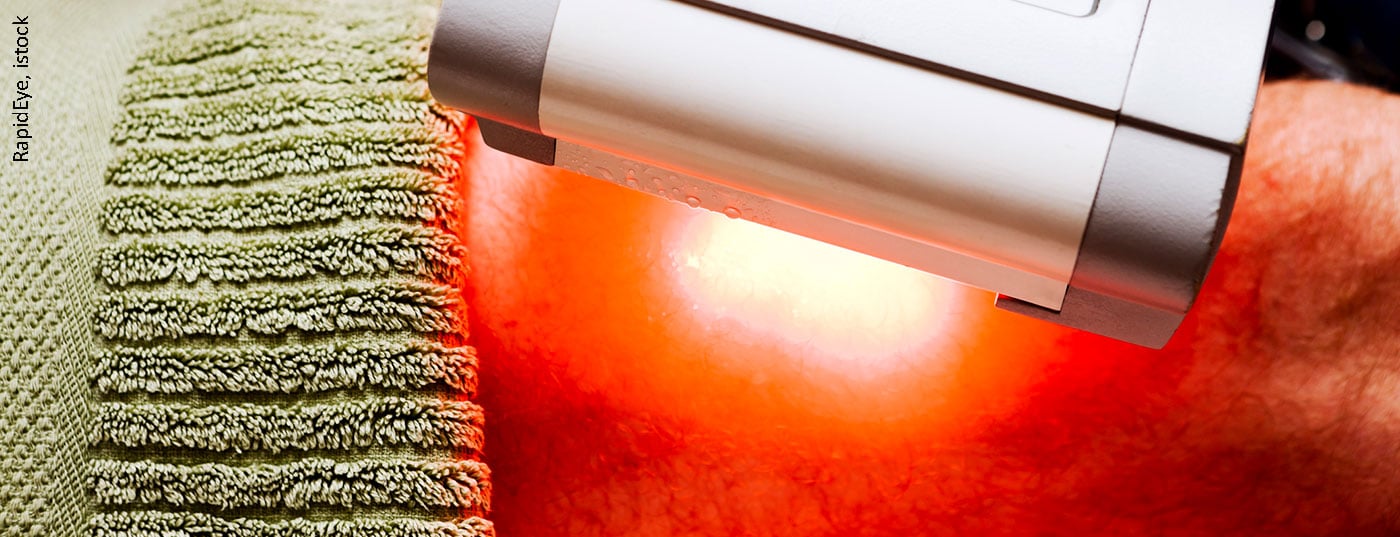
Actinic keratosis is an epithelial carcinoma in situ of the skin that can develop into an invasive squamous cell carcinoma. People with fair skin types who spend a lot of time outdoors are particularly at risk. Photodynamic therapy (PDT) is based on the application of light-sensitizing substances, which selectively accumulate in atypical keratinocytes in the diseased epidermis and are activated by illumination with light of suitable wavelength. In this process, photochemical and physical processes generate reactive oxygen species (ROS), which lead to cell damage and cell death of precancerous changes. In conventional photodynamic therapy, 5-aminolevulinic acid (ALA-PDT) resp. Methyl aminolevulinate (MAL-PDT) applied to the skin. Photoactive ALA is a precursor of the endogenous substance porphyrin and, under the influence of light of a certain wavelength, causes the formation of aggressive oxygen, which contributes to the cell death of diseased cells [1].


Current study findings at a glance

  • Kaw, et al: JAAD 2020 [2]: A modified PDT regimen with a start of blue light irradiation concurrent with application of ALA, had comparable efficacy to conventional PDT but resulted in less pain.
  • Steeb, et al.: JEADV 2020 [3]: PDT combined with other treatment modalities proved to be more effective than monotherapy. According to the authors, however, this is also dependent on individual factors.


Less painful thanks to modified therapy regimen

ALA-PDT is an effective treatment option for actinic keratosis, but some patients experience pain as a side effect during treatment. A clinical trial (n=23) compared a conventional treatment regimen (1 hour pretreatment with ALA followed by blue light irradiation) with a new modified regimen in which blue light irradiation is started immediately after ALA application [2]. A topical formulation of ALA 20% was applied to the entire face and/or scalp. On one side of the body, irradiation with the blue light was started immediately and continued for 30, 45, or 60 minutes (modified PDT). On the contralateral side, blue light started 1 hour after application of ALA and lasted 1000 seconds (conventional PDT). Pain was rated on a scale of 0 to 10. The number of keratotic lesions was determined by clinical examination and photographs. At 3 months after treatment, lesion clearance was almost identical on both sides, as demonstrated by statistical tests in a “noninferiority” design. However, the modified form of PDT, that is, with simultaneous irradiation, resulted in significantly less pain compared with conventional therapy. Regarding the interpretation of the results, it is pointed out that although this was a controlled clinical trial, the subject sample was relatively small.


Combination therapy: the more, the better?

In clinical practice, different interventions are often used in combination to achieve the best possible results. In the current S3 guideline on actinic keratosis and squamous cell carcinoma of the skin, there is a strong consensus-based recommendation to offer a combination of a field-directed with a lesion-directed treatment modality [1]. This is based on the recognition that potential synergistic effects can be achieved by combining different treatment modalities through different mechanisms of action. Combination therapies of a field-directed and an ablative procedure have been shown to be well tolerated in clinical practice [2]. In a publication on this topic published in 2020, the combination of cryosurgery followed by PDT, as well as PDT in combination with topical procedures and PDT with microneedling achieved slightly better results compared to the respective monotherapies. The authors concluded that the use of combination therapies should be assessed individually, taking into account patient- and lesion-specific aspects [3].  


Literature:

  1. Heppt MV, et al: S3 guideline “Actinic keratosis and squamous cell carcinoma of the skin”, abstract, part 1: 4 March 2020, https://onlinelibrary.wiley.com/
  2. Kaw U, et al: JAAD 2020; 82(4); 862-868.
  3. Steeb T, et al: JEADV 2020; 34(4): 727-732.


DERMATOLOGY PRACTICE 2020; 30(4): 44
Autoren
  • Mirjam Peter, M.Sc.
Publikation
  • DERMATOLOGIE PRAXIS
Previous Article
  • Type 1 diabetes

Despite known cardiac risk, many patients are undertreated

  • Cardiology
  • Education
  • Endocrinology and Diabetology
  • Partner Content
  • RX
  • Studies
View Post
Next Article
  • INOCA phenomenon and co.

Late-Breaking News Highlights

  • Cardiology
  • Congress Reports
  • RX
View Post
You May Also Like
View Post
  • 7 min
  • Disease-modifying therapies for ATTR-CM

TTR stabilizers, gene silencing and gene scissors: where do we stand?

    • Cardiology
    • Congress Reports
    • Genetics
    • RX
    • Studies
View Post
  • 8 min
  • Proteins in wound healing

Do special amino acids lead to success?

    • CME continuing education
    • Dermatology and venereology
    • Endocrinology and Diabetology
    • Nutrition
    • RX
    • Studies
View Post
  • 4 min
  • HER2+ early breast cancer

DESTINY-Breast11 – neoadjuvant T-DXd without anthracyclines

    • Education
    • Gynecology
    • Oncology
    • RX
    • Studies
View Post
  • 3 min
  • Lavender aromatherapy

Take away the fear of the dentist

    • Dentistry
    • Education
    • Pharmaceutical medicine
    • Phytotherapy
    • Psychiatry and psychotherapy
    • RX
    • Studies
View Post
  • 4 min
  • Digital dermatology: innovative project examples

AI and eHealth tools in HS care

    • Dermatology and venereology
    • General Internal Medicine
    • Practice Management
    • Prevention and health care
    • RX
    • Studies
View Post
  • 5 min
  • Mantle cell lymphoma

Recurrence after BTK inhibition – prognostic factors and treatment options

    • Education
    • Hematology
    • Oncology
    • RX
View Post
  • 3 min
  • Dementia risk with type 2 diabetes

SGLT2 inhibitors with advantages vs. DPP4 inhibitors

    • Education
    • Endocrinology and Diabetology
    • Geriatrics
    • Neurology
    • Pharmacology and toxicology
    • Psychiatry and psychotherapy
    • RX
    • Studies
View Post
  • 15 min
  • T helper 1 cells

Differentiation and activation of Th1 cells – a multi-omics approach

    • RX
    • CME continuing education
    • General Internal Medicine
    • Genetics
    • Prevention and health care
  • IBD matters

    Zum Thema
Top CME content
  • 1
    Communication as the key to therapy adherence
  • 2
    Solutions to the malnutrition dilemma
  • 3
    Solutions to the malnutrition dilemma
  • 4
    Focus on preventive care options
  • 5
    Fertility preservation from gonads to genomes to genoids

Newsletter

Sign up and stay up to date

Subscribe
Medizinonline Medizinonline
  • Contact
  • General terms and conditions
  • Imprint

Input your search keywords and press Enter.